
Belt Conveyor for Cement and Bulk Material Handling
Heavy-Duty Belt Conveyor for Clinker, Limestone, Coal and Bulk Materials
What Is a Belt Conveyor?
A belt conveyor is a continuous conveying system that transports bulk materials on a moving belt supported by idlers. LVRUI manufactures customized belt conveyors for cement plants, mining operations, aggregate processing lines and bulk material storage systems. Typical materials include clinker, limestone, coal, ore, gypsum, crushed stone and sand. Belt width, speed, conveyor length, inclination, drive arrangement and supporting structure are selected according to the required capacity and site layout.
It can be integrated into a complete bulk material conveying system with feeders, elevators, storage equipment and downstream loading units.
Key Features
✅ Continuous Bulk Material Transfer
Suitable for transporting large quantities of material over medium- or long-distance routes.
✅ Horizontal or inclined installation
The conveyor layout can be configured according to the available elevations and process arrangement.
✅ Customized Belt and Structural Design
Belt width, belt type, idler spacing, frame design and discharge arrangement are selected for the application.
✅ Multiple loading and discharge options
Feed chutes, head discharge, intermediate discharge and tripper arrangements can be provided where required.
✅ Optional dust-control components
Covers, skirt sealing, belt cleaners and dust-extraction connections can be added at exposed transfer points.
✅ System integration
The conveyor can connect with crushers, hoppers, feeders, storage silos, screens and bulk loading equipment.
How Does a Belt Conveyor Work?
A drive motor and gearbox rotate the drive pulley, moving the conveyor belt between the head and tail sections. Carrying idlers support the loaded belt, while return idlers support the empty belt travelling back toward the loading point.
Material enters through a feed chute and is carried along the selected horizontal or inclined route. At the head pulley, the material leaves the belt and enters a downstream chute, storage unit, processing machine or loading system.
Stable operation depends on correct belt tension, material loading, belt tracking, idler alignment and discharge design. The feed chute should place material near the centre of the belt and minimize impact, while belt cleaners and skirt sealing help control carryback and spillage.
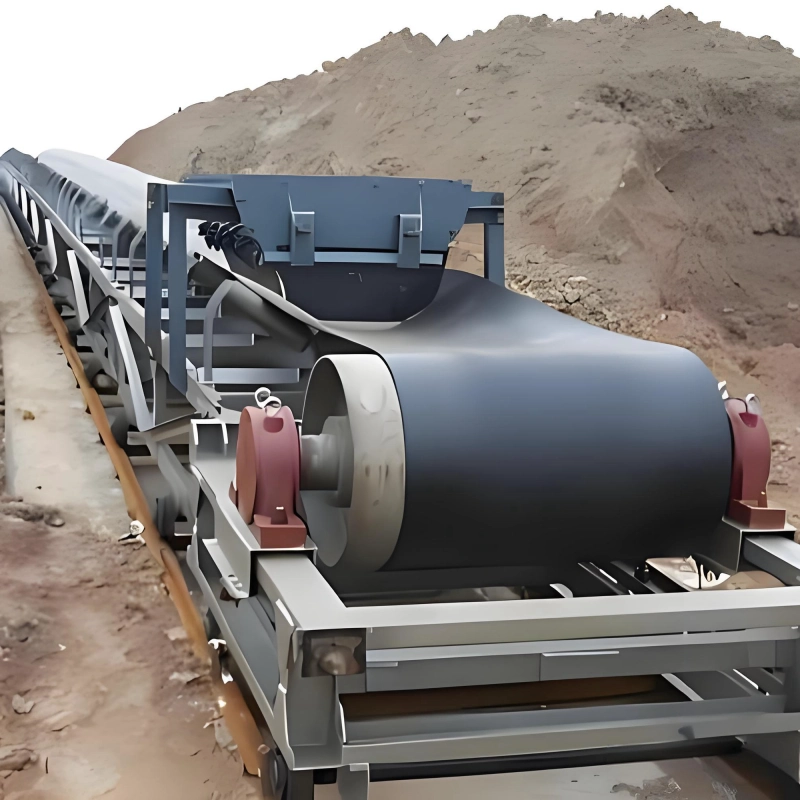
Main Components of a Belt Conveyor
✅ Conveyor belt – carries the bulk material along the conveying route.
✅ Drive and tail pulleys – move and guide the belt between the loading and discharge ends.
✅ Carrying and return idlers – support the loaded and returning belt.
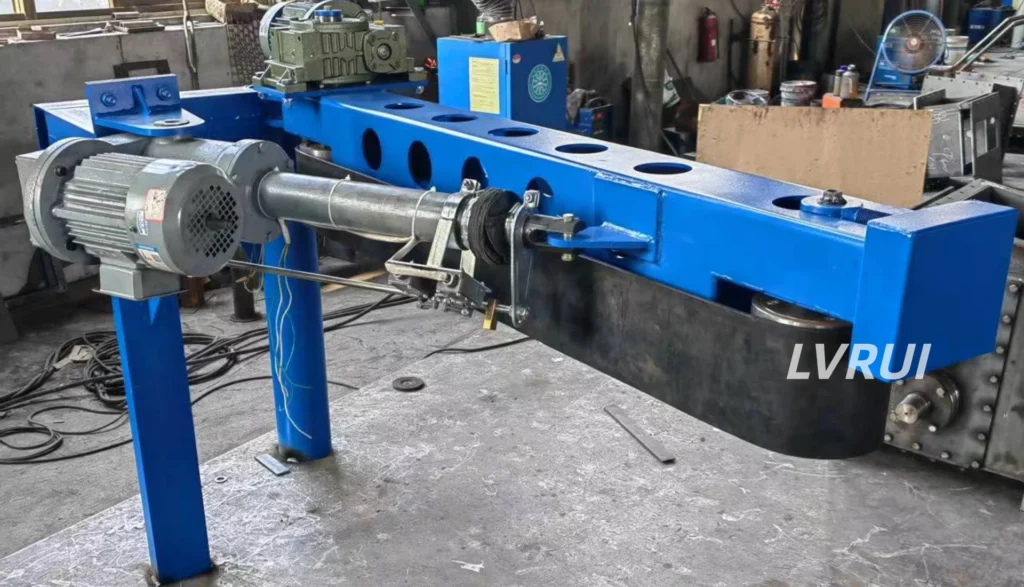
✅ Drive unit – includes the motor, gearbox, coupling and supporting base.
✅ Take-up device – maintains suitable belt tension during operation.
✅ Loading, discharge and cleaning components – include feed chutes, discharge chutes, skirts, belt cleaners and optional covers.
Typical Technical Configuration
| Model | Belt Width (mm) | Capacity (t/h) | Belt Speed (m/s) | Motor (kW) |
|---|---|---|---|---|
| BC500 | 500 | 20–120 | 0.8–1.6 | 5.5–15 |
| BC650 | 650 | 60–200 | 0.8–2.0 | 7.5–22 |
| BC800 | 800 | 100–400 | 0.8–2.5 | 11–30 |
| BC1000 | 1000 | 200–800 | 1.0–2.5 | 18.5–45 |
| BC1200 | 1200 | 400–1200 | 1.0–3.15 | 30–75 |
Drive power must be calculated according to the conveyor length, elevation difference, required capacity, belt speed, material load, and operating resistance. For further engineering reference, see CEMA’s Belt Conveyors for Bulk Materials.
Suitable Materials and Applications
A bulk material belt conveyor is mainly used for free-flowing granular, coarse or moderately lumpy materials.
Typical Materials
✅ Cement clinker
✅ Limestone
✅ Coal and coke
✅ Sand and gravel aggregate
✅ Crushed stone
✅ Gypsum
✅ Ore and mineral materials
✅ Slag
✅ Other compatible bulk solids
Fine powders such as fly ash require additional consideration. Conveyor covers, enclosed transfer chutes, skirt sealing and dust extraction may be necessary to limit material escape. A standard open troughed belt conveyor should not be treated as dust-tight.
Typical Applications
✅ Clinker transfer in cement plants
✅ Limestone conveying from crushers to storage
✅ Coal and coke handling systems
✅ Aggregate production and stockpiling
✅ Ore and mineral processing lines
✅ Feeding a clinker bulk loader for controlled truck loading
✅ Truck, railcar, ship or yard loading systems
✅ Long-distance bulk material transfer
For dry, fluidizable powder conveying along a continuously downward-sloping route, an air slide conveyor may be more suitable. For shorter enclosed powder transfer, a screw conveyor can also be considered.
For vertical lifting between different process levels, a bucket elevator is generally more suitable.
Belt Conveyor Configurations
Troughed Belt Conveyor
A troughed belt conveyor uses angled carrying idlers to form the belt into a trough. This is the standard configuration for clinker, limestone, coal, aggregate and similar bulk solids.
Inclined Belt Conveyor
An inclined belt conveyor moves material between different elevations. The allowable inclination depends on the material flowability, particle size, belt surface and loading conditions.
Covered Belt Conveyor
Fixed or removable covers can be installed to protect the material from weather and reduce wind disturbance. Covers alone do not replace transfer-point sealing or dust extraction.
Long-Distance Belt Conveyor
A long-distance belt conveyor requires detailed calculation of belt tension, drive power, take-up travel, route alignment and supporting structures. Intermediate drives or special arrangements may be required for demanding routes.
How to Select a Belt Conveyor
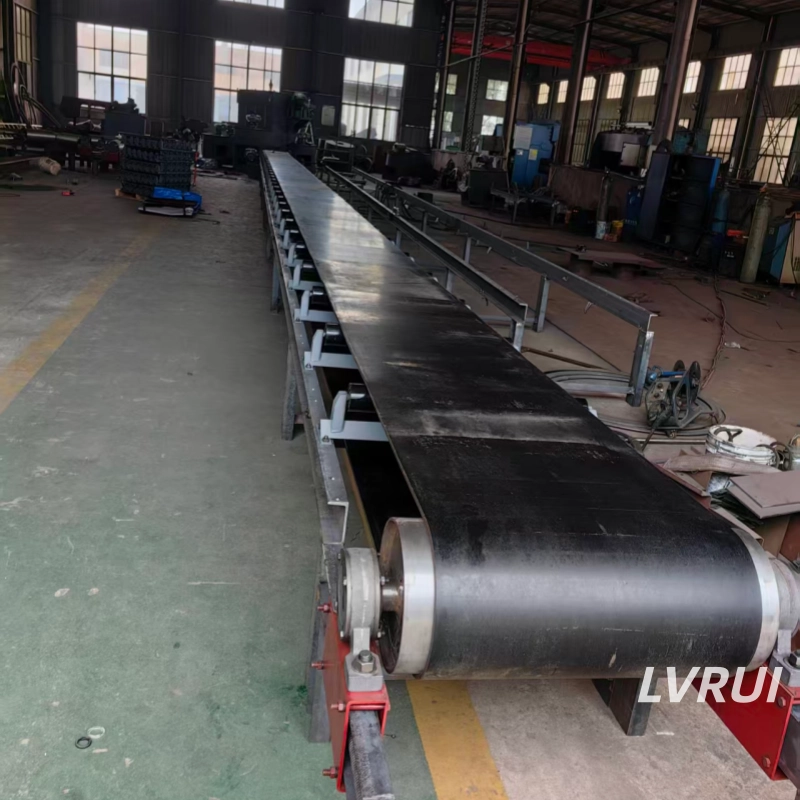
Please provide:
✅ Material name, bulk density, and maximum lump size
✅ Moisture content and material temperature
✅ Required conveying capacity
✅ Conveying distance and inlet/outlet elevations
✅ Number of loading and discharge points
✅ Indoor or outdoor conditions and dust-control requirements
✅ Power supply and site layout drawing
These details determine the belt width, speed, inclination, drive power, supporting structure, and chute design.
Manufacturing and Pre-Shipment Inspection
LVRUI manufactures each belt conveyor according to the approved project drawings.
Before shipment, we check:
✅ Frame, pulley, and idler alignment
✅ Drive and take-up arrangement
✅ Belt width and chute connections
✅ Guards, covers, and supporting components
✅ Coating, marking, and packing
Long conveyors may be shipped in sections. LVRUI provides installation drawings and remote technical guidance, while on-site installation is completed by the customer or its local contractor.
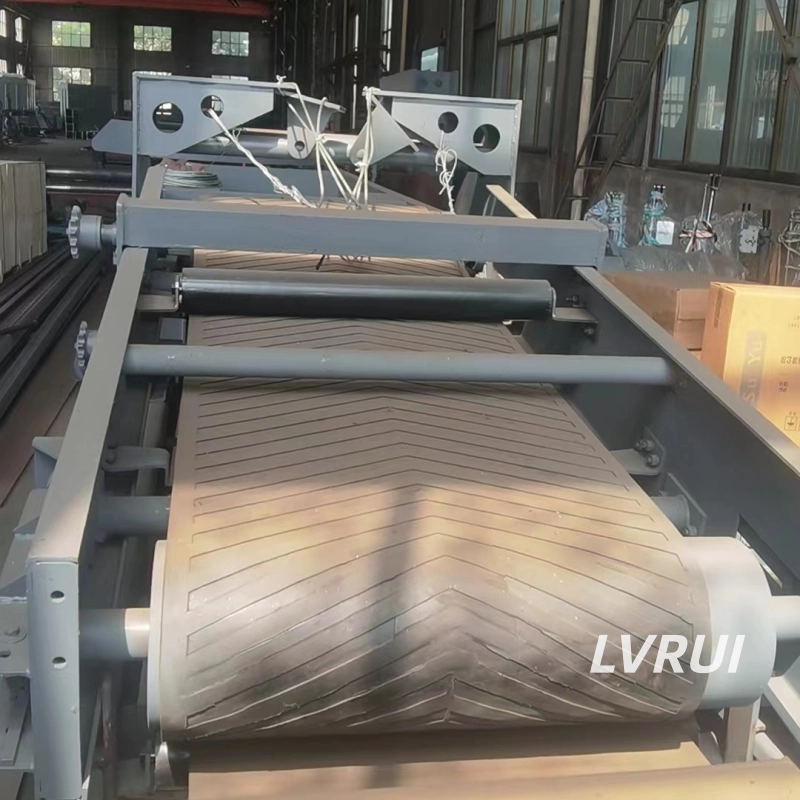
Project Cases
Belt Conveyor FAQs
What materials can a belt conveyor handle?
A troughed belt conveyor can transport clinker, limestone, coal, coke, aggregate, gypsum, ore, slag and other compatible bulk solids. The belt, idlers and chute design should be selected according to the material density, lump size, temperature and abrasiveness.
Can a belt conveyor transport fly ash or other fine powders?
Yes, under suitable conditions. Fine powders normally require conveyor covers, sealed transfer chutes, skirt sealing and dust-extraction connections. A standard open belt conveyor should not be treated as a dust-tight conveying system.
What determines belt conveyor capacity and belt width?
Capacity depends on the material bulk density, maximum lump size, belt width, belt speed, trough angle, conveyor inclination and loading conditions. Final belt width and speed should be calculated from the actual project data.
Can a belt conveyor be installed on an incline?
Yes. The allowable inclination depends on the material flowability, particle size and selected belt surface. Steeper routes may require cleated belts, sidewall belts or another specialized conveyor configuration.
Can a belt conveyor be covered for outdoor or dusty applications?
Yes. Fixed or removable covers can protect the material from rain and wind. Skirt sealing, enclosed transfer chutes, belt cleaners and dust extraction may also be required at loading and discharge points.
What information is required for a belt conveyor quotation?
Please provide the material, bulk density, maximum lump size, required capacity, conveying distance, inlet and outlet elevations, loading and discharge points, installation environment, power supply and site layout drawing.
How do I select the right belt conveyor for my application?
Selection depends on the material characteristics, required capacity, conveying distance, inclination, installation environment and operating conditions. Belt width, speed, structure and drive power should be determined according to the project requirements.
Request a Customized Belt Conveyor?
Send LVRUI your material data, required capacity, conveying distance, elevation difference and site layout. We will recommend a suitable conveying configuration based on your working conditions.
✅ Horizontal or inclined conveying layouts
✅ Customized belt widths and conveying lengths
✅ Optional covers and dust-control interfaces
✅ Loading and discharge chute customization
✅ Technical drawings and remote technical guidance