
Double Flap Valve for Airlock Discharge Applications
Two-stage flap operation for controlled discharge and pressure separation
Overview
LVRUI Double Flap Valve is a two-stage discharge valve designed for controlled material release and pressure separation between connected equipment. The valve uses upper and lower flap plates that operate alternately, allowing gravity discharge while reducing direct airflow exchange between upstream and downstream systems. It is commonly installed below silos, hoppers and dust collectors in cement plants and powder handling systems. LVRUI also provides standard Flap Valve solutions for general gravity discharge applications.
Key Features
✅ Two-stage flap operation for controlled discharge
✅ Pressure separation between upstream and downstream equipment
✅ Available with counterweight, pneumatic and electric drives
✅ Heavy-duty construction for cement and powder handling applications
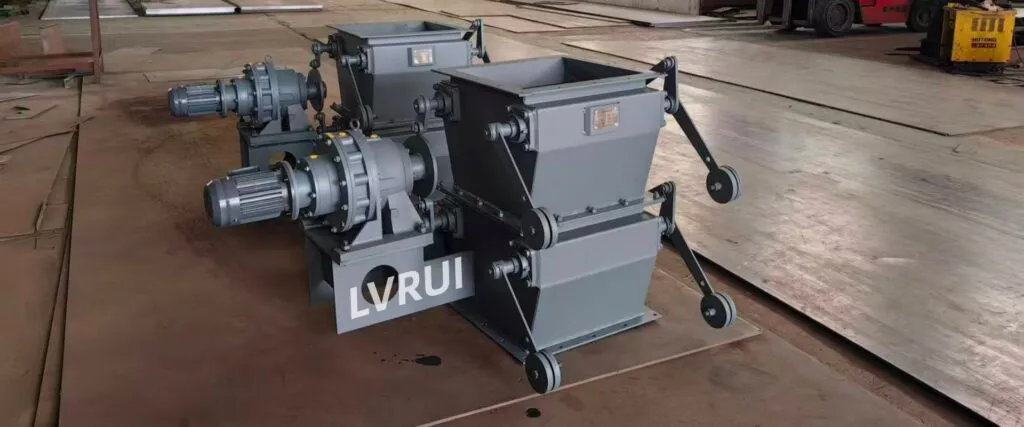
Available Drive Types
✅ Counterweight Design
Suitable for gravity discharge applications without external power supply.
✅ Pneumatic Operation
Suitable for automatic operation and PLC-controlled systems.
✅ Electric Operation
Suitable for remote operation and plant automation.
Typical Technical Configuration
| Item | Specification |
|---|---|
| Product Type | Double Flap Valve / Double Dump Valve |
| Operation | Alternating upper and lower flap plates |
| Drive Options | Counterweight / Pneumatic / Electric |
| Body Material | Carbon steel / Stainless steel |
| Application | Cement, fly ash, powder and dry bulk materials |
| Connection | Customized flange dimensions |
Final valve size, flap structure, actuator, sealing clearance and construction materials must be confirmed according to the material and operating conditions.
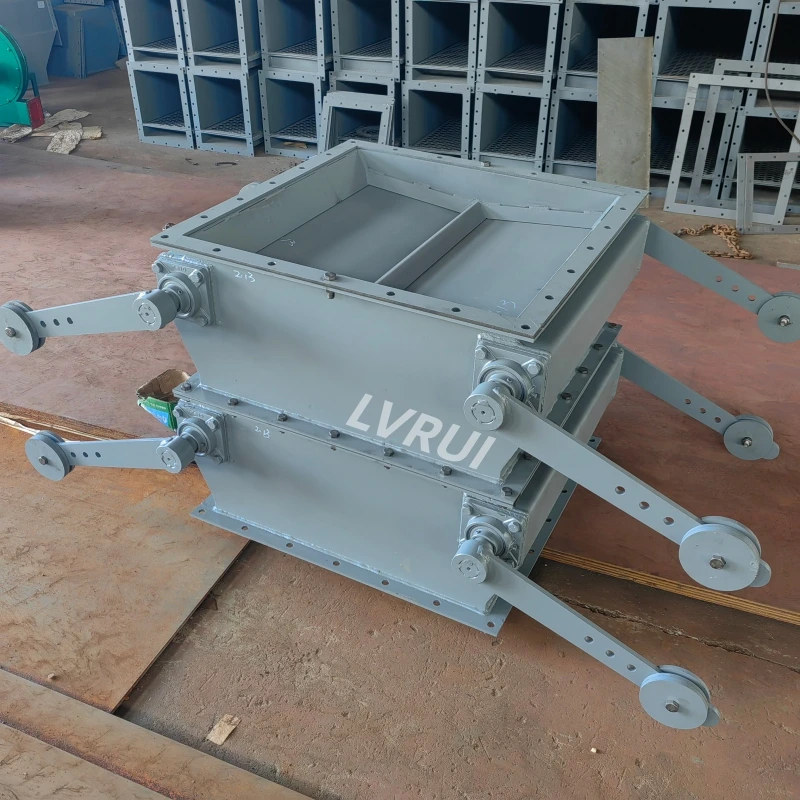
Typical Applications
✅ Dust collector discharge systems
✅ Silo outlet under negative pressure
✅ Pneumatic conveying systems
✅ Equipment connection points with pressure difference
✅ Cement plant powder handling systems
Dust Control Reference: Proper selection of discharge and dust handling equipment is important in industrial environments where combustible dust hazards may exist. Refer to recognized dust safety practices when designing bulk material handling systems.
Heavy-Duty and Special Applications
For abrasive or high-temperature materials, flap plates, liners, bearings and sealing components can be customized according to operating conditions.
How to Select a Double Flap Valve
Before quotation, please provide:
✅ Material type
✅ Temperature
✅ Capacity
✅ Pressure difference
✅ Installation dimensions
✅ Drive preference
How Does a Double Flap Valve Work?
A double flap valve consists of an upper flap, intermediate chamber and lower flap.
The operating sequence:
✅ Upper flap opens and material enters the chamber
✅ Upper flap closes to isolate the inlet
✅ Lower flap opens and releases material
✅ Lower flap closes before the next cycle
This sequence allows repeated discharge while maintaining pressure separation.


Double Flap Valve vs Rotary Valve
| Item | Double Flap Valve | Rotary Valve |
|---|---|---|
| Discharge Method | Alternating batch discharge | Continuous rotor rotation |
| Airlock Principle | Two sequential flaps | Rotor pockets and housing clearance |
| Metering Accuracy | Not intended for precise metering | Better suited to controlled feeding |
| Flow Passage | Open flap passage during discharge | Material passes through rotor pockets |
| Typical Use | Hopper or dust collector discharge | Feeding and airlock applications |
| Selection Priority | Pressure isolation and free gravity flow | Continuous feeding and dosing |
A double flap valve is generally selected when repeated gravity discharge and pressure isolation are more important than precise metering. A rotary valve is more suitable when a relatively continuous and controlled feed rate is required.
For a more detailed comparison of operating principles, maintenance requirements and suitable applications, read our guide to double flap valve vs rotary valve selection.
Manufacturing and Inspection
LVRUI manufactures each double flap valve according to the confirmed technical requirements and approved production drawing.
Before shipment, the main checks include:
✅ Body and flange dimensions
✅ Upper and lower flap movement
✅ Alternating operating sequence
✅ Flap closing position and clearance
✅ Motor, cylinder or counterweight operation
✅ Limit-switch position where supplied
✅ Access cover and maintenance space
✅ Surface coating and component marking
✅ Packing and delivery identification
LVRUI provides technical drawings, operating instructions and remote technical guidance for overseas projects. On-site installation is completed by the customer or its appointed local contractor.
Double Flap Valve FAQs
What is a double flap valve used for?
A double flap valve is used for controlled discharge of cement, powder and dry bulk materials from silos, hoppers, bag filters and other process equipment. Its two-stage flap design allows repeated material discharge while helping maintain pressure separation between upstream and downstream systems.
How does a double flap valve work as an airlock?
The upper and lower flaps open in sequence. One flap remains closed while the other opens, preventing a direct open passage through the valve and helping reduce air leakage between the upstream and downstream equipment.
What is the difference between a double flap valve and a rotary valve?
A double flap valve uses two alternating flaps for gravity discharge and pressure isolation. A rotary valve uses rotating pockets and is generally more suitable for continuous feeding or metering.
What information is required for a quotation?
Please provide the material, particle size, bulk density, temperature, capacity, pressure difference, inlet and outlet dimensions, installation height, drive preference and control requirements.
Need Help Selecting a Double Flap Valve?
Send LVRUI your material type, required discharge capacity, installation position, pressure conditions and drive requirements. LVRUI will recommend a suitable double flap valve structure, operating method and configuration for your application.
✅ Double flap valve selection based on material and operating conditions
✅ Counterweight, pneumatic and electric drive options available
✅ Customized inlet, outlet and flange dimensions
✅ Technical support for pressure separation and discharge applications