
Telescopic Loading Chute for Variable-Height Bulk Loading
Retractable Loading Chutes for Trucks, Railcars, Ships, Barges and Stockpiles
What Is a Telescopic Loading Chute?
A telescopic loading chute is a vertically retractable device that guides dry bulk material from a silo, hopper or conveyor outlet into a vehicle, vessel or stockpile. Unlike the broader term loading spout, this page focuses on extended length, retracted height, telescopic travel and lifting control. LVRUI customizes the chute structure, outlet, contact parts and dust connection according to the material, loading rate and site layout.
Extended Length, Retracted Height and Telescopic Travel
These dimensions must be confirmed separately.
| Dimension | Meaning | Selection Effect |
|---|---|---|
| Extended Operating Length | Chute length at the lowest loading position | Confirms whether the outlet can reach the receiving point |
| Retracted Height | Overall height when the chute is raised | Affects vehicle clearance and maintenance space |
| Telescopic Travel | Movement between the raised and lowered positions | Determines the usable loading-height range |
| Installation Height | Distance from the inlet connection to the receiving area | Establishes the required chute geometry |
Extended length is not the same as travel. The fixed inlet, outlet hood, section overlap and lifting arrangement affect the final dimensions. A drawing showing the highest and lowest loading positions is required for accurate selection.
Key Features
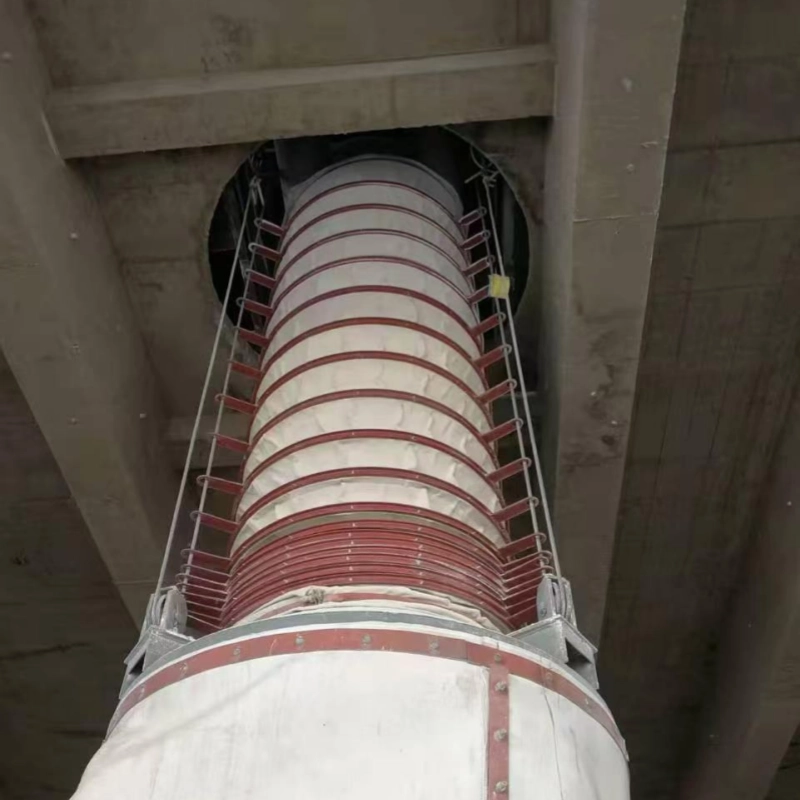
✅ Customized Telescopic Travel
Selected from the installation height, parked position and lowest discharge point.
✅ Controlled Electric Lifting
The winch, cables, pulleys and limit switches control extension and retraction.
✅ Separated Material and Return-Air Paths
Internal sections guide material, while the outer sleeve can connect to dust extraction.
✅ Application-Specific Outlet
Open skirts, discharge hoods, tanker cones and stockpile outlets are available.
✅ Material-Specific Construction
Carbon steel, stainless steel and replaceable wear parts can be selected.
✅ Flexible Control Options
Local, remote, level-sensing and PLC-compatible controls are available.
How Does a Telescopic Loading Chute Work?
Before loading, an electric winch lowers the chute toward the truck bed, railcar, ship hold or stockpile. Material enters through the upper flange and travels through internal guide cones or telescopic tube sections.
A flexible outer sleeve can surround the material path and provide a return-air passage to a dust collection system. Keeping the outlet close to the receiving surface helps reduce free-fall distance, uncontrolled material spread and airborne dust. Effective dust extraction depends on correctly selected airflow, enclosure, ductwork and filtration. General source-capture principles are explained in the UK HSE guidance on local exhaust ventilation.
For open loading, an optional level sensor can signal the chute to rise as the material surface increases. Automatic lifting and feed shutoff require integration with the winch and an upstream sector gate valve or feeder. After loading, the chute retracts to its parked position.
Suitable Materials and Applications
Telescopic loading chutes are mainly used for free-flowing dry powders, granules and selected coarse materials, including cement, fly ash, lime powder, mineral powder, gypsum powder, dry mortar ingredients, grain, fertilizer, limestone and clinker.
Fine powders normally require an outer sleeve and correctly sized extraction. Abrasive products may require reinforced cones, thicker contact parts or replaceable liners. Wet or sticky materials should be evaluated separately.
Typical applications include:
✅ Variable-height loading into open trucks and railcars
✅ Ship and barge hold loading from an existing conveyor
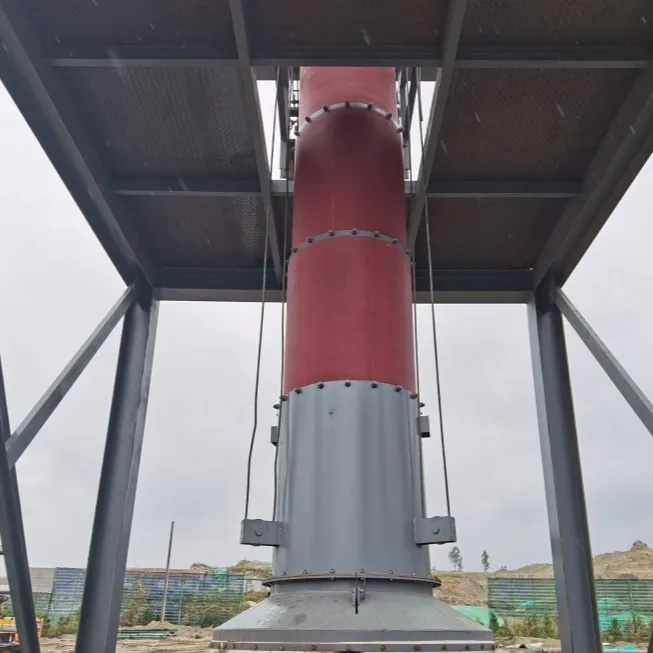
✅ Stockpile loading where the material surface rises
✅ Loading points requiring compact retracted clearance
✅ Enclosed tanker loading with a sealing cone and dust-return connection
The chute can be supplied as a standalone unit. A complete ship loader or bulk loading system includes additional conveying, support and control equipment.
For a complete silo-to-tanker loading arrangement with flow control, level detection and dust collection, see our Cement Bulk Loader.
Main Components
A typical telescopic loading chute can include:
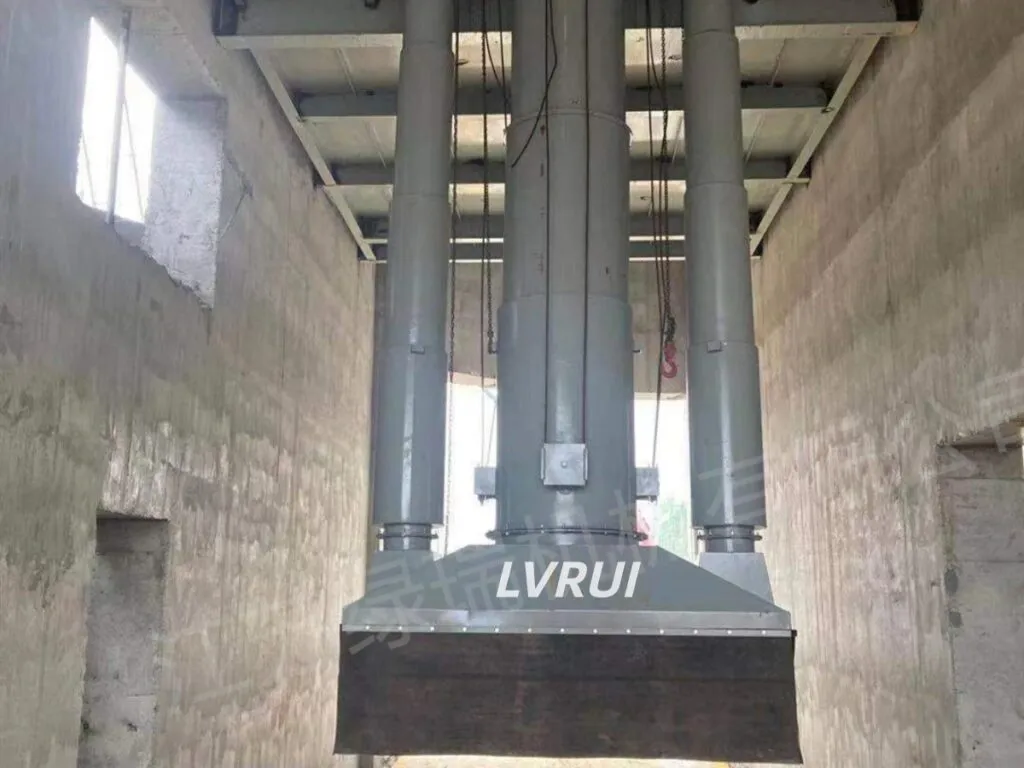
✅ Upper inlet flange and transition section
✅ Internal stacking cones or telescopic material tube
✅ Flexible outer sleeve and support rings
✅ Electric winch, cables, pulleys and support frame
✅ Open hood, dust skirt or sealing cone
✅ Dust extraction connection
✅ Upper and lower limit switches
✅ Optional level sensor and control box
The exact arrangement depends on the loading destination, travel, outlet structure and agreed dust-control scope.
Reference Technical Specifications
| Item | Available Configuration |
|---|---|
| Loading Capacity | Customized according to bulk density and upstream feed rate |
| Extended Length | Based on the lowest required loading position |
| Retracted Height | Designed for the available clearance |
| Telescopic Travel | Based on the highest and lowest operating positions |
| Main Steel Structure | Carbon steel; stainless steel available |
| Material-Contact Parts | Carbon steel, stainless steel or wear-resistant construction |
| Lifting Method | Electric winch |
| Outlet Type | Open hood, dust skirt, sealing cone or customized outlet |
| Dust Control | Central extraction connection or optional local filtration |
| Control | Local, remote or PLC-compatible |
| Sensors | Limit switches and optional level sensor |
| Installation | Indoor or outdoor configuration |
Final dimensions and capacity must be confirmed in the approved drawing. Dust airflow should be calculated from loading rate, displaced-air volume, outlet enclosure and ducting rather than selected as a fixed chute value.
Telescopic Loading Chute vs Loading Spout vs Loading Bellows
| Product Term | Main Purchasing Focus |
|---|---|
| Telescopic Loading Chute | Extended length, retracted height, travel and lifting mechanism |
| Loading Spout | Broad category for truck, tanker, railcar, ship, barge and stockpile loading |
| Loading Bellows | Flexible outer sleeve, internal material path, sealing and dust extraction |
These terms can overlap. Selection should be based on the required structure and operating conditions rather than the product name alone.
How to Select the Right Configuration
Please provide:
✅ Material name, bulk density and particle size
✅ Moisture, flowability, abrasiveness and temperature
✅ Required capacity in t/h or m³/h
✅ Loading destination and receiving opening
✅ Inlet position and flange dimensions
✅ Highest and lowest discharge positions
✅ Available retracted height and vehicle clearance
✅ Indoor or outdoor installation conditions
✅ Dust extraction or local filter requirements
✅ Outlet structure and level-sensing requirements
✅ Control mode, power supply and PLC signals
✅ Site layout, section drawing or installation photos
For ship, barge and stockpile applications, also provide pile-height variation, outdoor conditions and support details.
Manufacturing, Inspection and Delivery
LVRUI manufactures each chute according to the approved drawing and supply scope, including the agreed inlet, guide sections, sleeve, lifting mechanism, outlet, sensors and controls.
Before shipment, the dimensions, connections, lifting direction, movement and limit switch action can be checked. Large units may be divided into marked transport sections.
Unless otherwise agreed, installation and final integration with the support structure, upstream equipment and site dust collection system are completed by the customer or local installation team.
Telescopic Loading Chute FAQs
What is a telescopic loading chute used for?
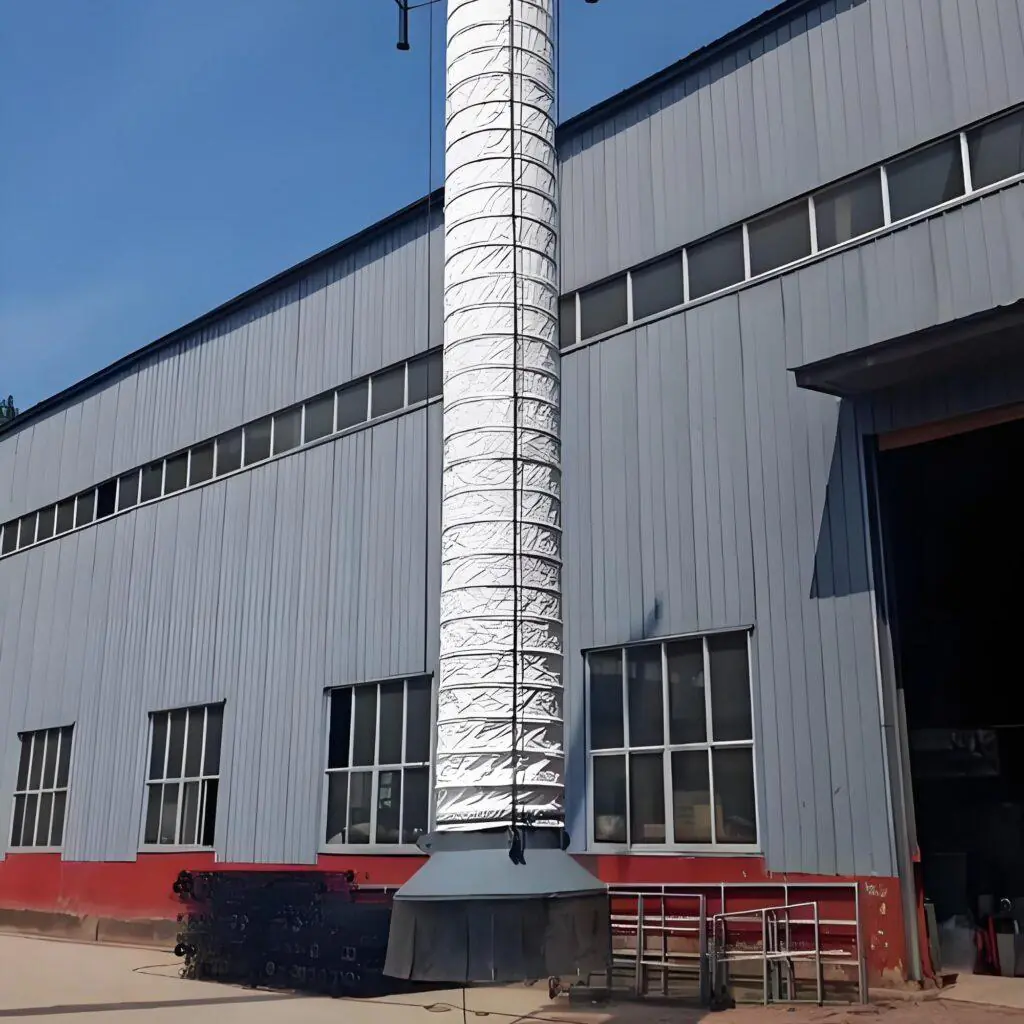
A telescopic loading chute transfers dry bulk material from a fixed discharge point into open trucks, railcars, ship holds, barges or stockpiles where the receiving height changes during loading. By keeping the outlet closer to the receiving surface, it reduces the material free-fall distance and helps control material spread and airborne dust.
How is telescopic travel determined?
The required telescopic travel is calculated from the highest parked position, the lowest operating position, the outlet assembly length and the overlap between the telescopic sections. A site section drawing showing both the raised and lowered positions is the most reliable basis for confirming the required travel.
How does a telescopic loading chute help control dust?
The chute lowers the discharge outlet closer to the material surface, reducing the distance through which the material falls. A flexible outer sleeve can also provide a return-air passage to a dust extraction system. Actual dust-control performance depends on the outlet enclosure, extraction airflow, ducting, filter capacity, material properties and operating conditions.
What is the difference between a telescopic loading chute and a loading spout?
Loading spout is a broad product term covering equipment used to load tankers, trucks, railcars, ships, barges and stockpiles. A telescopic loading chute is a retractable configuration selected mainly according to its extended length, retracted height, telescopic travel and lifting mechanism.
Can a telescopic loading chute handle clinker or abrasive materials?
Yes, but the chute configuration must be selected according to the particle size, material temperature, abrasiveness and impact conditions. Heavy-duty applications may require reinforced guide cones, thicker material-contact parts, replaceable liners or a wear-resistant outlet structure.
What information is required for a quotation?
Please provide the material name, bulk density, particle size, moisture, operating temperature, required capacity, loading destination, receiving opening dimensions, highest and lowest loading positions, available retracted height, inlet connection dimensions, dust-control requirements, control mode, power supply and site drawing.
Need a Telescopic Loading Chute for Your Site?
Send us your material data, required capacity, site drawing, highest and lowest loading positions, available retracted space and dust-control requirements. LVRUI will recommend a suitable chute structure, travel, lifting arrangement and outlet configuration.
✅ Customized extended and retracted dimensions
✅ Open, enclosed and long-travel configurations
✅ Wear-resistant and stainless-steel options
✅ Outlet structure matched to the receiving vehicle or loading point