
Air Slide Fabric for Cement and Bulk Powder Conveying
Uniform Air Permeability for Stable Fluidization in Air Slide Conveyors
What Is Air Slide Fabric?
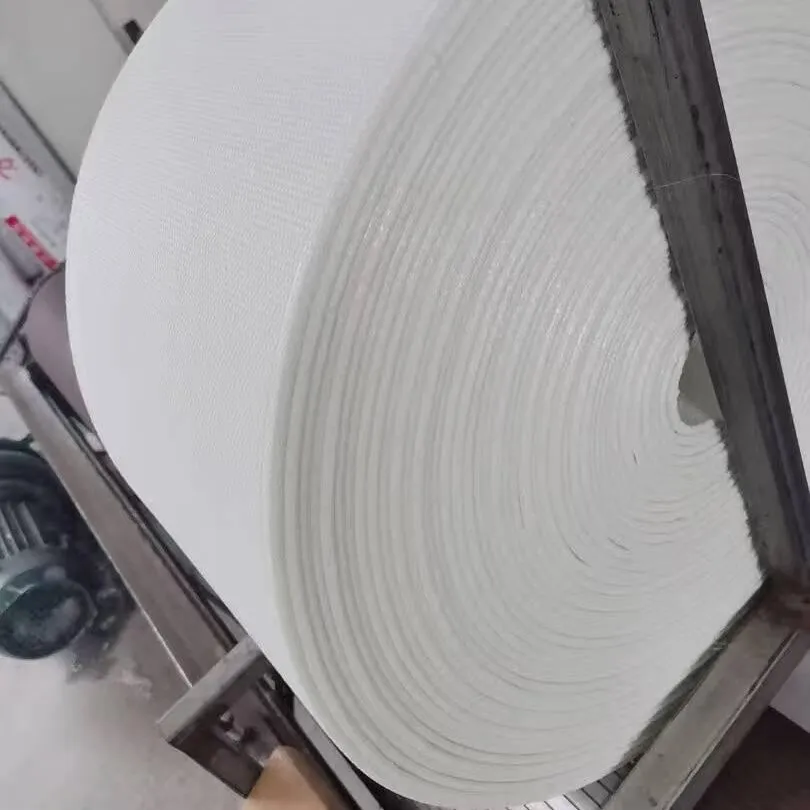
Air slide fabric, sometimes referred to as air slide canvas, is the air-permeable textile layer installed between the upper material chamber and lower air chamber of an air slide conveyor. It supports the conveyed powder while allowing low-pressure fluidizing air to pass evenly through the conveying surface.
As air passes through the fabric, fine powder above it becomes fluidized and its internal friction decreases. The material can then move along the inclined conveyor mainly under gravity.
LVRUI supplies air slide conveyor fabric for cement, fly ash, limestone powder, slag powder, mineral powder and other compatible fine dry materials. Width, thickness, fabric specification and supply dimensions can be matched to new conveyors or existing equipment requiring replacement.
Key Features

✅ Uniform Air Permeability
Consistent air distribution across the conveyor width helps maintain stable powder fluidization and reduces uneven material flow.
✅ Stable Powder Support
The fabric supports the material bed while allowing fluidizing air to pass through without excessive powder penetration into the lower air chamber.
✅ Abrasion-Resistant Construction
The fabric is designed for continuous contact with cement, fly ash and other fine industrial powders.
✅ Material Options for Different Temperatures
Fabric material can be selected according to operating temperature, conveyed material and actual application conditions.
✅ Customized Dimensions
Width, thickness and length can be matched to existing air slide conveyors, new equipment or replacement sections.
How Does Air Slide Fabric Work?
An air slide conveyor contains an upper material chamber and a lower air chamber separated by the fabric layer. Low-pressure air supplied to the lower chamber passes upward through the porous fabric. The airflow enters the powder bed and reduces friction between the particles, creating a fluidized state. Once fluidized, the powder moves along the inclined conveyor toward the discharge point under gravity.
The fabric therefore performs two essential functions:
✅ Supports the conveyed powder
✅ Distributes fluidizing air across the conveying surface
Stable conveying depends on the relationship between fabric permeability, blower conditions, powder properties, conveyor inclination and material loading.
Insufficient airflow can cause poor fluidization, while excessive airflow may disturb material flow and increase unnecessary air consumption.
Available Fabric Materials
Fabric material should be selected according to the actual operating conditions rather than temperature alone.
Polyester Air Slide Fabric
Polyester air slide fabric is commonly considered for cement, fly ash and mineral powder conveying under normal industrial temperature conditions. It provides a practical combination of air permeability, mechanical strength and wear resistance for many standard air slide applications.
High-Temperature Fabric Options
Where the operating temperature exceeds the suitable range of standard polyester fabric, alternative fibers may be considered according to the confirmed application.
Material selection should consider:
✅ Continuous operating temperature
✅ Maximum temporary temperature
✅ Powder characteristics
✅ Required air permeability
High-temperature material such as aramid or PPS should only be specified after the actual temperature and operating conditions are confirmed.
Air Slide Fabric Technical Specifications
The following information describes general customization options. Final specifications should be confirmed according to the application.
| Item | Available Specification |
|---|---|
| Product Type | Air-permeable fluidizing fabric |
| Main Application | Air slide conveyor |
| Material | Polyester or other confirmed fiber material |
| Thickness | Customized according to application |
| Width | Customized according to conveyor dimensions |
| Length | According to required installation dimensions |
| Air Permeability | Selected according to application and test conditions |
| Operating Temperature | Confirmed according to fabric material |
| Installation Position | Between upper material chamber and lower air chamber |
| Suitable Media | Cement, fly ash, mineral powder and compatible fine dry powders |
| Supply Purpose | New installation or replacement |
Air permeability values should always be evaluated together with the corresponding test pressure or pressure differential. Data obtained under different test conditions cannot be compared directly. For replacement projects, the existing fabric specification, conveyor dimensions or an original sample provides a more reliable basis than thickness alone.
Air permeability values should always be evaluated together with the corresponding test pressure or pressure differential. Data obtained under different test conditions cannot be compared directly. For general reference on textile air-permeability testing methods, see ISO 9237 – Determination of the permeability of fabrics to air.
Suitable Powders and Applications
Air slide conveyor fabric is mainly used for fine, dry and fluidizable powders.
Typical materials include:
✅ Cement powder
✅ Fly ash
✅ Limestone powder
✅ Slag powder
✅ Mineral powder
✅ Gypsum powder
✅ Other compatible fine dry materials
Typical installation locations include:
✅ Cement silo discharge lines
✅ Air slide conveyors between silos and process equipment
✅ Cement grinding and storage systems
✅ Fly ash handling lines
✅ Powder loading systems
✅ Mineral powder transfer lines
Coarse granules, wet materials and highly sticky powders are generally not suitable for conventional air slide conveying without further process evaluation.
Where one conveying line needs to distribute powder to different discharge routes, an air slide diverter can be integrated into the air slide conveying system.
How to Select the Correct Air Slide Fabric
The correct fabric should not be selected only by width or thickness.
Please provide:
✅ Conveyed material
✅ Required fabric width and thickness
✅ Existing conveyor dimensions
✅ Operating temperature
✅ Existing fabric specification, if available
For replacement fabric, also provide photographs or a sample when the original specification is unknown. The goal is to match the fabric permeability and mechanical properties with the conveyor and blower conditions rather than simply copying an approximate thickness.
Installation and Replacement Guidelines
Correct installation is important for maintaining uniform airflow.
During installation:
✅ Keep the fabric flat and evenly tensioned
✅ Avoid folds, wrinkles and local slack areas
✅ Confirm that the supporting perforated plate or grid plate is clean and level
✅ Seal the fabric edges correctly to prevent air bypass
✅ Avoid damaging the fabric with sharp tools or welding sparks
✅ Check that the upper material chamber and lower air chamber remain properly separated
The supporting perforated plate or grid plate should provide even support while allowing air to reach the complete fabric surface. Air slide fabric should be inspected when conveying capacity decreases, airflow becomes uneven or powder begins entering the lower air chamber.
For complete conveyor assembly, slope, sealing and commissioning considerations, see our air slide conveyor installation guide.
When Should Air Slide Fabric Be Replaced?
Replacement may be required when the fabric develops:
✅ Visible wear or holes
✅ Local thinning
✅ Permanent blockage
✅ Uneven air permeability
✅ Powder penetration into the lower air chamber
✅ Reduced fluidization performance that cannot be corrected through normal cleaning
Before replacing the fabric, the blower, air chamber, supporting plate and powder condition should also be checked. Poor conveying performance is not always caused by the fabric alone.
Manufacturing and Inspection
Fabric dimensions and material specifications are confirmed according to the customer’s requirements before production.
Typical inspection items include:
✅ Width and thickness
✅ Overall length
✅ Visible fabric surface condition
✅ Edge condition
✅ Material identification
✅ Packing and product marking
For replacement projects, LVRUI can review existing dimensions and operating information before confirming the new fabric specification.
Air Slide Fabric FAQs
What is air slide fabric used for?
Air slide fabric separates the material chamber from the lower air chamber in an air slide conveyor. It supports fine powder while allowing low-pressure fluidizing air to pass through the conveying surface.
How does air slide conveyor fabric fluidize cement powder?
Low-pressure air passes through the permeable fabric and enters the powder bed above it. This reduces particle friction and allows the cement powder to flow along the inclined conveyor under gravity.
How do I select the correct air permeability?
Air permeability should be selected according to the conveyed powder, blower conditions, fabric thickness and conveyor capacity. Any permeability value should also specify the corresponding test pressure or pressure differential.
What temperature can the fabric withstand?
The allowable temperature depends on the fabric material. Polyester is commonly used for standard applications, while higher-temperature fibers may be considered when operating conditions require them.
Can old air slide fabric be replaced using existing dimensions?
Yes. Replacement fabric can be produced according to confirmed conveyor dimensions or the existing fabric specification. A sample or clear photographs are helpful when the original data is unavailable.
Why does an air slide conveyor lose conveying capacity?
Reduced capacity may result from blocked fabric, insufficient airflow, powder moisture, incorrect conveyor slope, excessive material loading or problems in the lower air chamber. The complete conveying condition should be checked before replacing the fabric.
Need Help Selecting Air Slide Fabric?
Send LVRUI your conveyed material, required fabric width and thickness, operating temperature, air-supply conditions and existing conveyor dimensions. LVRUI will recommend a suitable fabric specification according to the powder characteristics, operating conditions and conveyor structure.
✅ Customized width and thickness
✅ Air permeability matched to conveying conditions
✅ Fabric material selected according to operating temperature
✅ Replacement fabric matched to existing conveyor dimensions