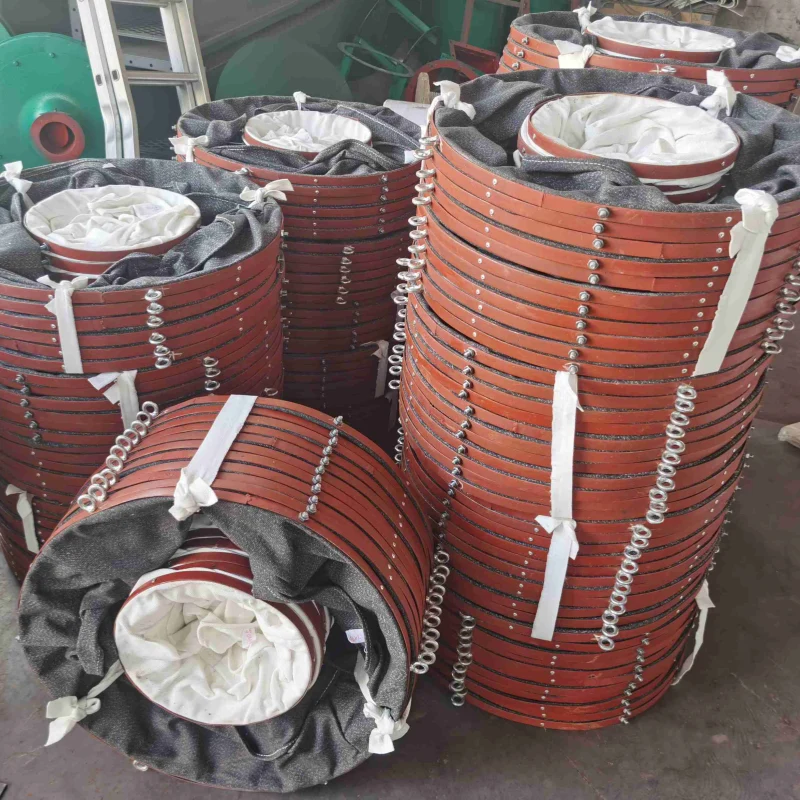
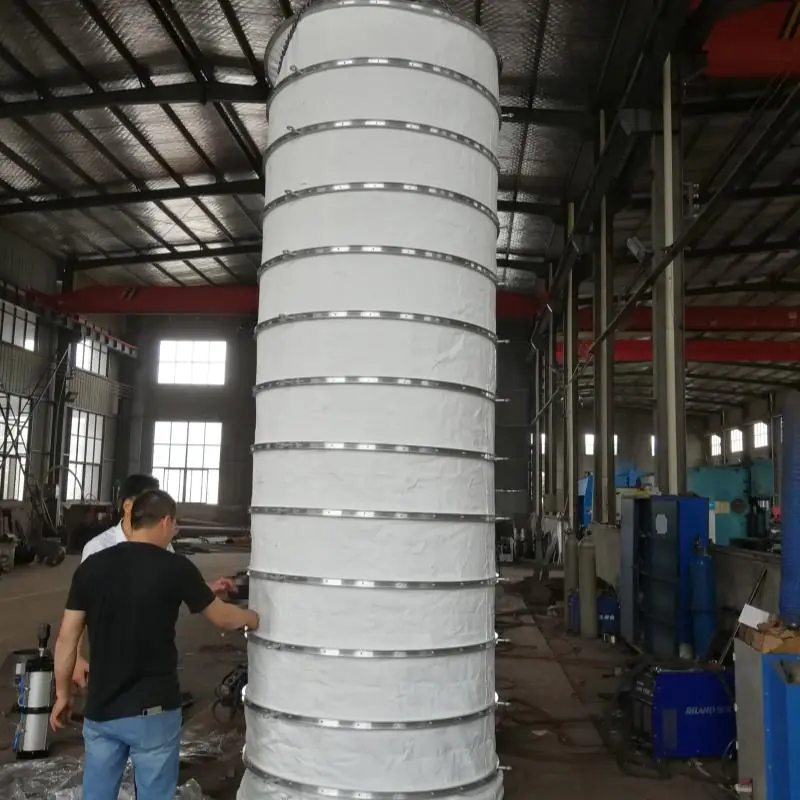
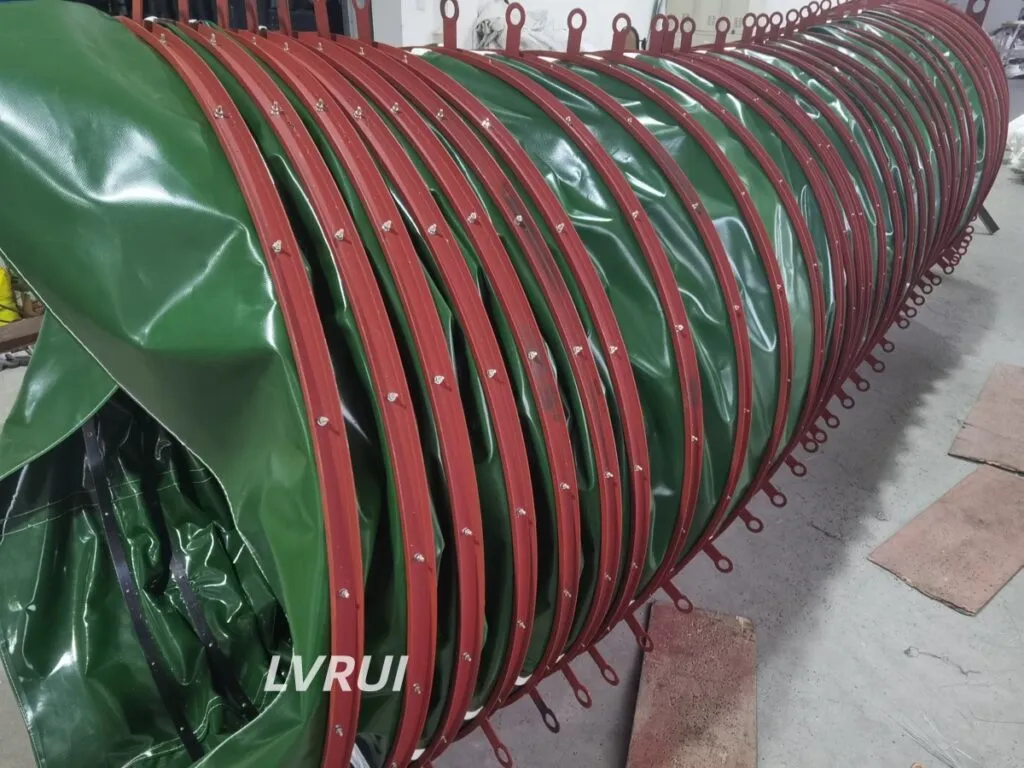
Canvas Shrouds for Loading Spouts, Conveyors and Silo Outlets
Custom Canvas Chute Sleeves, Loading Spout Outer Sleeves and Conveyor Dust Shrouds for Cement & Bulk Powder Handling
What Are Canvas Shrouds?
Canvas shrouds are canvas covers used to seal, cover or protect material transfer points in bulk material handling systems. They are often installed around loading equipment, conveyors, hoppers, silos, chutes, loading bellows and dust collectors where dust needs to be controlled and old canvas covers need regular replacement.
In real working conditions, equipment may vibrate, move slightly, expand under temperature change or require maintenance access. A canvas shroud provides a replaceable dust-control cover around the transfer area while allowing limited movement between adjacent equipment parts.
Depending on the installation position, this product may also be called:
✅ Canvas chute sleeve
✅ Loading spout outer sleeve
✅ Loading bellows outer sleeve
✅ Telescopic chute sleeve
✅ Canvas telescopic chute cover
✅ Conveyor dust shroud
✅ Conveyor chute canvas cover
✅ Silo outlet canvas shroud
✅ Hopper discharge canvas sleeve
✅ Dust-control canvas sleeve
✅ Canvas cover for loading spout
✅ Canvas cover for powder chute
For cement, fly ash, lime powder, gypsum powder, limestone powder and other dry bulk materials, a properly selected canvas shroud can help keep the transfer point cleaner and reduce maintenance caused by dust leakage, powder spillage or fabric damage.
Where Are Canvas Shrouds Used?
Canvas shrouds are used in many cement and powder handling systems. The design depends on the installation position, equipment movement, dust condition, working temperature and fabric wear condition.
Common application positions include:
✅ Loading spout outer sleeve
✅ Telescopic chute sleeve
✅ Loading bellows outer cover
✅ Cement silo outlet
✅ Fly ash silo outlet
✅ Hopper discharge point
✅ Belt conveyor transfer point
✅ Conveyor discharge chute
✅ Screw conveyor inlet or outlet
✅ Air slide conveyor transfer area
✅ Bag filter inlet or outlet
✅ Dust collector outlet
✅ Powder transfer chute
✅ Bulk truck loading system
✅ Tanker loading system
✅ Railcar or ship loading system
A canvas shroud is usually selected when the site needs a dust-control canvas cover that is easier to replace than a rigid metal structure.

Main Types of Canvas Shrouds
Canvas shrouds can be made for different equipment positions in cement, fly ash and dry bulk powder handling systems. The correct type depends on where the canvas cover is installed, how the equipment moves, and what kind of dust-control or replacement requirement the site has.
| Canvas Shroud Type | Where It Is Used | Main Function | Typical Uses | Recommended Internal Link Anchor |
|---|---|---|---|---|
| Loading Spout Outer Sleeve | Around loading spouts or loading bellows | Helps contain dust during bulk loading and protects the loading area from open powder leakage. | ✅ Cement tanker loading✅ Fly ash bulk truck loading✅ Lime powder loading✅ Mineral powder loading✅ Bulk material loading under silo✅ Loading bellows sleeve replacement✅ Telescopic loading chute sleeve replacement | loading spouts for dust-controlled bulk material loading |
| Telescopic Chute Sleeve | On telescopic loading chutes or retractable loading equipment | Moves with the loading chute during lifting and lowering, helping cover the material flow area. | ✅ Telescopic chute canvas cover✅ Canvas telescopic chute cover✅ Loading chute outer sleeve✅ Retractable chute sleeve✅ Bulk loading chute dust cover✅ Loading bellows outer fabric cover | telescopic chute for cement and fly ash loading |
| Canvas Chute Sleeve | Around discharge chutes, transfer chutes or powder flow passages | Covers powder discharge areas where dust needs to be contained and old canvas covers need replacement. | ✅ Conveyor discharge chute✅ Powder transfer chute✅ Hopper outlet chute✅ Cement discharge chute✅ Fly ash chute cover✅ Dust-control chute sleeve✅ Canvas sleeve for powder discharge | canvas chute sleeve for powder discharge |
| Conveyor Dust Shroud | At conveyor transfer points, discharge points or receiving points | Reduces dust escape during material transfer and helps keep the conveyor area cleaner. | ✅ Belt conveyor dust shroud✅ Conveyor transfer point canvas cover✅ Conveyor discharge dust cover✅ Screw conveyor inlet canvas sleeve✅ Air slide conveyor transfer cover✅ Cement conveyor dust-control canvas cover | conveyor dust shroud for cement powder handling |
| Silo Outlet Canvas Shroud | Under cement silos, fly ash silos, hoppers or bins | Covers the discharge area before downstream equipment and helps reduce dust leakage around the silo outlet. | ✅ Cement silo outlet canvas shroud✅ Fly ash silo discharge canvas sleeve✅ Hopper discharge canvas cover✅ Bin outlet dust-control sleeve✅ Silo bottom canvas cover✅ Powder discharge canvas shroud | cement silo discharge system |
| Dust Collector and Bag Filter Canvas Cover | Around bag filter inlets, dust collector outlets or dust collection equipment interfaces | Helps absorb vibration and reduce stress around dust handling areas. | ✅ Bag filter inlet canvas cover✅ Dust collector outlet canvas sleeve✅ Dust collection system canvas shroud✅ Baghouse canvas cover✅ Filter discharge canvas sleeve | bag filter dust collection system |
For custom canvas shrouds, drawings, old sample photos, opening size, sleeve height, fixing method and installation position are usually required before production. This helps confirm the correct shape, fabric material, seam design and edge fixing method.
Why Canvas Shrouds Matter in Cement and Powder Systems
Fine powder materials can easily escape from open transfer points. In cement plants, fly ash systems and dry powder loading lines, dust leakage often happens around loading spouts, telescopic chutes, conveyor transfer points, silo outlets and dust collector interfaces.For general industrial dust control reference, see the NIOSH Dust Control Handbook for Industrial Minerals Mining and Processing.
Canvas shrouds help solve practical site problems such as:
✅ Dust leakage around loading spouts
✅ Powder spillage at silo outlets
✅ Dust escape at conveyor transfer points
✅ Vibration from nearby equipment
✅ Slight equipment misalignment
✅ Old sleeve damage
✅ Frequent cleaning work
✅ Dust collector vibration
✅ Loose or damaged canvas covers
✅ Open gaps around powder transfer areas
A canvas shroud is not a cure for every dust issue. If the system has strong material impact, wet material, sticky powder, sharp particles, high temperature or serious air pressure changes, the fabric material, sleeve length, seam design and fixing method should be selected carefully.
Key Features of LVRUI Canvas Shrouds
| Feature | Description |
|---|---|
| Custom size | Made according to drawings, samples or site photos. |
| Multiple shapes | Round, square, rectangular, tapered and irregular shapes are available. |
| Dust-control design | Helps reduce dust leakage at powder transfer points when properly installed. |
| Sleeve-type spare part | Suitable for new equipment production or old sleeve replacement. |
| Cement plant use | Suitable for cement, fly ash, lime powder, gypsum powder and dry bulk powder systems. |
| Movement allowance | Supports limited movement and vibration around the material transfer area. |
| Fabric selection | Fabric material can be selected according to temperature, dust condition and wear requirement. |
| Reinforced seam | Reinforced seam and edge fixing design can be made according to working condition. |
| Easy replacement | Can be replaced during maintenance shutdowns without changing the main equipment. |
| Related equipment | Suitable for loading spouts, telescopic chutes, conveyors, silos, hoppers and dust collectors. |
Fabric Options for Canvas Shrouds
Different working conditions require different fabric materials. The right choice depends on material type, working temperature, dust condition, movement range, wear condition and replacement frequency.
| Fabric Option | Suitable Use |
|---|---|
| Standard canvas fabric | General dust-control covers for cement, fly ash and dry powder handling systems. |
| Coated canvas fabric | Used when better surface performance, improved dust resistance or easier cleaning is required. |
| Rubber-coated fabric | Suitable for heavier-duty positions with more wear, friction or mechanical stress. |
| Silicone-coated fabric | Can be considered for applications requiring better heat resistance or smoother surface performance. |
| Heat-resistant fabric | Used for elevated-temperature applications near hot materials or special powder transfer areas. |
| Custom fabric selection | Used for special dust, special temperature, frequent movement or unusual site conditions. |
Material selection should be confirmed according to drawings, photos, material information and expected service life. For replacement parts, old samples and installation photos are very helpful.
Canvas Shroud vs Loading Bellows Sleeve
Canvas shrouds and loading bellows sleeves are closely related, but the application is not always the same.
| Item | Canvas Shroud | Loading Bellows Sleeve |
|---|---|---|
| Main use | General dust-control canvas cover for transfer points. | Outer sleeve used on loading spouts or telescopic loading systems. |
| Common position | Conveyors, silo outlets, hoppers, chutes and dust collectors. | Bulk truck, tanker, railcar or ship loading equipment. |
| Movement | Usually limited movement or fixed position. | Moves with loading equipment during lifting and lowering. |
| Replacement purpose | Replace damaged canvas covers around transfer points. | Replace worn outer sleeve of loading bellows or telescopic chute. |
| Selection focus | Shape, opening size, fabric, seam and fixing method. | Diameter, lifting stroke, sleeve length, fabric wear and dust condition. |
Choose a canvas shroud when the site needs a general canvas cover or sleeve-type spare part for a transfer point. Choose a loading bellows sleeve when the sleeve is specifically used on a loading spout or telescopic chute.
Canvas Shroud vs Rubber Sleeve
Canvas shrouds and rubber sleeves can both be used around material transfer areas, but they are suitable for different working conditions.
| Item | Canvas Shroud | Rubber Sleeve |
|---|---|---|
| Weight | Usually lighter. | Usually heavier. |
| Customization | Easier to make in different shapes and sizes. | Depends on rubber thickness and forming method. |
| Common use | Cement, fly ash, lime powder, gypsum powder and dry powder handling. | Abrasive materials, stronger wear or heavier-duty transfer points. |
| Flexibility | Good for dust-control covers and sleeve replacement. | Good for rougher material conditions. |
| Maintenance | Easy to replace during shutdown. | May last longer in abrasive areas, depending on material condition. |
| Selection focus | Dust condition, fabric type, sleeve length and fixing method. | Abrasion level, thickness, impact and working temperature. |
For dry cement and fly ash systems, canvas or coated canvas is often enough. For abrasive mineral powder, aggregate or impact areas, rubber-coated fabric or rubber sleeve design may be more suitable.
Canvas Shroud vs Metal Expansion Joint
A canvas shroud is mainly used for dust control, equipment covering, vibration absorption and easy replacement in bulk material handling systems. A metal expansion joint is mainly used for thermal expansion, duct movement, pressure conditions or higher-temperature pipeline systems.
| Item | Canvas Shroud | Metal Expansion Joint |
|---|---|---|
| Main purpose | Dust-control cover and sleeve-type spare part. | Thermal expansion and duct movement compensation. |
| Material | Canvas or coated fabric. | Carbon steel, stainless steel or metal bellows. |
| Typical position | Loading spouts, conveyor transfer points, silo outlets, hoppers and dust collectors. | Duct systems, pipelines, high-temperature or pressure areas. |
| Replacement | Usually easier to replace. | Usually requires more careful installation. |
| Weight | Lightweight. | Heavier. |
| Best for | Dust containment and replaceable canvas covers. | Higher temperature, pressure or engineered duct movement. |
Choose a canvas shroud when the main need is dust containment and a replaceable canvas cover around a conveyor, chute, loading spout or silo outlet. Choose a metal expansion joint when the system requires engineered thermal expansion compensation, higher pressure resistance or metal duct design.

Engineering Selection Guide
Selecting a canvas shroud is not only about measuring the opening size. The sleeve should match the material, temperature, movement range, fixing method and actual installation position.
| Selection Factor | Why It Matters |
|---|---|
| Application position | Loading spouts, telescopic chutes, silo outlets, conveyor transfer points and dust collectors require different designs. |
| Material handled | Cement, fly ash, lime powder, gypsum powder, limestone powder and mineral powder have different dust and wear conditions. |
| Working temperature | Higher temperature may require coated canvas, silicone-coated fabric or heat-resistant fabric. |
| Dust condition | Fine powder systems usually require better edge fixing, tighter installation and reinforced seam design. |
| Movement range | Loading spouts and telescopic chutes may require longer sleeve length and better movement allowance. |
| Abrasion level | Abrasive materials may require rubber-coated fabric or reinforced fabric design. |
| Fixing method | The sleeve can be designed for flange fixing, clamp fixing, bolt-on fixing or custom edge fixing. |
| Replacement frequency | For high-wear positions, the sleeve should be easy to remove and replace during maintenance shutdown. |
| Installation space | The sleeve length, diameter and folding allowance should match the available space on site. |
| Existing sample | Old samples or damaged sleeve photos help confirm size and structure faster. |
Technical Options
The following options are for preliminary selection only. Final design should be confirmed according to drawings, samples, equipment interface and working condition.
| Item | Available Options |
|---|---|
| Product name | Canvas shroud, canvas chute sleeve, loading spout outer sleeve, telescopic chute sleeve, conveyor dust shroud |
| Application | Loading spout, telescopic chute, conveyor transfer point, silo outlet, hopper discharge, bag filter, dust collector |
| Shape | Round, square, rectangular, tapered, irregular custom shape |
| Fabric material | Standard canvas, coated canvas, rubber-coated fabric, silicone-coated fabric, heat-resistant fabric |
| Fixing method | Flange fixing, clamp fixing, bolt-on fixing, custom edge fixing |
| Seam design | Standard seam, reinforced seam, coated seam, custom reinforced edge |
| Size | Customized according to drawing, sample or site measurement |
| Length / height | Designed according to installation gap and movement range |
| Dust control | Standard dust-control cover or enhanced design according to site requirement |
| Suitable materials | Cement, fly ash, lime powder, gypsum powder, limestone powder, mineral powder and other dry bulk materials |
| Customization | Size, shape, fabric, hole position, edge reinforcement, sleeve length and fixing method |
Do not select the sleeve only by price. A low-cost fabric may fail quickly if the material is hot, abrasive, sharp, wet, sticky or under strong movement. For replacement parts, old sample photos and flange dimensions are usually the fastest way to confirm the correct design.
When Should a Canvas Shroud Be Replaced?
Canvas shrouds are consumable spare parts in many cement and powder handling systems. They should be inspected regularly, especially around loading spouts, silo outlets and conveyor transfer points.
| Problem | What It Means |
|---|---|
| Visible cracks or holes | The fabric surface has started to fail. |
| Torn canvas surface | Dust and powder may escape through the damaged area. |
| Dust leakage around the sleeve | The sleeve may be worn, loose or incorrectly fixed. |
| Broken seams | The edge or joint area may no longer hold properly. |
| Loose edge fixing | Bolts, clamps or fixing points may need repair or replacement. |
| Fabric hardening | Long-term use, heat or dust buildup may reduce movement allowance. |
| Fabric deformation | The sleeve may no longer match the equipment movement. |
| Powder accumulation | Material may be collecting on folds or damaged areas. |
| Worn bolt holes | The sleeve may not be fixed tightly anymore. |
| Material spillage | The cover may not protect the transfer area properly. |
| Old canvas cover cannot be fixed tightly | Replacement is usually more practical than repair. |
Keeping spare canvas shrouds in stock can reduce downtime during planned maintenance.

Information Required for Quotation
To make a suitable canvas shroud, loading spout outer sleeve, telescopic chute sleeve or conveyor dust shroud, please provide the following information:
| Required Information | Example |
|---|---|
| Application position | Loading spout, telescopic chute, conveyor transfer point, silo outlet, hopper discharge, bag filter or dust collector |
| Material handled | Cement, fly ash, lime powder, gypsum, limestone powder, mineral powder or other material |
| Working temperature | Normal temperature or high-temperature condition |
| Shape | Round, square, rectangular, tapered or custom |
| Opening size | Diameter, width × length or flange size |
| Required height or sleeve length | Total installed height or movement allowance |
| Fixing method | Flange, clamp, bolt-on or custom edge fixing |
| Movement requirement | Fixed equipment or moving telescopic equipment |
| Dust-control requirement | Standard dust cover or enhanced design |
| Existing sample | Available or not |
| Drawing or site photo | Available or not |
| Quantity required | Number of pieces |
| Destination country | For packing and shipping reference |
If you are replacing an old sleeve, please send photos of the existing canvas shroud, damaged area, flange size, hole spacing, total height and installation position. This helps us confirm the design faster and avoid wrong size production.
Why Choose LVRUI Canvas Shrouds?
LVRUI focuses on cement bulk material handling equipment and spare parts, including conveying systems, silo discharge equipment, bulk loading systems, dust collection systems and canvas dust-control covers.
For canvas shrouds, we do not only look at the fabric itself. We also consider where it is installed, what material passes through the system, how much movement the equipment has, how the sleeve is fixed and how often it needs to be replaced.
LVRUI can supply canvas shrouds for loading spouts, telescopic chutes, conveyors, silo outlets, hoppers, bag filters, dust collectors and powder transfer points. Custom size, fabric material, sleeve shape, seam reinforcement and fixing design can be made according to drawings, samples or site photos.
We can also provide related equipment and spare parts such as loading spouts, loading bellows, air slide conveyors, screw conveyors, flow control gate valves, slide gate valves, lump breakers, bag filters and metal expansion joints for cement and dry bulk powder systems.
Related Equipment
Canvas shrouds are often used together with other bulk material handling equipment.
| Related Equipment | Suggested Anchor Text |
|---|---|
| Loading Spouts | loading spouts for dust-controlled bulk material loading |
| Loading Bellows | loading bellows outer sleeve for truck and tanker loading |
| Cement Bulk Loader | cement bulk loader for dry powder loading |
| Air Slide Conveyor | air slide conveyor for cement powder conveying |
| Screw Conveyor | screw conveyor for bulk powder transfer |
| Flow Control Gate Valve | flow control gate valve for cement silo discharge |
| Slide Gate Valve | slide gate valve for silo outlet shut-off |
| Lump Breaker | lump breaker for cement silo discharge |
| Bag Filter | bag filter dust collection system |
| Metal Expansion Joint | metal expansion joint for duct and pipeline systems |
| Cement Silo Discharge System | cement silo discharge system for bulk powder handling |
FAQ About Canvas Shrouds
What is a canvas shroud used for?
A canvas shroud is used as a dust-control canvas cover or sleeve-type spare part around loading spouts, telescopic chutes, conveyor transfer points, silo outlets, hoppers and dust collector areas. It helps contain dust, reduce powder spillage and allow limited movement around the material transfer area.
Is a canvas shroud the same as a canvas chute sleeve?
In many applications, yes. A canvas chute sleeve usually refers to a canvas shroud installed around a discharge chute, transfer chute, loading chute or powder flow passage. The exact name depends on the equipment and installation position.
What is a loading spout outer sleeve?
A loading spout outer sleeve is the outer canvas cover used around a loading spout or loading bellows. It helps contain dust during bulk loading of cement, fly ash, lime powder, mineral powder and other dry bulk materials.
What is a telescopic chute sleeve?
A telescopic chute sleeve is a canvas sleeve used on retractable or telescopic loading chutes. It moves with the chute during loading and helps reduce dust escape around the loading area.
What is a canvas telescopic chute cover?
A canvas telescopic chute cover is a canvas sleeve used around a telescopic chute or loading chute. It is commonly used in bulk loading systems where the chute moves up and down during truck, tanker, railcar or ship loading.
Where are canvas shrouds commonly installed?
Canvas shrouds are commonly installed on loading spouts, telescopic chutes, conveyor transfer points, cement silo outlets, fly ash silo outlets, hopper discharge points, screw conveyor inlets or outlets, air slide conveyor transfer areas, bag filters and dust collectors.
Can canvas shrouds be used for cement and fly ash?
Yes. Canvas shrouds are commonly used in cement, fly ash, lime powder, gypsum powder and dry bulk powder handling systems. The fabric material should be selected according to temperature, dust condition, movement and wear level.
Can canvas shrouds handle high temperature?
Heat-resistant fabric can be selected for elevated-temperature applications. The suitable fabric should be confirmed according to actual working temperature, installation position and material condition.
Are canvas shrouds completely sealed?
Canvas shrouds can support dust-control performance when properly designed and installed. However, actual sealing performance depends on fabric material, fixing method, installation accuracy, air pressure condition and maintenance condition.
What is the difference between a canvas shroud and a rubber sleeve?
A canvas shroud is usually lighter and easier to customize for dry powder applications. A rubber sleeve is often more suitable for abrasive materials, stronger wear or heavier-duty transfer points.
What is the difference between a canvas shroud and a metal expansion joint?
A canvas shroud is mainly used for dust control, equipment covering and easy replacement. A metal expansion joint is mainly used for thermal expansion compensation, pressure conditions or metal duct systems.
Can canvas shrouds be customized?
Yes. The size, shape, fabric material, sleeve length, hole position, seam design and fixing method can be customized according to drawings, samples or site photos.
What information should I provide before ordering?
Please provide the application position, material name, working temperature, shape, opening size, required height, fixing method, photos or drawings, quantity and destination country.
Ready to Get a Reliable Canvas Shroud Solution?
Partner with LVRUI for professional bulk material handling solutions and responsive technical support.
✅ Get expert quotation and customized solution within 12 hours.
✅ Factory direct supply with strict quality control
✅ Professional engineering support from experienced team
✅ Stable delivery for overseas industrial projects