
Screw Conveyor for Cement and Bulk Powder
Reliable screw conveying solution for cement, powder and dry bulk materials
What is a screw conveyor?
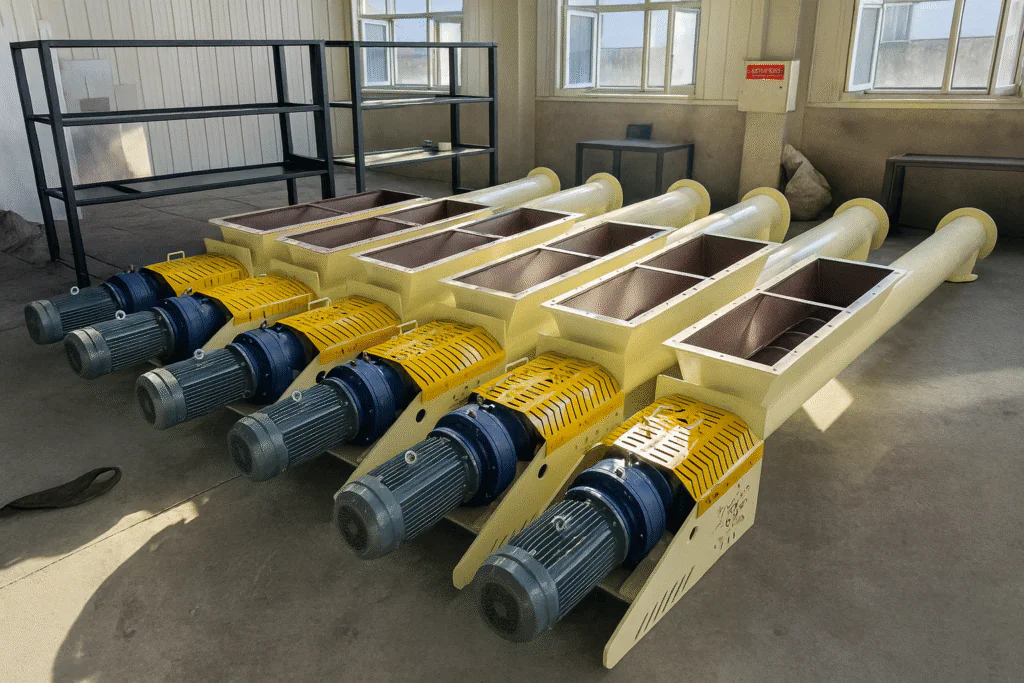
LVRUI Screw Conveyor is a mechanical conveying equipment designed for transporting cement, powder and dry bulk materials in industrial handling systems. LVRUI also provides complete bulk material handling equipment for cement plants and powder processing applications.
Using a rotating screw flight inside a trough or tube, this equipment moves materials smoothly from inlet to outlet. It is commonly used for silo discharge, powder transfer, feeding and short-distance conveying applications.
The diameter, length, inlet and outlet arrangement can be customized according to material characteristics, required capacity and installation layout.
Features
✅ Enclosed or covered conveying design for reduced dust exposure
✅ Customized diameter, length and installation configuration
✅ Horizontal and inclined installation options
✅ Suitable drive selection according to material and capacity
✅ Wear-resistant components for abrasive materials
How Does a Screw Conveyor Work?
The equipment uses a rotating screw flight inside a trough or tube to move bulk materials from the inlet to the outlet. When the motor drives the screw, the rotating flight pushes the material forward along the conveying direction. The trough or tube structure helps maintain controlled material transfer. The conveying performance depends on factors such as screw diameter, speed, installation angle and material characteristics. Proper selection ensures stable material transfer for different industrial applications.
Types of Screw Conveyor
LS Type Screw Conveyor
LS type units are commonly used for horizontal conveying of cement, fly ash, lime powder and other dry bulk materials. The compact structure provides reliable material transfer for cement plants, powder processing and bulk material handling systems.
U-Type Screw Conveyor
U-type units are suitable for conveying powders and dry bulk materials where easy inspection and maintenance are required. The open trough design allows convenient inspection and maintenance.
GL Series Tubular Screw Conveyor
GL series tubular units feature a fully enclosed tube structure for cleaner conveying and flexible installation in powder handling systems. They are suitable for applications where dust control and space-saving layouts are important.
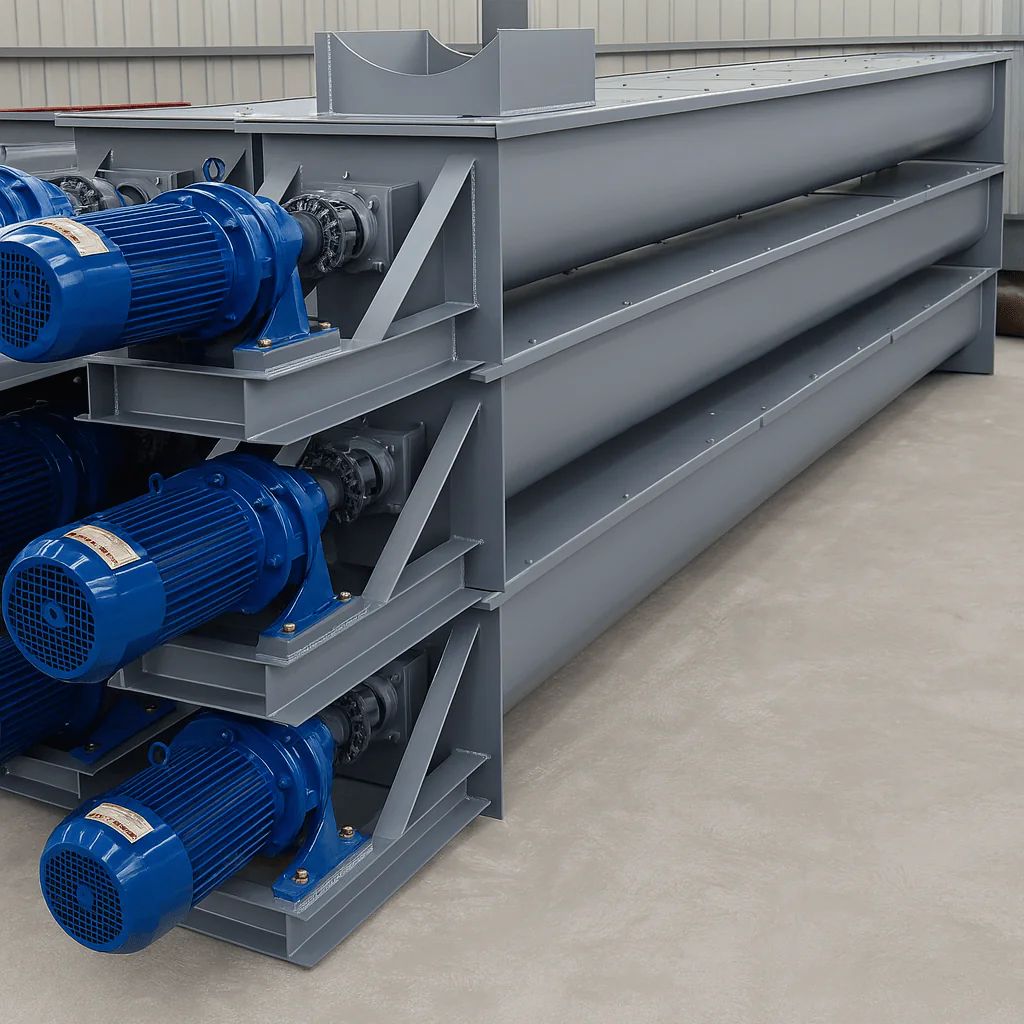
LS Type Screw Conveyor
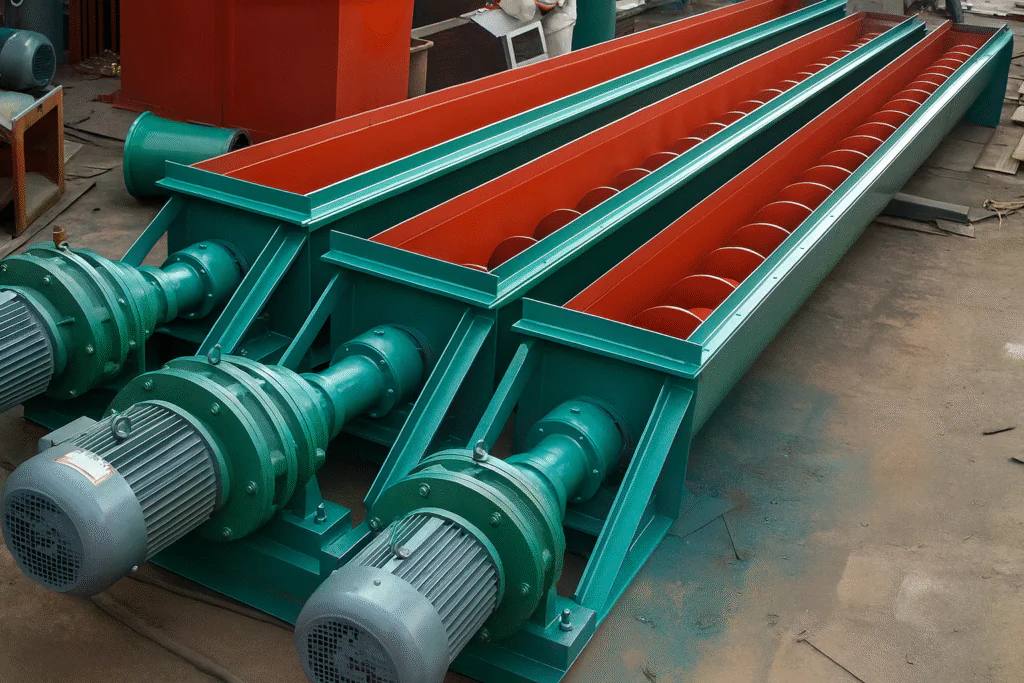
U-Type Screw Conveyor
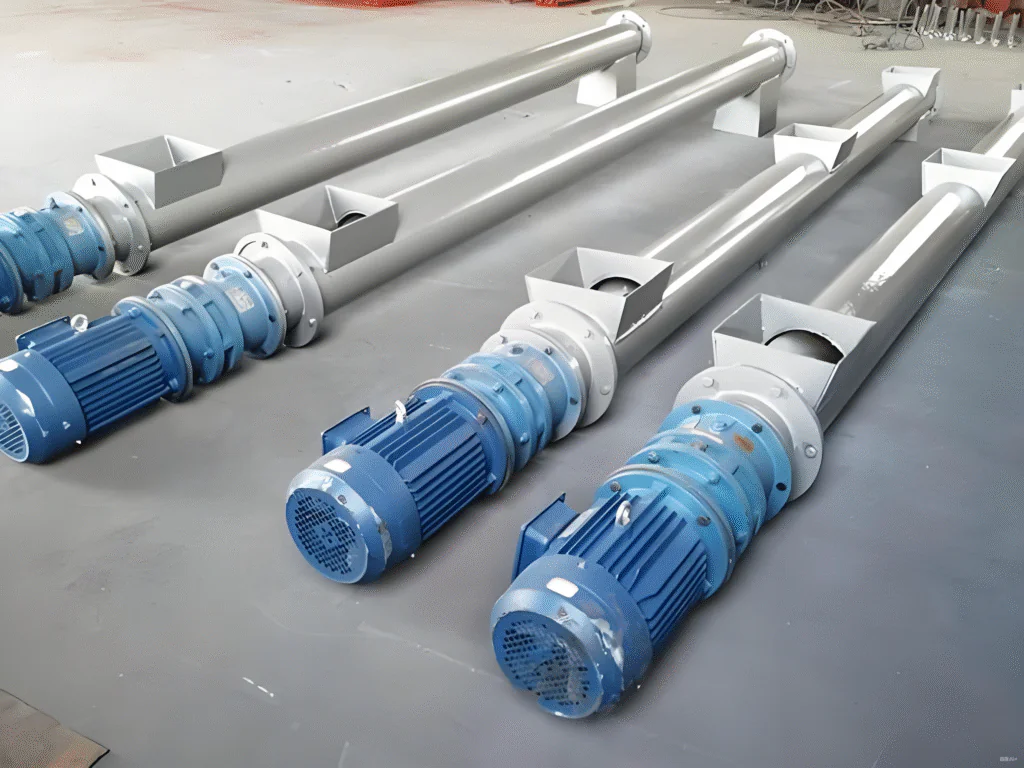
GL Series Tubular Screw Conveyor
Suitable Materials
Standard applications include:
✅ Cement
✅ Fly ash
✅ Lime powder
✅ Gypsum powder
✅ Mineral powder
✅ Dry mortar materials
✅ Collected dust
For clinker, wet materials, sticky powders, high-temperature materials or highly abrasive materials, the conveyor design should be confirmed according to actual operating conditions.
Typical Applications
These units are commonly used in cement and powder handling systems for:
✅ Silo and hopper discharge
✅ Feeding rotary valves and downstream equipment
✅ Conveying powder materials between process equipment
✅ Dust collection and return systems
✅ Short-distance transfer in cement and dry powder production lines
For long-distance conveying of fine aerated powder, an air slide conveyor may be a more suitable solution. The selection depends on conveying distance, material properties and installation conditions.
Screw Conveyor vs Air Slide Conveyor
Both systems are used for conveying dry bulk materials, but they are designed for different operating conditions.
| Screw Conveyor | Air Slide Conveyor | |
|---|---|---|
| Conveying method | Mechanical screw rotation | Air-assisted material fluidization |
| Main application | Short-distance transfer and feeding | Long-distance powder conveying |
| Suitable materials | Cement, powder and dry bulk materials | Fine powders with good fluidity |
| Installation | Horizontal or inclined layouts | Usually installed with a downward slope |
| Moving parts | Screw flight and drive system | Few moving parts |
| Typical applications | Silo discharge, feeding and equipment transfer | Long-distance conveying of fine cement powder |
For compact layouts, equipment feeding and short-distance transfer, a screw conveyor is often a practical choice. For long-distance conveying of fine powders with good flowability, an air slide conveyor may provide lower energy consumption and simpler operation. The final selection depends on conveying distance, material characteristics, capacity requirements and installation conditions.
Screw Conveyor vs Screw Feeder
A conveying system is mainly used for transferring bulk materials from one location to another in a continuous process, while a screw feeder is designed to control material discharge from a hopper, silo or bin. It is designed to control material discharge from a hopper, silo or bin at a controlled feeding rate.
Although both use a rotating screw mechanism, the design requirements are different. Equipment selection mainly focuses on conveying distance, capacity and installation layout, while feeder design requires more attention to feeding accuracy and inlet loading conditions. For applications requiring simple material transfer, a screw conveyor is usually the preferred solution.
Screw Conveyor Selection Information
To recommend a suitable solution, please provide:
| Required Information | Details |
|---|---|
| Material | Material name, bulk density, particle size and moisture condition |
| Required Capacity | Required conveying capacity (t/h, kg/h or m³/h) |
| Conveying Length | Horizontal or inclined conveying distance |
| Installation Angle | Horizontal or inclined installation |
| Screw Diameter (if available) | Existing size or required conveyor dimensions |
| Inlet and Outlet Arrangement | Quantity, location and connection dimensions |
| Material Temperature | Normal or special temperature conditions |
| Construction Material | Carbon steel, stainless steel or special requirements |
| Feeding Equipment | Hopper, silo, valve or upstream equipment |
| Layout Drawing | Installation drawing or process layout if available |
Material type and required capacity alone are not enough for accurate selection. Installation angle, inlet conditions and outlet resistance can also affect conveyor performance. For complete powder handling projects, LVRUI can also provide powder transfer systems.
Screw conveyor design and dimensional practices are commonly referenced according to industry standards such as CEMA guidelines.

Manufacturing and Customization
LVRUI provides customized conveying solutions according to different material characteristics, conveying requirements and installation conditions.
Customization options include:
✅ Conveyor length and diameter according to required capacity
✅ U-type or tubular structure according to installation conditions
✅ Customized inlet, outlet and connection arrangement
✅ Carbon steel, stainless steel and wear-resistant material options
✅ Suitable drive and reducer configuration according to operating requirements
Before production, technical details such as material properties, capacity requirements and installation dimensions are confirmed to ensure the conveyor matches the actual application.
Screw conveying system FAQs
What materials can a screw conveyor handle?
Screw conveyors are commonly used for conveying cement, fly ash, lime powder, mineral powder, dry mortar materials and other dry bulk materials.
Material characteristics such as moisture, particle size and abrasiveness should be considered during selection.
What is the difference between U-type and tubular screw conveyor?
U-type designs use an open trough structure, providing easy inspection and maintenance for general conveying applications.
Tubular screw conveyors use a fully enclosed tube structure, making them suitable for powder materials where dust control and compact installation are important.
Can a screw conveyor be installed at an angle?
Yes. These units can be designed for inclined conveying applications.
The conveying capacity may vary depending on the installation angle, screw speed and material characteristics.
How do I select the correct screw conveyor size?
Selection depends on material type, required capacity, conveying length, installation angle, inlet/outlet arrangement and operating conditions.
Providing these parameters helps determine a suitable screw diameter, speed and drive configuration.
What is the difference between a screw conveyor and a screw feeder?
This equipment is mainly used to transfer material from one point to another, while a screw feeder is designed to control material discharge from a hopper or silo at a controlled rate.
For general powder transfer and short-distance conveying, a screw conveyor is usually the preferred solution.
Need Help Selecting a Screw Conveyor?
Send LVRUI your material type, required capacity, conveying length, installation layout and operating conditions. We will recommend a suitable diameter, length and configuration for your application.
✅ Conveyor selection based on material characteristics and capacity requirements
✅ Customized length, inlet, outlet and installation arrangement
✅ Suitable drive and reducer configuration
✅ Technical support for screw conveyor selection and installation requirements