
Ship Loading Spouts for Existing Ship Loading Systems
Telescopic spouts for loading bulk materials into ships and barges
Overview
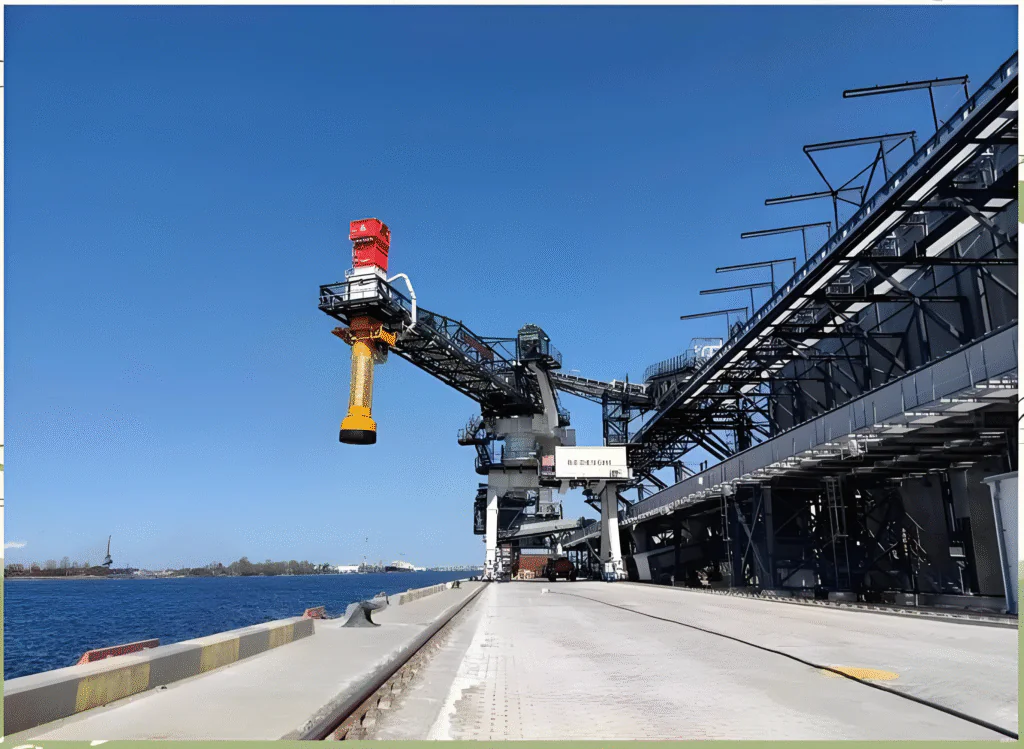
Ship loading spouts are installed at the discharge point of an existing conveyor or ship-loading system to guide bulk materials into ships and barges.
LVRUI supplies standalone telescopic loading spouts for integration with existing port equipment. The inlet connection, chute length, telescopic travel, discharge outlet and dust extraction arrangement are selected according to the site layout, material properties and required loading rate.
This approach allows ports and terminals to add or replace the loading spout without treating the entire ship-loading system as part of the spout supply scope.
Key Features
✅ Integration with Existing Loading Systems
Designed to connect to existing conveyor discharge points and ship-loading structures. Inlet interfaces and mounting dimensions are confirmed according to project drawings.
✅ Telescopic Height Adjustment
The operating length and lifting travel are selected according to the ship hold, loading positions and available installation height.
✅ Dust Extraction Connection
The outer sleeve or dust hood can be configured for connection to an existing dust collection system, subject to the selected design.
✅ Customized Inlet and Outlet
Inlet dimensions, discharge outlet and chute arrangement are configured according to the existing system and receiving opening.
Technical Specifications
| Item | Selection Basis |
|---|---|
| Material | Material type, particle size, bulk density and abrasiveness |
| Required Loading Rate | Required throughput and existing upstream feed rate |
| Inlet Connection | Existing conveyor discharge dimensions and mounting interface |
| Extended Length | Distance from the inlet to the required loading position |
| Telescopic Travel | Difference between the highest and lowest operating positions |
| Discharge Outlet | Ship hold opening and loading arrangement |
| Dust Extraction | Existing dust duct, collector and connection requirements |
| Lifting and Control | Required lifting travel, power supply and control interfaces |
Final dimensions and configuration are confirmed according to the existing loading system, vessel layout, material characteristics and approved drawings. Loading capacity depends on the upstream feeding system and the selected chute configuration.
Configuration Options
Ship loading spouts can be configured according to the existing equipment and loading requirements. Depending on the approved design, options may include:
✅ Customized inlet and mounting interfaces
✅ Different telescopic lengths and lifting travel
✅ Open discharge hoods or suitable dust skirts
✅ External dust extraction connections
✅ Material-contact construction selected for the application
✅ Compatible lifting and control arrangements
The final configuration depends on the existing structure, material properties, vessel layout and confirmed supply scope.
Related Equipment
LVRUI ship loading spouts are designed for integration with existing bulk conveying and dust collection systems.
For a broader overview of loading spout configurations for different receiving points, see our Loading Spouts page.
For detailed information on telescopic travel, extended length and retracted height, see our Telescopic Loading Chute page.
For general safety requirements covering spouts, chutes, hoppers and associated equipment at marine terminals, refer to the OSHA Marine Terminals standard
Ship Loading Spouts FAQs
What Is a Ship Loading Spout?
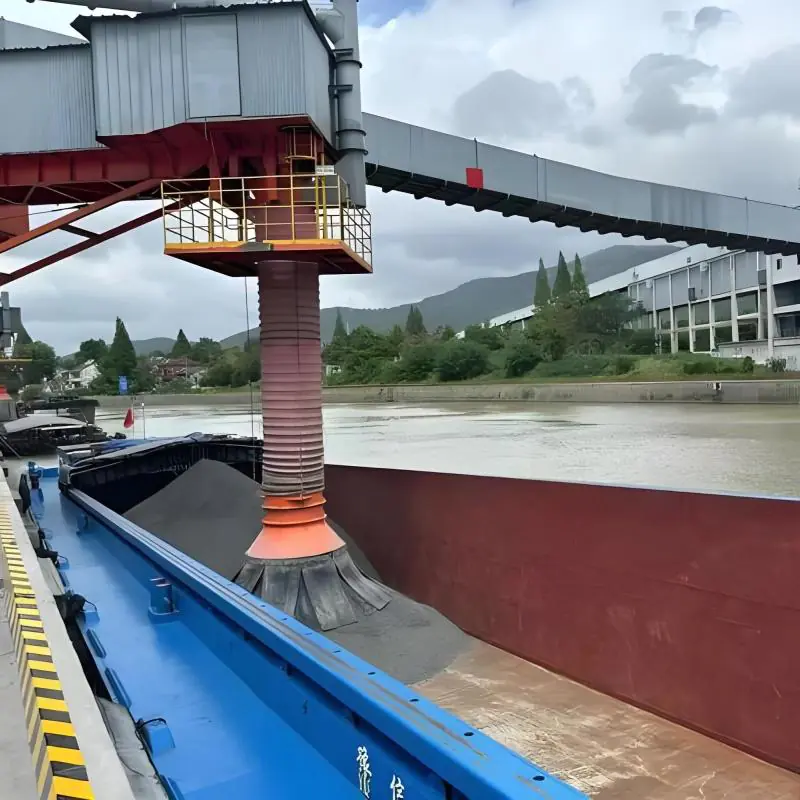
A ship loading spout is a telescopic chute installed at an existing conveyor discharge point to guide bulk materials into a ship or barge hold. Its dimensions and outlet are selected according to the loading position and site layout.
Can a Ship Loading Spout Be Installed on an Existing Loading System?
Yes. A standalone loading spout can be integrated with an existing ship-loading system when the inlet connection, mounting structure, operating height and dust extraction arrangement are compatible.
What Materials Can a Ship Loading Spout Handle?
Suitable materials depend on particle size, flowability, abrasiveness and the chute construction. Cement, clinker and other compatible bulk materials can be considered according to the application requirements.
How Is the Required Telescopic Travel Determined?
The required travel depends on the highest and lowest operating positions, installation height and discharge outlet geometry. A site drawing showing the existing conveyor outlet and ship hold is recommended for accurate selection.
How Is Dust Controlled During Ship Loading?
The spout helps reduce free-fall distance and material dispersion when the outlet is positioned appropriately. An outer sleeve or hood can be connected to a suitable dust extraction system. Actual performance depends on enclosure design, extraction airflow and operating conditions.
Need Help Selecting a Ship Loading Spout?
Send LVRUI your material type, required loading rate, existing conveyor outlet dimensions, required telescopic travel, ship hold layout and site drawings. LVRUI will recommend a suitable ship loading spout configuration, inlet and outlet dimensions, and dust extraction connections for your existing loading system.
✅ Spout dimensions selected according to material and loading requirements
✅ Telescopic length and travel configured for ship hold dimensions and installation height
✅ Customized inlet, outlet and mounting interfaces for existing equipment
✅ Dust extraction connections configured according to site requirements