
Pneumatic Flow Control Gate Valve for Cement Silos & Bulk Materials
Fast and Adjustable Pneumatic Powder Discharge Control
What Is a Pneumatic Flow Control Gate?
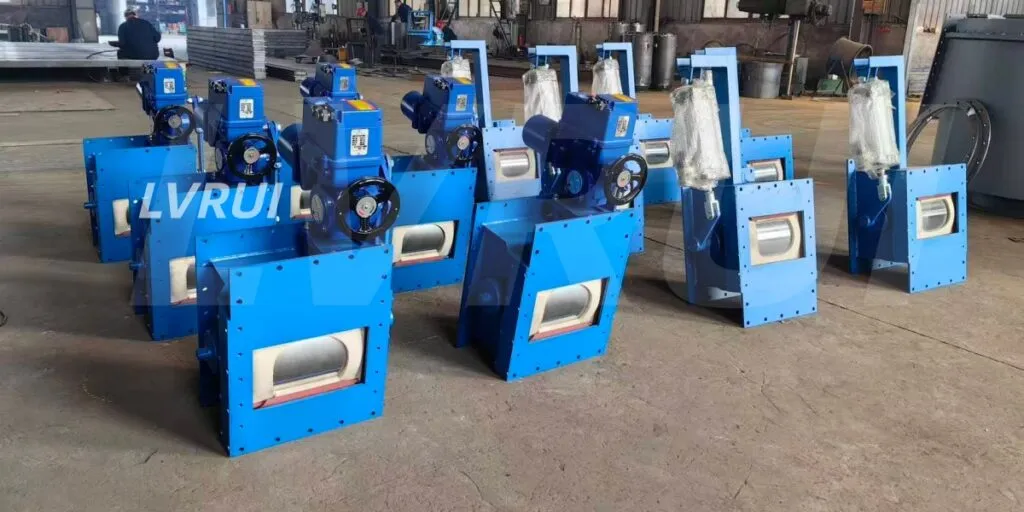
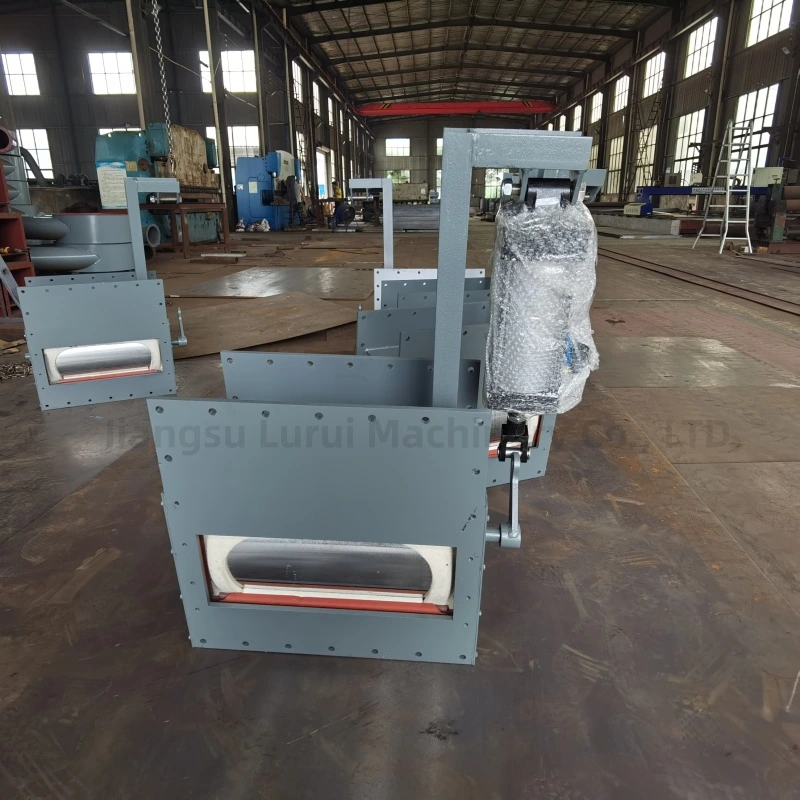
A pneumatic flow control gate is an air-operated valve used to adjust the discharge opening beneath a silo, hopper or bulk powder handling system. It is commonly used for cement, fly ash, raw meal, lime powder and other compatible dry powders where remote operation, fast response and adjustable discharge are required.
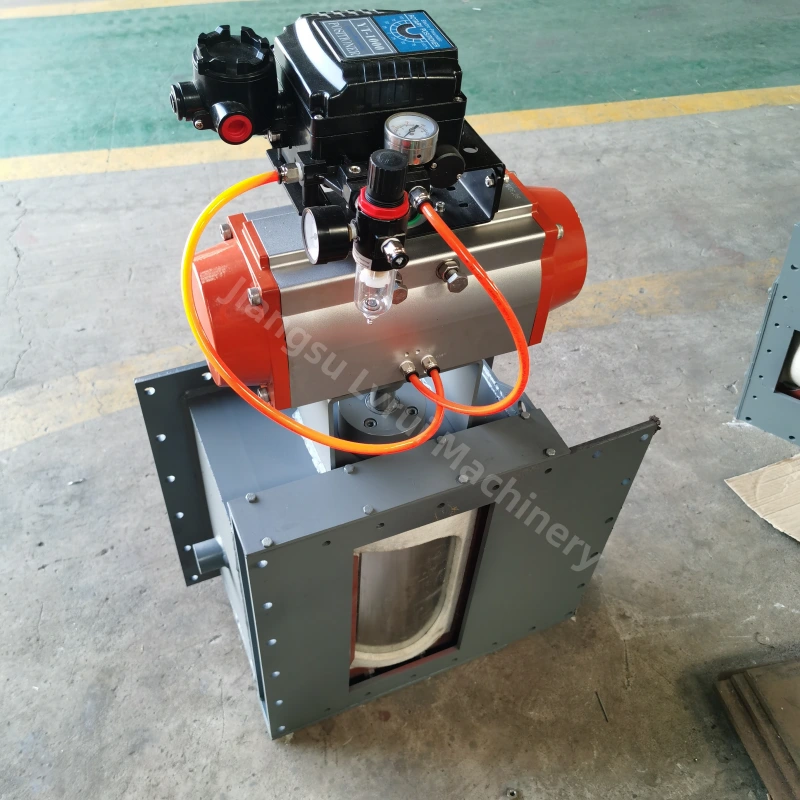
Depending on the actuator and control configuration, the gate can provide simple open-close operation or adjustable opening control. When equipped with a pneumatic positioner, the valve opening can be changed remotely according to the control signal to regulate the amount of material entering downstream equipment.
Learn more about the working principles of pneumatic conveying systems from Britannica’s technical overview of pneumatic conveyors.
Features
✅ Fast Pneumatic Actuation — Suitable for applications requiring quick response and frequent remote operation.
✅ Adjustable Gate Opening — Controls the effective discharge area instead of providing only full-open or full-close isolation.
✅ Optional Position Control — A pneumatic or electropneumatic positioner can be configured when intermediate opening positions are required.
✅ Dust-Controlled Sealing — Sealing components help reduce powder leakage around the valve body during cement and fly ash handling.
✅ Suitable for Dry Powder Discharge — Applicable to cement, fly ash, raw meal, lime powder and other compatible dry powders.
✅ Custom Connection and Actuator Arrangement — Flange dimensions, valve size, actuator orientation and control configuration can be selected according to the installation layout.
Typical Industrial Applications
This valve solution is commonly installed in industrial powder handling processes that require controlled discharge, dust isolation, and stable downstream conveying.
This type of pneumatic discharge control valve is widely used in:
✅ Cement Silo Bottom Discharge
✅ Fly Ash Silo and Hopper Discharge
✅ Raw Meal and Mineral Powder Handling
✅ Air Slide Conveyor Inlet Control
✅ Powder Feeding to Screw Conveyors or Other Downstream Equipment
✅ Automated Cement and Bulk Powder Handling Lines
How Does a Pneumatic Flow Control Gate Work?
The pneumatic actuator rotates the internal flow-control element between the closed and open positions, changing the effective discharge area through the valve.
When an electropneumatic positioner is used, the actuator can respond to a control signal and hold the valve at an intermediate opening position. This allows the amount of cement or other dry powder entering the downstream equipment to be adjusted remotely.
The valve regulates the discharge opening rather than measuring the material flow directly. Actual throughput depends on material properties, silo head, aeration condition, valve opening and downstream equipment.
For a basic explanation of powder flow behavior and material characteristics, refer to the Wikipedia overview of powder materials.
Technical Parameters (Reference)
| Parameter | Recommended Specification |
|---|---|
| Valve Type | Pneumatic Flow Control Gate |
| Application | Dry bulk powder discharge |
| Typical Materials | Cement, fly ash, raw meal, lime powder |
| Valve Body | Carbon steel / according to project |
| Actuation | Pneumatic rotary actuator |
| Opening Control | Open-close or adjustable positioning |
| Positioner | Optional, depending on control requirement |
| Control Signal | 4–20 mA when configured with compatible positioner |
| Position Feedback | Optional |
| Sealing | According to powder and operating condition |
| Air Supply | Confirm according to actuator size and configuration |
| Installation | Silo outlet, hopper outlet, air slide inlet |
| Connection Size | Customized according to project drawing |
How to Select a Pneumatic Flow Control Gate
| Selection Item | What to Confirm |
|---|---|
| Material | Cement, fly ash, raw meal, lime powder, etc. |
| Bulk density | kg/m³ |
| Moisture / flowability | Dry free-flowing or cohesive |
| Abrasiveness | Normal or abrasive powder |
| Silo outlet size | Width / diameter and flange dimensions |
| Required capacity | t/h |
| Control requirement | Open-close or adjustable opening |
| Control signal | PLC / 4–20 mA / limit switch requirement |
| Air supply | Available plant air pressure |
| Downstream equipment | Air slide, screw conveyor, feeder, etc. |
| Installation layout | Actuator orientation and maintenance space |
Advantages
✅ Stable and adjustable powder flow regulation
✅ Fast response speed for automated processes
✅ Strong structure, vibration-resistant
✅ Stable sealing performance for dust control
✅ Suitable for continuous industrial operation
✅ Available in custom sizes for specific applications
Pneumatic vs Motorized Flow Control Gate
| Item | Pneumatic | Motorized |
|---|---|---|
| Drive | Compressed air | Electric actuator |
| Response | Fast | Slower, controlled movement |
| Frequent operation | Very suitable | Suitable |
| Intermediate positioning | Requires suitable positioner/control | Easier to configure |
| Plant utility | Compressed air required | Electrical power required |
| Typical use | Fast automated discharge control | Continuous adjustable opening control |
Pneumatic Flow Control Gate FAQs
What is a pneumatic flow control gate used for?
A pneumatic flow control gate is used to adjust the discharge opening beneath a silo, hopper, or bulk powder handling system. It is commonly applied to cement, fly ash, raw meal, lime powder, and other compatible dry powders where fast remote operation and controlled material discharge are required.
Where is a pneumatic flow control gate typically installed?
Pneumatic flow control gates are commonly installed beneath cement silos, fly ash silos, hoppers, and intermediate bins. They can also be installed upstream of air slide conveyors, screw conveyors, feeders, or other downstream equipment that requires controlled powder feeding.
How is a pneumatic flow control gate different from a slide gate valve?
A standard slide gate valve is mainly used for full-open or full-close material isolation, while a pneumatic flow control gate can change the effective discharge opening to regulate material feeding. The pneumatic actuator also allows faster and more frequent remote operation than a manually operated gate.
Can a pneumatic flow control gate provide adjustable opening positions?
Yes. When equipped with a suitable pneumatic or electropneumatic positioner, the actuator can hold the gate at intermediate opening positions instead of operating only fully open or fully closed. This allows the discharge opening to be adjusted according to the process requirement, although the valve itself is not a precision weighing or metering device.
What air pressure is required for a pneumatic flow control gate?
Typical plant compressed-air pressure is approximately 0.4–0.6 MPa, but the actual requirement depends on the actuator model, valve size, material load, and control configuration. The required air supply should therefore be confirmed during actuator selection rather than treated as a fixed value for every valve.
What is the difference between a pneumatic and motorized flow control gate?
A pneumatic flow control gate is generally preferred when fast response, frequent operation, and plant compressed air are available. A motorized flow control gate is often selected where electrical actuation and controlled intermediate positioning are preferred. Pneumatic gates can also provide adjustable positioning when equipped with a suitable positioner, so the final choice should be based on operating frequency, control requirements, utilities, and system layout.
Discuss Your Pneumatic Flow Control Gate Requirements
Send LVRUI your material name, silo outlet dimensions, required capacity, downstream equipment and control requirements. LVRUI can confirm the suitable valve size, pneumatic actuator, sealing arrangement and control configuration.
✅ Pneumatic actuator selection
✅ Optional position control and feedback
✅ Customized flange and installation dimensions
✅ Technical drawings and remote technical support