
Silo Bottom Air Distributor for Cement Silo Aeration
Configurable Multi-Outlet Air Distribution for Cement Silo Aeration
What Is a Silo Bottom Air Distributor?
A silo bottom air distributor is an air-distribution device that routes air from a common supply line to multiple branches serving different aeration zones beneath a silo.
Depending on its internal design, the distributor can supply air to selected outlets or direct it between branches in a defined sequence. Downstream aeration pads, fluidizing boxes, or other aeration devices introduce the air into the stored powder. The distributor itself does not convey or fluidize the material directly.
LVRUI configures silo bottom air distributors according to the required outlet arrangement, airflow, operating pressure, drive system, and installation dimensions.
Key Features
✅ Multi-Outlet Air Routing — Routes air from a common inlet to multiple aeration branches.
✅ Configurable Outlet Arrangement — Outlet quantities, diameters, and flange positions are selected according to the silo layout.
✅ Drive and Distribution Options — Drive configuration and air-routing sequence depend on the selected model.
✅ System-Specific Dimensions — Inlet, outlet, and installation dimensions are confirmed against the project drawing.
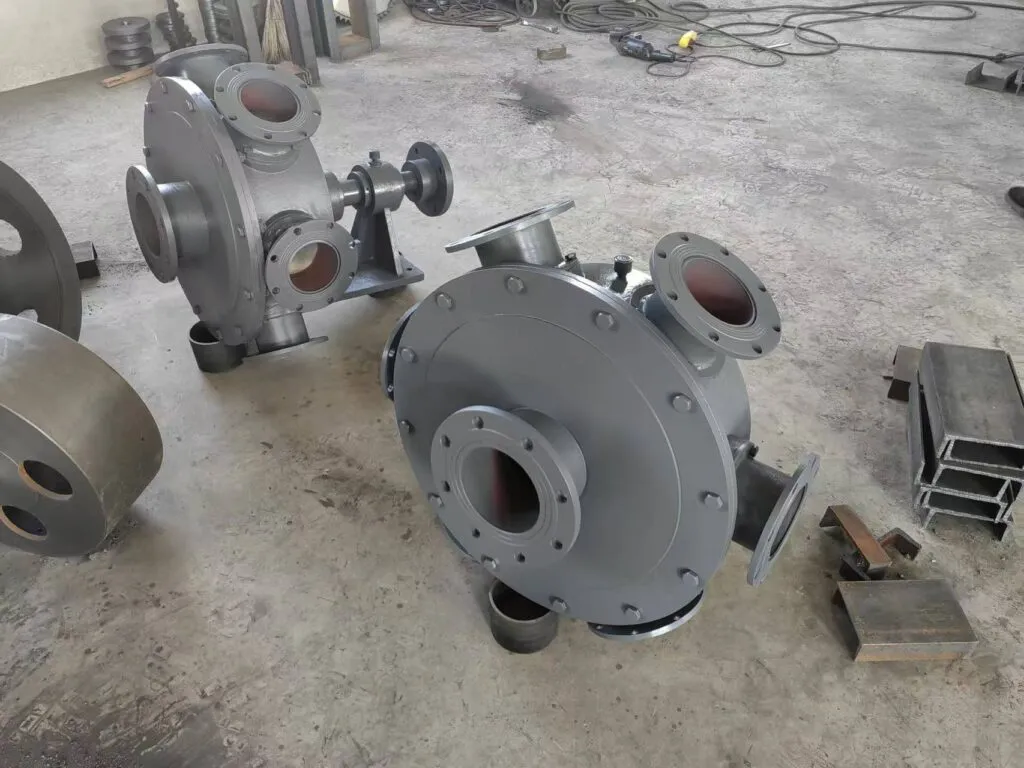
How Does a Silo Bottom Air Distributor Work?
Aeration air from the blower or plant air-supply system enters the distributor through the main inlet. Inside the distributor, the airflow is routed toward the connected outlet branches. These branches then deliver air to the corresponding aeration boxes or aeration pads installed at the silo bottom.
A typical air path can be understood as:
Air Source → Main Air Line → Silo Bottom Air Distributor → Branch Air Pipes → Aeration Zones → Stored Powder
The air distributor itself does not fluidize the powder directly. Fluidization occurs downstream where the aeration device introduces air into the powder bed. This distinction is important when designing a complete silo aeration system: the distributor controls or organizes airflow, while the aeration boxes or fluidizing elements introduce that air into the stored material.
Silo Bottom Air Distributor vs Air Manifold
Although both devices connect one air source to multiple branches, their operating functions may be different.
| Item | Silo Bottom Air Distributor | Simple Air Manifold |
|---|---|---|
| Main Function | Controlled distribution to silo aeration branches | Basic branching of an air line |
| Typical Application | Silo-bottom aeration system | General air piping |
| Outlet Arrangement | Matched to aeration zones | General branch connections |
| Flow Control | According to distributor structure | Usually determined by piping/valves |
| System Integration | Designed around silo aeration layout | Not necessarily silo-specific |
| Configuration | Project-specific inlet/outlet arrangement | Usually simpler |
For distributor models using an internal rotary mechanism, air can be directed sequentially between different outlet branches. In this configuration, the equipment may also be described as a rotary air distributor.
Main Components and Construction
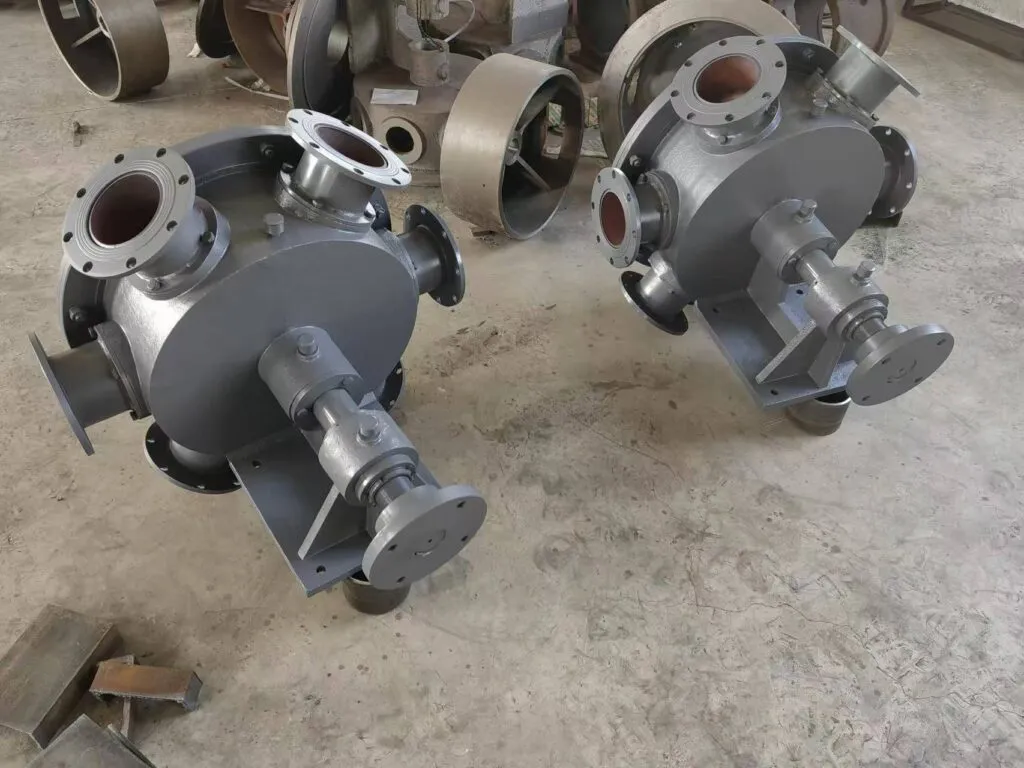
The components and internal arrangement vary by model and required outlet configuration.
A typical silo bottom air distributor may include:
✅ Main air inlet
✅ Distributor housing
✅ Multiple air outlets
✅ Internal air-routing mechanism
✅ Drive assembly where applicable
✅ Inlet and outlet flanges
✅ Supporting structure
The final structure depends on the number of aeration zones and the required air-distribution arrangement.
Technical Specifications
Technical data should be selected according to the actual silo aeration design rather than using one fixed configuration for every project.
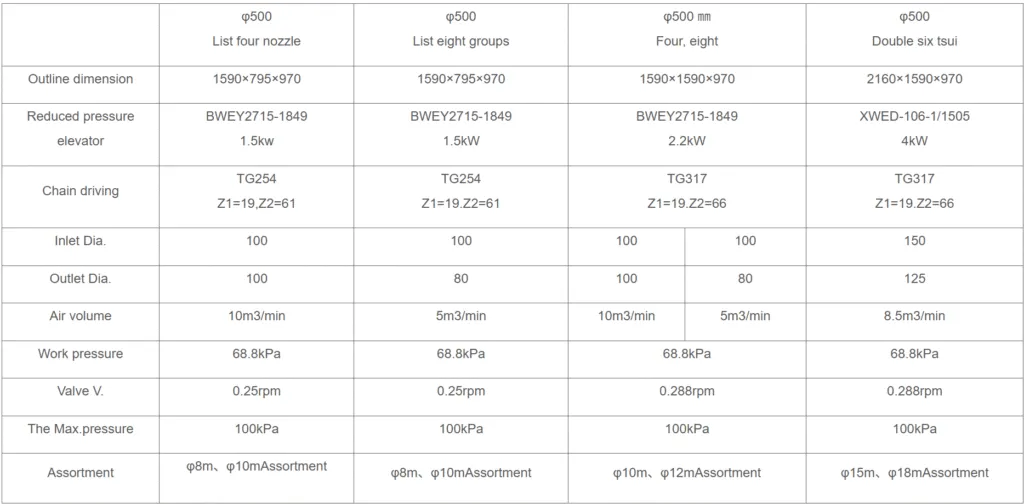
Final inlet size, outlet quantity, airflow, operating pressure and drive configuration should be confirmed from the silo aeration drawing and air-supply conditions.
Typical Applications
Silo bottom air distributors are mainly used where one air supply must serve multiple silo-bottom aeration branches.
Typical applications include:
✅ Cement silo aeration systems
✅ Raw meal silo aeration
✅ Homogenizing silo systems
✅ Multi-zone silo-bottom aeration
✅ Aeration box air-supply systems
✅ Fine-powder silo discharge systems requiring organized aeration
The equipment can be used in systems storing cement, raw meal, fly ash and other compatible fine powders.
However, these materials do not pass through the air distributor. The distributor handles only the aeration air supplied to the downstream fluidizing devices.
How It Fits into a Cement Silo Aeration System
In a complete cement silo bottom discharge system, the silo bottom air distributor works together with aeration devices, flow-control equipment and downstream conveying equipment.
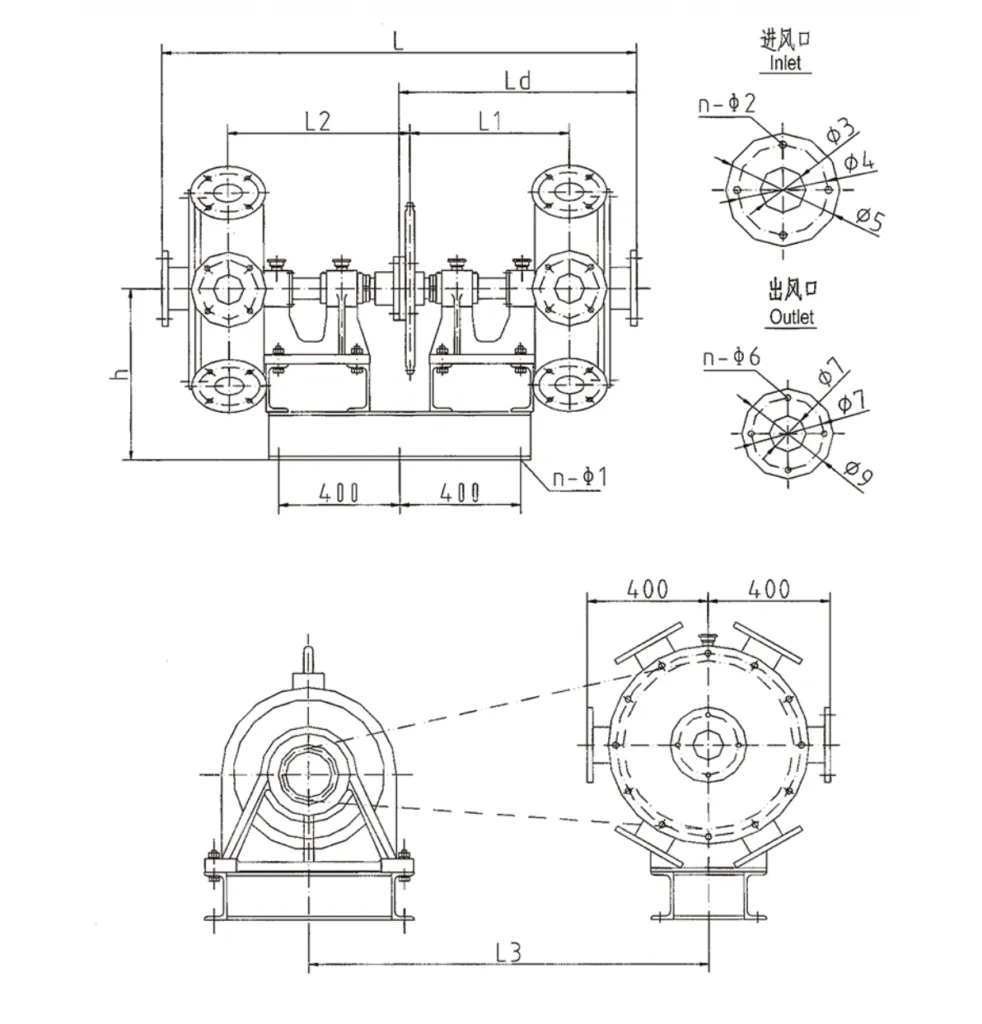
A complete cement silo-bottom discharge arrangement may include several different components, each with a separate function.
Blower or Air Supply
Provides the required airflow and pressure.
↓
Silo Bottom Air Distributor
Routes the air supply to multiple aeration branches.
↓
Aeration Boxes or Fluidizing Devices
Introduce the air into the powder bed.
↓
Stored Cement or Raw Meal
Becomes easier to fluidize and discharge toward the silo outlet.
↓
Flow Control and Downstream Conveying Equipment
Regulates material discharge and transfers the powder to the next process.
The air distributor should therefore be selected as part of the complete aeration arrangement rather than as an isolated valve.
How to Select a Silo Bottom Air Distributor
Select the distributor according to the complete silo aeration layout, not the distributor alone.
Please provide:
✅ Silo type and stored powder
✅ Silo diameter or bottom layout
✅ Number and position of aeration zones
✅ Required outlet quantity and branch-pipe sizes
✅ Available airflow and operating pressure
✅ Required air-distribution sequence, if applicable
✅ Power supply for driven configurations
✅ Silo aeration or piping drawing
LVRUI will review the blower capacity, piping layout, aeration zones, and connection dimensions before confirming the distributor configuration. More outlets do not automatically improve powder discharge. Insufficient airflow, undersized branch pipes, moisture, or blocked aeration devices may also affect performance.
For existing silos, photos and piping drawings can support the configuration review.
For additional engineering background, see this guide to silo design and powder-flow considerations.
Installation and Maintenance
Install the distributor where the main air supply and branch pipes can be connected with acceptable pressure loss and adequate maintenance access.
During installation and inspection:
✅ Confirm airflow direction
✅ Check inlet and outlet dimensions
✅ Follow the designed branch-pipe arrangement
✅ Inspect flange sealing and pipe connections
✅ Provide sufficient maintenance space
✅ Check the drive and internal air-routing mechanism where applicable
Changes to outlet quantity or branch-pipe size should be reviewed against the airflow requirements of the complete aeration system.
Silo Bottom Air Distributor FAQs
What is a silo bottom air distributor used for?
A silo bottom air distributor directs aeration air from a common supply line to multiple branch pipes serving different aeration zones at the bottom of a silo. It is commonly used as part of cement, raw meal and fine-powder silo aeration systems.
Does a silo bottom air distributor convey cement?
No. Cement or other stored powder does not pass through the air distributor. The device handles aeration air and supplies it to aeration boxes or other fluidizing devices installed in the silo system.
What is the difference between a silo air distributor and an aeration box?
A silo air distributor routes air between the main supply and multiple aeration branches. An aeration box is installed at the silo bottom and introduces the supplied air into the powder bed to support fluidization.
Can the number of air outlets be customized?
Yes. The required number and arrangement of outlets should be confirmed according to the number of silo aeration zones, branch-pipe layout and air-supply design.
What working pressure is required for a silo bottom air distributor?
The required pressure depends on the distributor configuration, airflow demand, piping resistance and downstream aeration arrangement. The operating pressure should be confirmed from the complete silo aeration system rather than selected from a universal fixed range.
Need Help Selecting a Silo Bottom Air Distributor?
Send LVRUI your silo aeration layout, number of aeration zones, available airflow and pressure, main air-pipe size, branch-pipe dimensions, required outlet configuration and power supply where applicable. LVRUI will confirm a suitable silo bottom air distributor configuration according to the aeration layout and piping arrangement.
✅ Outlet quantity matched to the aeration zones
✅ Inlet and outlet sizes matched to the piping system
✅ Air-distribution configuration selected for the required arrangement
✅ Installation dimensions confirmed according to the project drawing