
Loading Bellows for Cement and Fine Powder Loading
Flexible Loading Bellows for Tankers and Open Trucks with Dust Extraction Options
What Are Loading Bellows?
Loading bellows are retractable bulk loading devices that use an internal material channel and a flexible outer sleeve to guide dry powder from a silo, hopper or conveyor into a tanker, open truck or railcar. Jiangsu LVRUI Machinery supplies loading bellows for cement, fly ash, lime powder, mineral powder and other dry materials. The length, inlet flange, outlet structure, lifting mechanism, sleeve material, dust extraction connection and level-control arrangement can be customized according to the receiving vehicle and site layout.
Tanker and Open Truck Loading Bellows
| Type | Typical Application | Main Configuration |
|---|---|---|
| Tanker Loading Bellows | Cement, fly ash and fine powder loading into enclosed tankers | Sealing cone, enclosed material path, outer dust sleeve, extraction connection and optional level sensor |
| Open Truck Loading Bellows | Powder or small granules loaded into open trucks and railcars | Flexible dust skirt, adjustable outlet height, outer containment sleeve and material-level control |
A railcar can use either configuration depending on whether the wagon has a closed hatch or an open loading area. The lower outlet structure should therefore be selected according to the receiving opening rather than the vehicle name alone.
Typical applications include cement tanker loading, fly ash truck loading, open truck loading below silos, railcar filling and local powder loading points connected to a dust collection system.
For a complete silo-bottom cement tanker loading system with flow control, level detection and dust collection, see our Cement Bulk Loader.
Key Features
✅ Flexible Outer Bellows
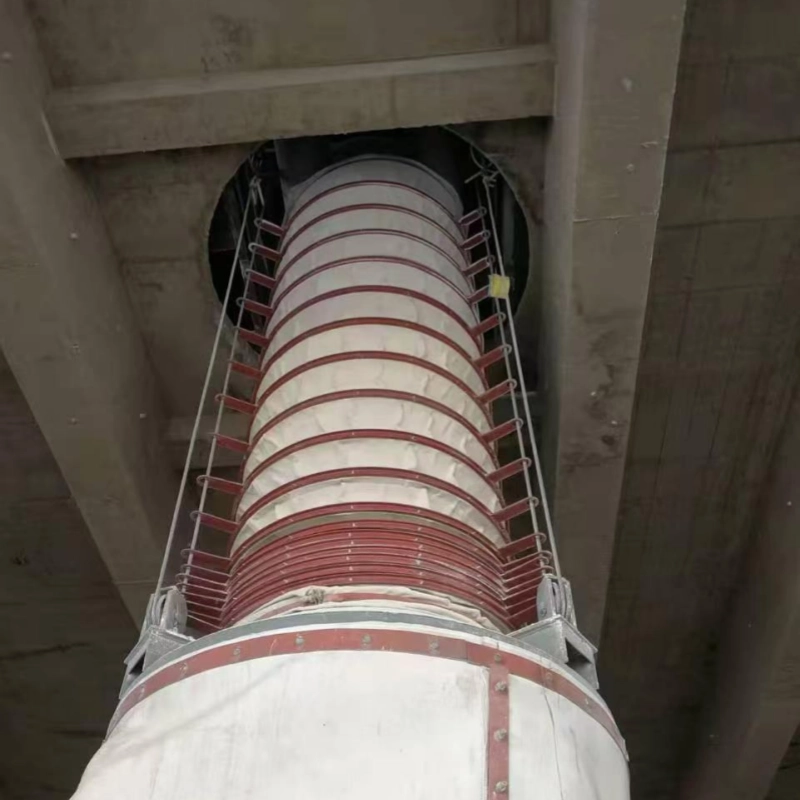
The outer sleeve surrounds the loading zone and provides a return-air path when connected to dust extraction.
✅ Internal Material Guide Structure
Internal cones or telescopic tubes guide the material and separate the product stream from the return-air passage.
✅ Tanker and Open Loading Outlets
A sealing cone is available for tanker hatches, while open loading uses a flexible skirt or outlet cover.
✅ Customized Telescopic Travel
Extended length, retracted height and total travel can be selected according to the installation.
✅ Level and Position Control
Level sensors, limit switches, remote controls and PLC-compatible signals are available when required.
✅ Material and Wear Options
Carbon steel, stainless steel, reinforced cones and different sleeve materials can be selected for the application.
How Do Loading Bellows Work?
Before loading, the lifting mechanism lowers the bellows toward the receiving opening. Material passes through the internal guide cones or telescopic tube, while the flexible outer sleeve surrounds the loading zone.
For tanker loading, the lower cone connects with the tanker inlet. Displaced air and dust can return through the space between the material channel and outer sleeve to an external dust collector or local filter. Local exhaust ventilation should capture airborne dust as close as practical to the point where it is generated.
For open loading, the outlet skirt is kept close to the material surface. An optional level sensor can send a lifting or full-load signal as the material level rises. After loading, the bellows retracts to its upper position.
The equipment does not control material flow by itself. A slide gate, flow control valve, feeder or upstream conveyor may be required to match the loading rate with the bellows diameter and receiving capacity.
Main Components
A typical unit can include:
✅ Upper inlet flange and support frame
✅ Internal guide cones or telescopic tube
✅ Flexible outer bellows or replaceable canvas shroud
✅ Electric winch, cables and lifting mechanism
✅ Tanker sealing cone or open loading skirt
✅ Dust extraction connection
✅ Level sensor, limit switches and control box
The exact arrangement depends on the loading method and whether dust extraction is supplied by the customer’s central system or included in the order.
Suitable Materials and Operating Limits
Loading bellows are mainly suitable for free-flowing dry powders and selected small granules, including cement, fly ash, lime powder, mineral powder, gypsum powder, slag powder, dry mortar ingredients, grain and fertilizer.
Wet, sticky or cohesive materials can build up inside the chute and affect retraction. Coarse clinker, large aggregates, highly abrasive materials or elevated-temperature products may require a heavy-duty telescopic chute or another loading structure rather than standard powder loading bellows.
Loading Bellows vs Loading Spouts vs Telescopic Loading Chutes
These terms overlap in the bulk solids industry, but LVRUI separates the pages according to structure and purchasing intent.
| Term | Main Page Positioning |
|---|---|
| Loading Bellows | Flexible outer sleeve, tanker sealing cone and dust extraction arrangement |
| Loading Spouts | Broad category organized by tanker, truck, railcar, ship, barge and stockpile loading |
| Telescopic Loading Chute | Extended length, retracted height, lifting mechanism and variable travel |
One assembly may contain both a telescopic chute and flexible bellows. Customers should confirm the required structure, travel, receiving opening and dust-control arrangement rather than selecting equipment only from the product name.
Selected Loading Bellows Applications
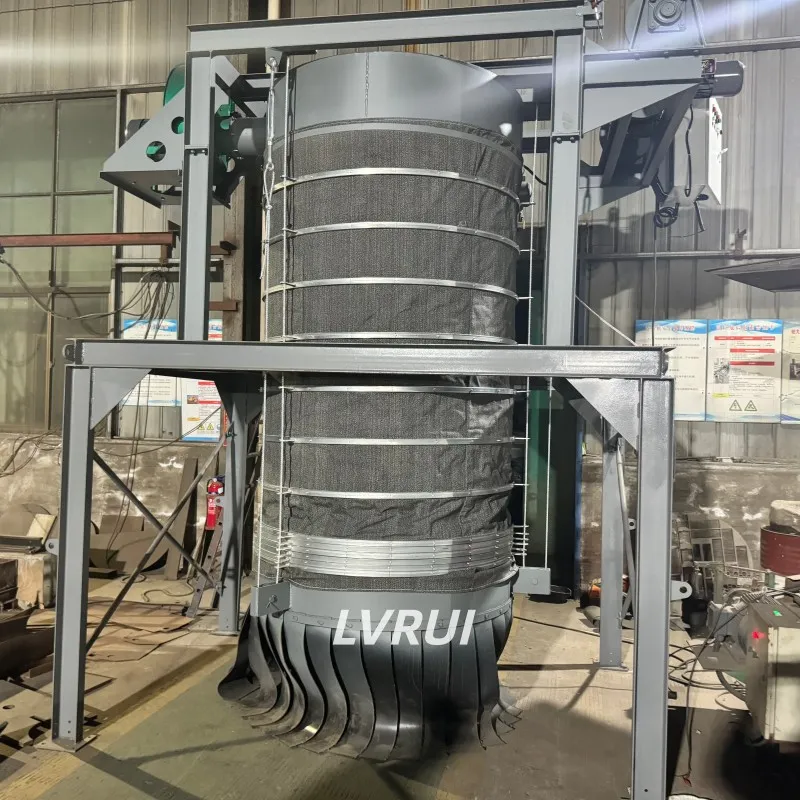
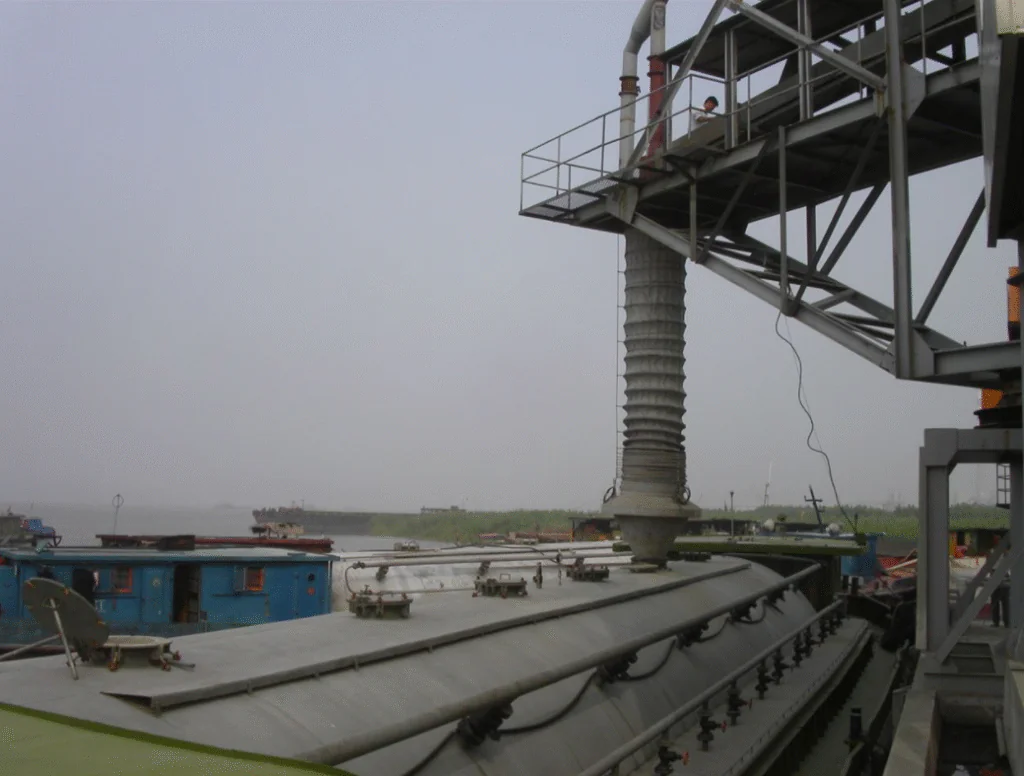
The following photos show loading bellows supplied for tanker, open truck and dry powder loading applications. Each unit was configured according to the customer’s material, loading height, receiving opening and dust-control requirements.
Depending on the order, LVRUI’s supply scope may include equipment manufacturing, lifting and control components, dust extraction connections and export delivery. Site installation and final system integration are normally completed by the customer or local installation team.
Reference Technical Specifications
| Item | Reference Range or Option |
|---|---|
| Loading Capacity | 50–500 t/h |
| Travel / Loading Height | 1,500–6,000 mm |
| Main Steel Structure | Carbon steel or stainless steel |
| Flexible Sleeve | Selected according to material and environment |
| Lifting Method | Manual, electric winch or automated control |
| Outlet Type | Tanker sealing cone or open loading skirt |
| Dust Control | External extraction connection or optional local filter |
| Control | Local, remote or PLC interface |
These values are for preliminary comparison only. Final capacity, diameter, travel, sleeve material and drive configuration depend on bulk density, particle size, loading rate, receiving opening and installation height.
Information Required for Selection
| Required Information | Details |
|---|---|
| Material | Name, bulk density, particle size and moisture |
| Required Capacity | Loading rate in t/h or m³/h |
| Loading Destination | Tanker, open truck or railcar |
| Receiving Opening | Hatch diameter or open loading area |
| Installation Height | Distance from discharge point to vehicle |
| Telescopic Travel | Required extended and retracted length |
| Material Temperature | Normal and maximum temperature |
| Dust Control | Central extraction or local filter requirement |
| Outlet Structure | Sealing cone or open loading skirt |
| Control Mode | Local, remote or PLC control |
| Power Supply | Voltage and frequency |
| Site Information | Layout drawing, photos and connection dimensions |
The receiving opening, telescopic travel, displaced-air volume and available maintenance space can significantly change the final design.
Manufacturing, Inspection and Delivery
LVRUI manufactures each unit according to the approved drawing and agreed supply scope. The supply can include the steel inlet section, internal guide structure, flexible outer sleeve, lifting mechanism, outlet cone, limit switches, level sensor and control components.
Before shipment, the main dimensions, telescopic movement, lifting direction, inlet flange, outlet structure, limit switches and external appearance can be checked.
The equipment is normally supplied as a standalone unit for installation and system connection by the customer or local installation team unless otherwise agreed.
Loading Bellows FAQs
What are loading bellows used for?
Loading bellows load cement, fly ash and other dry bulk materials into tankers, open trucks or railcars while guiding the material stream and helping control displaced air, dust and spillage.
What is the difference between loading bellows and loading spouts?
Loading spouts are a broader category covering several loading destinations. Loading bellows emphasize the flexible outer sleeve, internal guide structure, sealing cone and dust extraction arrangement used for powder loading.
Which loading bellows are suitable for cement tanker loading?
A tanker loading bellows with a sealing cone, enclosed material channel, outer dust sleeve, extraction connection and optional level sensor is normally selected for cement and fly ash tankers.
Can loading bellows be used for open truck loading?
Yes. Open truck loading bellows use a flexible dust skirt or outlet cover instead of a tanker sealing cone. The outlet should remain close to the material surface during loading.
Is a dust collector required for loading bellows?
Fine powders usually require correctly sized extraction airflow and a dust collector. The collector may be part of the customer’s central system or supplied as a local filtration option, depending on the agreed scope.
What information is required for a loading bellows quotation?
Please provide the material, bulk density, particle size, loading capacity, vehicle type, receiving opening, installation height, telescopic travel, temperature, dust-control requirement, control mode, power supply and site drawing.
Need Loading Bellows for Your Application?
Send us your material, required capacity, vehicle type, receiving opening, installation height, telescopic travel and dust-control requirements. LVRUI will recommend a suitable loading bellows configuration based on your operating conditions.
✅ Tanker and open truck configurations
✅ Customized travel, inlet and outlet dimensions
✅ Dust extraction and level-control options
✅ Factory assembly and inspection before shipment