
Louver Damper Valve for Large Duct Airflow Control
Multi-Blade Damper for Baghouse, Kiln Exhaust and Industrial Ventilation Systems
What Is a Louver Damper?
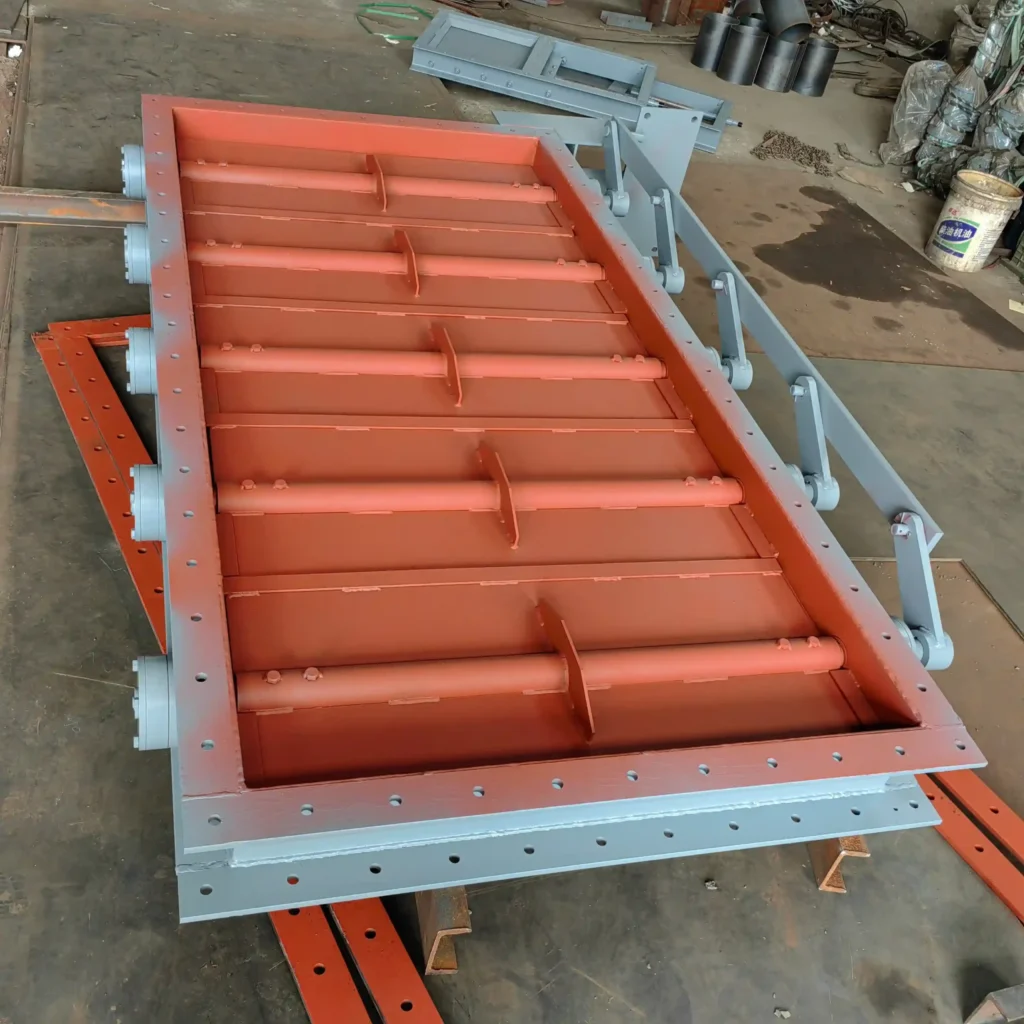
A louver damper is a multi-blade airflow control device installed inside an industrial duct to regulate, balance or isolate air and gas flow. Multiple blades are connected through a linkage mechanism and rotate together to change the available flow area.
Louver dampers are commonly used in baghouse ducts, dust collection systems, kiln and preheater exhaust lines, furnace and boiler ducts, fan systems and other large industrial ventilation networks.
Parallel-blade and opposed-blade arrangements can be selected according to the required airflow pattern and control function. Manual, electric or pneumatic actuation can also be configured according to damper size, operating frequency and automation requirements.
For a broader comparison of damper structures and airflow-control applications, see our industrial damper valves overview.
How Does a Louver Damper Work?
A louver damper regulates airflow by rotating multiple blades mounted across the duct opening. As the blades move from closed to open, the available flow area increases and allows more air or gas to pass through the duct.
The blade arrangement affects how airflow changes during modulation. Parallel blades rotate in the same direction, while opposed blades rotate adjacent blades in opposite directions.
Parallel-blade dampers are commonly used where isolation and straightforward airflow control are required. Opposed-blade dampers generally provide a more uniform airflow profile during partial opening and are well suited to balancing and modulation applications.
Key Features of Louver Damper Valve
| Feature | Engineering Value |
|---|---|
| Multi-Blade Structure | Provides gradual airflow adjustment across large duct sections. |
| Parallel or Opposed Blade Design | Allows the blade arrangement to be selected according to isolation, balancing or modulation requirements. |
| Large Duct Configuration | Suitable for round, square and rectangular industrial duct systems. |
| Manual, Electric or Pneumatic Operation | Supports local operation, remote control and automated system integration. |
| High-Temperature Configuration | Heat-resistant materials, reinforced blades and protected shaft arrangements can be selected for hot-gas applications. |
| Custom Sealing and Connection Design | Shaft sealing, flange sealing and customized duct connections can be selected according to operating conditions. |
Technical Specifications
| Specification Item | Recommended Details |
|---|---|
| Damper Type | Multi-blade louver damper for industrial airflow control and dust extraction systems. |
| Blade Type | Parallel-blade or opposed-blade design according to airflow control requirements. |
| Duct Size / Diameter | DN400–DN3000 as common range; larger round or rectangular duct sizes can be customized. |
| Body Material | Carbon steel, stainless steel, heat-resistant steel, or customized material according to site conditions. |
| Blade Material | Carbon steel, stainless steel, reinforced steel, or heat-resistant blade design for hot gas ducts. |
| Operation Method | Manual / electric / pneumatic; optional PLC/DCS integration according to control requirements. |
| Working Pressure | Low-pressure and large-air-volume duct systems; pressure condition should be confirmed before quotation. |
| Temperature Range | Standard or high-temperature configuration according to actual gas temperature and material requirements. |
| Sealing Design | Standard sealing, low-leakage design, shaft sealing, flange sealing, or customized sealing structure. |
| Control Feedback | Optional limit switch, position indicator, open/close signal, 4–20 mA position feedback, or PLC/DCS integration. |
| Installation Method | Flange connection, welded duct connection, or customized interface for round or rectangular ducts. |
| Typical Applications | Baghouse systems, dust collectors, kiln exhaust ducts, furnace lines, boiler exhaust, cement plant ventilation, and industrial exhaust systems. |
| Customization Data Required | Duct size, airflow volume, temperature, dust concentration, pressure condition, actuator type, flange drawing, and installation direction. |
For systems handling combustible dust, plant-specific hazard assessment and applicable safety requirements should also be considered. See the OSHA combustible dust guidance for general background information.
Louver Dampers Control Airflow, Not Direct Powder Discharge
A louver damper is designed primarily for air, exhaust gas and dust-laden airflow inside industrial ducts. It is not normally used as the main shut-off or regulating device for cement powder, fly ash or other bulk solids discharged directly from a silo or hopper.
For direct powder discharge, a flow control gate valve or slide gate valve is normally more appropriate, depending on whether the process requires flow regulation or simple isolation.
Parallel Blade vs Opposed Blade Louver Damper
| Selection Factor | Parallel Blade | Opposed Blade |
|---|---|---|
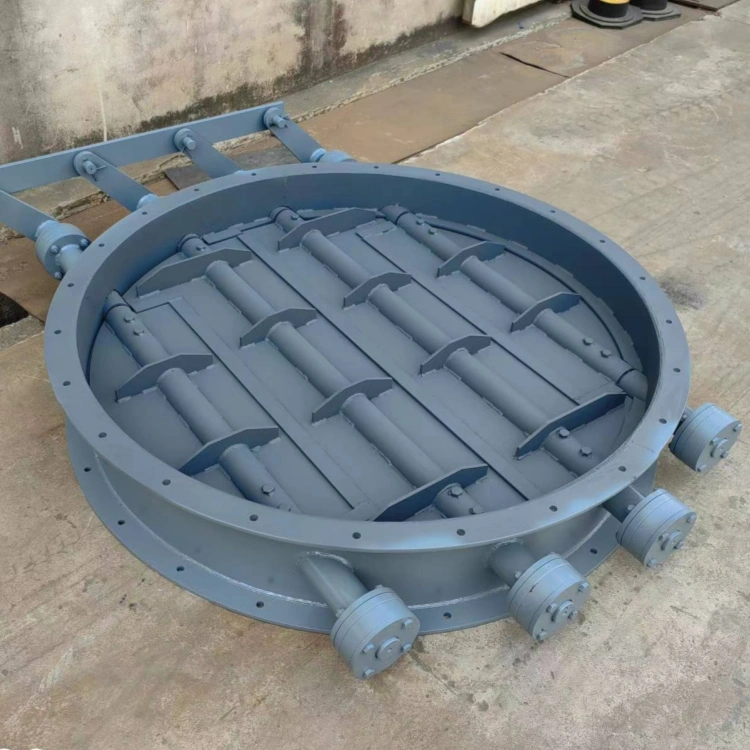
| Blade Movement | All blades rotate in the same direction | Adjacent blades rotate in opposite directions |
| Airflow Pattern | Tends to redirect airflow during partial opening | Provides a more uniform airflow profile |
| Typical Control | Isolation and general regulation | Balancing and modulation |
| Typical Application | Exhaust ducts and isolation branches | Baghouse branches and large process ducts |
| Selection Priority | Straightforward operation and isolation | More gradual airflow adjustment |
Parallel-blade dampers are generally suited to isolation and general duct control. Opposed-blade dampers are commonly selected where smoother modulation and more uniform airflow distribution are required.
Typical Installation Positions
| Installation Position | Main Purpose | Related Equipment |
|---|---|---|
| Baghouse Inlet / Outlet Duct | Balances air volume entering or leaving the baghouse and supports stable filtration. | Bag filter, pulse jet filter, dust collection system. |
| Baghouse Branch Duct | Balances airflow between different filter chambers or dust extraction points. | Baghouse, branch duct, fan system. |
| Kiln Exhaust Duct | Regulates hot gas flow and helps stabilize process exhaust conditions. | Rotary kiln, preheater, clinker cooler. |
| Furnace or Boiler Exhaust Line | Regulates hot-gas exhaust flow in furnace and boiler duct systems. | Furnace, boiler, heat recovery system, exhaust fan. |
| Large Industrial Ventilation Duct | Controls or balances high-volume airflow in process ventilation systems. | Ventilation network, process fan, industrial exhaust line. |
| Dust Collector Branch Line | Adjusts suction airflow at different dust extraction points. | Cyclone, dust collector, transfer point, hopper. |
| Fan Inlet / Outlet Duct | Controls system air volume and pressure before or after the fan. | Induced draft fan, exhaust fan, process fan. |
| Cement Plant Process Duct | Regulates airflow around mills, packing plants, silos, and material transfer points. | Cement mill, raw mill, silo, packing plant, loading station. |
How to Select the Right Louver Damper Valve
| Selection Factor | What to Confirm | Why It Matters |
|---|---|---|
| Duct Size and Shape | Round, rectangular, or square duct size; flange standard; available installation space. | Louver dampers are often used in large ducts, so accurate duct data is essential. |
| Airflow Volume | Air volume, velocity, fan capacity, pressure condition, and required regulation range. | Airflow data affects blade size, torque, pressure loss, and control accuracy. |
| Blade Arrangement | Parallel blade or opposed blade design. | Blade arrangement affects airflow pattern, balancing performance, and modulation smoothness. |
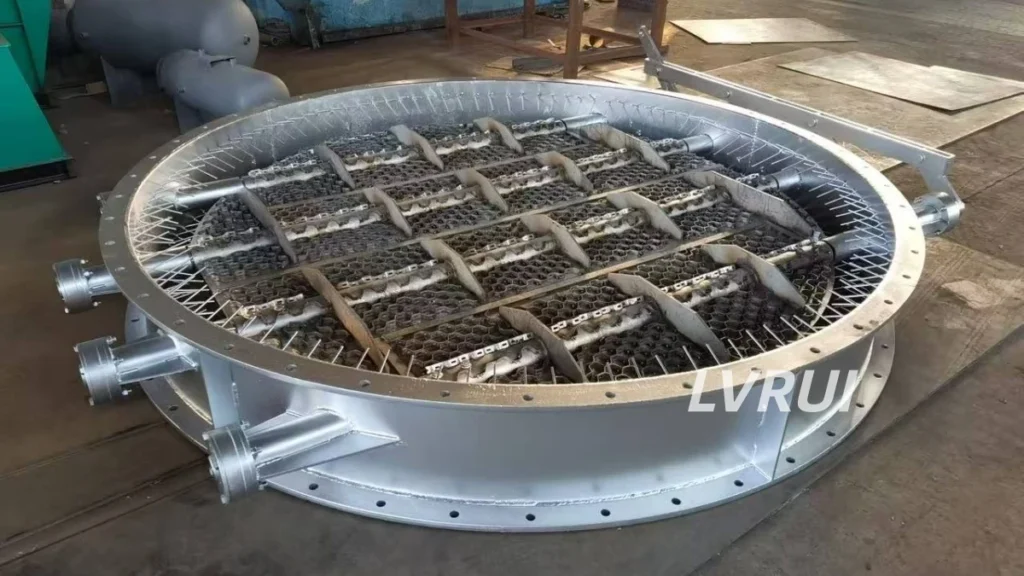
| Operating Temperature | Normal temperature, peak temperature, hot gas, kiln exhaust, furnace exhaust, or boiler exhaust. | High-temperature ducts require heat-resistant materials, reinforced blades, and protected shaft design. |
| Dust Concentration | Cement dust, fly ash, kiln dust, mineral powder, coal dust, abrasive particles. | Dust load affects sealing, shaft protection, maintenance frequency, and service life. |
| Control Purpose | Airflow balancing, throttling, isolation, shut-off, or automatic regulation. | Different control purposes require different blade structures, sealing levels, and actuators. |
| Actuator Type | Manual, electric or pneumatic; confirm any PLC/DCS or position-control requirements. | The actuator should match operation frequency, response speed, and automation level. |
| Sealing Requirement | Standard sealing, low-leakage design, shaft sealing, or flange sealing. | Better sealing reduces uncontrolled air leakage and improves system efficiency. |
| Control Feedback | Limit switch, position indicator, open/close signal, or 4–20 mA position feedback. | Feedback is important for automatic control and central monitoring. |
To select the right louver damper valve, buyers should confirm duct size, airflow volume, blade arrangement, operating temperature, dust concentration, control purpose, actuator type, sealing requirement, and control signal before quotation.
Louver Damper vs Butterfly Damper
| Selection Factor | Louver Damper | Butterfly Damper |
|---|---|---|
| Blade Structure | Multiple linked blades | Single rotating blade |
| Typical Duct | Large process and ventilation ducts | Compact round or rectangular ducts |
| Airflow Control | Multi-blade modulation and balancing | General airflow regulation and isolation |
| Installation | Requires linkage space | Compact structure |
| Typical Use | Baghouse, kiln, preheater and large process ducts | Dust ducts, cyclone outlets and fan lines |
A louver damper is generally selected where a large duct requires multi-blade airflow modulation or balancing. A butterfly damper may be more suitable where compact construction and straightforward airflow control are priorities.
Louver Damper FAQs
What is a louver damper valve used for?
A louver damper valve is used to regulate, balance, or isolate airflow in large industrial ducts, baghouse systems, dust collectors, kiln exhaust ducts, furnace lines, boiler exhaust systems, and cement plant ventilation networks.
What is the difference between a louver damper valve and a butterfly damper valve?
A louver damper valve uses multiple linked blades and is generally better suited to large ducts requiring airflow balancing or multi-blade modulation. A butterfly damper uses a single rotating blade and is typically selected where compact construction and straightforward airflow regulation or isolation are priorities.
When should I choose a louver damper instead of a butterfly damper?
Choose a louver damper when the duct is large, airflow volume is high, or multi-blade modulation and more uniform airflow distribution are required. A butterfly damper may be more suitable where compact construction and simpler airflow regulation or isolation are priorities.
Are louver dampers suitable for high-temperature applications?
Yes. High-temperature louver dampers can be designed with heat-resistant steel, reinforced blades, external bearings, protected shafts, and proper sealing for kiln, furnace, boiler, and hot gas exhaust ducts.
Which actuator should be used for a louver damper valve?
Manual actuators are suitable for local and low-frequency adjustment. Electric actuators are commonly used for remote positioning, modulation and PLC/DCS integration, while pneumatic actuators are suitable for frequent switching or interlocked operation. The actuator should be selected according to damper size, required torque, operating frequency and control requirements.
What information is needed for quotation?
Please provide duct size and shape, airflow volume, operating temperature, dust concentration, pressure condition, blade arrangement, actuator preference, sealing requirement, flange drawing, and control signal requirements.
What is the difference between parallel blade and opposed blade louver dampers?
Parallel blade louver dampers rotate all blades in the same direction and are suitable for isolation and general airflow regulation. Opposed blade louver dampers rotate adjacent blades in opposite directions and provide a more uniform airflow profile during partial opening, making them more suitable for airflow balancing and modulation in large ducts and baghouse systems.
Can a louver damper valve work with a bag filter system?
Yes. A louver damper valve can be installed before or after a bag filter system to regulate inlet airflow, balance branch ducts, isolate filter chambers, or support stable negative pressure control. The damper size, blade design, sealing structure, and actuator should be selected according to air volume, dust load, temperature, and pressure condition.
Discuss Your Louver Damper Requirements
Please provide the duct size and shape, airflow volume, operating temperature, pressure condition, dust or gas characteristics, required control function, blade arrangement and preferred actuation method. LVRUI can review the damper dimensions, parallel or opposed blade arrangement, body and blade materials, shaft and sealing structure, actuator configuration and duct connection before quotation.
✅ Parallel or opposed blade configuration
✅ Manual, electric or pneumatic actuation
✅ Round, square or rectangular duct connection
✅ Carbon steel, stainless steel or heat-resistant construction
✅ PLC/DCS control options according to project requirements