
Bulk Loading System for Cement, Fly Ash & Dry Bulk Materials
Bulk Loading Systems for Trucks and Tankers, with Optional Flow Control, Dust Collection and Level Detection
What Is a Bulk Loading System?
A bulk loading system coordinates material feeding, flow control, loading, dust extraction, level detection and electrical interlocks at a truck or tanker loading station. It is typically installed below a storage silo, hopper or upstream conveying system to transfer dry bulk materials into a receiving vehicle safely and efficiently.
Unlike a standalone loading spout, a bulk loading system may combine several pieces of equipment, including a telescopic loading spout, flow control gate, dust collector, level sensor, lifting device and control system. The exact equipment scope depends on the material, loading capacity, vehicle type and existing plant arrangement.
LVRUI configures bulk loading equipment for cement, fly ash, lime powder, mineral powder, dry mortar and similar bulk materials. The system can be connected to existing silos, air slide conveyors, screw conveyors or other upstream feeding equipment.
Working Principle
Material is discharged from the silo or upstream conveyor through a flow control gate or other feeding device. Before loading starts, the loading spout is lowered to the required receiving position.
During loading, the upstream equipment controls material flow while the loading spout provides a contained discharge path. Displaced air and airborne dust are directed toward an integrated or external dust collection system.
Limit switches control the loading spout travel, while a high-level sensor or weighing signal can stop upstream feeding when loading is complete. After residual material clears the chute, the loading spout retracts to its parked position.
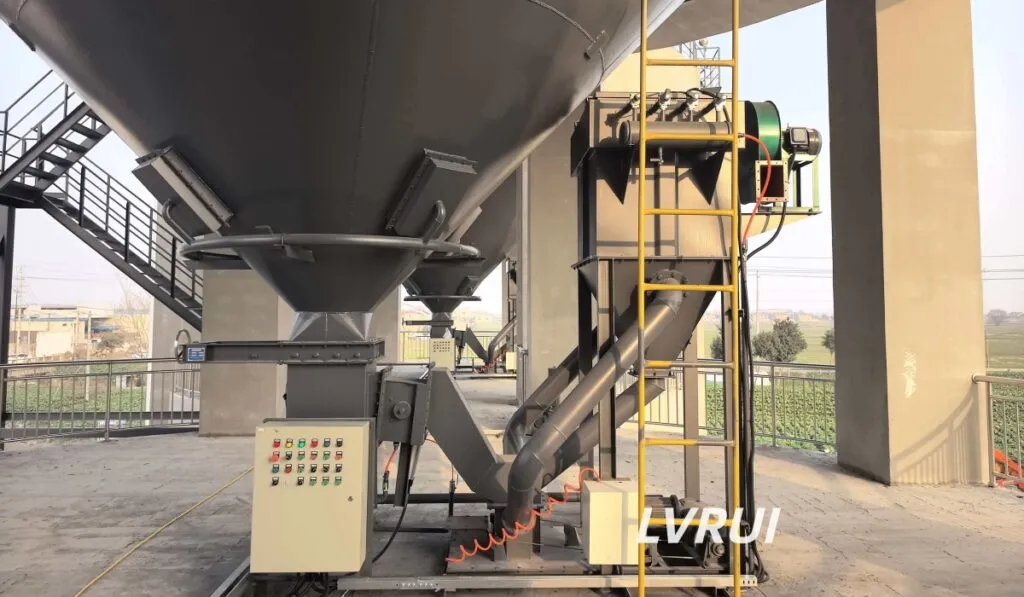
NIOSH guidance on bulk-loading dust control notes that telescoping loadout spouts, reduced drop height and local exhaust ventilation can help reduce dust generation during bulk loading.
Main Components of a Bulk Loading System
A bulk loading system can include the following equipment depending on the required project scope:
✅ Telescopic loading spout or loading chute – guides material into the truck, tanker or other receiving point.
✅ Flow control gate or feeding device – regulates the material feed rate from the silo or upstream conveyor.
✅ Dust collection system – captures displaced air and airborne dust generated during loading.
✅ Level sensor or external weighing-system signal – provides the loading-stop input according to the selected control logic.
✅ Electric winch or lifting device – controls extension and retraction of the loading spout.
✅ Vehicle interface – a sealing cone can be used for closed tanker loading, while a flexible skirt or shroud is typically used for open loading.
✅ Control panel and electrical interlocks – coordinate feeding, dust extraction, lifting and loading-stop functions.
✅ Optional upstream conveying equipment – such as an air slide conveyor or screw conveyor where required.
The final scope depends on whether the customer requires only the loading-point equipment or a coordinated system including upstream feeding, dust extraction, level control and electrical interlocks.
Bulk Loading System Configuration Options
The system configuration depends on the receiving vehicle, material properties, existing plant equipment and required control functions.
✅ Receiving arrangement: closed tanker, open truck or other loading point
✅ Installation layout: under-silo, platform-mounted or connected to existing conveying equipment
✅ Loading requirements: required capacity, loading height and spout travel
✅ Material conditions: bulk density, particle size, temperature and abrasiveness
✅ Dust collection: connection to an existing collector or an agreed dust-collection arrangement
✅ Control requirements: local operation, remote signals and PLC-compatible interfaces
✅ Supply scope: loading-point equipment only or a coordinated system with agreed upstream and control interfaces
Information Required for Bulk Loading System Selection
Selecting a bulk loading system requires more than confirming the loading capacity. Material characteristics, receiving vehicle, silo interface, loading height, dust-control requirements and control signals must be considered together.
Before quotation, please provide the following information where available:
| Required Information | Why It Matters |
|---|---|
| Material | Confirms whether the system is suitable for cement, fly ash, lime, mineral powder or other dry bulk materials |
| Bulk density | Helps verify loading capacity and equipment size |
| Particle size | Affects flowability, dust generation and outlet structure |
| Moisture content | Helps identify possible bridging, sticking or flow problems |
| Material temperature / abrasiveness | Determines whether wear-resistant or heat-resistant components are required |
| Required loading capacity | Determines feeding and loading equipment requirements |
| Silo or conveyor outlet size | Confirms the upstream connection dimensions |
| Truck or tanker inlet / loading area | Determines the required outlet structure and interface |
| Installation height and required travel | Determines loading spout extension and lifting range |
| Existing dust collection system | Confirms the dust connection and available extraction arrangement |
| Control requirements | Determines local, remote, PLC, level-sensor or weighing interfaces |
| Site drawing or photos | Helps confirm structure, clearances and connection layout |
With these details, LVRUI can recommend a suitable bulk loading system configuration and confirm the required interfaces with the existing silo, conveyor, dust collection and control equipment.
Applications
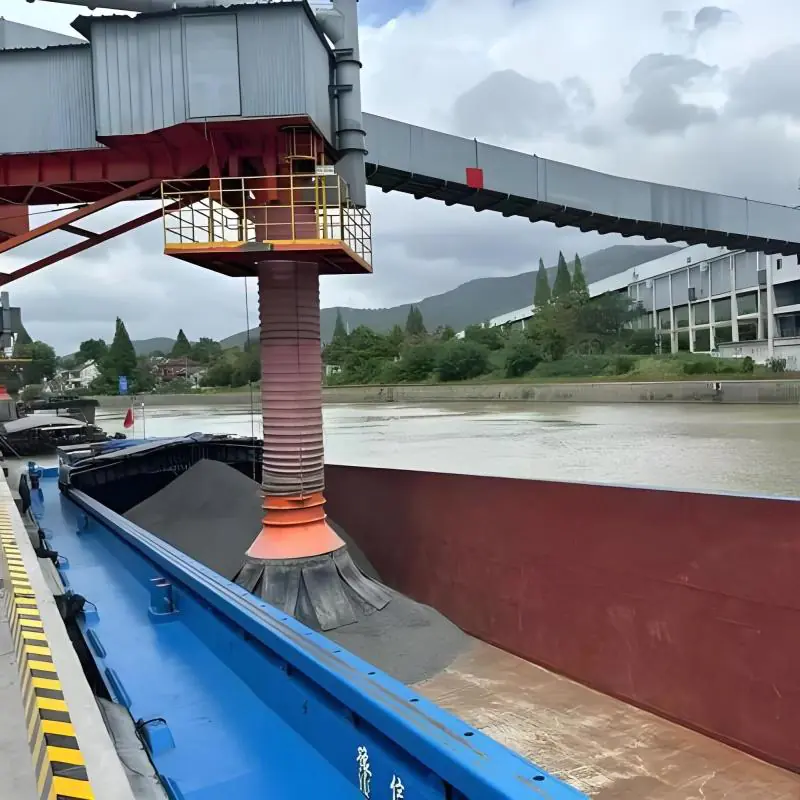
LVRUI bulk loading systems are used for loading dry bulk materials from silos or conveying equipment into trucks and tankers.
Typical applications include:
✅ Cement, fly ash and lime powder loading
✅ Mineral powder and dry mortar loading
✅ Existing loading-station retrofit projects
✅ Selected granular material loading
Typical Bulk Loading System Configurations
The following examples illustrate two common bulk loading configurations for fine powders and coarse or abrasive materials. Final equipment selection depends on the material properties and receiving arrangement.
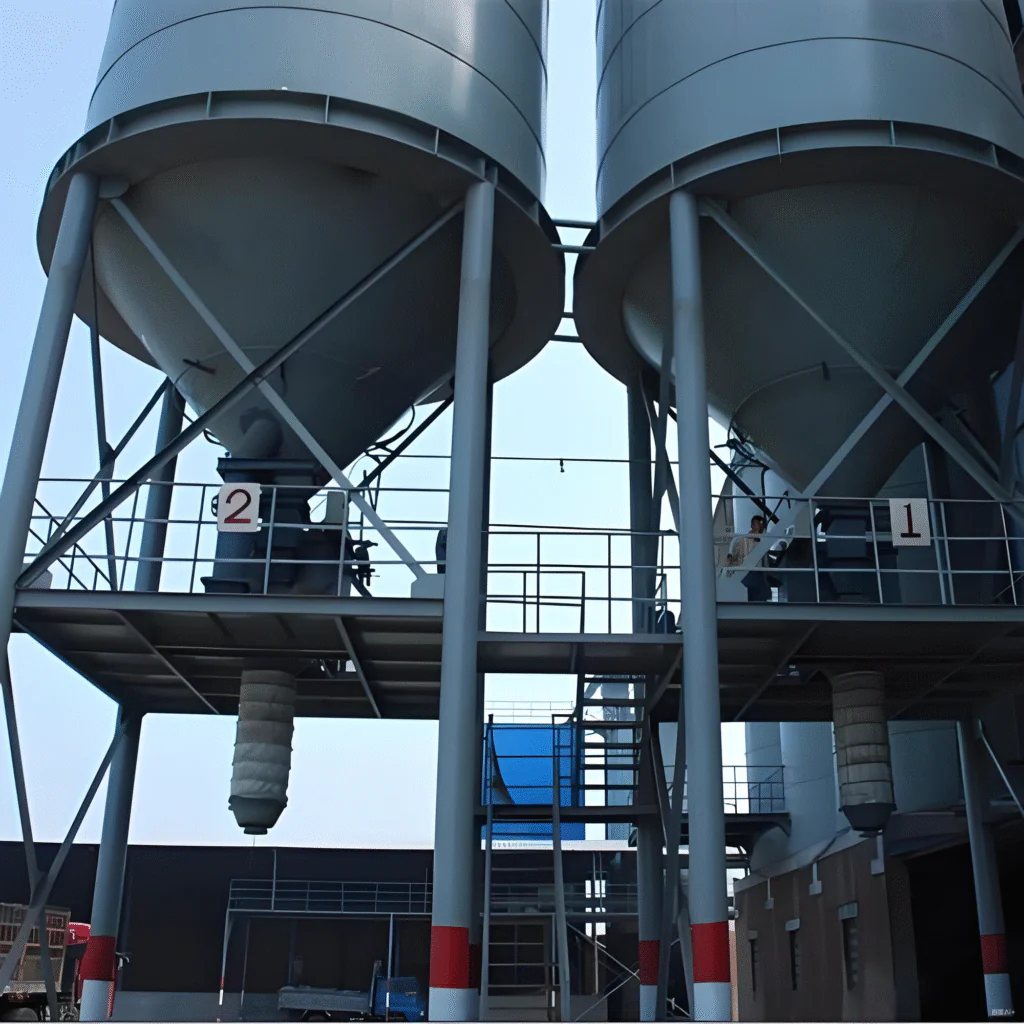
Designed for cement, fly ash, lime powder, slag powder and similar fine dry materials loaded from storage silos into enclosed tanker trucks. A typical configuration combines controlled feeding, a sealing loading head, level detection and dust extraction.
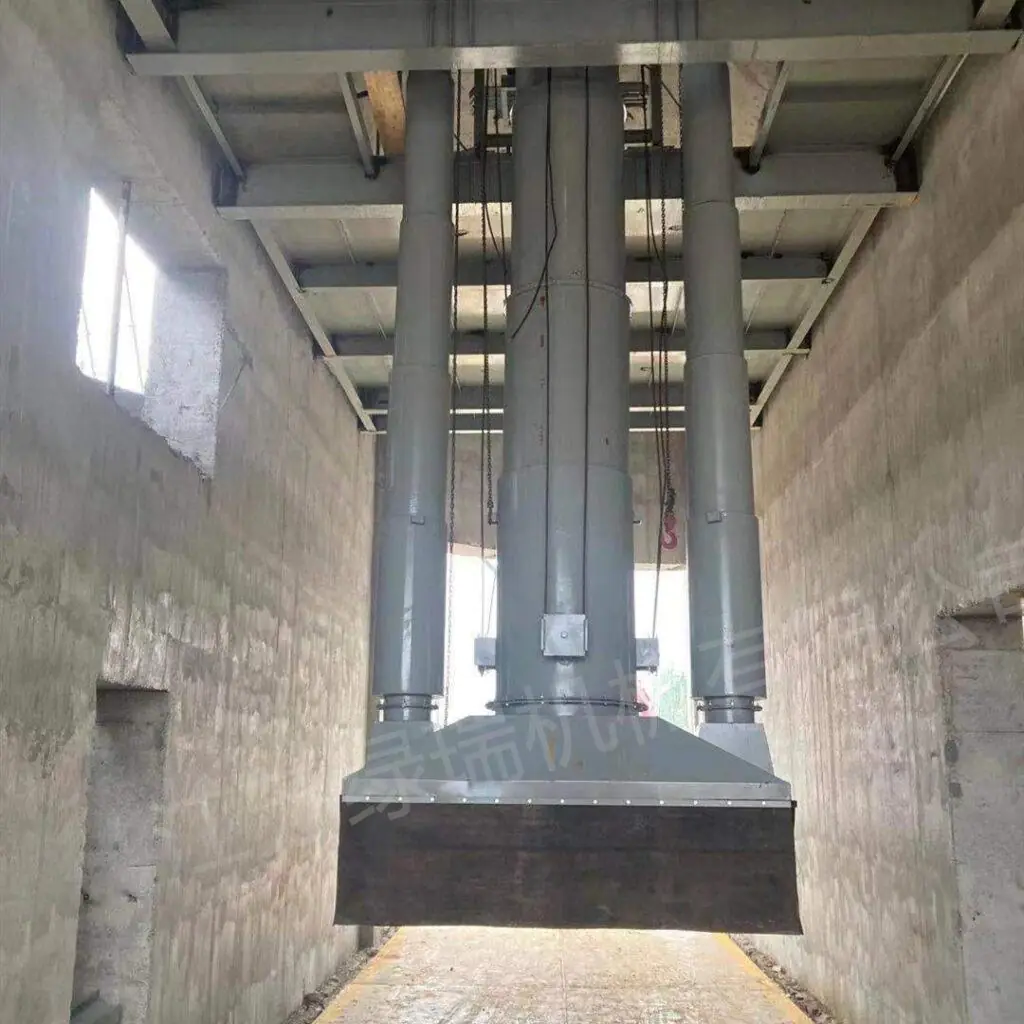
Designed for clinker and other coarse or abrasive bulk materials loaded into open trucks or receiving areas. Compared with fine-powder tanker loading, this configuration normally requires a heavier-duty discharge structure, wear-resistant contact parts and a wider loading outlet.
Bulk Loading System FAQs
Does LVRUI provide on-site installation for bulk loading systems?
LVRUI mainly supplies the equipment and technical drawings. On-site installation, civil works and field construction are normally completed by the customer or its appointed local contractor. We can provide equipment connection drawings and technical guidance for installation.
Can a bulk loading system be connected to existing silos and conveyors?
Yes. The system can be connected to existing silos, hoppers, air slide conveyors, screw conveyors and other compatible feeding equipment. Connection dimensions, structural support and control interfaces should be confirmed from the site layout and technical drawings.
Is automatic bulk loading control available?
Yes. Limit switches, high-level sensors, weighing signals and electrical interlocks can be integrated according to the required control logic. These signals can coordinate feeding, lifting, dust extraction and automatic loading stop functions. The weighing equipment itself is supplied separately unless explicitly included in the quotation. LVRUI can provide the agreed control interface signals for integration.
How is dust controlled during bulk loading?
Dust control normally combines a contained loading path, suitable vehicle interface, controlled material feed and adequate dust extraction. The required arrangement depends on whether the material is loaded into a closed tanker or an open truck and on the material dustiness and loading rate.
For application-specific solutions, see our dust-controlled truck and tanker loading system.
Is a bulk loader system the same as a bulk loading system?
The terms are often used interchangeably. Bulk loading system is the broader term for a coordinated loading station, while bulk loader system may emphasize the equipment installed at the loading point. Depending on project scope, both may include loading spouts, feed control, dust extraction, level detection and electrical controls.
What information is required for a bulk loading system quotation?
Please provide the material, bulk density, particle size, required capacity, silo outlet size, receiving vehicle, installation height, required loading travel, dust-control arrangement, control requirements and available site drawings or photos.
Request a Customized Bulk Loading System
Send LVRUI your material name, bulk density, required capacity, silo outlet dimensions, receiving vehicle type and loading height. We will recommend a suitable loading spout arrangement, dust-control solution, flow-control configuration and automation setup.
✅ Under-silo or platform-mounted loading arrangement
✅ Truck, tanker or open-truck loading configuration
✅ Integrated dust collector and level control options
✅ Matched loading spout, gate valve and support structure