
Bag Filter for Cement Plant Dust Collection
PPCS Multi-Chamber Baghouse for Large-Airflow and Centralized Dust Collection
What is a bag filter for cement plant?
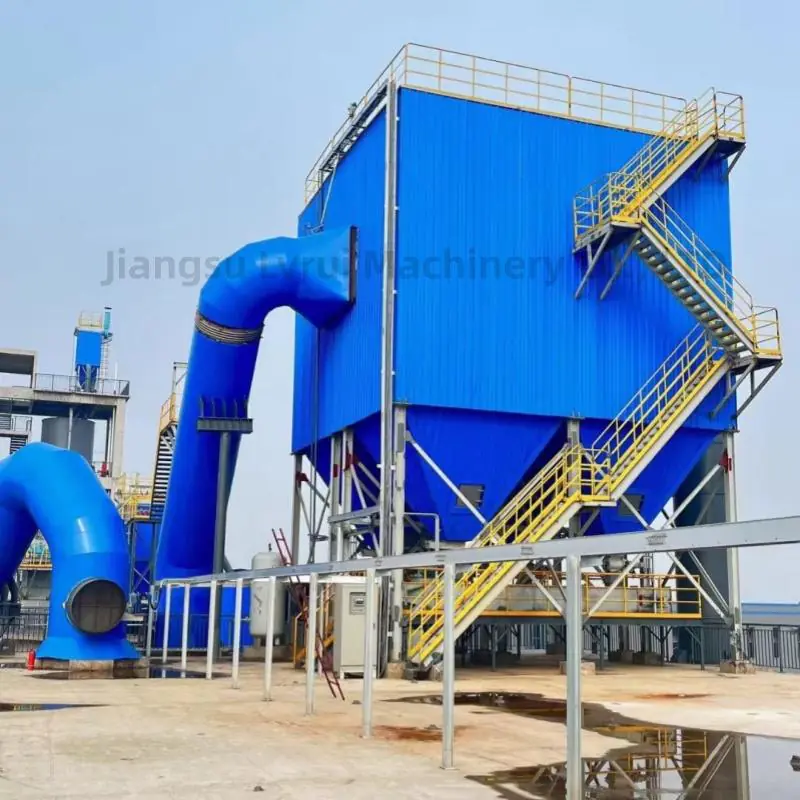
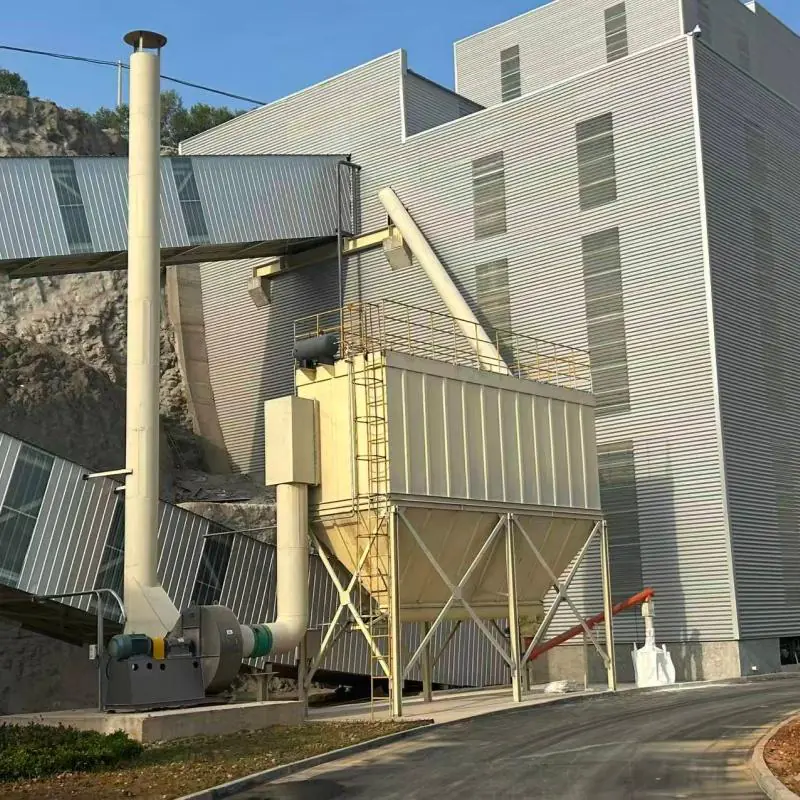
A bag filter is an industrial dust collection device that removes dry particulate matter from an air stream through fabric filter bags. Jiangsu LVRUI Machinery supplies PPCS multi-chamber bag filters for centralized dust collection in cement plants, grinding stations, terminals and dry powder processing systems. The filter area, chamber quantity, housing dimensions, hopper arrangement, filter media, inlet and outlet connections, dust discharge equipment and control system can be customized according to the required airflow and operating conditions.
Typical Applications
Industrial bag filters are generally selected for larger airflow, continuous operation or centralized extraction from one or more dust-generating points.
Typical applications include:
✅ Cement grinding stations and mill ventilation systems
✅ Centralized dust collection for conveyor transfer points
✅ Bucket elevator head and tail dust extraction
✅ Cement packing and material transfer sections
✅ Bulk cement loading and powder handling areas
✅ Storage silo and hopper dust collection systems
✅ Fly ash, slag powder and lime powder processing lines
✅ Dust recovery from crushing, screening or conveying equipment
The correct configuration depends on the dust source. A grinding station may require continuous large-airflow extraction, while a transfer system may collect dust from several hoods through a common duct network.
For small or isolated dust sources with lower airflow requirements, a compact pulse jet dust collector may be more suitable than a large multi-chamber baghouse.
Key Features
✅ Multi-Chamber Baghouse Design
The modular chamber arrangement is suitable for larger airflow and centralized dust collection applications.
✅ Application-Based Filter Area
Filter area and filtration velocity are selected according to airflow, dust concentration, particle characteristics and operating time.
✅ Customized Air Inlet and Distribution
The inlet position and internal airflow arrangement can be designed to reduce direct impact on the filter bags and improve dust distribution.
✅ Multiple Filter Media Options
Filter bag material can be selected according to gas temperature, moisture, chemical conditions and dust abrasiveness.
✅ Integrated Dust Hopper
The hopper can be matched with a rotary valve, screw conveyor or other discharge equipment according to the dust recovery process.
✅ Inspection and Maintenance Access
Access doors, bag replacement space and maintenance platforms can be arranged according to the installation layout.
Main Components
A typical industrial bag filter can include:
✅ Steel filter housing and clean-air chamber
✅ Fabric filter bags and supporting cages
✅ Tube sheet and bag sealing components
✅ Pulse valves, blow pipes and air manifold
✅ Dust hopper and inspection doors
✅ Differential-pressure monitoring device
✅ Rotary valve or screw conveyor for dust discharge
✅ Control cabinet and cleaning controller
✅ Support structure, platform and access ladder
✅ Fan and duct connections when included in the supply scope
The exact supply scope should be confirmed before quotation. LVRUI can supply the bag filter as an individual unit or provide selected supporting components according to the customer’s process design.
How Does an Industrial Bag Filter Work?
Dust-laden air enters the filter housing through the inlet and is distributed across the filter chamber. Dust particles are retained on the outer surface of the filter bags, while filtered air passes through the fabric and enters the clean-air chamber before leaving through the outlet.
As dust accumulates, a dust layer forms on the bag surface and system resistance gradually increases. The PPCS bag filter uses a pulse-cleaning arrangement to remove accumulated dust from the bags. The separated dust falls into the lower hopper and is discharged through a rotary valve, screw conveyor or another ash-handling device.
Stable operation depends on more than the filter itself. The collection hood, duct diameter, airflow distribution, fan pressure, filter area, hopper discharge and compressed-air system must be considered as one complete dust collection process.
The U.S. Environmental Protection Agency explains that fabric filters remove particles from contaminated gas streams through fabric filtration and the accumulated dust layer.
Reference Technical Specifications
| Model | PPCS32-3 | PPCS32-4 | PPCS32-5 | PPCS32-6 | PPCS64-4 | PPCS64-5 | PPCS64-6 | PPCS64-7 | PPCS64-8 |
|---|---|---|---|---|---|---|---|---|---|
| Air Volume (m³/h) | 6900 | 8930 | 11160 | 13390 | 17800 | 22300 | 26700 | 31200 | 35700 |
| Filtering Velocity (m/min) | 1.2–2.0 | 1.2–2.0 | 1.2–2.0 | 1.2–2.0 | 1.2–2.0 | 1.2–2.0 | 1.2–2.0 | 1.2–2.0 | 1.2–2.0 |
| Total Filter Area (m²) | 93 | 124 | 155 | 186 | 248 | 310 | 372 | 434 | 496 |
| Net Filter Area (m²) | 62 | 93 | 124 | 155 | 186 | 248 | 272 | 310 | 434 |
| Number of Dust Collecting Chambers | 3 | 4 | 5 | 6 | 4 | 5 | 6 | 7 | 8 |
| Total Number of Filter Bags | 96 | 128 | 160 | 192 | 256 | 320 | 384 | 448 | 512 |
| Dust Collector Resistance (Pa) | 1470–1770 | 1470–1770 | 1470–1770 | 1470–1770 | 1470–1770 | 1470–1770 | 1470–1770 | 1470–1770 | 1470–1770 |
| Inlet Dust Concentration (g/m³) | < 200 | < 200 | < 200 | < 200 | < 200 | < 200 | < 200 | < 200 | < 200 |
| Reference Outlet Dust Concentration (g/m³) | < 0.02 | < 0.02 | < 0.02 | < 0.02 | < 0.02 | < 0.02 | < 0.02 | < 0.02 | < 0.02 |
| Maximum Allowable Negative Pressure (Pa) | 5000 | 5000 | 5000 | 5000 | 5000 | 5000 | 5000 | 5000 | 5000 |
| Compressed Air Pressure (MPa) | 0.5–0.7 | 0.5–0.7 | 0.5–0.7 | 0.5–0.7 | 0.5–0.7 | 0.5–0.7 | 0.5–0.7 | 0.5–0.7 | 0.5–0.7 |
| Gas Consumption (m³/min) | 0.27 | 0.37 | 0.46 | 0.55 | 1.2 | 1.5 | 1.8 | 2.1 | 2.4 |
| Pulse Valves (pcs) | 3 | 4 | 5 | 6 | 4 | 5 | 6 | 7 | 8 |
| Pulse Valve Size (inch) | 1½” | 1½” | 1½” | 1½” | 1½” | 1½” | 1½” | 1½” | 1½” |
*The values above are for preliminary model comparison only. Actual airflow, filter area, fan pressure, filter media and dust discharge arrangement must be confirmed according to the dust source and process data.
An outlet dust concentration should only be stated in the final technical agreement after confirming the filter media, inlet concentration, operating temperature, moisture condition and local emission requirements.
Information Required for Selection
To recommend a suitable bag filter, please provide:
| Required Information | Details |
|---|---|
| Dust Source | Grinding station, transfer point, elevator, packing line or loading system |
| Required Airflow | Design airflow in m³/h or process information for calculation |
| Material | Cement, fly ash, slag powder, lime or other dry dust |
| Dust Concentration | Expected inlet concentration |
| Gas Temperature | Normal and maximum operating temperature |
| Moisture Condition | Humidity and possible condensation risk |
| Emission Requirement | Required outlet dust concentration |
| Operating Schedule | Continuous or intermittent operation |
| Installation Space | Available height, footprint and maintenance access |
| Dust Discharge | Rotary valve, screw conveyor or other arrangement |
| Supply Scope | Filter only or filter with fan, controls and discharge equipment |
Airflow should not be selected only from the size of the connected equipment. The number of dust collection points, hood design, duct resistance, capture velocity and leakage air can all affect the required system capacity.
Bag Filter or Compact Pulse Jet Dust Collector?
Both products use fabric filtration and compressed-air cleaning, but their equipment scale and typical applications are different.
A PPCS multi-chamber bag filter is generally selected for larger airflow, continuous industrial operation or centralized dust collection from several points. It provides a larger filter area and a substantial hopper for collected dust.
A compact pulse jet dust collector is more suitable for local extraction from a single silo, conveyor transfer point, small hopper or individual production machine where the airflow and available installation space are limited.
The correct choice should be based on airflow, dust loading, operating time, installation space and required dust discharge capacity—not only on the cleaning method.
Filter Media Selection
The material of the industrial filter bags must match the actual gas and dust conditions.
Polyester filter bags are commonly used for normal-temperature, dry cement and mineral dust. Higher temperatures, chemical exposure, oil mist or moisture may require different materials or surface treatments.
Important selection factors include:
✅ Normal and maximum operating temperature
✅ Moisture and condensation risk
✅ Dust abrasiveness
✅ Particle size distribution
✅ Chemical composition of the gas
✅ Required filtration velocity
✅ Cleaning pressure and frequency
Selecting the wrong filter media can cause premature bag damage, excessive resistance or reduced filtration performance.
Inspection and Maintenance
Routine inspection should cover:
✅ Differential pressure across the filter
✅ Pulse valves and compressed-air pressure
✅ Condition of the filter bags and cages
✅ Sealing around access doors and tube sheets
✅ Dust buildup inside the hopper
✅ Operation of the rotary valve or screw conveyor
✅ Fan vibration, airflow and duct condition
A gradual increase in differential pressure may indicate insufficient cleaning, moisture, material buildup or a blocked dust discharge. Increased dust at the outlet may indicate damaged filter bags, poor bag sealing or leakage between the dirty-air and clean-air chambers.
Filter bags should be replaced according to their actual condition and system performance rather than only according to a fixed time interval. For detailed fault diagnosis, read our guide to industrial bag filter troubleshooting.
Manufacturing, Inspection and Delivery
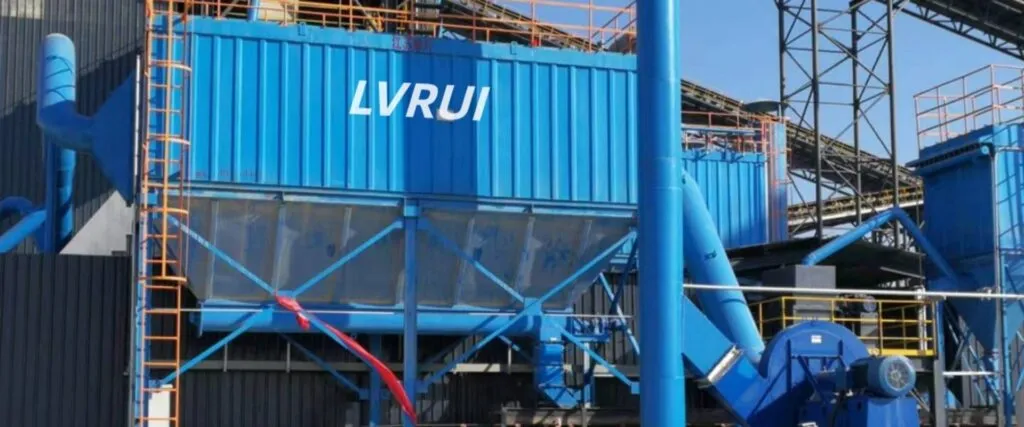
LVRUI manufactures the filter housing, clean-air chamber, dust hopper, support structure and connection flanges according to the approved drawing and supply scope.
Before shipment, the equipment can be checked for:
✅ Main dimensions and flange positions
✅ Chamber and hopper assembly
✅ Quantity of filter bags and cages
✅ Pulse valve and blow pipe arrangement
✅ Inspection doors and maintenance access
✅ Dust discharge connections
✅ Surface treatment and external appearance
Large bag filters may be divided into transport sections according to container dimensions. Site installation and final system connection are normally completed by the customer or the customer’s local installation team unless otherwise agreed.
Bag Filter FAQs
What is a bag filter used for in a cement plant?
A bag filter is used to collect airborne cement dust from grinding stations, conveyor transfer points, bucket elevators, packing lines, bulk loading systems, and other dry material handling areas. Larger multi-chamber bag filters are generally suitable for centralized dust collection or applications requiring continuous airflow.
How do I size a bag filter for cement dust collection?
Bag filter sizing is mainly based on the required airflow and selected filtration velocity. Dust concentration, particle size, operating temperature, moisture, filter media, cleaning method, and operating time must also be considered. The collection hood, duct resistance, fan pressure, and number of dust collection points can affect the final filter area.
What is the difference between a bag filter and a compact pulse jet dust collector?
A multi-chamber bag filter is generally used for larger airflow, continuous operation, or centralized extraction from several dust sources. A compact pulse jet dust collector is more suitable for local dust collection at a single silo, hopper, conveyor transfer point, or production machine with lower airflow requirements.
Which filter bag material is suitable for cement dust?
Polyester filter bags are commonly used for normal-temperature, dry cement dust. The final filter media selection depends on operating temperature, humidity, chemical conditions, dust abrasiveness, and condensation risk. Higher temperatures or moisture-sensitive applications may require different materials or surface treatments.
What causes high differential pressure in a bag filter?
Common causes include excessive dust loading, insufficient pulse-cleaning pressure, blocked pulse valves, moisture, clogged filter bags, excessive filtration velocity, or poor hopper discharge. The ductwork, fan operation, compressed-air system, and differential-pressure monitoring device should also be checked during troubleshooting.
What information is required to select a cement plant bag filter?
Please provide the dust source, required airflow, material, inlet dust concentration, normal and maximum temperature, moisture condition, emission requirement, operating schedule, installation space, and preferred dust discharge method. A plant layout or ductwork drawing will help confirm the filter configuration and connection dimensions.
Need Help Selecting a Bag Filter?
Send LVRUI your dust source, required airflow, dust characteristics, inlet gas temperature, inlet dust concentration, target outlet dust concentration and installation layout. LVRUI will confirm a suitable PPCS bag filter configuration, including filter area, chamber quantity, filter media and dust discharge arrangement.
✅ Filter area and chamber quantity matched to airflow and dust load
✅ Filter media selected according to temperature and dust conditions
✅ Hopper discharge configuration matched to collected dust handling
✅ Inlet, outlet and installation dimensions matched to the site layout