
Dust Collection System for Cement Plants & Powder Handling
Integrated Dust Collection Solutions for Cement Plants and Bulk Material Handling Applications
What Is an Industrial Dust Collection System?
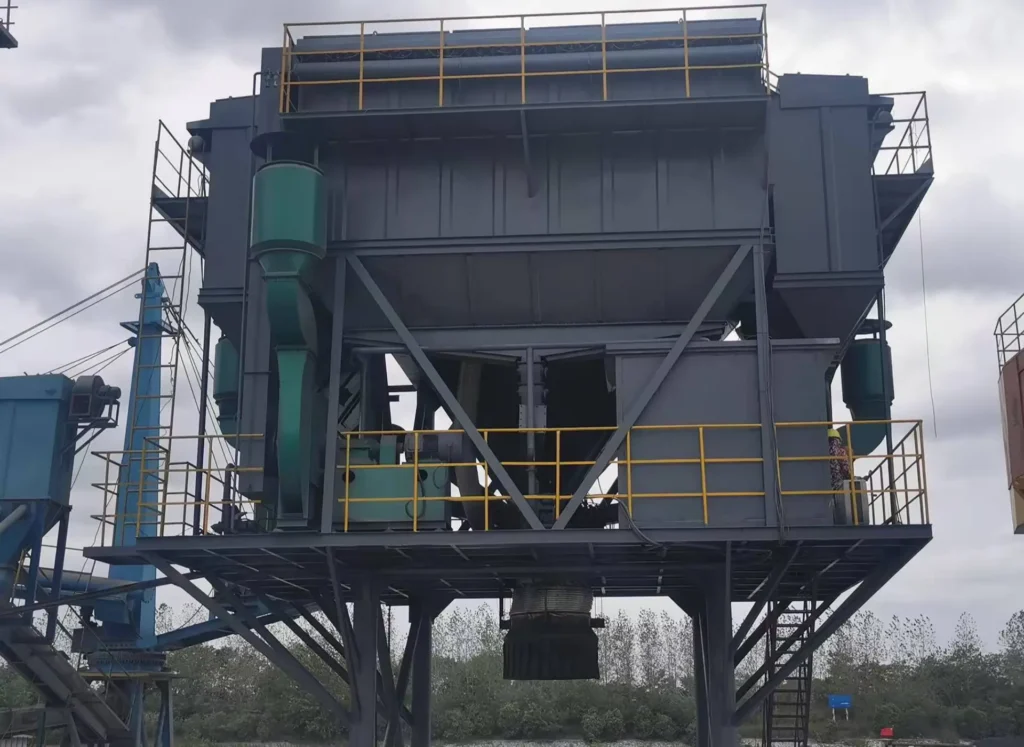
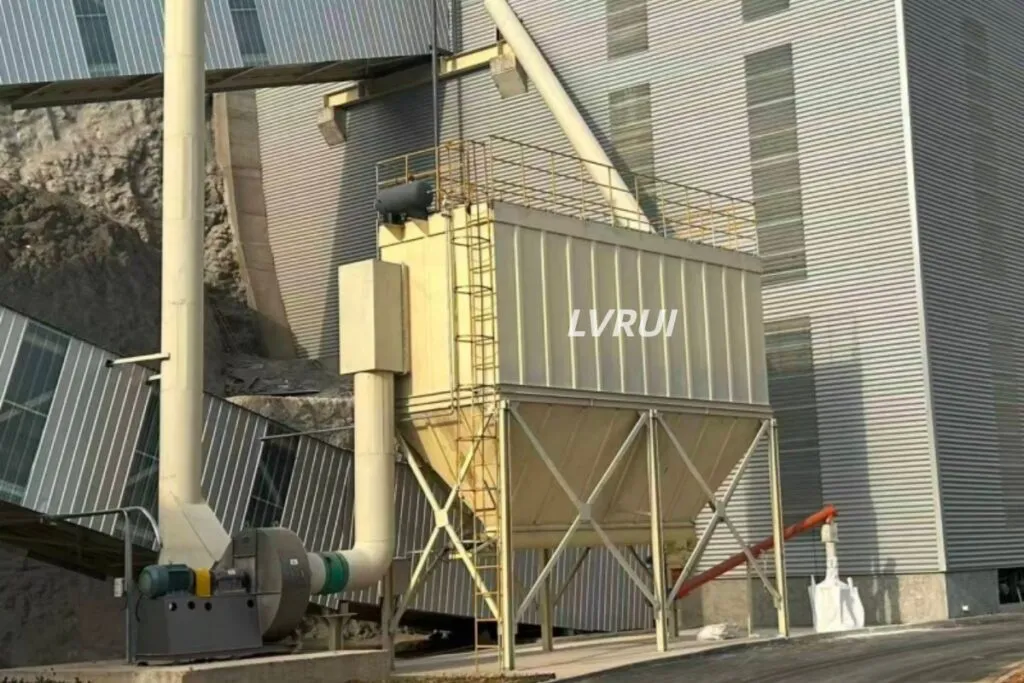
An industrial dust collection system is an integrated arrangement designed to capture dust-laden air, transport it through ductwork, separate dust using suitable filtration equipment and discharge the collected material.
LVRUI supplies industrial dust collection systems for cement grinding, powder processing, conveyor transfers, silo venting and bulk loading. Depending on the project layout, a system may serve individual dust sources or connect multiple extraction points through a common duct network.
Unlike a standalone dust collector, a complete system also considers dust capture hoods, extraction airflow, duct resistance, fan performance and equipment connections. The final configuration depends on dust characteristics, required airflow, operating conditions, installation layout and the agreed supply scope.
For broader information about source containment and dust prevention, see LVRUI’s dust control system solutions.
Main Components of an Industrial Dust Collection System
An industrial dust collection system combines several components to capture dust, maintain extraction airflow and discharge collected material. The exact equipment arrangement depends on the dust sources, filtration requirements and project scope.
Dust Capture Hood
Dust capture hoods collect dust-laden air close to designated emission points, such as conveyor transfer chutes, packing machines and bulk loading stations.
Hood dimensions, enclosure conditions and connection positions must be considered together with the required extraction airflow.
Ductwork and Airflow Control
Ductwork transports dust-laden air from the capture points to the filtration equipment. Duct routing, branch connections and system resistance affect the airflow available at each extraction point.
Where required, industrial damper valves can regulate airflow through individual duct branches. The damper type and control method should be selected according to the duct dimensions and operating requirements.
Filtration Equipment
Filtration equipment separates dust particles from the extracted airflow. Depending on the application, a system may use fabric bag filters, compact pulse-jet collectors, cartridge collectors or cyclone pre-separators.
Filter selection depends on the required airflow, dust concentration, particle characteristics, temperature, moisture and outlet emission requirements.
Fan and Dust Discharge Equipment
The fan provides the pressure difference and airflow required to extract dust through the system. Fan selection must account for the extraction points, duct resistance, filtration resistance and operating conditions.
Collected dust must also be removed from the filter hopper. Depending on the application, a rotary valve, screw conveyor or other suitable discharge device can be included in the system.
Control and Monitoring System
The control system manages the functions included in the selected equipment package, which may include fan operation, filter cleaning, differential-pressure monitoring and equipment alarms.
For systems with several dust capture points, airflow-control arrangements and equipment operating sequences should be coordinated with the approved process layout.
Common Dust Collector Types for Industrial Applications
Different filtration and separation equipment can be selected according to the dust source, required airflow, dust concentration, operating conditions and installation layout. LVRUI supplies several types of dust collection equipment for different industrial applications.
| Equipment | Main Function | Typical Application |
|---|---|---|
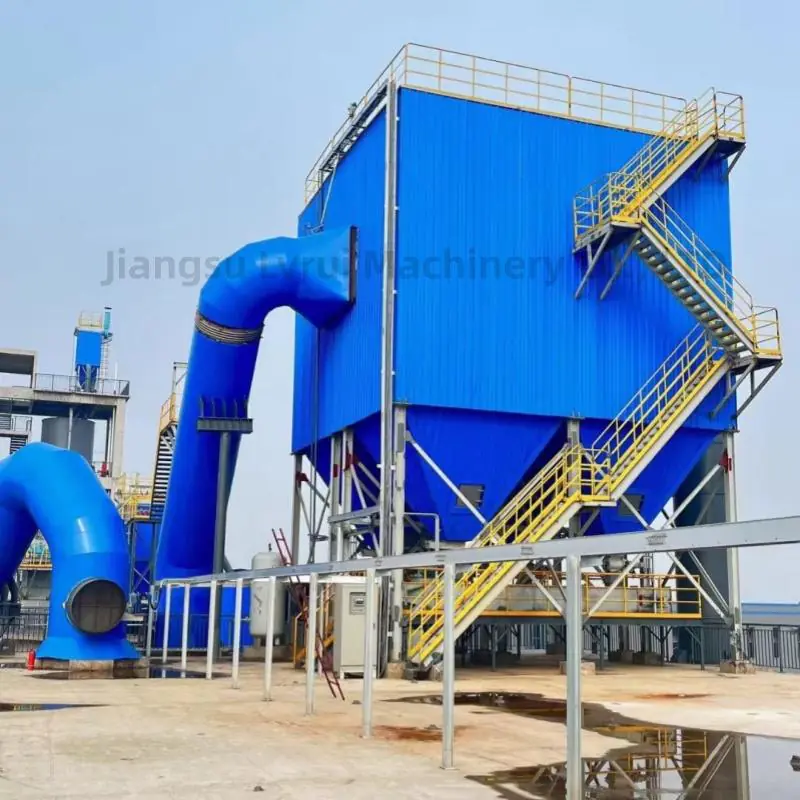
| PPCS Multi-Chamber Bag Filter | Fabric filtration with pulse-jet cleaning | Larger-airflow and centralized dust collection |
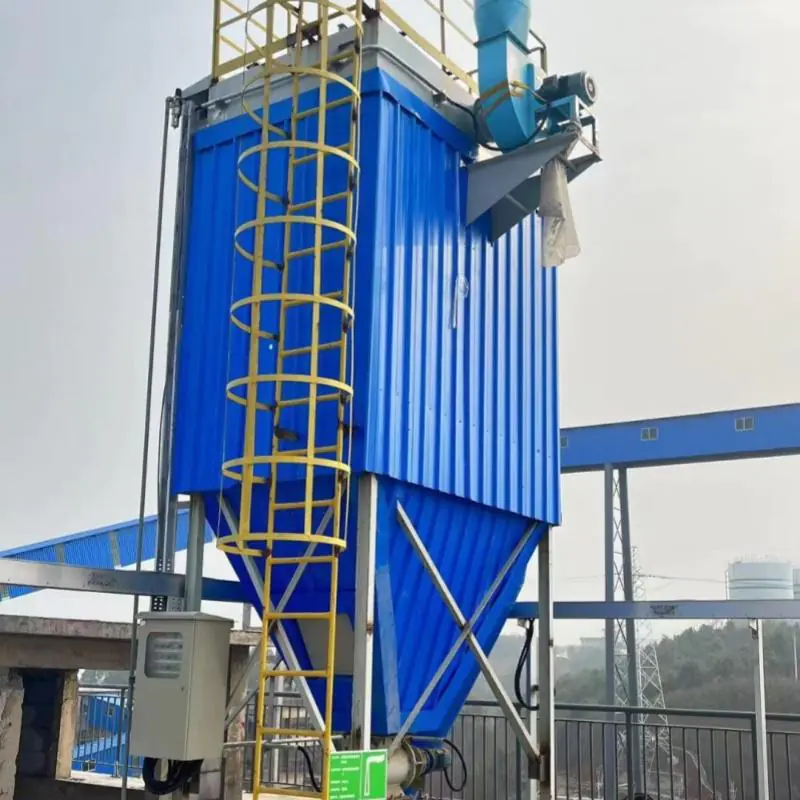
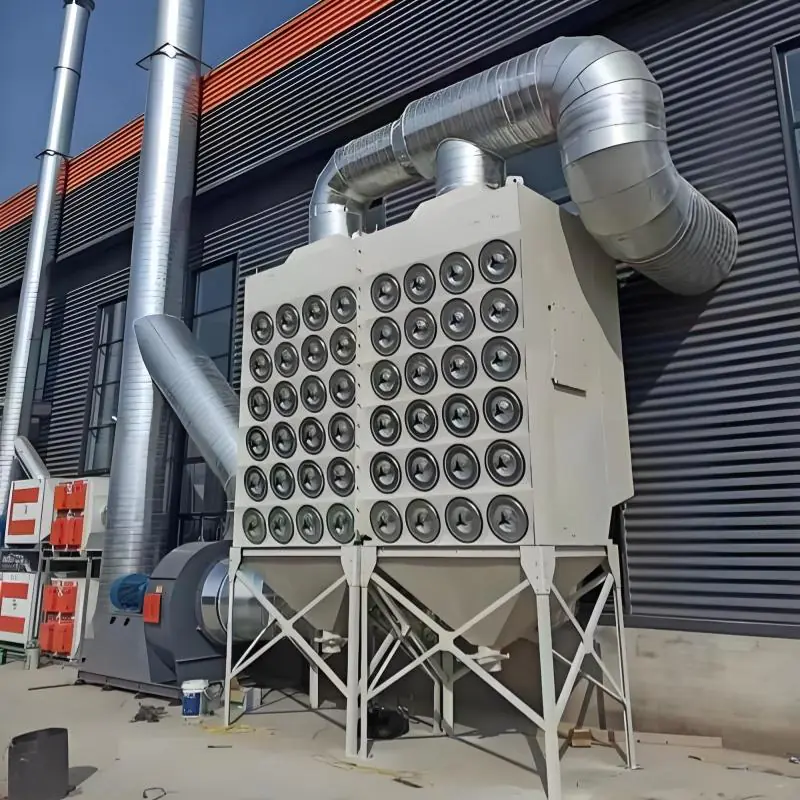
| HMC Compact Pulse Jet Dust Collector | Compact bag filtration with automatic pulse cleaning | Local extraction at individual dust sources |
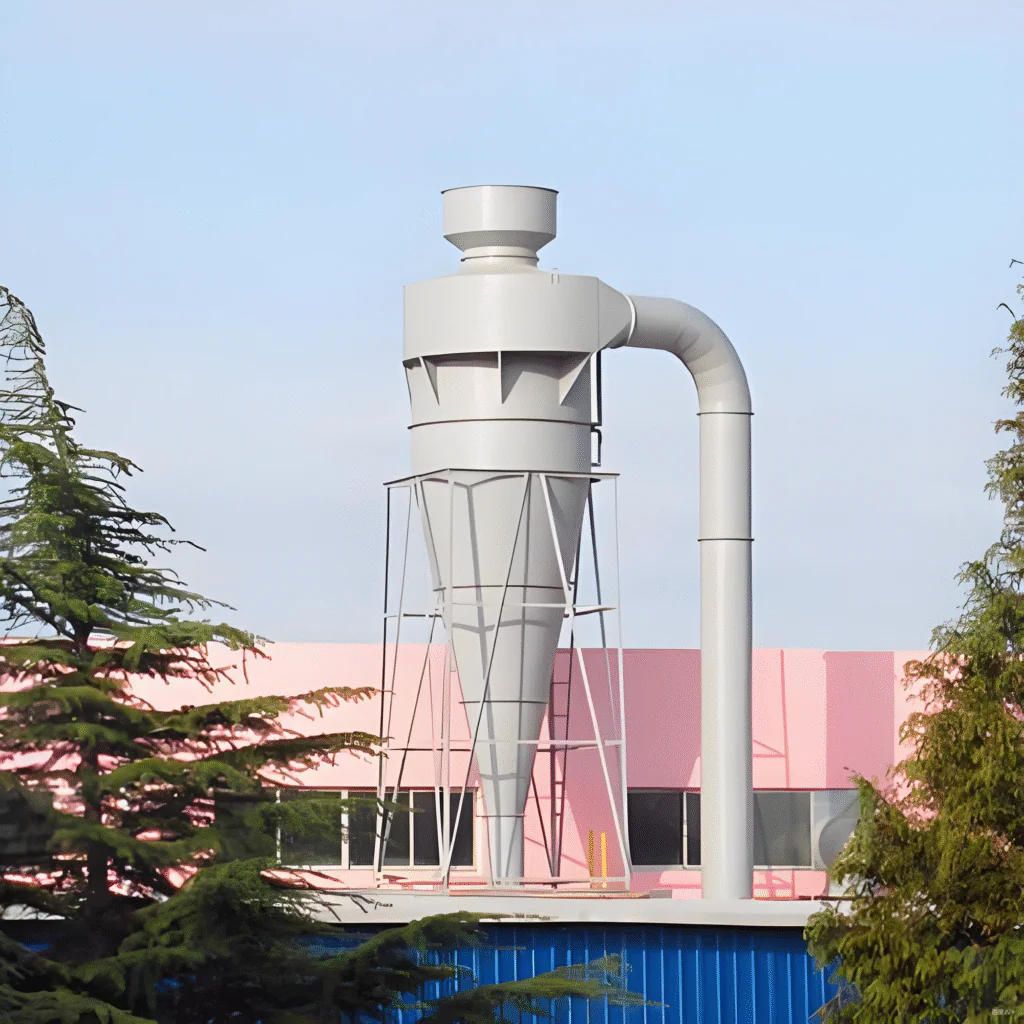
| Cyclone Dust Collector | Centrifugal separation of coarse particles | Pre-separation and suitable coarse-dust recovery |
| Cartridge Dust Collector | Filtration through pleated cartridges | Compact filtration for compatible fine, dry dust |
Both PPCS and HMC equipment use fabric filter bags and compressed-air pulse cleaning. Their main differences are equipment configuration, airflow requirements and intended applications.
Working Principle of an Industrial Dust Collection System
A typical industrial dust collection system captures dust-laden air near the dust source and transports it to filtration equipment through a controlled airflow path.
The main operating process includes:
- Dust-laden air is captured through suitable hoods or extraction connections.
- The fan maintains the required airflow through the connected duct network.
- Dust-containing air enters the selected filtration or separation equipment.
- Dust particles are separated from the airflow, while filtered air passes toward the clean-air outlet.
- Collected dust is transferred to a hopper and discharged through a suitable device.
- The filtered air is discharged or otherwise handled according to the approved system design.
Where pulse-jet filtration is used, compressed-air cleaning periodically removes accumulated dust from the filter surfaces during operation. Stable performance depends on suitable airflow distribution, filtration capacity, fan operation and reliable dust discharge.
Industrial Dust Collection System Applications
LVRUI supplies dust collection equipment for cement production, powder processing and compatible bulk material handling applications.
Cement Grinding and Processing
Dust collection systems can be configured for cement grinding stations, mill ventilation, packing equipment and other dust-generating process connections.
Aggregate and Coarse Material Processing
Crushing, screening and transfer operations may require dust extraction from equipment enclosures and transfer connections.
Fly Ash and Mineral Powder Handling
Suitable dust collection equipment can be connected to compatible fly ash, lime powder, slag powder and other mineral powder handling equipment according to material characteristics and process requirements.
How to Select an Industrial Dust Collection System
Selecting a dust collection system requires evaluating the complete extraction arrangement rather than choosing a filter unit based only on nominal airflow capacity. The following factors should be considered before confirming the equipment configuration.
Dust Sources and Extraction Airflow
Identify the number and locations of dust-generating points, along with the operating conditions at each location.
The required airflow depends on the capture or enclosure arrangement, dust source characteristics and the number of extraction points operating simultaneously.
Dust Characteristics and Filtration Method
Dust concentration, particle-size distribution, abrasiveness, temperature and moisture affect filtration equipment selection. Engineers should also assess the risk of filter clogging, potential media wear and whether pre-separation is required.
Ductwork, Fan and System Resistance
Duct length, branch arrangements, airflow-control components and filtration resistance affect the required fan operating point.
The fan and duct network should be evaluated together to maintain the required extraction airflow at the designated dust sources.
Dust Discharge and Maintenance
The discharge equipment must be compatible with the collected dust and the downstream handling arrangement.
The system layout should also provide suitable access for inspecting filter elements, cleaning components, fans and dust discharge devices.
Final equipment selection must be based on the actual operating data, required performance and agreed project scope.
Dust Collection for Bulk Loading and Conveying Equipment
Dust collection systems can be integrated with suitable conveying and bulk loading equipment to capture dust at designated transfer, discharge and loading positions.
Conveyor and Transfer Point Dust Collection
Conveyor transfer points may require extraction hoods, enclosed connections and duct branches to collect dust where material moves between equipment.
The extraction arrangement should account for transfer geometry, material properties, induced airflow and the operating conditions of the connected conveyors.
Where several extraction points share one collector, duct resistance and airflow distribution should be evaluated for the complete system.
Dust Collection for Bulk Loading
Bulk loading operations may require dedicated extraction connections to capture dust displaced during material discharge.
Depending on the loading equipment, the system may include compatible suction connections, ductwork, filtration equipment and airflow-control components.
LVRUI can coordinate suitable dust collection equipment with its bulk loading systems according to the agreed equipment package.
Dust Collection System for Silo Venting
During cement silo filling, incoming material displaces air that may carry fine dust toward the silo vent. Suitable vent filtration equipment is required to separate dust from the displaced air while providing adequate ventilation for the filling operation.
Collected dust must also be removed from the filter hopper. Depending on the application, a rotary valve, screw conveyor or other suitable discharge device can be included in the system.
For further details about filtration equipment and selection considerations, see our Cement Silo Dust Collector guide.
Safety and Dust Control Considerations
Industrial dust collection systems should be evaluated according to the actual dust characteristics, operating temperature, process conditions and applicable site safety requirements.
Important considerations include suitable duct airflow, prevention of excessive dust accumulation, equipment maintenance access and safe handling of collected material.
Where the handled material may produce combustible dust, additional hazard assessment and appropriate protective measures may be required. These requirements should be confirmed for the specific material and installation.
For background information on combustible dust hazards, refer to OSHA’s Combustible Dust guidance.
Technical Data Required for Quotation
To evaluate a suitable dust collection system, please provide the available project information.
| Required information | Details |
|---|---|
| Dust source | Equipment type, number of extraction points and operating conditions |
| Dust characteristics | Material, concentration, particle properties and moisture |
| Airflow | Required extraction airflow or process data |
| Gas conditions | Normal and maximum temperature, humidity and relevant gas conditions |
| Filtration requirements | Required outlet dust concentration or project specification |
| Installation layout | Available space, duct routing and equipment connection drawings |
| Utilities and discharge | Power supply, compressed air where required and dust discharge method |
| Special requirements | Applicable site safety requirements and other project constraints |
LVRUI can review the supplied information and propose an appropriate equipment configuration and supply scope.
Dust Collection System FAQs
What is the difference between a dust collector and a dust collection system?
A dust collector is the filtration or separation unit. A complete dust collection system also includes the required extraction, ductwork, fan, dust discharge and control equipment.
How does an industrial dust collection system work?
The system captures dust-laden air near designated dust sources and transports it through ductwork to suitable filtration or separation equipment. The collected material is discharged through an appropriate device, while filtered air is handled according to the approved system design.
Which dust collector is suitable for a cement plant?
PPCS multi-chamber bag filters are generally considered for larger centralized applications, while compact HMC pulse-jet collectors are suitable for many local dust sources. Final selection depends on airflow, dust concentration, temperature, moisture and installation requirements.
Can dust collection equipment be connected to conveyors and bulk loading systems?
Yes. Compatible dust collection equipment can be integrated with conveyor transfer points, packing equipment, loading spouts and other bulk material handling equipment. The extraction airflow, duct connections and operating conditions must be coordinated with the connected equipment.
What role does a damper valve play in a dust collection system?
An industrial damper valve can regulate airflow through suitable duct branches or provide isolation where required by the system design. The damper type, actuator and operating function should be selected according to the actual duct conditions.
What information is needed to select an industrial dust collection system?
Please provide the dust source, required airflow, material characteristics, operating conditions and available installation drawings. Refer to the Technical Data Required for Quotation section for the complete checklist.
Request a Dust Collection System for Your Project
If you need dust collection equipment for cement production, powder handling or bulk material transfer, please provide your dust source, required airflow, material properties and available installation drawings. LVRUI can review your application and recommend suitable filtration equipment and coordinated system configurations.
✅ Multiple dust collector types and configurations
✅ Customized equipment dimensions and connections
✅ Coordinated dust collection equipment packages
✅ Technical drawings and remote support