
Chain Conveyor for Clinker and Bulk Materials
Heavy-Duty Enclosed Chain Conveyor for Abrasive and High-Temperature Material Handling
What Is a Chain Conveyor?
A chain conveyor is an enclosed mechanical conveying system that uses chains and scraper flights to move bulk materials through a steel trough.
It is commonly used for conveying clinker, slag, limestone, cement and other abrasive bulk materials where stable horizontal or inclined transport is required.
LVRUI provides customized chain conveyor designs according to material characteristics, capacity requirements and plant layout.
Typical Applications
Enclosed chain conveyors are commonly installed in cement plants, grinding stations, terminals, mineral processing lines and dry bulk material handling systems. Typical applications include:
✅ Conveying clinker between production and storage sections
✅ Transferring slag, limestone and other abrasive materials
✅ Handling collected dust or coarse powder below process equipment
✅ Moving material horizontally between production units
✅ Feeding bucket elevators, crushers, hoppers or storage bins
✅ Conveying material where an enclosed casing is required to reduce dust escape
This equipment is useful when the material is too abrasive, too hot or too coarse for a standard belt or screw conveyor. Material temperature, particle size, moisture and impact load must still be confirmed before selection.
How Does a Chain Conveyor Work?
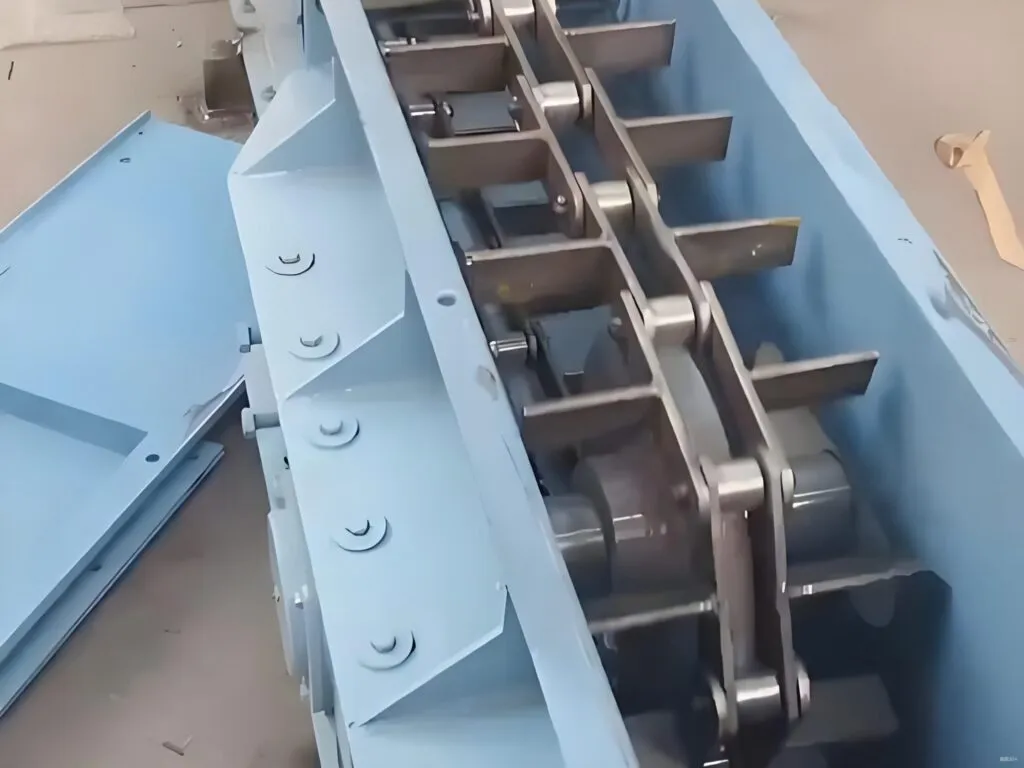
The gear motor drives the head shaft and sprocket, causing the chain and scraper flights to travel continuously through the trough. Material enters through the inlet and is pushed or dragged toward the discharge outlet.
Chain speed is generally kept relatively low to limit impact, dust generation and wear. Stable operation depends on correct chain tension, aligned sprockets, controlled feeding and an unobstructed discharge outlet.
A slide gate, feeder or other upstream control device may be required when the conveyor is installed below a hopper or silo. This helps prevent uncontrolled material loading and reduces the risk of overload.
Materials Handled by Chain Conveyor
The equipment can be configured for:
✅ Cement clinker
✅ Granulated or crushed slag
✅ Limestone and mineral materials
✅ Cement and coarse cement powder
✅ Fly ash and collected dust
✅ Coal ash and other dry bulk solids
Fine, highly aeratable powder may be better suited to an air slide conveyor. Long-distance transport of cooler and less abrasive material may be more economical with a belt conveyor, while vertical lifting should normally be handled by a bucket elevator.
Wet, sticky or strongly compacting materials require separate evaluation because buildup inside the trough can increase chain load and component wear.
Main Components
A typical chain conveyor can include:
✅ Enclosed steel trough with inspection covers
✅ Heavy-duty chains and scraper flights
✅ Head and tail sprocket assemblies
✅ Gear motor and chain tensioning device
✅ Replaceable bottom and side wear liners
✅ Customized inlets, outlets and support frames
The final configuration depends on the conveying duty. Abrasive clinker or slag may require thicker liners and reinforced scrapers. Elevated-temperature applications require confirmation of the chain, bearings, seals and lubrication arrangement.
For general engineering reference, ISO 1977 specifies characteristics for conveyor chains, attachments and associated sprockets used in conveying and mechanical handling applications.
Technical Specifications
| Model | Width (mm) | Capacity (t/h) | Speed (m/s) | Material Temp | Motor (kW) |
|---|---|---|---|---|---|
| LRMC200 | 200 | 10–40 | 0.16–0.32 | ≤ 200°C | 2.2–7.5 |
| LRMC300 | 300 | 40–80 | 0.16–0.32 | ≤ 200°C | 4–11 |
| LRMC400 | 400 | 80–150 | 0.16–0.32 | ≤ 200°C | 7.5–15 |
| LRMC500 | 500 | 150–250 | 0.16–0.32 | ≤ 200°C | 11–22 |
*The values above are for preliminary reference only. Actual capacity and motor power depend on bulk density, particle size, moisture, material temperature, conveying length, inclination, inlet loading and operating conditions.
Applications above 200°C require separate technical confirmation. The chain, scraper flights, bearings, seals, liners and lubrication arrangement must all be evaluated for the actual temperature.
Key Features
✅ Enclosed Material Transfer
The enclosed steel trough helps reduce material leakage and dust exposure.
✅ Heavy-Duty Chain and Scraper Design
Chain and scraper components are selected according to material load and operating conditions.
✅ Wear Protection
Replaceable liners help protect the trough and extend service life.
✅ Flexible Layout Integration
Horizontal and inclined arrangements are available according to process requirements.
✅ Easy Inspection and Maintenance
Inspection covers provide access to chains, scrapers and wear parts.
How to Choose the Right Conveyor
A chain conveyor is suitable for abrasive, coarse or elevated-temperature materials that require enclosed horizontal or inclined transport.
For long-distance conveying of cooler materials, a belt conveyor may be more economical. A screw conveyor is generally used for short-distance powder transfer, while an air slide conveyor is suitable for dry, aeratable fine powder. For vertical lifting, a bucket elevator is normally recommended.
The final selection should consider material properties, capacity, temperature, conveying distance and installation layout.
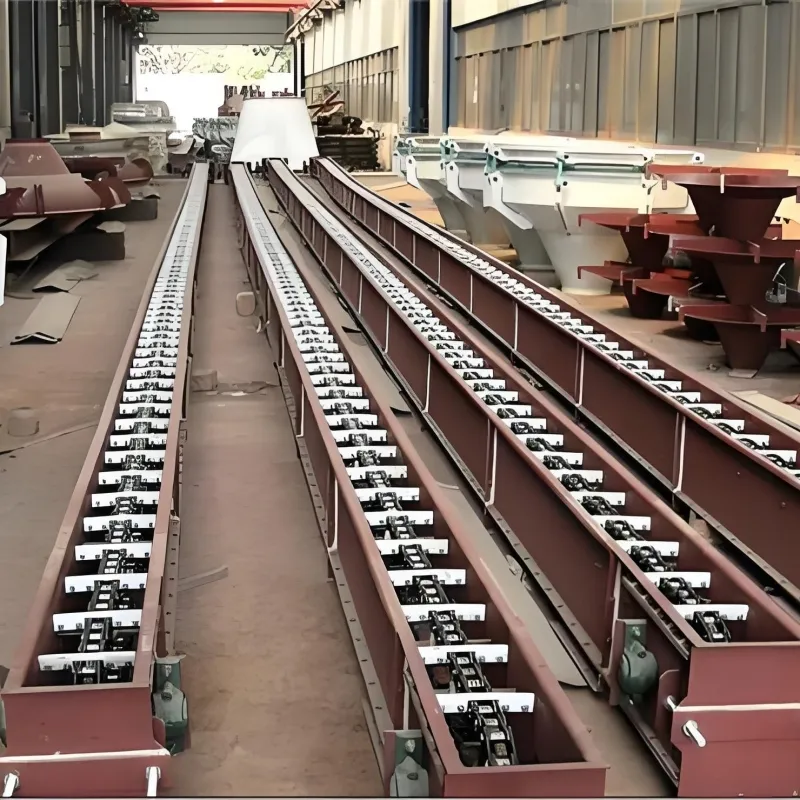
Information Required for Conveyor Selection
Please provide the following information for accurate configuration and quotation:
| Required Information | Details |
|---|---|
| Material | Material name, bulk density, particle size and moisture |
| Material Temperature | Normal and maximum operating temperature |
| Required Capacity | Conveying rate in t/h or m³/h |
| Conveying Distance | Horizontal length and total center distance |
| Installation Angle | Horizontal or inclined arrangement |
| Inlet Conditions | Feed method, inlet quantity and expected loading |
| Outlet Arrangement | Outlet quantity, position and flange dimensions |
| Operating Schedule | Continuous or intermittent operation |
| Wear Conditions | Abrasiveness and expected operating hours |
| Site Layout | Process drawing or installation dimensions |
For installations below a silo or hopper, the discharge opening and feeding control method should also be provided. These conditions affect chain load, drive power and the risk of material buildup.
Providing a process or installation drawing helps confirm the inlet position, outlet direction, drive arrangement and available maintenance space.
Manufacturing, Inspection and Delivery

LVRUI manufactures each unit according to the approved drawing and order requirements. Carbon steel is commonly used for the conveyor casing, while liner thickness, scraper design, chain specification and surface treatment are selected according to the application.
Before shipment, the equipment can be checked for main dimensions, assembly condition, chain movement, rotation direction and external appearance.
Large conveyors may be divided into transport sections according to container limitations. The sections can then be reassembled by the customer or local installation team at the project site.
Chain Conveyor FAQs
What materials can a chain conveyor handle?
It can be configured for clinker, slag, limestone, cement, fly ash, collected dust and other dry bulk materials. Selection must consider temperature, abrasiveness, particle size, moisture and bulk density.
Can it convey high-temperature clinker?
Yes. A suitable configuration can handle elevated-temperature clinker. Standard reference models may be designed for material temperatures up to 200°C, but the actual limit depends on the chain, scrapers, liners, bearings, seals and lubrication. Higher temperatures require separate confirmation.
What is the difference between a chain conveyor and a belt conveyor?
This type of conveyor uses chains and scraper flights inside a steel trough, making it suitable for abrasive, coarse or hotter materials. Belt conveyors are generally more economical for longer-distance transport of cooler and less abrasive bulk materials.
Can the conveyor operate on an incline?
Yes, but the acceptable angle depends on material characteristics and scraper design. Inclined operation can reduce conveying capacity and increase power demand, so the angle must be confirmed during selection.
How can chain and liner wear be reduced?
Correct chain tension, aligned sprockets, controlled feeding, suitable chain speed and regular removal of material buildup are important. Replaceable liners and reinforced scrapers can also be used for abrasive applications.
What information is required for a quotation?
Please provide the material, capacity, temperature, particle size, conveying length, installation angle, inlet and outlet dimensions, operating time and a layout drawing. This information allows LVRUI to recommend a suitable configuration.
What is the difference between a chain conveyor and a scraper conveyor?
A chain conveyor and scraper conveyor use similar conveying principles. The main difference is the chain and scraper configuration, which is selected according to material characteristics, capacity and operating conditions.
Need a Chain Conveyor for Your Application?
Send us your material information, required capacity, conveying distance, operating temperature and layout drawing. LVRUI will recommend a suitable conveying configuration based on your operating conditions.
✅ Customized Design Based on Material and Layout
✅ Heavy-Duty Chain, Scraper and Wear Liner Options
✅ Factory Assembly and Inspection Before Shipment
✅ Export Packing and Delivery Support