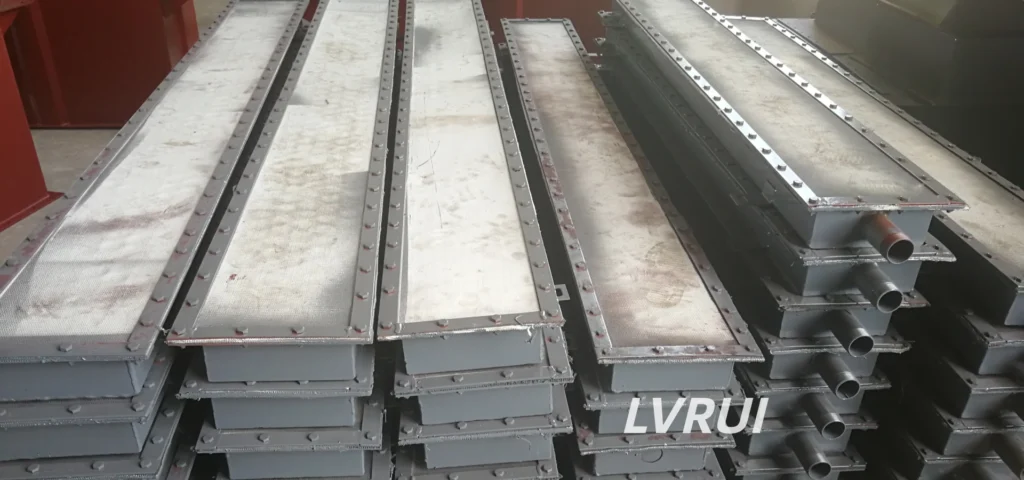
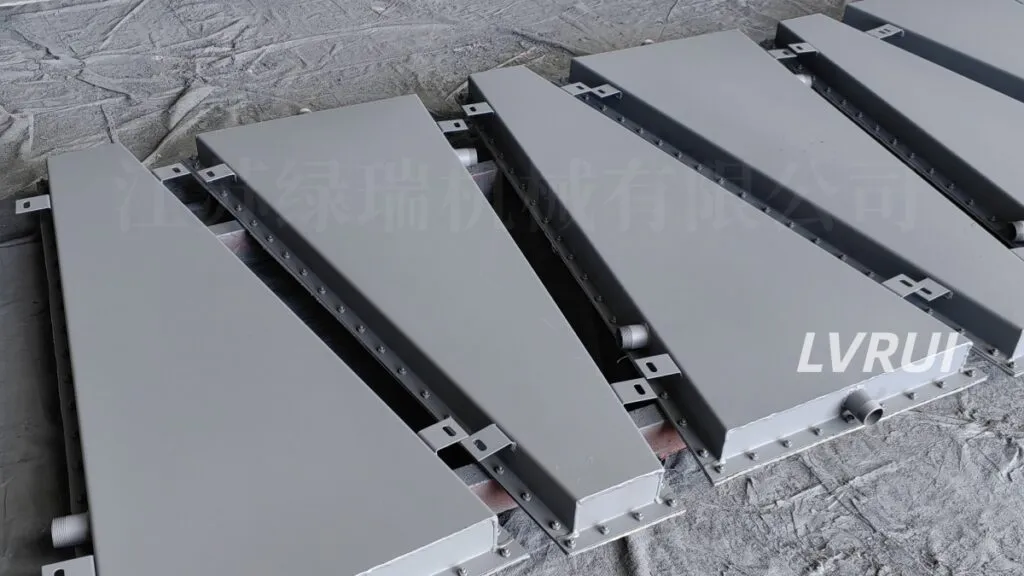
A Practical Guide to Support Alignment, Section Connections, Air Slide Fabric, Sealing and Startup Checks
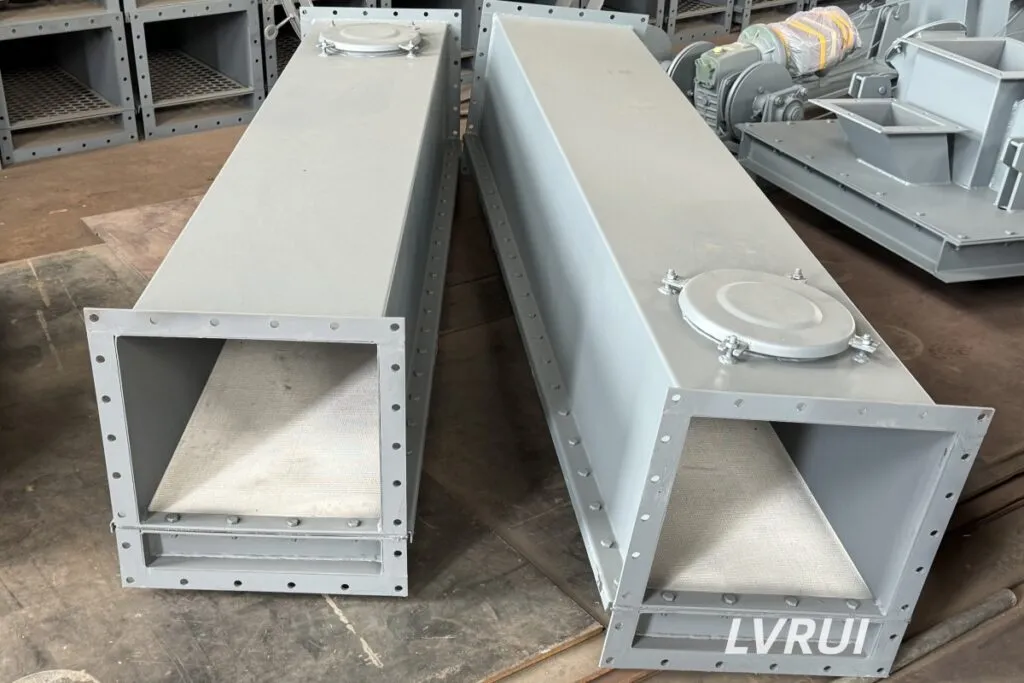
Introduction
Air slide conveyor installation begins after the conveyor configuration, conveying route and equipment interfaces have been confirmed. At this stage, the main objective is to install each conveyor section according to the approved layout while maintaining the required elevation profile, alignment, sealing and fluidizing-air connections.
Installation errors such as misaligned sections, damaged or wrinkled air slide fabric, leaking lower air chambers, restricted transitions or incorrectly connected air piping can affect powder flow during commissioning.
This guide focuses on practical installation and startup checks for air slide conveyors used in cement and dry powder handling systems. Equipment sizing, material suitability and blower calculations should be confirmed separately during engineering and selection.
Quick Answer: How Should an Air Slide Conveyor Be Installed?
An air slide conveyor should be installed according to the approved equipment and layout drawings, with the required continuous downward conveying profile maintained from inlet to outlet. Conveyor sections should be correctly supported and aligned, flange joints sealed, air slide fabric installed flat and securely fixed, and the lower air chamber connected to the specified fluidizing-air supply. Before normal production, the system should undergo airflow, leakage and controlled material-flow checks.
Step-by-Step Air Slide Conveyor Installation Process
A proper air slide conveyor installation should follow the approved layout from support preparation and section assembly through fabric installation, sealing and commissioning.
Air Slide Conveyor Installation Process Overview
| Installation Step | Main Check | Purpose |
|---|---|---|
| Support and Elevation Check | Confirm support positions and elevations against approved drawings | Maintain the required conveying profile |
| Conveyor Section Assembly | Align adjoining sections and flange connections | Maintain a smooth material passage |
| Air Slide Fabric Installation | Install fabric flat, secure edges and avoid wrinkles or damage | Maintain uniform fluidizing-air passage |
| Lower Air Chamber Connection | Connect air piping, branches and valves according to drawings | Supply fluidizing air to each required section |
| Sealing Inspection | Check flange joints, covers, fabric edges and air connections | Prevent air and dust leakage |
| Inlet and Outlet Interface Check | Confirm clear transitions to connected equipment | Avoid local restriction or accumulation |
| Commissioning | Perform airflow, leakage and controlled material-flow tests | Verify installation before normal production |
Step 1: Check Supports and Installation Elevations
Before lifting conveyor sections into position, compare the support locations and elevations with the approved general arrangement drawing.
Check:
✓ Support position and spacing
✓ Anchor or fixing points
✓ Structural condition and load support
✓ Inlet and outlet elevation
✓ Intermediate section elevations
✓ Clearance for installation and inspection access
The objective is not to make the conveyor horizontally level. The installed supports must reproduce the required conveying profile shown on the project drawing.
Errors in support elevation can create local flat sections, unexpected changes in inclination or misalignment between adjoining conveyor sections.
Step 2: Verify the Installed Conveying Profile
After the supports are positioned, confirm that the conveyor follows the elevation and inclination shown on the approved project drawing.
Check that:
✓ The route remains continuously downward where required
✓ No unintended flat or reverse-slope section has been created
✓ Section joints do not introduce a step into the material path
✓ Inlet and outlet elevations match connected equipment
✓ Support adjustment has not changed the designed conveying route
Do not change the conveyor inclination during installation based on a generic slope value. If the installed route cannot match the approved drawing, the layout should be reviewed before structural modifications are made.
Step 3: Assemble and Align Conveyor Sections
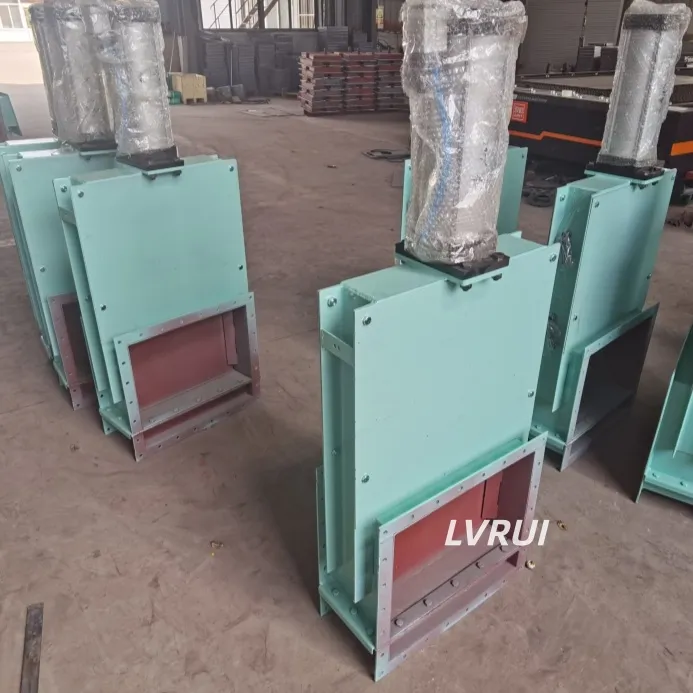
Position adjoining air slide conveyor sections so that the internal material passage remains continuous through each flange connection.
Before tightening the connection:
✓ Check section centerline alignment
✓ Check upper and lower chamber alignment
✓ Confirm flange faces fit correctly
✓ Verify that no internal edge projects into the material path
✓ Install the specified gasket or sealing material
✓ Tighten connections evenly
A misaligned section joint can create a local accumulation point even when the overall conveyor profile is correct.
Step 4: Connect the Fluidizing-Air Supply
Connect the lower air chamber to the fluidizing-air piping according to the approved air-distribution arrangement.
Check:
✓ Correct air connection for each conveyor section
✓ Correct valve orientation and accessibility
✓ Secure and sealed piping connections
✓ No blocked or unintentionally closed air branch
✓ Pressure measurement points installed where specified
✓ Flexible connections installed where required by the equipment layout
Installation should confirm that air can reach the required lower chambers without obvious leakage or restriction. Airflow, pressure loss and blower power should be confirmed from the project design rather than adjusted to a universal pressure value.
For airflow and blower sizing methods, see the Air Slide Conveyor Power Calculation Guide.
Step 5: Install the Air Slide Fabric
The air slide fabric separates the upper material chamber from the lower air chamber and allows fluidizing air to pass through the powder bed. Its installation should therefore be checked carefully before the upper conveyor section is fully closed.
Check that the fabric is:
✓ Clean and free from installation debris
✓ Installed flat without folds or wrinkles
✓ Positioned correctly over the support plate
✓ Securely fixed around the edges
✓ Properly sealed so powder cannot bypass into the lower chamber
✓ Free from cuts, punctures or heat damage
Avoid excessive local tension or uneven fixing that may distort the fabric or sealing edge.
For fabric construction and application details, see the Air Slide Fabric page.
Step 6: Check Sealing Before Closing the Installation
Air leakage from the lower chamber reduces the air available for fluidization, while poor sealing in the upper conveying section can allow dust to escape during operation.
Inspect:
✓ Conveyor section flange joints
✓ Fabric edge sealing
✓ Inspection covers
✓ Lower air chamber joints
✓ Air-pipe connections
✓ Inlet and outlet connections
Seal defects should be corrected before material commissioning rather than compensated for by increasing blower output.
Step 7: Verify Inlet and Outlet Interfaces
Before commissioning, inspect the connection between the air slide conveyor and the upstream and downstream equipment.
Confirm that:
✓ The inlet transition is clear and correctly positioned
✓ Material can enter without hitting a restricted internal edge
✓ The outlet is not partially obstructed
✓ Downstream equipment can receive material continuously
✓ Flexible or expansion connections are installed where specified
✓ Inspection access remains available
The purpose of this check is to verify the physical installation interface, not to redesign the overall powder-handling system.
Before inspection, adjustment or commissioning work that may expose personnel to unexpected equipment startup or stored energy, follow the plant’s approved energy-isolation procedure. OSHA provides requirements for the control of hazardous energy (lockout/tagout) during applicable servicing and maintenance activities.
Air Slide Conveyor Commissioning Procedure
After air slide conveyor installation is completed, commissioning should verify airflow, sealing, material movement and downstream discharge before normal production begins.
Step 1: Pre-Startup Inspection
Before starting the blower:
✓ Remove installation debris and loose items
✓ Confirm covers and flange joints are closed
✓ Check fabric installation if accessible
✓ Confirm air piping and valves are correctly connected
✓ Confirm downstream equipment is ready
✓ Verify that the material path is clear
Step 2: Airflow-Only Test
Operate the fluidizing-air system without feeding powder.
Check:
✓ Blower operation
✓ Abnormal vibration or noise
✓ Obvious air leakage
✓ Air delivery to required conveyor sections
✓ Pressure indication where measurement points are provided
Step 3: Initial Material Test
Introduce a controlled amount of material and observe how it moves through the complete conveying route.
Check:
✓ Stable movement from inlet to outlet
✓ No accumulation at section joints
✓ No unusual dust or air leakage
✓ Stable discharge into downstream equipment
✓ No localized area of poor fluidization
Step 4: Increase Feed Gradually
If the initial material test is stable, increase the feed rate gradually toward the required operating condition rather than applying maximum throughput immediately.
Monitor:
✓ Material flow stability
✓ Outlet discharge
✓ Pressure trend
✓ Leakage
✓ Repeated accumulation
✓ Upstream and downstream coordination
If instability develops, identify the affected location before changing multiple operating variables at the same time.
Common Air Slide Conveyor Installation Mistakes
| Installation Mistake | Possible Result |
|---|---|
| Support elevations do not match the drawing | Local flat area, poor alignment or incorrect conveying profile |
| Misaligned section connections | Material accumulation at joints |
| Wrinkled or damaged air slide fabric | Uneven fluidization |
| Poor fabric-edge sealing | Powder entering the lower air chamber |
| Lower air chamber leakage | Reduced fluidizing-air supply |
| Restricted inlet or outlet transition | Local buildup or unstable material flow |
| Air piping connected incorrectly | One or more sections receive insufficient air |
| Full material feed before commissioning | Installation problems appear under load before they are identified |
What Should Be Confirmed Before Installation Handover?
Before installation is accepted for normal operation, confirm:
✓ Conveyor section locations match the approved layout
✓ Support elevations and conveying profile are correct
✓ Section joints are aligned and sealed
✓ Air slide fabric has been inspected
✓ Lower air chambers are sealed
✓ Fluidizing-air piping is connected correctly
✓ Inlet and outlet interfaces are clear
✓ Inspection covers are accessible
✓ Airflow-only testing has been completed
✓ Controlled material commissioning has been completed
✓ Any installation corrections have been recorded
The final handover record should reflect the actual installed condition, especially where field adjustments differ from the original drawing. After commissioning, routine inspection intervals and operating records should be established. See the Air Slide Conveyor Maintenance Checklist for preventive inspection guidance.
Air Slide Conveyor Installation FAQs
What should be checked before installing an air slide conveyor?
Confirm the approved layout, support positions, inlet and outlet elevations, conveyor section arrangement, air-supply connections and interfaces with upstream and downstream equipment before installation begins.
What slope should be used during air slide conveyor installation?
The conveyor should be installed according to the inclination and elevation profile specified in the approved project drawing. A universal slope should not be applied during installation because the required profile depends on the selected equipment, material, route and available elevation difference.
How should air slide fabric be installed?
The fabric should be clean, flat, properly positioned over the support plate, securely fixed around its edges and sealed so powder cannot enter the lower air chamber. Wrinkles, cuts, loose edges and uneven fixing should be corrected before closing the conveyor.
What should be checked at air slide conveyor section joints?
Check centerline alignment, flange fit, sealing, internal continuity and whether any edge or misalignment projects into the powder flow path.
Should the air slide conveyor be tested before full material feed?
Yes. First perform an airflow-only test, then introduce a controlled amount of material. Increase the feed rate gradually only after airflow, leakage, material movement and downstream discharge have been checked.
What should be recorded after installation?
Record the installed section arrangement, field adjustments, air connections, inspection findings, commissioning results and any deviation from the original drawing.
Conclusion
Air slide conveyor installation should reproduce the approved conveying route and equipment arrangement as accurately as possible. Support elevations, section alignment, air slide fabric, lower air chamber sealing, fluidizing-air connections and inlet/outlet interfaces should all be verified before material commissioning.
A controlled startup—beginning with an airflow-only test followed by gradual material feeding—helps identify installation problems before normal production begins. If field conditions require changes to the designed conveying profile or equipment interfaces, those changes should be reviewed before permanent modification.
Need Help Reviewing Your Air Slide Conveyor Installation Requirements?
Send LVRUI the conveyor layout, section dimensions, inlet and outlet elevations, conveying material, required capacity, blower information and photos or drawings of the installation area.
Based on the available information, LVRUI can help review the equipment arrangement, section connections, air-supply interfaces and installation requirements before the conveyor is placed into operation.
📧 Email: info@lvrui-conveyor.com
💬 WhatsApp: +86 18261998937
🌐 Website: https://lvrui-conveyor.com