How Plate-Type Powder Aeration Devices Differ from Aeration Pads and Air Slide Components
Introduction
Air slide aeration plate is a term used in some powder-handling projects to describe a plate- or panel-type device for powder aeration and fluidization, although the terminology is not fully standardized across manufacturers and engineering documents. Related terms may include aeration plate, fluidization plate, aeration panel, fluidizing pad, and air-slide flow aid. These names are not always used consistently between manufacturers, engineering drawings, and plant operators.
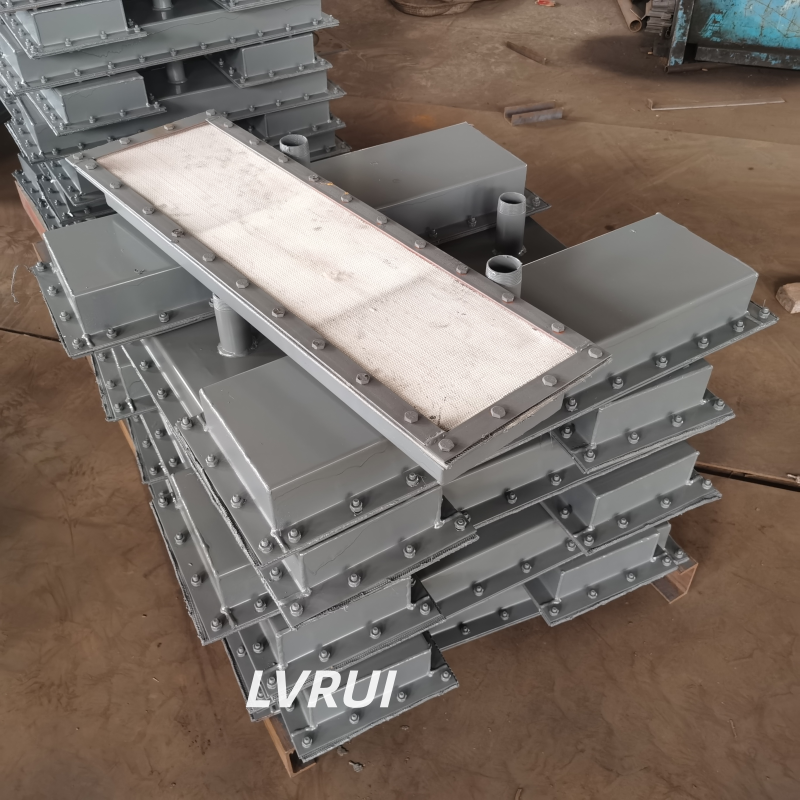
In general, a plate-type aeration device introduces low-pressure air through a permeable or porous surface to improve local powder mobility. It may be installed in a silo, hopper, discharge zone, or another location where dry powder requires additional fluidization.
However, this type of device should not automatically be confused with an aeration pad or with the fabric and support structure inside an air slide conveyor. The actual component should be identified from its construction, installation position, and function rather than from the name alone.
What Does “Air Slide Aeration Plate” Mean?
The term “air slide aeration plate” does not always describe one standardized component design. In some project documents or supplier descriptions, it is used broadly for a plate or panel that distributes air through a permeable surface to assist powder fluidization.
Related terms may include:
- Aeration plate
- Fluidization plate
- Aeration panel
- Powder aeration device
- Powder flow aid
- Fluidizing plate
These terms may describe similar operating principles, but their physical construction can differ. A compact silo aeration pad, a larger fluidization panel, and the porous conveying medium inside an air slide should therefore not be assumed to be interchangeable.
Aeration Plate vs Aeration Pad vs Air Slide Internal Components
| Component | Primary Function | Typical Position |
|---|---|---|
| Aeration Pad | Provides localized aeration to help dry powder move toward an outlet | Silo cone, hopper bottom or discharge zone |
| Aeration Plate / Fluidization Plate | Distributes air over a plate- or panel-type aeration surface; exact construction varies by design | Silo, hopper or localized powder-flow zone |
| Air Slide Fabric / Porous Media | Allows fluidizing air to enter the conveyed powder | Inside the air slide conveyor between the material and air chambers |
| Perforated / Grid Support Plate | Supports the air slide fabric and maintains the lower air passage in fabric-type designs | Inside the air slide conveyor beneath the fabric |
These components may all be associated with powder fluidization, but their functions and structures are different. The safest way to identify the correct component is to check the equipment drawing, installation position, air chamber, and permeable medium.
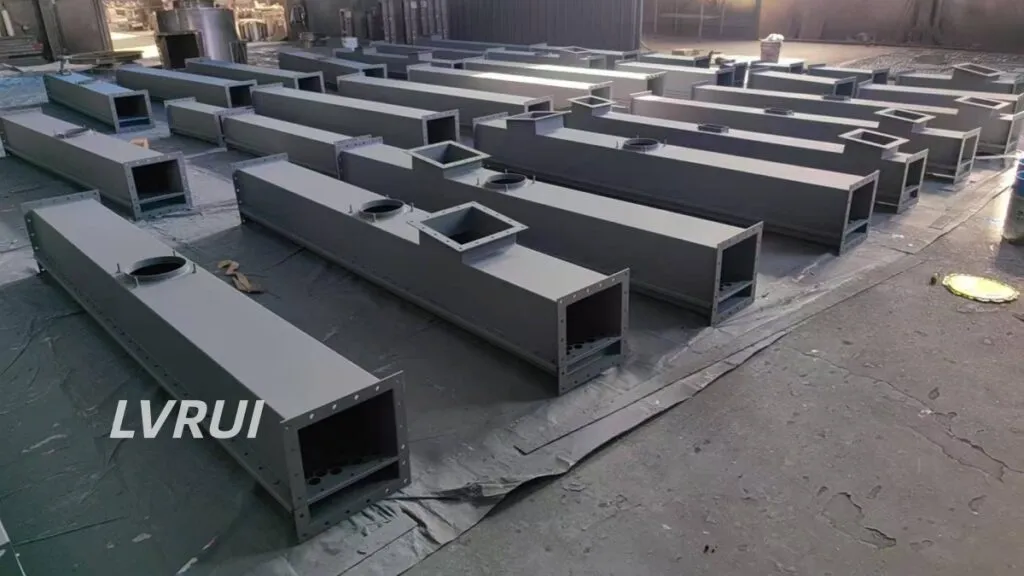
Air slide designs are not identical across manufacturers. In LVRUI’s conventional fabric-type air slide conveyor, the air slide fabric is supported by a perforated or grid support plate above the lower air chamber. Other designs may use different porous media or plate arrangements.
For the complete conveying principle, see how an air slide conveyor works.
How Plate-Type Powder Aeration Works
Low-pressure air enters a chamber beneath the permeable or porous aeration surface. The air then passes through the active surface and enters the powder directly above it.
The basic process is:
- Low-pressure air enters the aeration chamber.
- Air is distributed across the active surface.
- Air passes into the powder above the plate or panel.
- Local compaction and particle contact may be reduced.
- Suitable dry powder can move more readily toward the outlet or next process.
Aeration does not mechanically push powder through the system. Its effectiveness depends on the material properties, storage condition, equipment geometry, and the location where air is introduced.
Research on aerated silo discharge also shows that aeration performance depends on powder behavior and operating conditions rather than on a universal airflow setting.
Where Plate-Type Aeration Devices May Be Found
Silo and Hopper Flow-Aid Zones
Plate- or panel-type aeration devices may be installed in selected silo or hopper areas where local powder compaction affects movement toward the discharge zone.
Powder Discharge Areas
A larger aeration surface may be used where the equipment design requires air distribution across a broader area rather than through several compact aeration pads.
Specialized Fluidization Equipment
Some powder-handling systems use custom porous plates, panels or fluidization surfaces as part of equipment-specific flow-aid designs. Their function should be confirmed from the actual engineering drawing.
This article does not provide aeration-pad placement rules or silo-cone layout recommendations. For that topic, see the Aeration Pads Placement Design guide.
Why Component Names Can Be Misleading
Powder-handling terminology is not fully standardized across suppliers and engineering projects. A component described as an “aeration plate” in one drawing may be called a “fluidization panel” or “air pad” elsewhere.
For this reason, the name alone is not sufficient for equipment selection.
When identifying a component, check:
- Where it is installed
- Whether it has a separate air chamber
- The size of the active aeration surface
- Whether the permeable element is fabric, porous media, or another material
- Whether the component supports powder flow in a silo or forms part of a conveyor
- Whether another structural plate supports the permeable medium
What an Aeration Plate Does Not Automatically Replace
An aeration plate or fluidization panel should not automatically be treated as a replacement for other powder-handling components.
It does not replace:
A Flow Control Gate
Aeration improves powder mobility. It does not precisely regulate the material discharge rate.
A Shut-Off or Isolation Valve
An aeration device cannot provide positive process isolation.
Air Slide Fabric
In a fabric-type air slide conveyor, the air slide fabric or porous conveying medium performs a separate fluidization and conveying function.
The Air Slide Support Structure
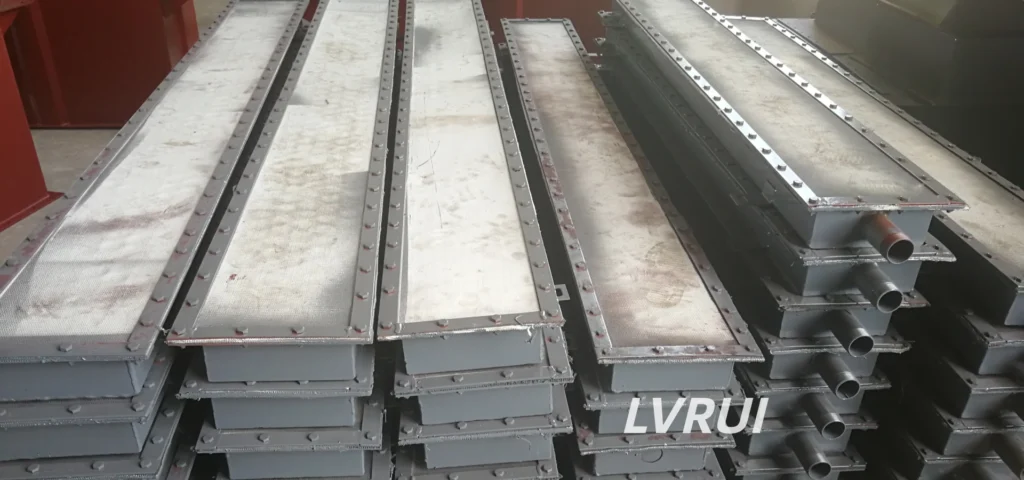
A perforated or grid support plate primarily supports the conveying medium in LVRUI’s conventional air slide design. It is not automatically the same component as a standalone silo aeration plate.
Proper Silo or Hopper Design
Additional aeration cannot automatically correct unsuitable geometry, severe caking, wet material, or physical outlet obstruction.
What Information Helps Identify the Correct Component?
Before requesting a replacement or new aeration component, provide:
- Equipment or silo drawing
- Installation location
- Photos of the existing component
- Overall dimensions
- Active aeration surface dimensions
- Air inlet size and position
- Permeable media or fabric information, if known
- Powder being handled
- Available low-pressure air-supply information
These details help determine whether the requirement is for an aeration pad, aeration plate, fluidization panel, air slide fabric, or another component.
Air Slide Aeration Plate FAQs
Is an air slide aeration plate a standardized component name?
Not always. The term may be used differently between suppliers and project documents. The actual equipment should be identified from its structure, installation location and function.
Is an aeration plate the same as an aeration pad?
Not necessarily. Both may introduce air into powder, but their size, construction and installation arrangement can differ. Some suppliers may also use the terms interchangeably, so drawings and specifications should be checked.
Is an aeration plate the same as the perforated support plate inside an air slide conveyor?
Not automatically. In LVRUI’s conventional fabric-type air slide design, the perforated or grid plate supports the air slide fabric above the lower air chamber. A standalone aeration plate used as a powder flow aid has a different system role.
What is the difference between an aeration plate and air slide fabric?
An aeration plate or fluidization panel is generally a complete or partial powder-aeration device, while air slide fabric is the permeable conveying medium used inside a fabric-type air slide conveyor.
Why do different suppliers use different names for similar aeration devices?
Powder aeration terminology is not completely standardized. Terms such as aeration plate, fluidization plate, aeration panel and aeration pad may overlap depending on the equipment design and supplier terminology.
What should I provide if I am unsure which component I need?
Provide equipment drawings, installation photos, dimensions, mounting details, air inlet information and the powder being handled. These details are more reliable than the component name alone.
Conclusion
The term “air slide aeration plate” may refer to different plate- or panel-type powder fluidization components depending on the supplier and equipment design.
When identifying a component, the most important factors are its structure, installation position, permeable medium, air chamber and actual function. Aeration plates, aeration pads, air slide fabric and support plates may all be related to powder fluidization, but they should not automatically be treated as interchangeable components.
Correct identification helps avoid specification errors when replacing or integrating powder aeration equipment.
Not Sure Which Aeration Component You Need?
Send LVRUI your equipment drawing, installation photos, component dimensions, air inlet details and powder information.
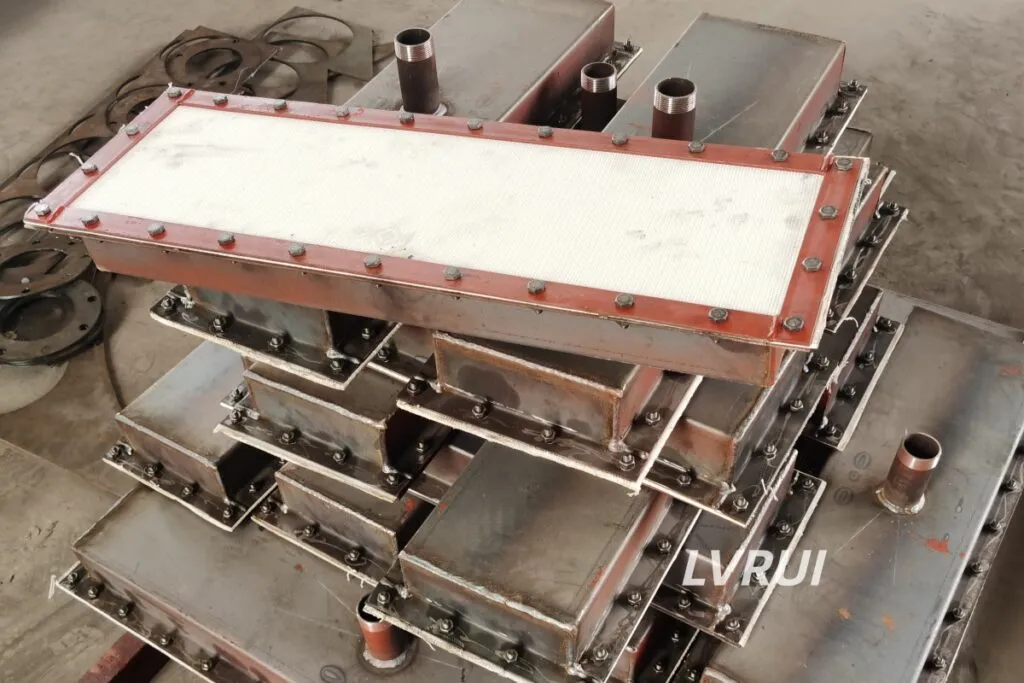
Based on the actual structure and installation position, LVRUI can help identify whether the requirement is for an aeration pad, fluidization plate, air slide fabric, support structure or another powder-aeration component.
✓ Drawing and component review
✓ Existing-part identification
✓ Installation interface confirmation
✓ Configuration recommendation
Email: info@lvrui-conveyor.com
WhatsApp: +86 182 6199 8937
WeChat: +86 182 6199 8937