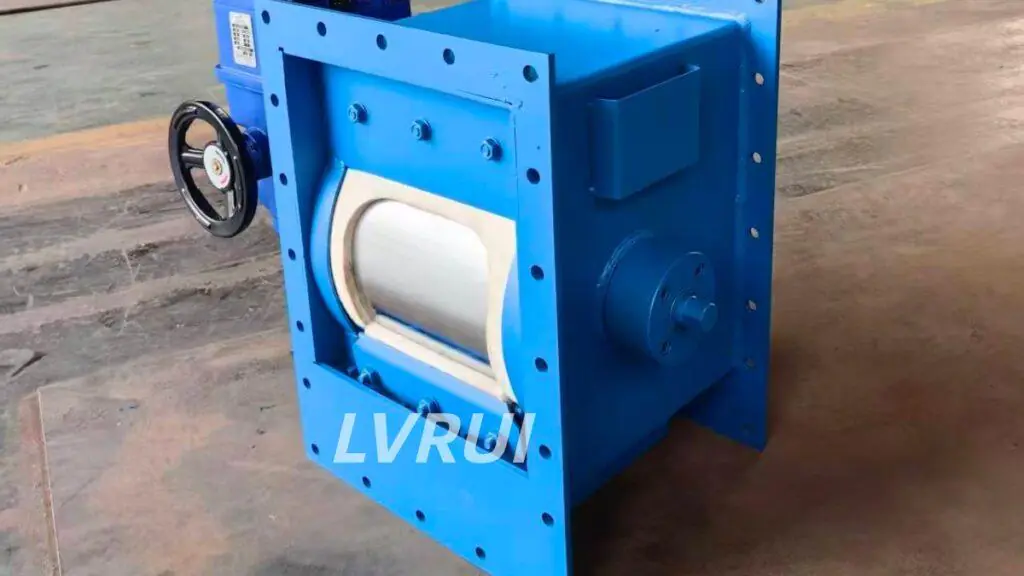
Louver Damper for Cement Plants: Where It Is Used and How to Select It

Practical guidance for selecting louver dampers in baghouse ducts, kiln exhaust systems, mill ventilation lines, clinker cooler exhaust and other cement plant airflow applications.


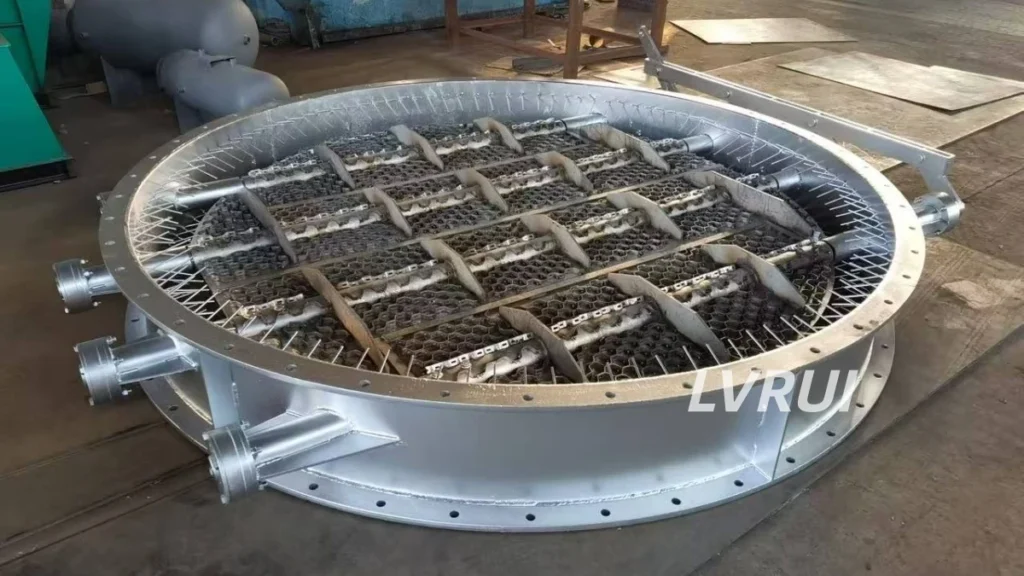
Parallel blade louver damper structure for large industrial ducts
Parallel blades rotate in the same direction to regulate airflow across large industrial duct sections.

Where Are Louver Dampers Used in Cement Plants?

A louver damper for cement plants is used to regulate, balance or isolate airflow in large industrial duct systems carrying ventilation air, dust-laden air and process exhaust gas.

Baghouse and Dust Collector Ducts

Dust collection systems depend on controlled airflow to capture dust from mills, conveyors, transfer points and other production areas.

Louver dampers can be installed in:

  • Dust collector inlet ducts
  • Baghouse branch ducts
  • Outlet ducts
  • Fan inlet or outlet lines
  • Individual dust extraction branches

In a system with multiple extraction points, the damper can help balance airflow between branches or isolate part of the ductwork during maintenance.

The required blade position should be determined from the actual airflow and pressure conditions rather than only from a visual estimate of the opening angle.

For detailed product specifications and available configurations, see the Louver Damper product page.


Kiln and Preheater Exhaust Ducts

Kiln and preheater systems handle large quantities of process gas, often at elevated temperatures.

Louver dampers in these ducts may be used to regulate exhaust airflow, balance gas distribution or isolate sections of the duct system.

High-temperature applications require more than selecting a different body material. The design may also need to consider:

  • Normal and maximum gas temperature
  • Blade thickness and reinforcement
  • Shaft material
  • Bearing arrangement
  • Shaft sealing
  • Thermal expansion
  • Actuator protection

For this reason, a damper intended for kiln or preheater service should be designed according to the actual operating temperature rather than relying on a general temperature rating.


Clinker Cooler Exhaust Systems

Clinker cooler systems use large volumes of air, and their exhaust ducts can contain both elevated temperatures and abrasive dust.

Louver dampers may be installed in cooler exhaust ducts or associated fan systems to regulate airflow between different process sections.

Selection should consider:

  • Duct dimensions
  • Airflow volume
  • Gas temperature
  • Dust loading
  • Pressure condition
  • Required control function

Where abrasive clinker dust is present, blade edges, shafts, bearings and maintenance accessibility also become important design considerations.


Cement Mill, Raw Mill and Fan Ventilation Ducts

Cement mills and raw mills require ventilation to remove heat and maintain stable operating conditions. Dust extraction systems connected to these areas also depend on correctly distributed airflow.

Typical louver damper installation points include:

  • Mill ventilation ducts
  • Separator exhaust ducts
  • Dust extraction branches
  • Fan inlet ducts
  • Fan outlet ducts

A louver damper should be evaluated as part of the ventilation system rather than as an isolated component. Airflow, fan pressure and system resistance can all influence how the damper behaves at different blade positions.


Multi-Blade Design: Parallel vs Opposed Blade Louver Dampers

A louver damper uses several blades across the duct opening instead of one large rotating plate. Louver dampers are one type of industrial damper valves used for airflow regulation, balancing and isolation in industrial duct systems.

For large industrial ducts, this multi-blade structure distributes airflow control across a wider cross-section and makes it possible to adapt the damper to large square or rectangular duct dimensions.

However, blade quantity alone does not determine performance. Additional blades also introduce additional shafts, bearings and linkage points, all of which must be designed according to the operating conditions.

Two common blade arrangements are parallel and opposed blade configurations.

Parallel-Blade Louver Damper

In a parallel-blade damper, all blades rotate in the same direction.

This is the primary configuration used by LVRUI for many cement plant louver damper applications.

Parallel blades are suitable for applications involving:

  • General airflow regulation
  • Duct isolation
  • Dust collection branches
  • Exhaust ducts
  • Large process-air systems

The linkage arrangement is relatively straightforward and is suitable for many industrial ventilation applications.

Opposed-Blade Louver Damper

In an opposed-blade arrangement, adjacent blades rotate in opposite directions.

This arrangement can be considered where a project requires a different airflow distribution or modulation characteristic during partial opening.

LVRUI primarily supplies parallel-blade configurations, while opposed-blade designs can be evaluated for customized applications when required.

Neither arrangement should automatically be considered better. The correct choice depends on the required airflow behavior and actual duct conditions.


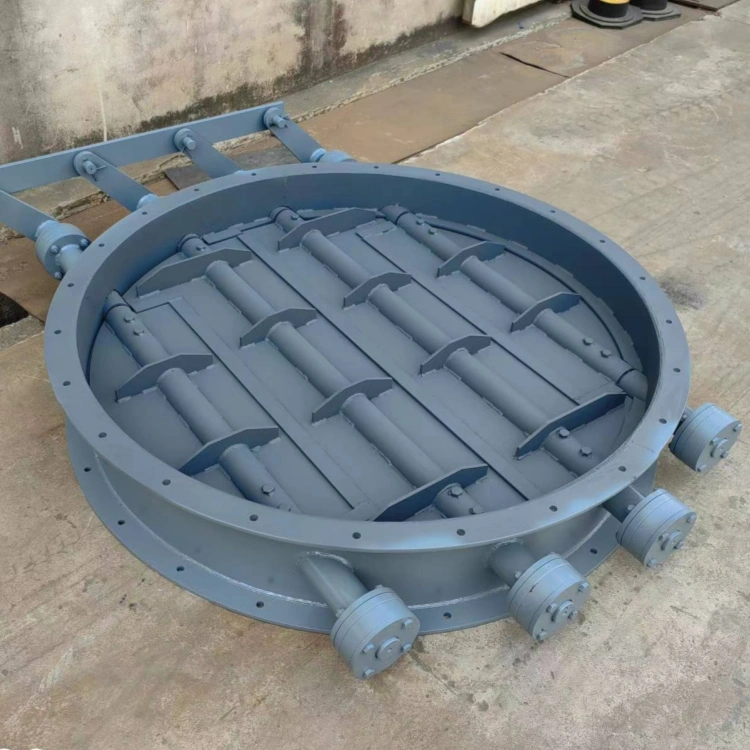
Louver damper for cement plants with parallel blade design

LVRUI

Parallel-blade louver damper for airflow regulation and isolation in cement plant duct systems.

What Determines Louver Damper Selection in a Cement Plant?

Selecting a louver damper only by duct width and height is not sufficient. Several operating parameters should be confirmed before the design is finalized.

1. Duct Size and Shape

Provide the actual:

  • Round diameter, or
  • Width × height for rectangular ducts
  • Flange dimensions
  • Available installation space

Large rectangular dampers may require additional blade, shaft or frame reinforcement.

2. Airflow Volume

Normal and maximum airflow should be provided where available.

Airflow volume influences the blade configuration, required opening position and overall damper behavior within the ventilation system.

3. Gas Temperature

Both normal and maximum operating temperatures should be considered.

Temperature may affect:

  • Blade and body material
  • Shaft design
  • Bearings
  • Sealing arrangement
  • Thermal expansion allowance
  • Actuator location

High-temperature configurations should therefore be selected according to actual process conditions.

4. Dust and Gas Conditions

Confirm whether the duct carries:

  • Clean air
  • Cement dust
  • Raw meal dust
  • Fly ash
  • Kiln dust
  • Hot process gas
  • Other dust-laden exhaust

Dust concentration and abrasiveness can influence blade clearance, shaft sealing and maintenance requirements.

For systems handling combustible dust, plant-specific dust hazard assessment and applicable safety requirements should also be considered. See the OSHA combustible dust guidance for general information on combustible dust hazards.

5. Required Control Function

Clarify whether the damper is intended mainly for:

  • Airflow regulation
  • Balancing
  • Isolation
  • Throttling
  • Automatic modulation

A damper primarily used for isolation may have different design priorities from one that frequently operates at intermediate blade positions.

6. Actuator and Control Requirements

Typical operating methods include manual, electric and pneumatic actuation.

Manual operation is suitable for infrequent local adjustment. Electric actuators are commonly used for remote positioning or modulation, while pneumatic actuators can be selected for frequent switching or interlocked operation.

For automated systems, also confirm any requirements for:

  • PLC or DCS integration
  • Limit switches
  • Position indication
  • Intermediate positioning
  • 4–20 mA control or feedback

The actuator should ultimately be sized according to damper dimensions, operating torque and required movement frequency.


Louver Damper vs Butterfly Damper in Cement Plants

Both louver and butterfly dampers control airflow, but their structures and typical applications differ.

Selection FactorLouver DamperButterfly Damper
Blade StructureMultiple linked bladesSingle rotating blade
Typical DuctLarge process and ventilation ductsCompact round or rectangular ducts
Airflow ControlMulti-blade regulation and balancingGeneral regulation and isolation
InstallationRequires blade linkage spaceMore compact structure
Typical ApplicationsBaghouse, kiln, preheater, cooler and large process ductsDust ducts, cyclone outlets and fan lines

A louver damper is generally preferred where a large process duct benefits from multi-blade airflow regulation or balancing.

A butterfly damper may be more suitable where compact construction and straightforward airflow control are priorities.

Final selection should be based on the actual duct dimensions and operating conditions rather than assuming that one damper type is universally better.


Common Louver Damper Selection Mistakes

Several recurring mistakes can lead to poor damper selection even when the basic duct dimensions are correct.

Selecting Only by Duct Size

Two ducts with identical dimensions may operate at very different airflow volumes, temperatures, pressures and dust concentrations.

Duct size therefore cannot be the only selection parameter.

Airflow, temperature, operating medium and control function should be evaluated together.

Using an Airflow Damper for Direct Powder Discharge

A louver damper is primarily intended to control air, exhaust gas or dust-laden airflow inside a duct.

It is not normally used as the main valve for cement, fly ash or other bulk solids flowing directly from a silo or hopper.

For direct powder handling, a flow control gate valve may be used when material flow needs to be regulated, while a slide gate valve is more appropriate for simple isolation or full-open/full-close operation.

Assuming Every Louver Damper Provides Tight Shut-Off

A closed damper does not automatically mean gas-tight isolation.

Actual leakage depends on factors such as:

  • Blade clearance
  • Blade edge design
  • Frame construction
  • Shaft arrangement
  • Sealing configuration

If a project has a specific leakage requirement, it should be defined before the damper structure is finalized.


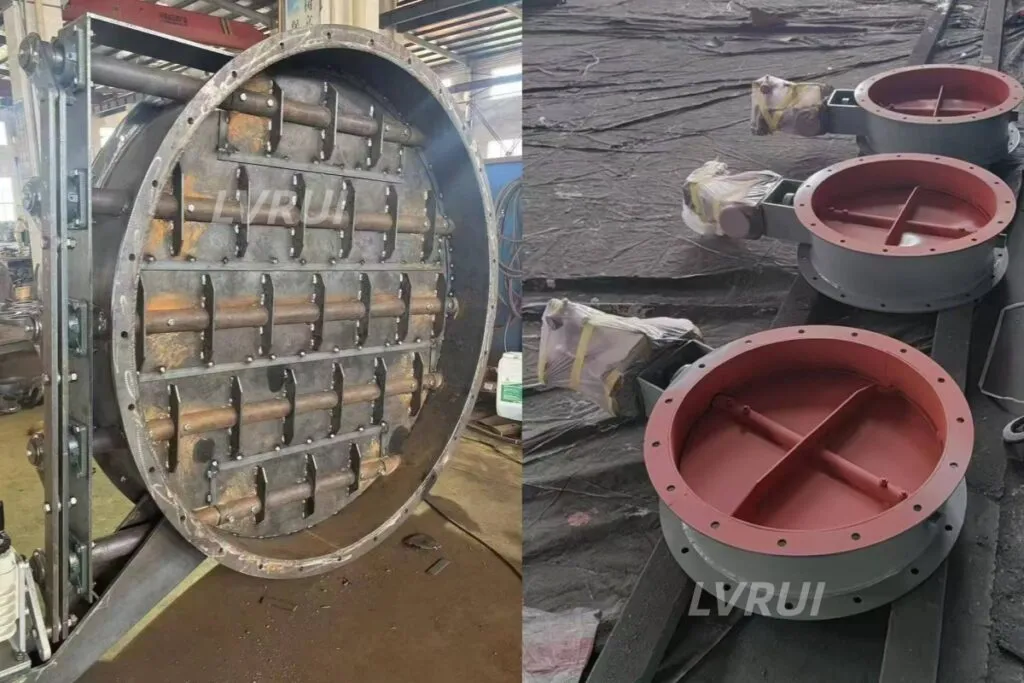
Louver damper and butterfly damper for cement plant airflow control
Comparison of multi-blade louver damper and single-blade butterfly damper structures for industrial duct airflow control.

FAQs About Louver Dampers in Cement Plants

Where are louver dampers installed in cement plants?

They are commonly installed in baghouse ducts, kiln and preheater exhaust ducts, clinker cooler exhaust systems, mill ventilation lines, fan ducts and other large process-air networks.

Can a louver damper be used in kiln exhaust ducts?

Yes, provided the damper is designed according to the actual gas temperature, duct dimensions, dust loading and pressure conditions. High-temperature applications may require different materials, shaft arrangements, bearings and sealing structures.

Are parallel-blade louver dampers suitable for cement plants?

Yes. Parallel-blade configurations are suitable for many cement plant ventilation, dust collection and process-air applications involving general airflow regulation, balancing or duct isolation.

What information is required to select a cement plant louver damper?

Provide the installation position, duct size, airflow volume, normal and maximum operating temperature, pressure condition, dust or gas characteristics, required control function and preferred actuator type.

Can a louver damper control cement powder directly?

Normally no. A louver damper is designed for airflow or gas control inside industrial ducts. Cement, fly ash and other bulk solids discharged directly from silos normally require bulk-material valves such as slide gate valves or flow control gate valves.


Need Help Selecting a Louver Damper for Your Cement Plant?

When selecting a louver damper for cement plants, provide the installation position, duct dimensions, airflow, operating temperature, pressure condition and required control method.

LVRUI can review these operating conditions and recommend the appropriate blade configuration, materials, actuator and connection dimensions for the application.

✓ Parallel-blade configuration for common cement plant applications
✓ Opposed-blade configuration available for customized projects
✓ Manual, electric or pneumatic actuation
✓ Customized round, square or rectangular duct connections
✓ PLC/DCS control options where required

For project discussion, technical review or quotation, contact LVRUI:

Email: info@lvrui-conveyor.com
WhatsApp: +86 18261998937
WeChat: +86 18261998937