Loading cement or fly ash into a closed tanker requires a reliable way to detect when the material reaches the required filling level. Because the material level inside the tanker cannot be directly observed during loading, relying only on manual operation can make the final stage of filling difficult to control.
A cement tanker level switch provides a point-level detection signal when the powder reaches a predetermined full-level position. For air-blow full-level detection on cement and fly ash loading spouts, see our Air Pressure Level Switch. The signal can then be connected to the loading control cabinet and interlocked with the material discharge valve to stop feeding.
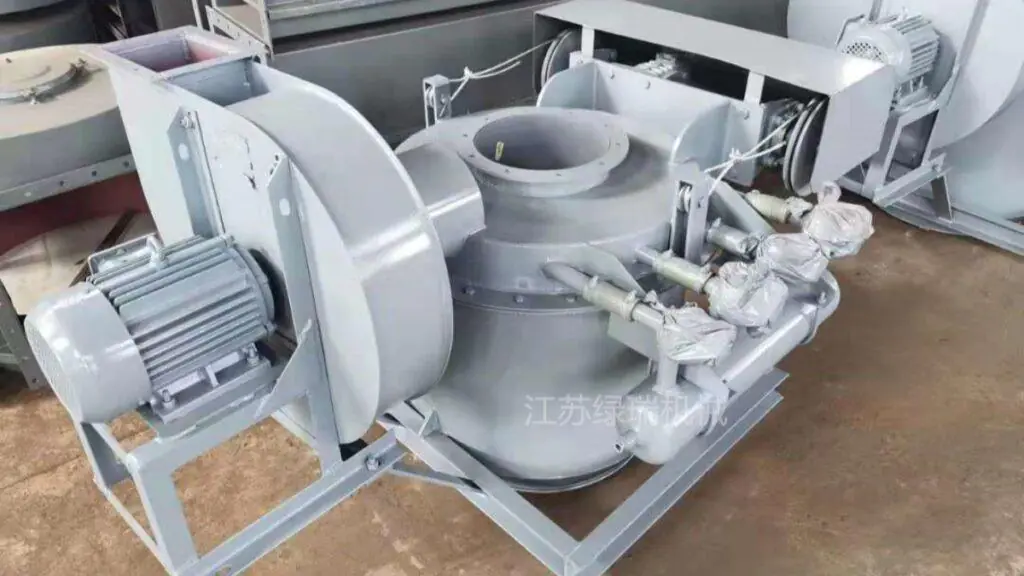
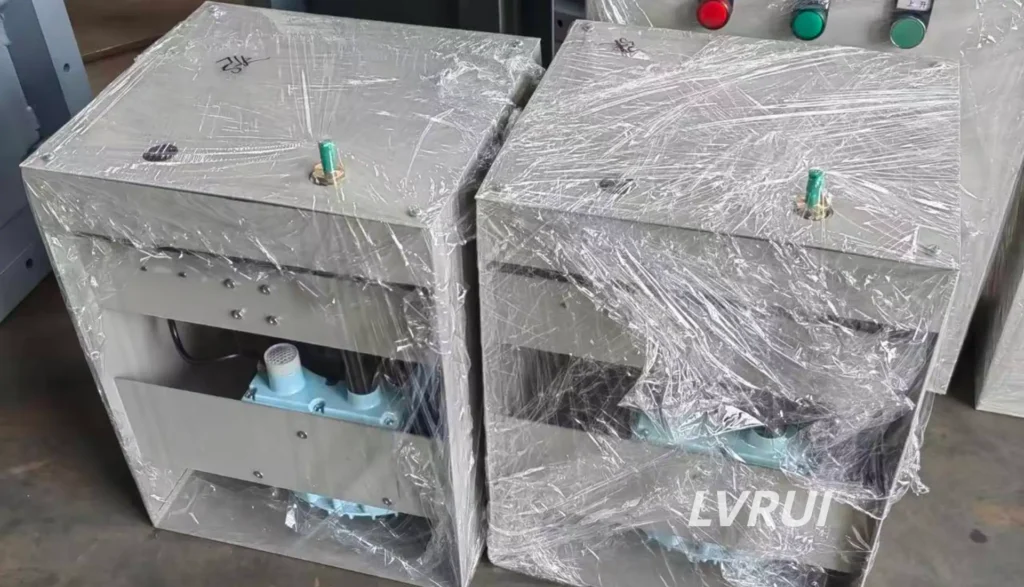
The LRS-40 uses an air-pressure detection principle. It has a built-in vortex blower that continuously supplies air through a tube connected to the loading head. When cement or fly ash reaches the detection point and blocks the air outlet, the resulting pressure change activates a pressure switch. The electrical signal is then sent to the control system to close the loading valve.
This article explains how this air-pressure level detection system works and how it integrates with a cement bulk loading system.
What Is a Cement Tanker Level Switch?
A cement tanker level switch is a point-level detection device used during bulk loading of cement, fly ash and similar dry powders.
Its purpose is to detect a specific condition: The material has reached the predetermined full-level point inside the tanker.
It does not continuously measure the material height or display the percentage of material inside the tanker. Instead, it provides a switch signal when the material reaches the detection position.
Depending on the supplier or application, the same function may be described as a cement tanker level sensor, cement loading level switch, bulk loader level switch, pneumatic level switch, or air-pressure level switch.
In equipment and procurement searches, related terms may also include micro pressure level gauge, pneumatic level gauge, air blowing level switch, and cement bulk machine level gauge. The LRS-40 is technically a point-level switch used to detect the full-level condition during bulk loading.
Some suppliers or buyers may also use terms such as micro pressure level gauge or micro pressure level switch for similar equipment. However, the LRS-40 is more accurately understood as a point-level switch rather than a continuous level gauge.
The main application is automatic full-level detection during bulk loading. This type of full-level detection is one part of a broader cement tanker overfill protection strategy.
How Does the LRS-40 Cement Tanker Level Switch Work?
The LRS-40 uses air pressure to detect when the tanker reaches the required filling level.
The basic operating sequence is:
Vortex blower → Air tube → Loading head → Air outlet → Powder blocks outlet → Back pressure changes → Pressure switch → Control cabinet → Valve interlock → Loading stops
1. The Vortex Blower Starts
The LRS-40 has a built-in vortex blower.
When the telescopic loading spout starts its loading operation, the vortex blower operates synchronously and supplies continuous air to the level detection circuit.
The airflow provides the pressure-based detection condition required by the system.
2. Air Is Supplied to the Loading Head
An air tube connects the LRS-40 to the loading head of the telescopic loading spout.
During loading, air is continuously delivered through this connection to the blowing port on the loading head.
The blowing port is positioned at the required full-level detection point inside the tanker.
3. Cement or Fly Ash Reaches the Detection Point
As cement powder or fly ash enters the tanker, the material level gradually rises.
During normal filling, the air outlet remains open, allowing the supplied air to pass through the detection path.
The level switch therefore remains in its normal operating state.
4. The Powder Blocks the Air Outlet
When the material reaches the predetermined full-level position, the cement or fly ash covers and blocks the air outlet on the loading head.
This is the actual level-detection event.
The system does not need to continuously measure the height of the material. It only needs to determine whether the powder has reached the selected detection point.
5. Back Pressure Activates the Pressure Switch
Once the air outlet is blocked, the airflow is restricted and the pressure in the air line changes.
The resulting back-pressure condition activates the pressure switch inside the LRS-40.
The pressure change is therefore converted into an electrical switching signal.
6. The Full-Level Signal Stops Material Feeding
The electrical signal from the LRS-40 is connected to the loading control cabinet.
The control system then sends a closing command to the flow control gate or other feeding valve.
The valve closes and material feeding stops.
The complete process can be summarized as:
Material loading → Material reaches detection point → Air outlet blocked → Back pressure increases → Pressure switch activated → Electrical signal → Control cabinet → Valve closes → Loading stops
This is the core operating principle of the LRS-40.
How Does the Level Switch Interlock With the Loading Valve?
The level switch is only one part of the automatic loading control system.
The LRS-40 detects the full-level condition and provides the electrical signal. It does not mechanically close the material valve itself.
A typical control arrangement is:
LRS-40 Level Switch
↓
Full-Level Signal
↓
Loading Control Cabinet
↓
Valve Drive / Actuator
↓
Flow Control Gate or Shut-Off Valve
↓
Material Feeding Stops
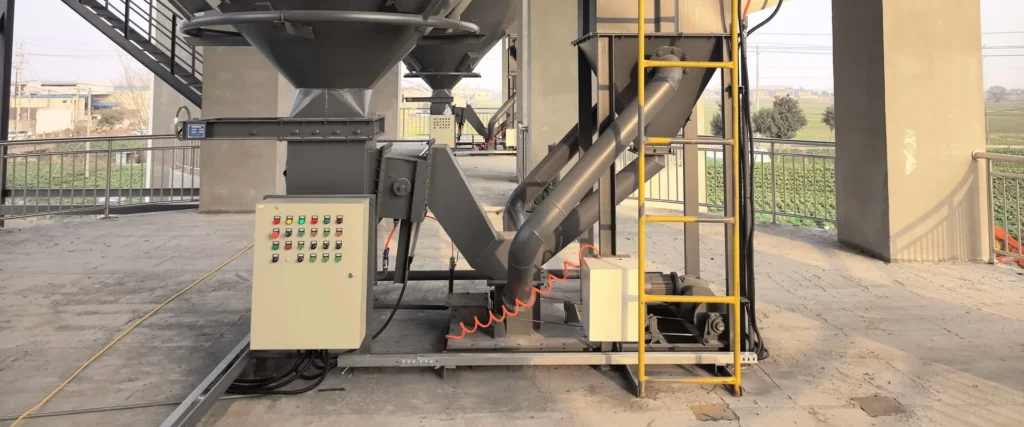
The LRS-40 therefore needs to be connected to the site control cabinet and integrated with the valve drive.
For a new bulk loading system, the level switch can be incorporated into the control logic during electrical design.
For an existing loading system, the compatibility of the level switch signal, control voltage, control logic and valve actuator should be checked before installation.
The valve closing time should also be considered because material may continue moving through the discharge path for a short period after the stop signal is generated.
Where Is the Cement Tanker Level Switch Installed?
The LRS-40 is installed as part of the bulk loader and its level detection system.
The main switch assembly can be mounted on the lifting platform of the telescopic loading spout, while the air tube connects it to the loading head. From a broader bulk-loading engineering perspective, NIOSH guidance on telescoping loadout spouts explains how reducing material drop distance can help control dust during bulk loading.
The blowing port is positioned at the lower part of the loading head and enters the tanker during loading.
The installation arrangement should be determined according to the actual equipment configuration and required filling level.
Important considerations include:
- Tanker inlet dimensions
- Loading spout structure
- Loading head dimensions
- Required full-level position
- Air tube routing
- Loading spout movement
- Installation space
- Existing control cabinet
- Valve type and actuator
- Valve closing response
The detection point should be selected according to the actual tanker and loading-head arrangement rather than using one fixed installation dimension for every application.
Is the LRS-40 a Level Switch or a Continuous Level Meter?
The LRS-40 is a point-level switch, not a continuous level transmitter.
This distinction is important because the terms level sensor, level switch, level indicator and level transmitter are sometimes used interchangeably in equipment searches.
| Device | Main Function |
|---|---|
| Level Switch | Detects whether material reaches a defined level |
| Level Sensor | General term for level detection equipment |
| Level Indicator | Indicates or displays level information |
| Continuous Level Transmitter | Continuously measures material level |
The LRS-40 belongs to the first category.
It does not continuously calculate or display the actual height of cement or fly ash inside the tanker.
Its function is more specific:
Detect the full-level condition and provide a switching signal for the loading control system.
This makes it particularly relevant to automated bulk loading where the loading valve needs to stop when the tanker reaches the required filling level.
Common Problems With Cement Tanker Level Detection
When a cement tanker level detection system does not operate correctly, both the air circuit and electrical control circuit should be checked.
Premature Full-Level Signal
If the level switch indicates a full tanker before the required level is reached, check:
- Detection point position
- Loading head installation
- Air outlet condition
- Air tube condition
- Abnormal pressure conditions
- Powder accumulation around the detection point
The installation position should be checked before adjusting the control system.
No Full-Level Signal
If the tanker reaches the required level but the LRS-40 does not generate a signal, check:
- Whether the vortex blower is operating
- Whether the air tube is correctly connected
- Whether the air outlet is correctly positioned
- Whether the pressure switch is operating
- Whether the electrical signal reaches the control cabinet
The air circuit and electrical circuit should be tested separately.
Full-Level Signal Is Generated but the Valve Does Not Close
If the LRS-40 generates the correct signal but material continues feeding, the problem may be downstream of the level switch.
Check:
- Control cabinet input
- Relay or PLC logic
- Valve control output
- Valve actuator
- Actuator power supply
- Valve mechanical movement
The level switch can only provide the detection signal. The control cabinet and valve drive must correctly execute the stop command.
Material Continues After the Valve Receives the Stop Signal
Material flow may not stop instantaneously when the valve receives the closing command.
The actual stopping condition depends on:
- Detection response
- Control-system response
- Valve closing time
- Material flow rate
- Material remaining in the discharge path
For high-capacity loading systems, these factors should be considered when determining the full-level detection position.
What Information Is Needed to Select a Cement Tanker Level Switch?
When selecting an LRS-40 or replacing an existing cement tanker level sensor, the following information is useful:
- Material name
- Cement, fly ash or other powder type
- Tanker inlet dimensions
- Loading spout structure
- Loading head dimensions
- Required filling level
- Existing valve type
- Valve actuator type
- Control cabinet configuration
- Control voltage
- Existing switch signal
- Air tube arrangement
- Installation space
- Photos of the existing equipment
- Equipment drawings, if available
For replacement projects, photographs of the existing loading spout, loading head, level switch and control cabinet can help confirm the installation and control arrangement.
The objective is not simply to select a level switch based on its name. The sensing position, air connection and electrical interlock must all be compatible with the existing bulk loading system.
LRS-40 Air-Pressure Level Switch for Cement Bulk Loading
The LRS-40 is an air-pressure level switch designed for bulk loading applications involving cement powder, fly ash and similar dry materials.
Its operating system includes:
- Built-in vortex blower
- Air-pressure detection
- Air tube connected to the loading head
- Full-level switch signal
- Installation with the bulk loading equipment
- Connection to the loading control cabinet
- Interlock with the material discharge valve
When the material reaches the predetermined full-level position, it blocks the air outlet on the loading head. The resulting back-pressure change activates the pressure switch, and the electrical signal is sent to the control cabinet.
The control system then closes the connected loading valve or flow-control valve to stop material feeding.
For customers looking to replace an existing cement tanker level switch, add full-level detection to a bulk loader, or integrate a level detection device with a loading valve, the LRS-40 can be evaluated according to the actual loading and control arrangement.
Frequently Asked Questions
What is a cement tanker level switch?
A cement tanker level switch is a point-level detection device used to detect when cement or another dry powder reaches a predetermined filling level inside a tanker during bulk loading.
How does an air-pressure level switch detect a full tanker?
The level switch continuously supplies air to a blowing port on the loading head. When the rising powder blocks the outlet, the pressure in the air line changes. This pressure change activates the pressure switch and generates a full-level electrical signal.
Can the LRS-40 be used for fly ash?
Yes. The LRS-40 is designed for cement powder, fly ash and similar dry bulk materials, provided that the material and loading arrangement are suitable for the application.
Does the LRS-40 directly close the loading valve?
No. The LRS-40 generates the full-level switch signal. The signal is connected to the loading control cabinet, which then controls the valve drive or actuator to stop material feeding.
What information is needed to select an LRS-40?
The material type, tanker inlet dimensions, loading-head arrangement, required detection level, existing valve and actuator, control cabinet and electrical signal information are useful for confirming the application.
Conclusion
A cement tanker level switch provides a simple point-level detection function for automated bulk loading of cement, fly ash and similar dry powders.
The LRS-40 uses an air-pressure detection principle rather than continuously measuring the material height. Its built-in vortex blower supplies air through the loading head. When the powder reaches the detection point and blocks the air outlet, the resulting back-pressure change activates the pressure switch.
The full-level signal is then transmitted to the loading control cabinet and interlocked with the material discharge valve:
Air supply → Full-level detection → Back-pressure change → Electrical signal → Control cabinet → Valve interlock → Loading stops
Because the level switch, control cabinet and valve drive operate as one control loop, the complete loading system should be considered when selecting or replacing the equipment.
Contact LVRUI for Cement Tanker Level Switch Requirements
If you are looking for a cement tanker level switch, cement loading level sensor, or an air-pressure full-level detection solution for a bulk loading system, send us your material type, tanker inlet dimensions, loading spout arrangement and existing valve or control cabinet information.
LVRUI can review the application and confirm the suitable level detection and valve interlock arrangement.
Jiangsu Lvrui Machinery Co., Ltd.
WhatsApp: +86-18261998937
WeChat: +86-18261998937
Email: info@lvrui-conveyor.com