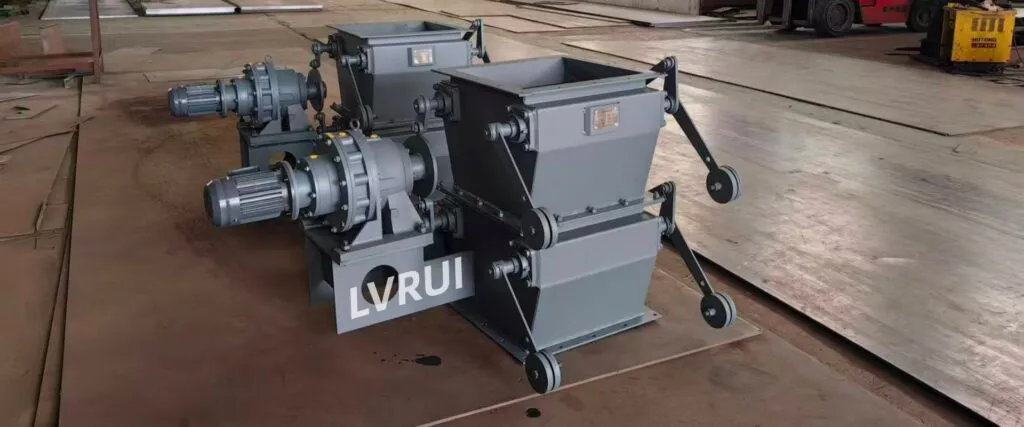
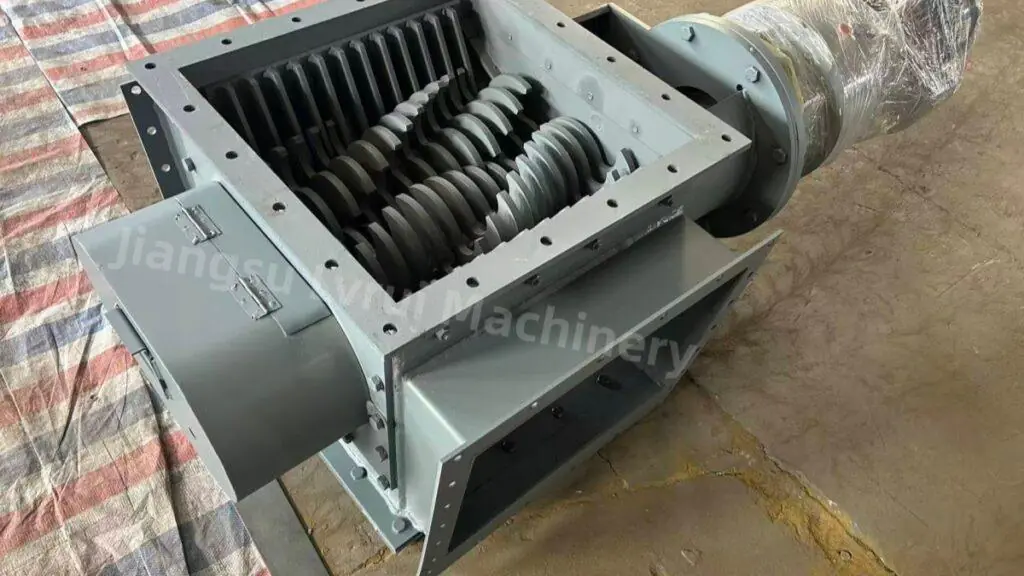
Sector gate vs clamshell gate is a common comparison when selecting a discharge gate for clinker silos, aggregate bins, limestone hoppers and other gravity-fed bulk material systems.
Both gate types can open, stop or roughly regulate the discharge of coarse bulk solids, but their blade arrangements and discharge patterns are different. A sector gate normally uses one curved blade rotating around a shaft, while a clamshell gate uses two opposing curved blades that open and close together.
Neither design is universally better. The correct choice depends on the material, silo or hopper outlet, material head, required discharge pattern, downstream equipment, wear conditions and actuator arrangement.
This guide compares the two designs and explains how to select the more suitable gate for clinker, aggregate and other coarse bulk material applications.
What Is the Main Difference Between a Sector Gate and a Clamshell Gate?
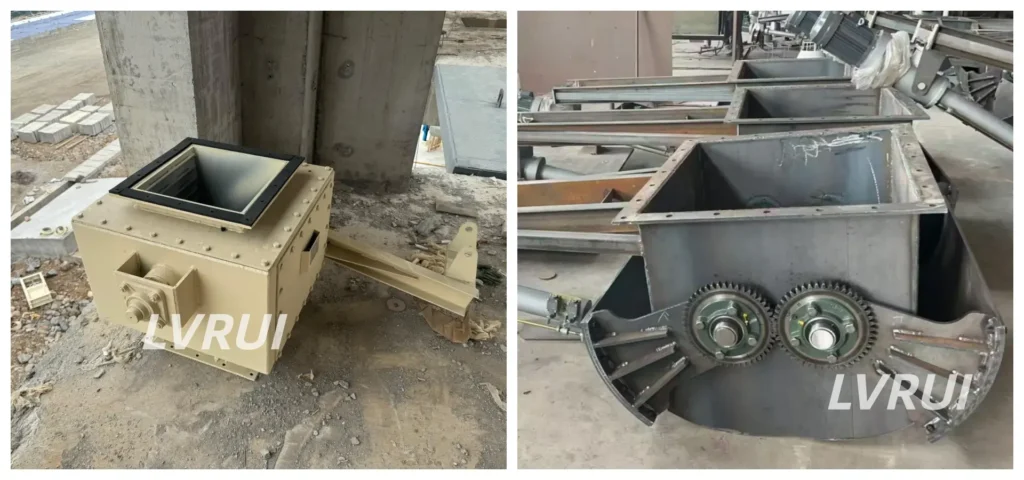
The fundamental difference is the number and movement of the gate blades.
A sector gate uses a single curved blade. The blade rotates around a fixed shaft and progressively exposes the discharge opening from one side.
A clamshell gate uses two opposing curved blades. The blades move together through a synchronized mechanism and create a relatively centered discharge opening.
This structural difference affects the opening pattern, mechanical arrangement, maintenance requirements and how the material enters the downstream equipment.
| Comparison | Sector Gate | Clamshell Gate |
|---|---|---|
| Blade structure | Single curved blade | Two opposing curved blades |
| Opening pattern | Progressively opens from one side | Opens from both sides toward the center |
| Main movement | Rotary | Synchronized rotary |
| Mechanical structure | Relatively simple | Additional synchronization components |
| Typical materials | Clinker, aggregate, limestone, slag and other coarse bulk solids | Clinker, aggregate, limestone, slag and other coarse bulk solids |
| Main duty | Open/close and coarse discharge regulation | Open/close and coarse discharge regulation |
| Typical installation | Below silo, hopper or storage bin | Below silo, hopper or loading bin |
| Precision dosing | No | No |
The selection should therefore be based on the complete discharge system rather than simply asking which gate is stronger or which gate has a larger opening.
How Do Sector Gate and Clamshell Gate Discharge Patterns Differ?
The opening geometry is one of the most useful differences between the two designs.
Sector Gate
A sector gate uses one curved blade connected to a rotating shaft. As the blade moves away from the outlet, the effective discharge area gradually increases and material falls by gravity into the equipment below.
Because the blade moves from one side, the opening is asymmetric during partial operation. This arrangement is suitable for full open/close duty and coarse flow adjustment when the actuator supports intermediate positioning.
Its relatively simple blade arrangement can also be advantageous where straightforward mechanical construction and maintenance are priorities.
Clamshell Gate
A clamshell gate uses two opposing curved blades that move together through a synchronized mechanism.
During opening, both blades rotate away from the center and create a relatively centered discharge passage. This can be useful when a chute, bulk loader or conveyor is installed directly below the silo or hopper outlet.
The additional synchronization mechanism makes the structure somewhat more complex than a single-blade sector gate, but it also allows the opening to remain more centered.
Neither opening pattern provides precision dosing by itself. Actual material discharge depends on material properties, outlet geometry, material head and downstream conditions.
Which Gate Is Better for Clinker and Aggregate Discharge?
Both sector gates and clamshell gates can be used for clinker, limestone, gravel, crushed stone and other coarse bulk solids. The better choice usually depends more on the discharge arrangement than on the material name alone.
A sector gate is often suitable where a relatively simple single-blade mechanism is preferred and the gate is required to open, close or roughly regulate clinker entering a clinker bulk loader, chute, belt conveyor, pan conveyor or other downstream equipment.
A clamshell gate can be considered when a centered dual-blade opening better matches the silo outlet and downstream equipment arrangement.
For clinker, crushed stone and other abrasive materials, wear protection may be required with either design. Depending on the actual operating conditions, this may include reinforced gate blades, replaceable wear plates or protected material-contact areas.
Maximum particle size should also be confirmed before the opening and blade clearance are finalized. Large or irregular lumps can increase the risk of interference during closing if the gate geometry is not properly selected.
The gate should therefore be designed according to the actual bulk material rather than selected only from the nominal outlet dimensions.
Can Sector Gates and Clamshell Gates Regulate Material Flow?
Both gate types can provide coarse flow adjustment when the actuator and control system support intermediate positioning.
For example, the gate may initially open only part way to reduce a sudden material surge into a conveyor or bulk loading system.
However, gate opening percentage does not correspond directly to material flow percentage.
Actual discharge depends on several factors, including material flowability, particle size, bulk density, material head, hopper geometry and downstream resistance.
Neither a sector gate nor a clamshell gate should therefore be treated as a precision feeder or weighing device. Applications requiring accurate dosing should use suitable feeding or weighing equipment together with the gate.
What Actuator Should Be Used?
Actuator selection depends on gate size, material loading, operating frequency, available utilities and the required control mode.
Electric Drive
Electric actuation can be suitable where electrical power is available and controlled opening or intermediate positioning is required. A geared actuator can provide open/close control together with limit switches and optional position feedback.
Electric actuation is suitable where controlled blade movement, limit switches or position feedback are required.
Pneumatic Drive
Pneumatic actuation provides relatively fast movement where a reliable compressed-air supply is available.
It is suitable for frequent open/close operation. If intermediate positioning is required, an appropriate positioner or control arrangement should be used rather than a simple open/close pneumatic actuator.
Electro-Hydraulic Drive
Electro-hydraulic actuation is suitable for heavier-duty bulk material gates where relatively high operating force and a self-contained drive arrangement are desirable.
It can be particularly useful for larger clinker and aggregate discharge gates.
Regardless of actuator type, the required force or torque should be determined from the actual gate geometry and operating load rather than from the outlet dimensions alone.
Can These Gates Be Used for Cement Powder?
Sector gates and clamshell gates are generally better suited to coarse or granular bulk solids than to fine powder isolation.
For materials such as cement, fly ash, raw meal, lime powder and other fine powders, a suitable slide gate, shut-off gate or powder flow control gate will often be more appropriate where better isolation or flow control is required.
Fine powder can enter clearances that are acceptable for coarse clinker or aggregate but unsuitable where tighter powder isolation is required.
Standard sector gates and clamshell gates should also not automatically be considered pressure-tight, gas-tight or completely dust-tight. Any specific sealing requirement should be confirmed separately during equipment selection.
How Do Rod Gates Fit Into the System?
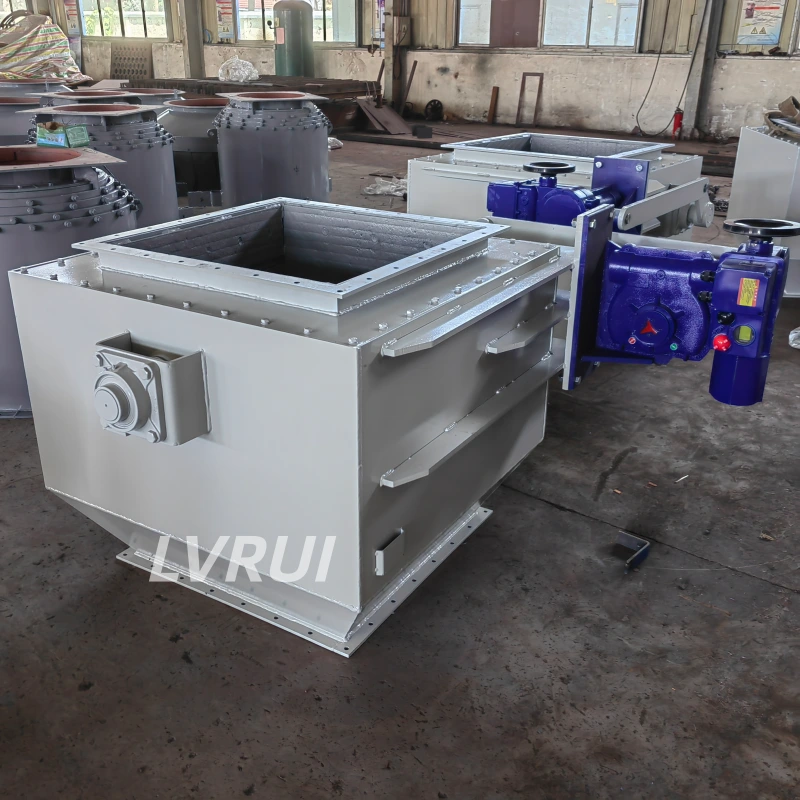
A rod gate performs a different function from a sector gate or clamshell gate.
In clinker and aggregate silo discharge systems, the rod gate is commonly used as an upstream isolation device, while the sector gate or clamshell gate controls normal material discharge.
Typical arrangements include:
Silo → Rod Gate → Sector Gate → Conveyor
or:
Silo → Rod Gate → Clamshell Gate → Bulk Loader
The rod gate allows the downstream discharge equipment to be isolated for inspection or maintenance, while the sector or clamshell gate performs normal opening, closing or coarse flow regulation.
These devices therefore complement rather than directly replace each other.
Sector Gate or Clamshell Gate: How Should You Choose?
The final selection should be based on the complete operating conditions rather than on one feature alone.
1. Material Characteristics
Confirm the material name, bulk density, minimum and maximum particle size, temperature, moisture condition, flowability and abrasiveness. For aggregate applications, bulk density can be determined according to recognized test methods such as ASTM C29/C29M.
For abrasive clinker, slag or crushed stone, the gate may require reinforced blades or replaceable wear protection.
2. Silo or Hopper Outlet
Confirm the actual outlet shape and dimensions.
Square and rectangular outlets are common, but transition sections may be required when connecting the gate to a silo, hopper or downstream chute with a different interface.
3. Material Head
Confirm the approximate material height above the gate.
Material head affects blade loading, shaft and bearing loads, opening resistance and the required actuator force. A gate installed below a deep clinker silo may therefore require a different structural and actuator configuration from the same-size gate installed below a shallow hopper.
4. Required Discharge Capacity
Provide the expected discharge rate in t/h.
The gate opening should be coordinated with the silo outlet and the capacity of the downstream conveyor, chute or bulk loading equipment.
The gate should not be expected to correct a bottleneck elsewhere in the material handling system.
5. Downstream Equipment
Confirm whether the material discharges into a bulk loader, loading chute, belt conveyor, pan conveyor, chain conveyor or another piece of handling equipment.
A sector gate may be appropriate where a one-sided progressive opening is acceptable, while a clamshell gate may be preferred where a more centered discharge passage better matches the downstream layout.
6. Operating Mode
Determine whether the application requires only full open/full close operation or occasional intermediate positioning for coarse flow adjustment.
Frequent positioning or flow regulation may require a different actuator and control arrangement from a simple isolation duty.
7. Available Utilities and Control
Confirm the available electrical power, control voltage, compressed-air supply and PLC/DCS signals.
The actuator should be selected according to both mechanical requirements and the utilities available at the plant.
8. Wear Requirements
For abrasive clinker, aggregate or other coarse materials, confirm whether the gate requires replaceable wear plates, reinforced blades or additional protection in high-impact areas.
Wear protection should be considered together with particle size, material velocity, drop height and operating frequency.
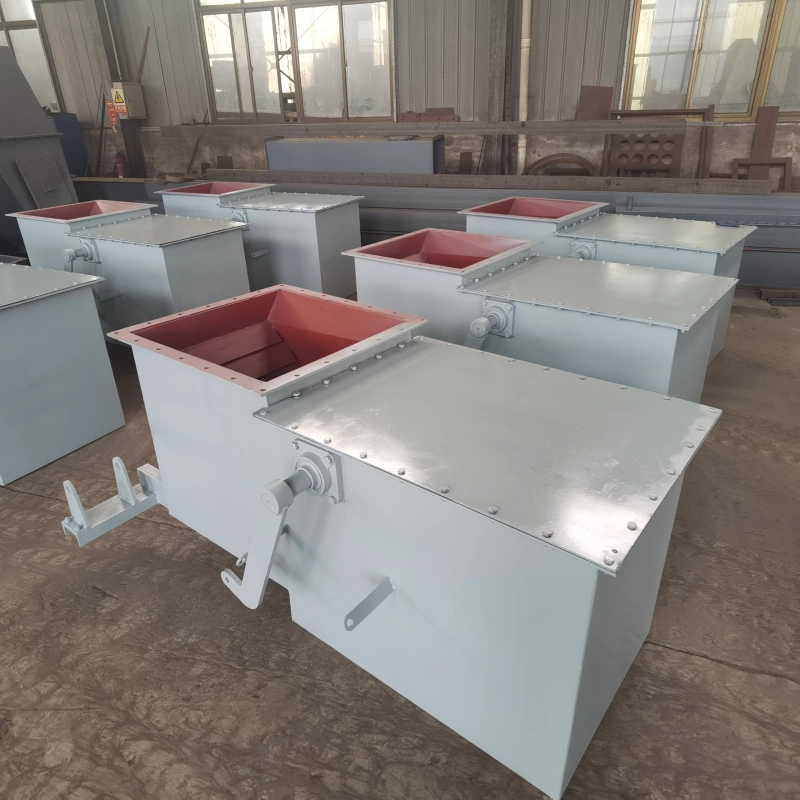
FAQs About Sector Gate vs Clamshell Gate
What is the main difference between a sector gate and a clamshell gate?
A sector gate uses one curved rotating blade, while a clamshell gate uses two opposing curved blades that move together. The sector gate progressively opens from one side, while the clamshell design creates a more centered discharge opening.
Which gate is better for clinker discharge?
Both can be suitable for clinker. A sector gate is often selected where a relatively simple single-blade arrangement is preferred, while a clamshell gate may be selected when a centered dual-blade opening better suits the silo outlet and downstream equipment. Material head, particle size, wear conditions and actuator requirements should determine the final choice.
Can a sector gate control clinker flow?
Yes. Intermediate blade positions can provide coarse discharge regulation when a suitable actuator and control arrangement are used. However, a sector gate is not a precision feeder and should not be used alone for accurate mass dosing.
Is a clamshell gate suitable for aggregate?
Yes. A clamshell gate can handle gravel, crushed stone, limestone and other coarse granular materials when the opening size, blade clearance, wear protection and actuator are correctly selected.
Can a sector gate or clamshell gate replace a rod gate?
Not necessarily. A rod gate is normally used for isolation of coarse bulk material, while a sector or clamshell gate controls normal discharge. In many clinker and aggregate silo systems, the rod gate and discharge gate are installed together.
What information is required before selecting a discharge gate?
The supplier should know the material, bulk density, particle size, temperature, moisture condition, required capacity, silo or hopper outlet dimensions, approximate material head, downstream equipment, preferred actuator, available utilities, control requirements and installation conditions.
Conclusion
The sector gate vs clamshell gate decision depends on the complete discharge arrangement rather than on one design being universally better.
A sector gate provides a relatively simple single-blade rotary arrangement, while a clamshell gate uses two synchronized blades to create a centered discharge opening. Both can be suitable for clinker, aggregate, limestone and other coarse bulk solids.
Final selection should consider material characteristics, outlet dimensions, material head, downstream equipment, wear conditions and actuator requirements.
Need Help Selecting a Sector Gate or Clamshell Gate?
Send us your application details and we can recommend a suitable gate configuration for your bulk material discharge system. Please provide:
- Material and bulk density
- Particle size and temperature
- Required discharge capacity
- Silo or hopper outlet dimensions
- Preferred actuator and control requirements
✅ Sector gate and clamshell gate configurations
✅ Pneumatic, electric and electro-hydraulic drive options
✅ Customized dimensions and connection interfaces
Email: info@lvrui-conveyor.com
WhatsApp: +86 18261998937
WeChat: +86 18261998937