
Flow Control Gate Valve for Cement Silo and Bulk Powder Handling
Adjustable Powder Discharge Control for Silos, Hoppers and Conveying Systems
What Is a Flow Control Gate Valve?
A flow control gate valve is designed to regulate the discharge rate of cement and other fine powders from storage silos. It is commonly used together with an on/off shut-off gate (also known as a rotary shut-off gate or arc gate), with the flow control gate regulating material discharge and the shut-off gate providing isolation.
These valves are typically installed at the bottom or side discharge of a cement silo, or downstream of a short air slide conveyor section. Depending on the equipment layout and discharge arrangement, horizontal or vertical installation configurations are available.
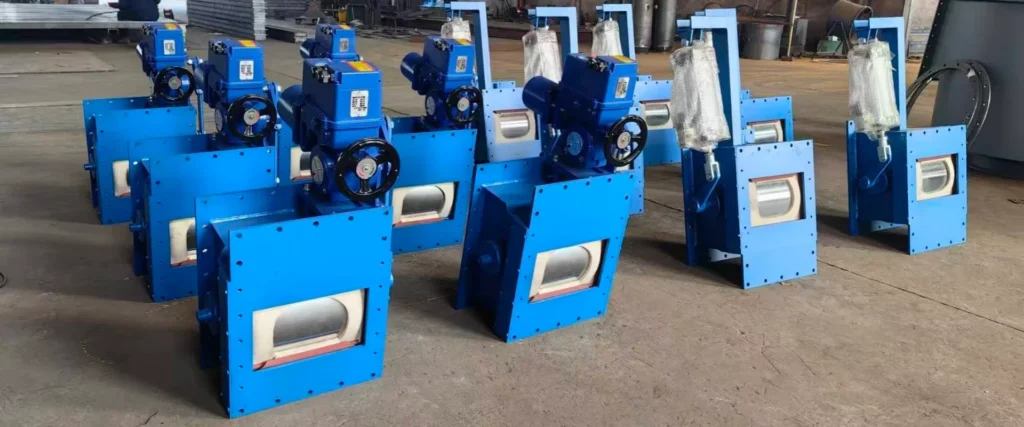
Key Features
✅ Adjustable discharge opening
Helps regulate powder flow from silos, hoppers and conveying systems.
✅ More stable downstream feeding
Reduces sudden material surges entering air slide conveyors, screw conveyors and weighing equipment.
✅ Manual, pneumatic or motorized operation
Different drive options are available for local, remote or automated control.
✅ Optional position feedback
Limit switches and position sensors can connect with a local panel or plant PLC.
✅ Customized structure
Valve dimensions, installation arrangements, curved valve elements, sealing configurations, and actuators can be customized to meet project requirements.
✅ Suitable for dry powder systems
Common applications include cement, fly ash, raw meal, lime powder and mineral powder handling.
How Does a Flow Control Gate Valve Work?
A flow control gate valve consists of a valve body, curved flow-control element, removable sealing pads, bushings, customized sealed bearings, air-permeable layer, aeration inlet, and drive mechanism. During operation, a blower supplies low-pressure, low-volume air to the aeration chamber. The air passes uniformly through the air-permeable layer, fluidizing fine powders such as cement and reducing resistance to material flow. Assisted by gravity and the installation incline, the fluidized material moves toward the discharge outlet. The drive mechanism rotates the curved flow-control element through a coupling, adjusting the effective discharge opening to regulate material flow.
On/off and modulating configurations can share the same valve body design, with different actuation and control arrangements:
On/Off Control: A pneumatic cylinder, typically operated by a solenoid valve, opens or closes the gate without continuous flow regulation.
Modulating Control:
Electric: An electric actuator adjusts the gate opening, with optional 4–20 mA control and position feedback for PLC/DCS integration.
Pneumatic: An electro-pneumatic positioner receives a 4–20 mA signal and controls the pneumatic actuator to adjust the gate opening.
Both modulating options regulate material discharge by adjusting the curved flow-control element.
Flow Control Gate Valve Drive Options
| Drive Type | Operation | Suitable For | Main Consideration |
|---|---|---|---|
| Manual Flow Control Gate Valve | Handwheel or manual mechanism | Occasional local flow adjustment | Requires manual operation |
| Pneumatic Flow Control Gate Valve | Pneumatic cylinder or actuator | Remote on/off or modulating control | Requires compressed air; 4–20 mA input for modulating type |
| Motorized Flow Control Gate Valve | Electric actuator | Adjustable discharge and PLC/DCS control | Requires power and control signals |
Drive selection depends on operating frequency, required opening control, available utilities, and plant automation requirements.
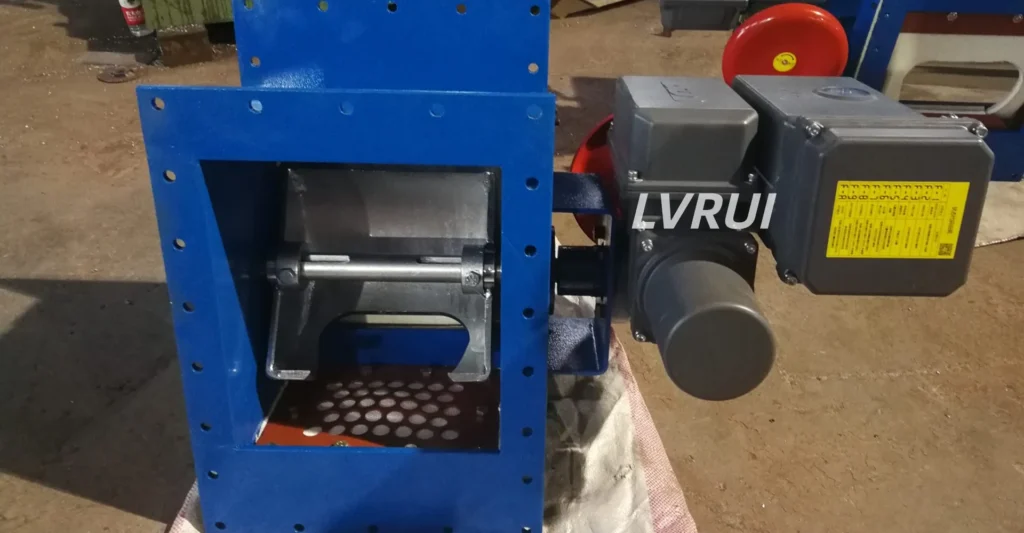
Technical Specifications
The following values are for preliminary model selection. Actual discharge capacity depends on the material properties, bulk density, moisture, opening position, material-column height and downstream equipment.
| Item | B250 | B300 | B400 | B500 | B630 |
|---|---|---|---|---|---|
| Inlet Size (mm) | 240×180 | 290×180 | 390×180 | 490×180 | 620×280 |
| Flow Capacity (t/h) | 0–150(max) | 0–220(max) | 0–410(max) | 0–550(max) | 0–700(max) |
| Operation Type | Manual / Pneumatic / Electric | Manual / Pneumatic / Electric | Manual / Pneumatic / Electric | Manual / Pneumatic / Electric | Manual / Pneumatic / Electric |
| Body Material | Carbon Steel | Carbon Steel | Carbon Steel | Carbon Steel | Carbon Steel |
| Working Temperature (°C) | ≤150°C Standard / ≤200°C Optional | ≤150°C Standard / ≤200°C Optional | ≤150°C Standard / ≤200°C Optional | ≤150°C Standard / ≤200°C Optional | ≤150°C Standard / ≤200°C Optional |
| Suitable Materials | Cement/ powder material | Cement/ powder material | Cement/ powder material | Cement/ powder material | Cement/ powder material |
Final valve size, actuator, blade material, sealing structure, flange dimensions and control configuration must be confirmed according to the approved project drawing.
Suitable Materials and Applications
LVRUI flow control gate valves are mainly used for dry, aeratable powders, including:
✅ Cement
✅ Fly ash
✅ Raw meal
✅ Lime powder
✅ Gypsum powder
✅ Slag powder
✅ Limestone powder
✅ Other suitable mineral powders
If the material contains hardened lumps or oversized agglomerates, a lump breaker may be required upstream of the flow control gate.
Typical applications include:
✅ Cement and fly ash silo discharge
✅ Feeding air slide conveyors
✅ Screw conveyor inlet feeding
✅ Controlled feeding to weighing hoppers
✅ Cement packing and bulk loading systems
Material suitability depends on flowability, aeration characteristics and operating conditions. Wet, sticky or highly cohesive materials require separate evaluation.
How to Select a Flow Control Gate Valve
Please provide:
✅ Material name, bulk density, particle size, moisture, and temperature
✅ Required discharge capacity
✅ Silo or hopper outlet dimensions and material-column height
✅ Installation position and downstream equipment
✅ Preferred manual, pneumatic, or motorized drive
✅ Required opening control, operating frequency, and sealing level
✅ Power supply, control signals, and site drawing
Installation and maintenance access should be planned according to the site layout and applicable local safety requirements. For general reference, see the OSHA requirements for materials handling and storage.
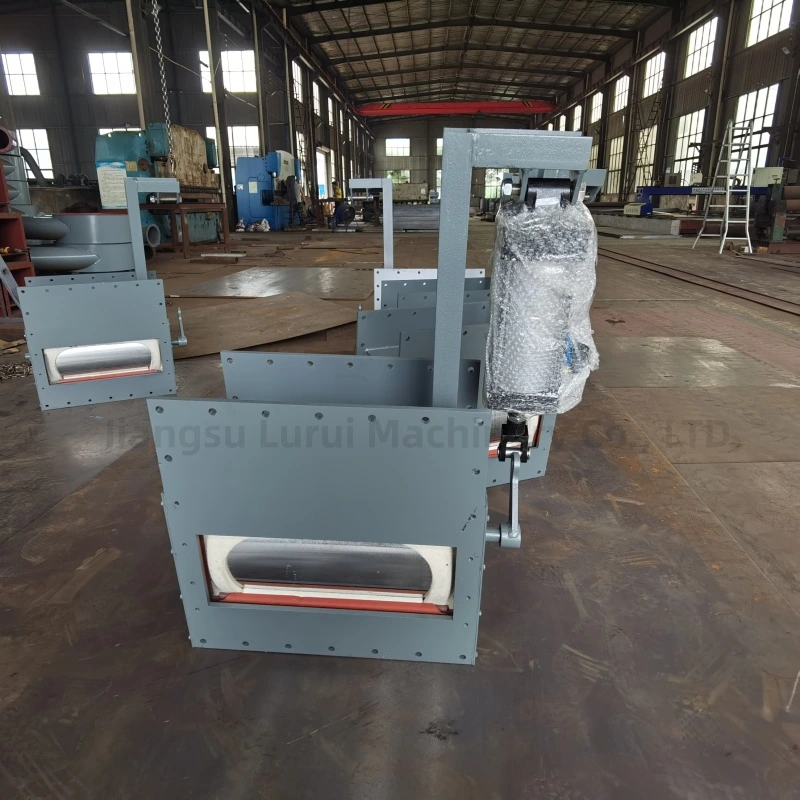
Flow Control Gate Valve vs Slide Gate Valve
| Item | Flow Control Gate Valve | Slide Gate Valve |
|---|---|---|
| Main Function | Adjustable powder discharge and shut-off | Mainly on/off material isolation |
| Flow Adjustment | Curved valve element allows adjustable discharge opening | Limited flow adjustment; mainly designed for on/off operation |
| Typical Application | Silo feeding, air slide inlet, weighing and batching | Silo, hopper and conveyor inlet isolation |
| Drive Options | Manual, pneumatic or electric, including modulating control | Manual, pneumatic or electric on/off control |
| Sealing Performance | Replaceable sealing pads provide reliable material shut-off when fully closed | Sealing performance may decrease as the sliding plate and sealing surfaces wear |
| Maintenance | Removable sealing pads allow inspection and replacement | Sliding plate and sealing surfaces may require maintenance due to wear |
LVRUI flow control gate valves combine adjustable powder discharge with reliable powder-tight shut-off. The curved valve element and replaceable sealing pads help prevent cement powder leakage when fully closed. Conventional slide gates may experience reduced sealing performance over time due to sliding friction and material wear.
Manufacturing and Inspection
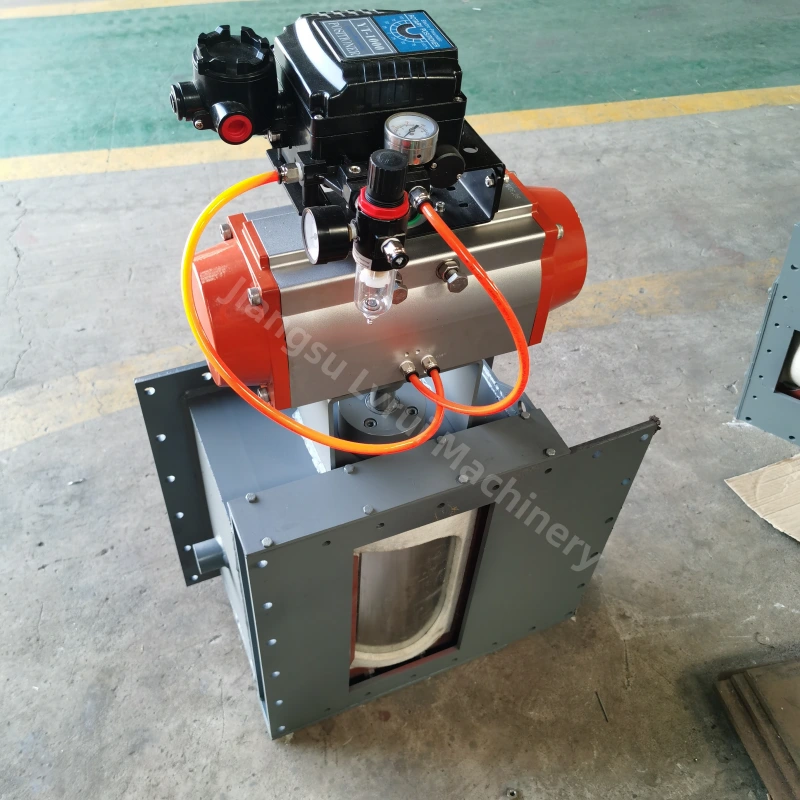
LVRUI manufactures each flow control gate valve according to the confirmed project data and approved production drawing.
Before shipment, the main checks include:
✅ Body and flange dimensions
✅ Curved Valve Element Opening and Closing Movement
✅ Actuator stroke and operating direction
✅ Limit switches and position feedback
✅ Sealing components, coating, marking and packing
LVRUI provides technical drawings, installation instructions and remote technical guidance. On-site installation is completed by the customer or its appointed local contractor.
Project Reference: LVRUI supplied B300 and B400 pneumatic and motorized flow control gate valves for a cement silo discharge retrofit in Taiwan, China. View our cement and bulk material handling projects.
Flow Control Gate Valve FAQs
What is a flow control gate valve used for?
A flow control gate valve adjusts the discharge opening beneath a silo, hopper or conveying system to provide more stable feeding of cement, fly ash and other compatible dry powders.
How is it different from a slide gate valve?
A flow control gate valve uses a curved valve element to regulate powder discharge and provides powder-tight shut-off when fully closed through replaceable sealing pads. A conventional slide gate is mainly designed for material isolation, and its sealing performance may deteriorate as sliding surfaces wear.
What drive options are available?
Manual, electric and pneumatic drives are available. Both electric and pneumatic actuators can provide modulating control, while pneumatic cylinders are also available for on/off operation. Control options depend on the actuator configuration.
Can a flow control gate valve be installed before an air slide conveyor?
Yes. It can regulate the amount of powder entering an air slide conveyor, helping reduce sudden feeding surges and improve conveying stability.
Can a flow control gate valve provide accurate dosing?
The valve regulates powder discharge by adjusting the gate opening but does not measure the actual material flow rate. Accurate dosing requires additional weighing or flow measurement equipment and a suitable control system.
What information is required for a quotation?
Please provide the material, bulk density, particle size, moisture, required capacity, outlet dimensions, material temperature, installation position, downstream equipment, drive preference and control requirements.
Can a flow control gate valve replace a slide gate valve?
A flow control gate valve and a slide gate valve are designed for different purposes. A flow control gate valve is mainly used for adjustable powder discharge control, while a slide gate valve is mainly used for isolation and shut-off.
Request a Customized Flow Control Gate Valve
Send LVRUI your material data, silo outlet dimensions, required capacity, downstream equipment and preferred drive type. We will recommend a suitable valve size, actuator and control configuration.
✅ Manual, pneumatic or motorized operation
✅ Customized inlet and flange dimensions
✅ Optional position feedback and PLC interface
✅ Technical drawings and remote guidance