
Metal Expansion Joint for Industrial Ducts and Pipelines
Thermal Movement and Vibration Compensation for Cement Plant and Dust Collection Systems
What Is a Metal Expansion Joint?
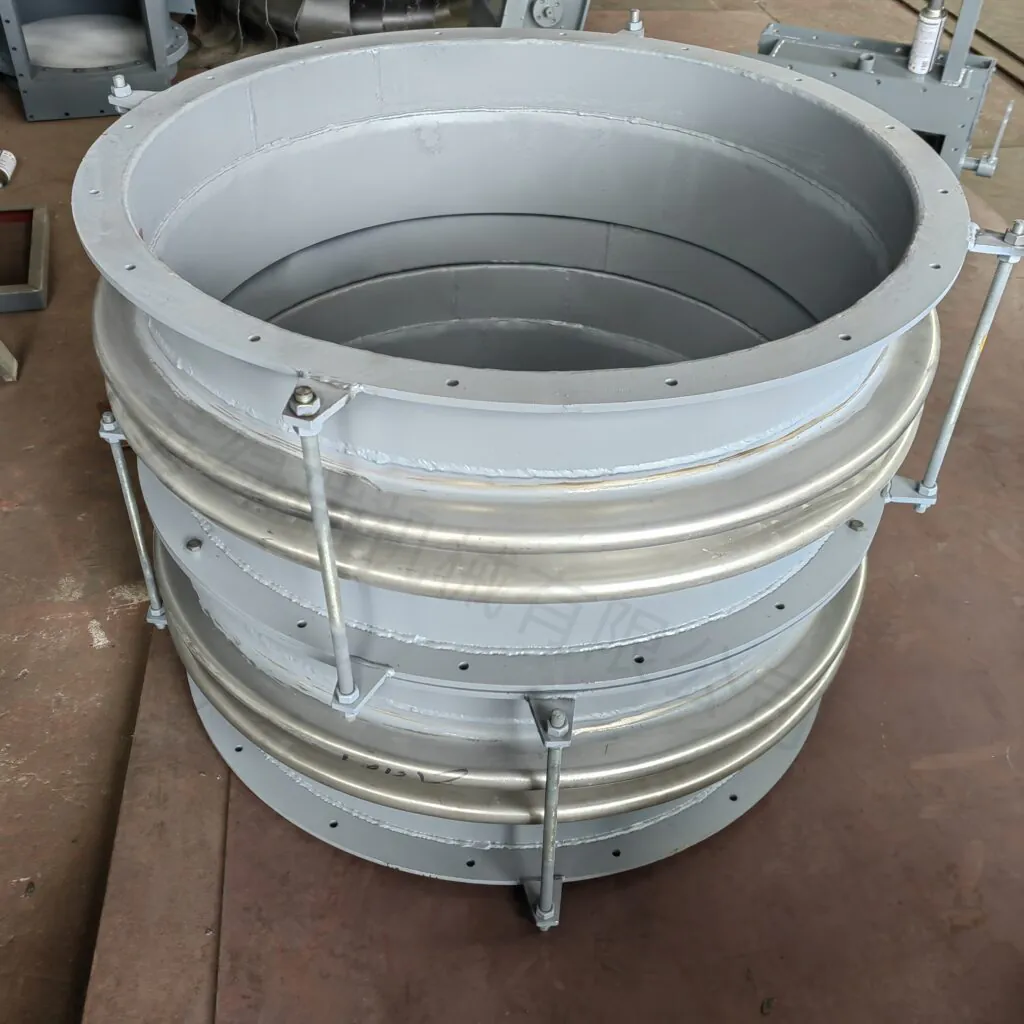
A metal expansion joint is a flexible connection used to absorb controlled thermal expansion, vibration and relative movement in industrial ducts and pipelines. Also called a metal bellows expansion joint or metallic expansion joint, it uses corrugated metal bellows to reduce mechanical stress transferred to connected ducts, flanges, fans and other equipment.
LVRUI manufactures customized round and rectangular metal expansion joints for cement plants, dust collection systems, ventilation ducts, blower connections and hot-gas lines. Dimensions, materials and structural options are confirmed according to the customer’s operating conditions and connection drawing.
Key Benefits
✅ Absorbs Thermal Movement
The metal bellows flex within their designed range to accommodate controlled expansion and contraction caused by temperature changes.
✅ Reduces Stress on Connected Equipment
A correctly selected metal expansion joint helps reduce excessive loads on ducts, flanges, fans, dust collectors and supporting structures.
✅ Suitable for Dust-Laden Ducts
An optional internal liner protects the bellows from abrasive dust, turbulent gas and high flow velocity.
✅ Maintains a Flexible Sealed Connection
The corrugated metal bellows allow controlled movement while maintaining a reliable connection between ducts, pipelines or equipment.
How Does a Metal Expansion Joint Work?
Industrial ducts and pipelines expand or contract as their operating temperature changes. Fans, blowers and dust collection equipment may also generate vibration or small relative movements.
The corrugated bellows deform within a controlled range as the connected system moves. Depending on the structure, a metal expansion joint can accommodate:
✅ Axial compression or extension along the centerline
✅ Lateral displacement perpendicular to the centerline
✅ Angular movement between the two connection ends
A standard metal bellows should not be subjected to uncontrolled torsional twisting. The duct arrangement, anchors, guides and supports must allow the intended movement without forcing the bellows beyond its design range.
Metal expansion joints should not be used to correct major duct misalignment or an incorrect installation gap. Correct installation, movement control and duct alignment are essential to metal expansion joint service life.
General definitions of axial, lateral and angular bellows movement are available from the Expansion Joint Manufacturers Association.
Main Components
✅ Metal Bellows
The bellows are the main flexible element. Their material, thickness, number of layers and convolution structure affect movement capacity and operating performance.
✅ End Connections
Flanges or welded ends connect the expansion joint to the adjacent duct, pipeline or equipment.
✅ Internal Flow Liner
The liner guides the gas through the joint and helps protect the bellows from abrasive dust, high gas velocity and turbulent flow.
✅ Tie Rods or Limit Rods
These components may be used to control the permitted movement or restrict excessive displacement.
Available Structures and Options
LVRUI can manufacture metal expansion joints according to confirmed drawings and operating requirements.
Available Structures
✅ Round or rectangular shape
✅ Single-bellows or multiple-bellows structure
✅ Flanged or welded connection
✅ Carbon-steel or stainless-steel end sections
✅ Customized installation length
✅ Customized flange and bolt-hole dimensions
Optional Accessories
✅ Internal flow liner
✅ Tie rods
✅ Limit rods
✅ External protective cover
✅ Reinforcement components
The final structure depends on the movement direction, installation length, operating temperature, pressure or vacuum, medium and duct support arrangement.
Metal Expansion Joint Technical Specifications
The following specifications are general customization options. Final dimensions and construction are confirmed in the approved production drawing.
| Item | Available Specification |
|---|---|
| Product Type | Metal bellows expansion joint |
| Shape | Round or rectangular |
| Duct / Pipe Size | Customized according to drawing |
| Face-to-Face Length | Customized |
| Bellows Material | SS304 or other confirmed stainless-steel grade |
| End Connection Material | Carbon steel or stainless steel |
| Connection Type | Flanged, welded or customized |
| Bellows Structure | Single-layer or multi-layer, subject to design |
| Movement Type | Axial, lateral, angular or combined |
| Operating Temperature | Confirmed according to material and structure |
| Pressure / Vacuum | Confirmed according to operating conditions |
| Internal Liner | Optional |
| Tie Rods / Limit Rods | Optional |
| External Cover | Optional |
| Flange Details | Customized according to drawing |
| Applicable Media | Air, dust-laden gas, hot gas and compatible industrial gases |
The required movement capacity cannot be determined from duct diameter alone. Temperature, pressure or vacuum, movement direction and installation conditions must be reviewed together.
Suitable Media and Applications
Metal expansion joints are suitable for compatible clean air, dust-laden gas, hot gas and industrial exhaust systems.
When the medium contains corrosive gas or abrasive particles, the gas composition, dust concentration and operating temperature should be provided before material selection.
Typical Applications
✅ Cement plant process ducts
✅ Bag filter inlet and outlet ducts
✅ Dust collection and exhaust lines
✅ Blower and fan connections
✅ Industrial ventilation systems
✅ Kiln and furnace auxiliary ducts
✅ Fly ash and mineral powder systems
✅ Pneumatic conveying air lines
✅ Connections between fixed ducts and vibrating equipment
Metal Expansion Joint vs Non-Metallic Expansion Joint
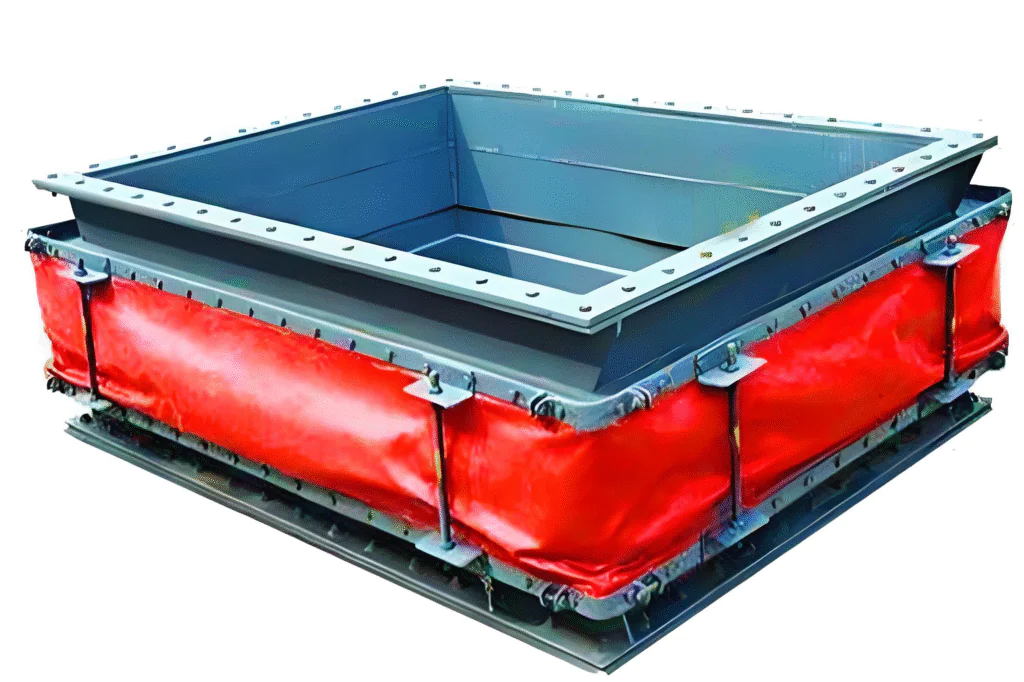
Metal expansion joints and non-metallic expansion joints both belong to the expansion joint product category. However, they use different flexible materials and are selected for different operating conditions.
| Comparison | Metal Expansion Joint | Non-Metallic Expansion Joint |
|---|---|---|
| Flexible Element | Corrugated metal bellows | Fabric or composite flexible material |
| Typical System | Industrial ducts and pipelines | Large low-pressure air and gas ducts |
| Movement | Controlled axial, lateral or angular movement | Often used for relatively large combined movement |
| Connection Structure | Metallic sealed connection | Flexible fabric connection |
| Main Selection Factors | Temperature, pressure, movement and medium | Temperature, pressure, movement and fabric structure |
A non-metallic expansion joint should not automatically be replaced with a metal expansion joint, or vice versa. The correct type must be selected according to temperature, pressure or vacuum, required movement, medium and available installation space.
For selected low-pressure duct and powder-handling applications, a non-metallic flexible connector may provide a more suitable movement solution.
How to Select a Metal Expansion Joint
Please provide the following information for selection and quotation:
✅ Connection dimensions and installation length
✅ Operating and maximum temperature
✅ Positive pressure or negative pressure
✅ Required axial, lateral or angular movement
✅ Medium, dust concentration and flow velocity
✅ Required liner, tie rods, limit rods or protective cover
For replacement units, provide the original drawing or clear photographs with detailed dimensions and operating data.
Manufacturing and Inspection
LVRUI manufactures each metal expansion joint according to the confirmed dimensions and approved production drawing.
Before shipment, the main inspection items include:
✅ Overall dimensions and face-to-face length
✅ Round or rectangular connection dimensions
✅ Flange dimensions and bolt-hole positions
✅ Bellows and end-connection alignment
✅ Internal liner position and flow direction
✅ Tie-rod or limit-rod arrangement
✅ Welding appearance and visible surface condition
✅ Product marking and export packing
Large metal expansion joints may be divided into sections according to transportation and installation requirements.
LVRUI provides production drawings, installation instructions and remote technical guidance.
Metal Expansion Joint FAQs
What is a metal expansion joint used for?
A metal expansion joint absorbs controlled thermal expansion, vibration and relative movement in industrial ducts and pipelines. It helps reduce stress transferred to connected ducts, flanges, fans and other equipment.
What movement can a metal bellows expansion joint absorb?
Depending on its structure, a metal bellows expansion joint can accommodate axial compression, axial extension, lateral displacement or angular movement. Standard metal bellows should not be subjected to uncontrolled torsional twisting.
When is an internal liner required?
An internal liner is recommended for abrasive dust, high-velocity gas or turbulent flow. It guides the gas through the joint and reduces direct erosion and dust accumulation around the bellows.
What is the difference between metal and non-metallic expansion joints?
A metal expansion joint uses corrugated metal bellows, while a non-metallic expansion joint uses fabric or composite flexible materials. Selection depends on temperature, pressure or vacuum, movement, medium and installation space.
Can metal expansion joints be customized for round and rectangular ducts?
Yes. LVRUI can manufacture round and rectangular metal expansion joints according to confirmed duct dimensions, installation length, connection details and operating conditions.
What information is required for a metal expansion joint quotation?
Please provide the duct dimensions, face-to-face length, operating temperature, pressure or vacuum, required movement, medium and connection drawing. For replacement units, the original drawing or detailed dimensions are preferred.
Request a Customized Metal Expansion Joint
Send us your duct size, installation length, operating temperature, pressure or vacuum, required movement and connection drawing.
✅ Application-based structure selection
✅ Round and rectangular designs
✅ Optional liner, rods and protective cover
✅ Drawing confirmation before production