Flow Control Gate for Cement Silo Bottom Discharge: Working Principle and System Integration
Katup Pengatur Aliran untuk Pelepasan Dasar Silo Semen: Prinsip Kerja dan Integrasi Sistem
1. What Is a Flow Control Gate for Cement Silo Bottom Discharge?
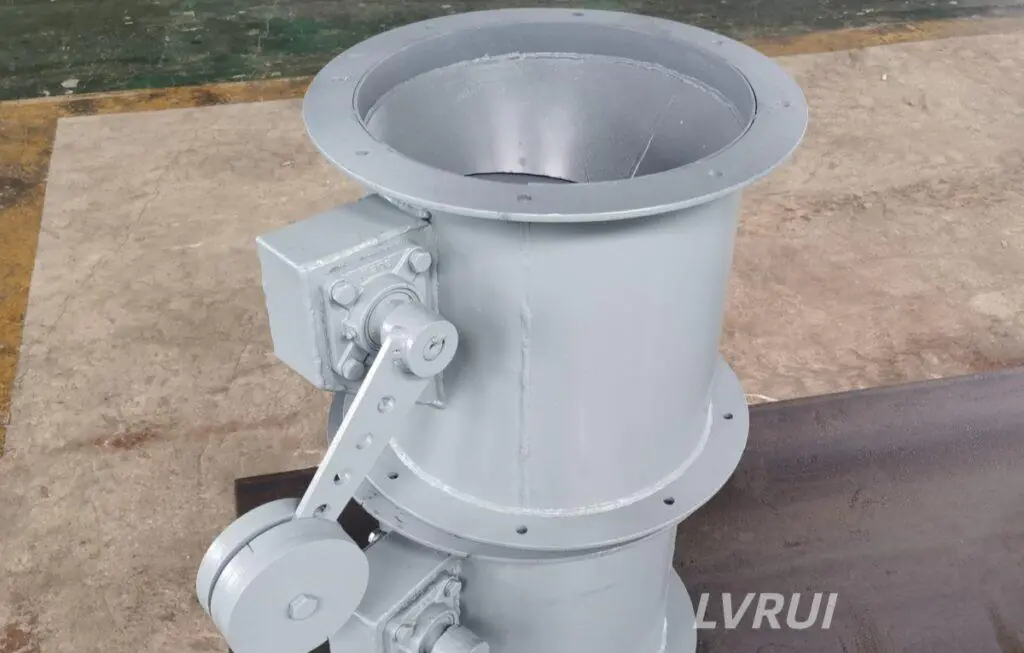
A flow control gate for cement silo bottom discharge is an industrial valve installed at the outlet of a cement silo or storage bin. Its main function is to regulate and isolate the flow of bulk cement as it moves from the silo into conveying equipment or loading systems.
Unlike simple slide gates or manual dampers, a flow control gate is designed for continuous operation under abrasive and dusty conditions. It provides adjustable flow control, reliable sealing performance, and stable operation in automated cement handling systems.
In cement plants, grinding stations, and bulk terminals, flow control gates play a vital role in ensuring controlled discharge, preventing uncontrolled material surges, and protecting downstream equipment from overload.
2. Working Principle of a Cement Silo Bottom Flow Control Gate
During operation, cement flows downward from the silo cone toward the gate inlet. The gate blade, driven by a pneumatic or electric actuator, moves horizontally or vertically to adjust the opening area of the material passage.
When the gate is partially open, the cement flow rate is precisely controlled according to process requirements. When fully closed, the gate provides a tight seal to isolate the silo from downstream equipment for maintenance or emergency shutdown.
This controlled discharge process works in close coordination with silo aeration systems. By introducing compressed air through aeration pads or air distributors, the cement is fluidized and flows smoothly toward the gate opening.
The working principle is based on the concept of Fluidization.
3. Structural Design and Main Components
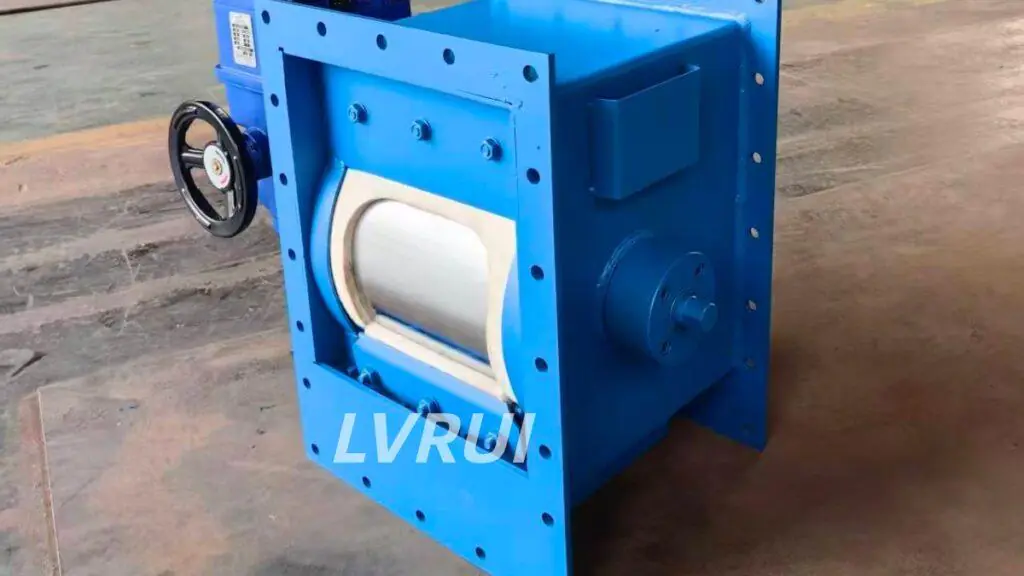
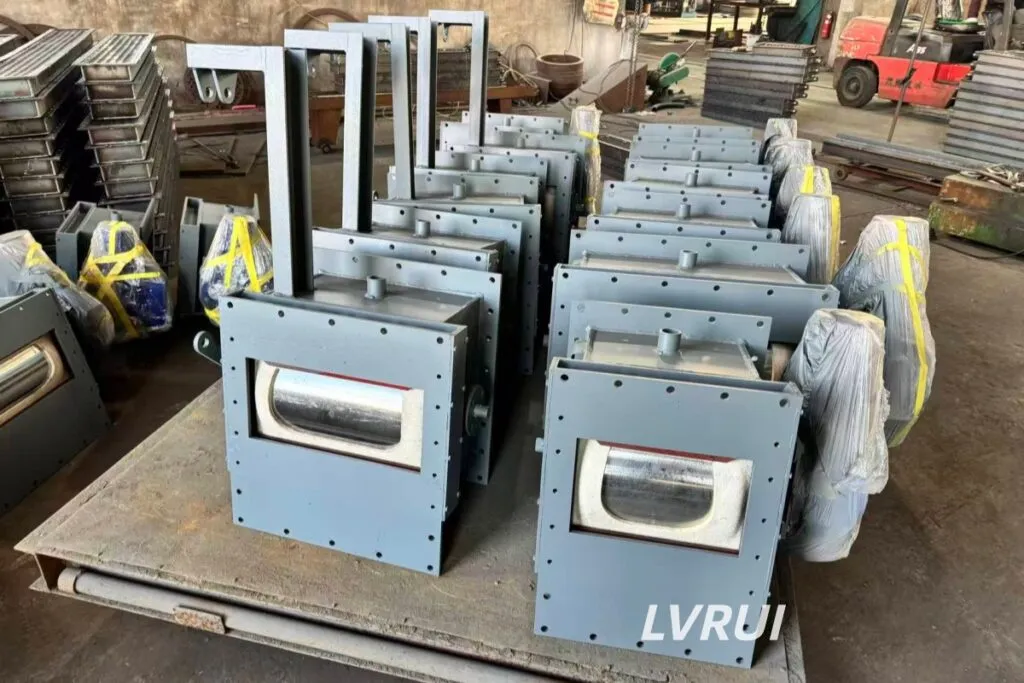
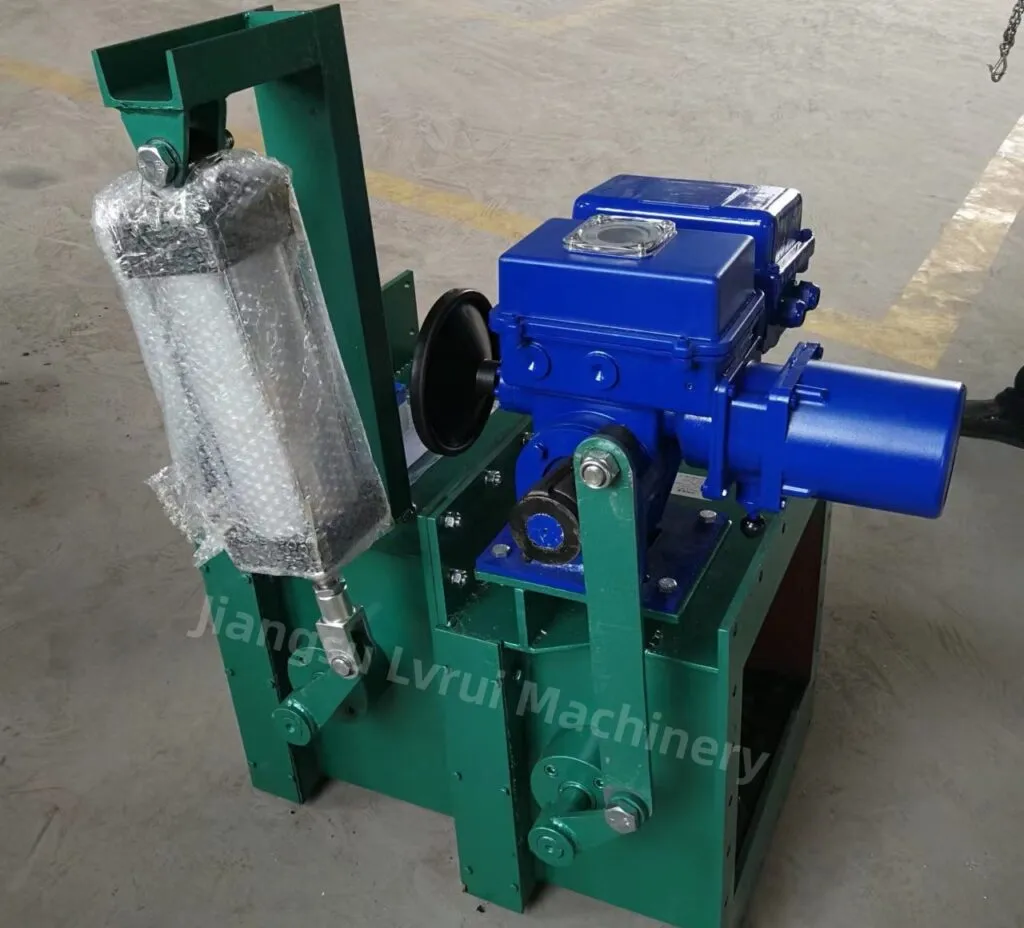
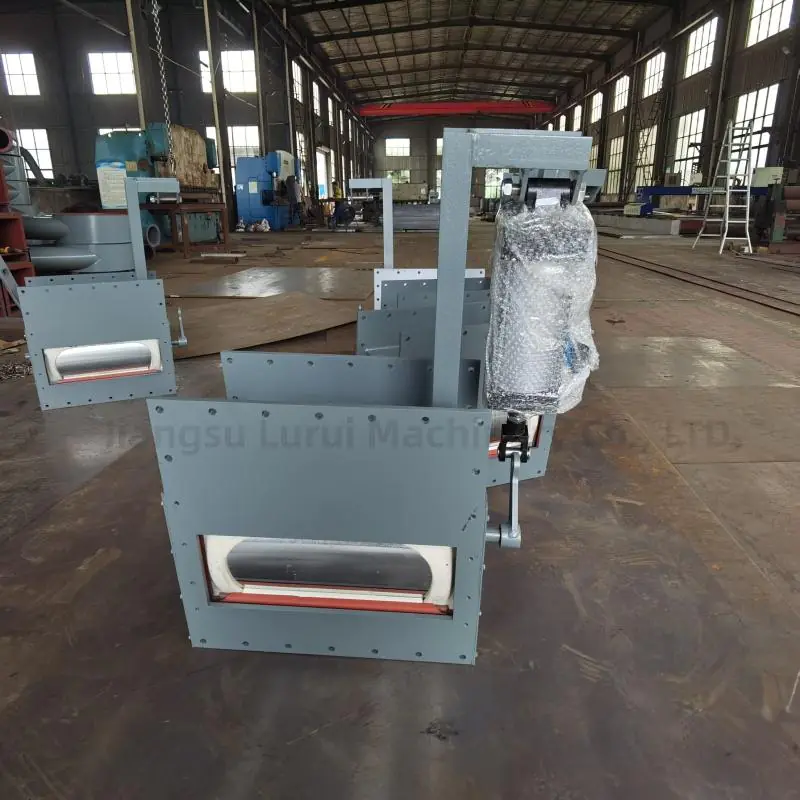
A typical flow control gate for cement silo bottom discharge consists of the following components:
✔ Heavy-duty steel valve body with flanged connections
✔ Sliding or rotating gate blade with wear-resistant lining
✔ Pneumatic cylinder or electric actuator
✔ Position indicator or limit switch
✔ High-performance sealing system
✔ Inspection cover for maintenance access
The valve body is usually manufactured from carbon steel or stainless steel and coated with epoxy paint for corrosion resistance. High-wear areas such as the blade and sealing surfaces are reinforced with abrasion-resistant materials to extend service life.
4. Why Cement Silos Need a Flow Control Gate at the Bottom
Uncontrolled cement discharge from silo outlets can cause a wide range of operational problems, including material surging, equipment blockage, excessive dust generation, and inconsistent feeding rates.
Installing a flow control gate at the silo bottom helps address these challenges by:
✔ Regulating discharge flow rate accurately
✔ Preventing uncontrolled material surges
✔ Reducing dust leakage at silo outlets
✔ Improving operational safety
✔ Enabling automated process control
For high-capacity cement plants and continuous production lines, a properly selected flow control gate is an essential component for stable and reliable operation.
5. Typical Application Scenarios
Flow control gates for cement silo bottom discharge are widely used in:
✔ Cement production lines
✔ Raw meal and clinker storage silos
✔ Fly ash silos in power plants
✔ Bulk cement truck loading stations
✔ Concrete batching plants
✔ Mineral powder handling systems
They are commonly integrated with:
- Silo Bottom Air Distributor – for uniform aeration under the silo
- Air Slide Conveyor – for low-energy powder conveying
- Screw Conveyor – for controlled mechanical conveying
- Bulk Loader System – for truck or container loading
6. Key Design Parameters
When selecting a flow control gate for cement silo bottom discharge, engineers should consider the following parameters:
✔ Inlet and outlet dimensions
✔ Required flow control range
✔ Actuator type (pneumatic or electric)
✔ Working pressure and temperature
✔ Cement bulk density and abrasiveness
✔ Sealing performance requirements
✔ Installation orientation and flange standards
Typical gate sizes range from DN150 to DN600, depending on silo capacity and discharge rate requirements.
7. System Integration with Silo Aeration and Conveying Equipment
A flow control gate alone cannot ensure stable cement discharge. It must be properly integrated with silo aeration systems and downstream conveying equipment.
In a standard cement silo bottom discharge system, the configuration usually includes:
✔ Aeration pads or fluidizing boxes under the silo cone
✔ A Silo Bottom Air Distributor to balance airflow
✔ A Flow Control Gate at the silo outlet
✔ An Air Slide Conveyor or Screw Conveyor for material transport
By coordinating airflow distribution and gate opening, the system achieves smooth and controlled cement flow, minimizing discharge interruptions and reducing wear on mechanical components.
8. Common Problems and Solutions
Problem: Material arching at the silo bottom
Solution: Improve aeration coverage and coordinate airflow with gate opening.
Problem: Excessive dust leakage at the gate outlet
Solution: Upgrade sealing materials and install dust-tight flanges.
Problem: Inconsistent discharge rate
Solution: Use a motorized flow control gate with position feedback for precise regulation.
Problem: Rapid wear of gate blade
Solution: Apply abrasion-resistant liners and optimize blade material selection.
9. Authoritative External References
- Fluidization in Bulk Solids – Wikipedia
- Conveyor Equipment Manufacturers Association (CEMA)
- OSHA Bulk Material Handling Safety
FAQs About Flow Control Gates for Cement Silo Bottom Discharge
What is a flow control gate used for in a cement silo?
A flow control gate is used to regulate and isolate the flow of cement from the silo outlet to downstream conveying or loading equipment.
Can flow control gates handle abrasive cement materials?
Yes. They are designed with wear-resistant liners and heavy-duty blades for abrasive cement handling.
Should a pneumatic or electric flow control gate be used?
Pneumatic gates are suitable for fast on-off control, while electric gates offer precise position control for continuous regulation.
Is a flow control gate compatible with air slide conveyors?
Yes. Flow control gates are commonly used together with air slide conveyors for efficient powder transport.
Can flow control gates be customized?
Yes. Sizes, actuator types, sealing systems, and flange standards can be customized based on project requirements.
Indonesian Short Version
Katup pengatur aliran untuk pelepasan dasar silo semen digunakan untuk mengatur dan mengisolasi aliran semen curah dari outlet silo ke peralatan konveyor atau sistem pemuatan. Dengan desain tugas berat, sistem penyegelan yang andal, dan integrasi dengan sistem aerasi silo, katup ini membantu meningkatkan stabilitas pengosongan silo, mengurangi kebocoran debu, dan memastikan operasi penanganan semen yang aman dan efisien.
Call To Action
Need a reliable Flow Control Gate for Cement Silo Bottom Discharge for your cement handling system? Contact LVRUI today for a professional solution and fast quotation.
✔ Get expert quotation within 12 hours
✔ Customized design for your silo bottom discharge system
📧 Email: info@lvrui-conveyor.com
🌐 Website: https://lvrui-conveyor.com