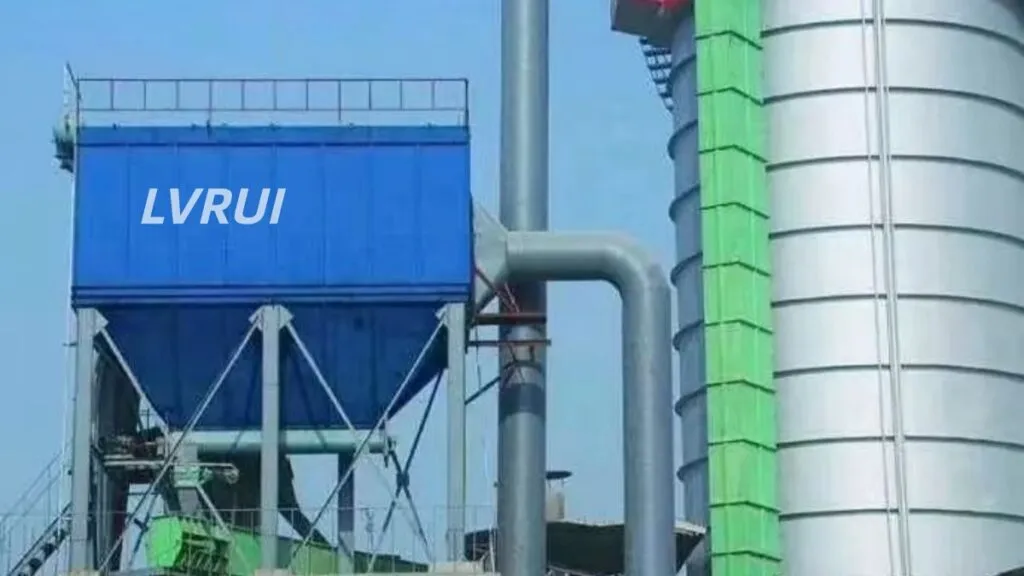
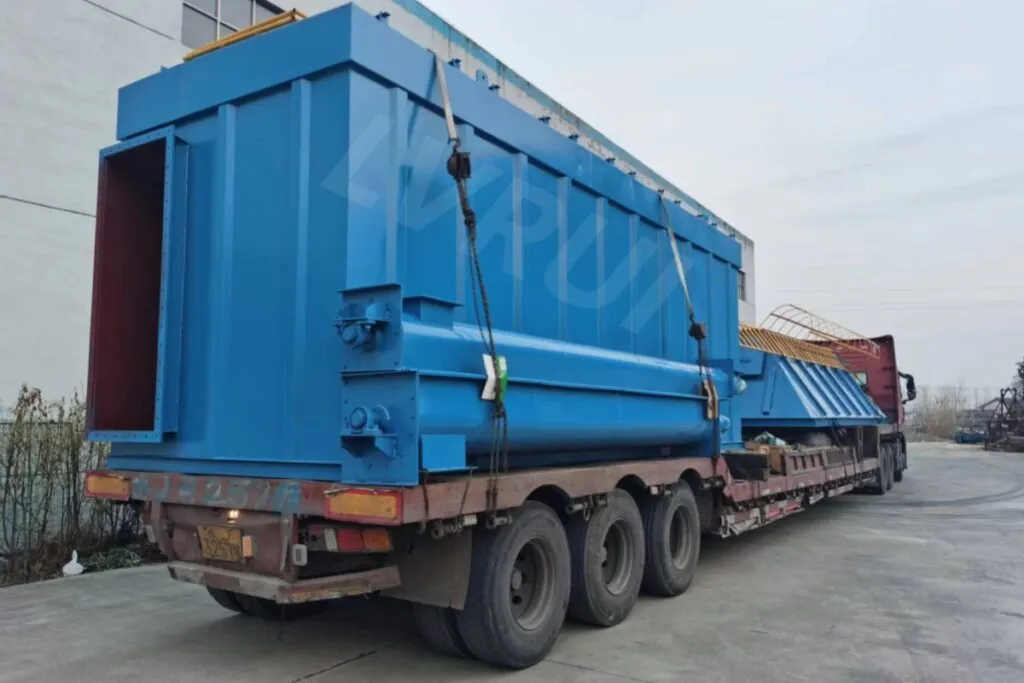
Engineering considerations for selecting and configuring industrial bag filter systems for kiln, grinding, silo, transfer, packing and other dust-generating areas in cement plants.
What Is an Industrial Bag Filter System?
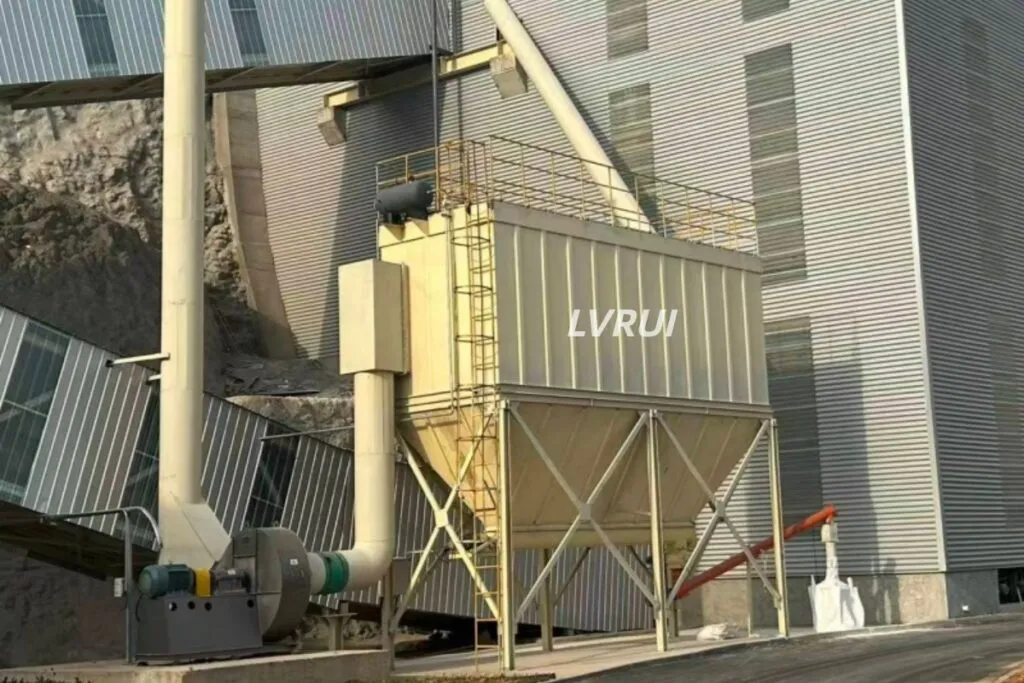
An industrial bag filter system is a dust collection arrangement that uses fabric filter bags to separate particulate matter from an extracted air or gas stream. In cement plants, it may serve a single dust source or form part of a centralized dust collection system connected to several collection points.
A complete installation typically involves more than the bag filter itself. Dust hoods, ductwork, an extraction fan, filter chambers, cleaning components, hoppers and dust discharge equipment must work together to maintain suitable airflow through the system.
The bag filter therefore should not be selected as an isolated piece of equipment. Its configuration needs to match the dust source, required extraction airflow, material characteristics, process temperature and downstream dust handling arrangement.
How Does a Bag Filter Work?
Dust-laden air enters the filter housing and passes through the filter media. Dust particles are retained on the filter bags, while cleaned air exits the collector. As dust accumulates, a cleaning system removes the deposited material so that filtration can continue, and the collected dust falls into the hopper for discharge.
For a detailed explanation of filtration, dust cake formation and pulse-jet cleaning, see our bag filter working principle guide.
Where Are Bag Filter Systems Used in Cement Plants?
An industrial bag filter system can be installed at different stages of cement production, but the operating conditions are not identical. Dust concentration, gas temperature, moisture, particle characteristics and required extraction airflow vary considerably between process areas.
Raw Mill and Kiln Dust Collection
Raw mill and kiln-related gas streams can involve relatively high dust loads and demanding temperature conditions. System selection should therefore consider gas temperature, process fluctuations, dust characteristics, filtration area and suitable filter media rather than relying only on nominal airflow.
Where temperature or moisture conditions fluctuate, particular attention should be paid to preventing condensation and protecting the filter media.
Clinker Cooler Dust Collection
Clinker cooler applications may involve hot, abrasive dust. The bag filter system must therefore be evaluated together with upstream gas conditions, particle loading and the required temperature range of the selected filter media.
Abrasion at the inlet and uneven airflow distribution should also be considered because concentrated dust loading can accelerate wear inside the collector.
Cement Grinding and Material Transfer
Cement grinding, conveying and transfer operations generate fine airborne dust that can escape when material falls between equipment or when displaced air is not properly controlled.
Local extraction should be positioned close to the dust source. Hood design, duct velocity and extraction airflow should be coordinated so that dust is captured without unnecessarily increasing the total air volume handled by the filter.
Cement Silo and Storage Areas
Dust can be generated during pneumatic filling, silo venting, discharge and material transfer around storage systems.
Depending on the application, a local vent filter or a centralized bag filter system may be used. Selection should reflect the actual source of displaced air and the required dust collection arrangement rather than simply the storage capacity of the silo.
Packing and Bulk Loading Areas
Packing machines and bulk loading points often generate intermittent dust as material is filled into bags or vehicles.
Effective control normally requires dust containment close to the filling point together with sufficient extraction airflow. For bulk loading operations, the loading equipment and dust extraction arrangement should be considered as one coordinated system. This is particularly important in dust-free bulk truck loading systems, where loading and dust extraction operate together.
Key Design Factors for an Industrial Bag Filter System
Selecting an industrial bag filter system requires several process variables to be considered together. Airflow alone is not sufficient for determining collector size or configuration.
Required Extraction Airflow
Required airflow should be based on the amount of air that must be extracted from the actual dust-generating points. Hood arrangement, enclosure condition, process-generated airflow and duct losses all affect the final system requirement.
Oversizing airflow can increase collector size, fan power and duct dimensions, while insufficient extraction may allow dust to escape from the capture point.
Dust Concentration and Particle Characteristics
Dust concentration, particle size, abrasiveness and cohesiveness influence inlet design, filter loading and dust discharge.
Fine cement powder behaves differently from coarse or highly abrasive clinker dust. These differences should be considered when selecting the collector configuration and protecting high-wear areas. For applications with high coarse-particle loading, a cyclone dust collector may also be considered as a pre-separation stage before downstream filtration.
Filtration Velocity and Filter Area
Filtration velocity represents the amount of gas passing through a given filter area. It is an important design parameter because excessive filtration velocity can increase pressure drop, cleaning frequency and stress on the filter bags.
The appropriate value depends on dust characteristics, cleaning method, operating conditions and filter media rather than one universal design figure.
Gas Temperature and Moisture
Gas temperature must remain within the operating range of the selected filter media.
Moisture also requires attention. If gas temperature falls below the relevant condensation conditions, moisture can combine with fine dust and create deposits on filter surfaces, potentially increasing resistance and making cleaning more difficult.
Pressure Drop and Fan Requirements
Pressure drop changes as dust accumulates on the filter media and is removed during cleaning.
The extraction fan must therefore be selected against the resistance of the complete system, including hoods, ducts, collector and other components—not simply the resistance of the bag filter housing.
Dust Discharge Arrangement
Collected dust must be discharged reliably from the hopper.
Poor hopper discharge can cause dust accumulation even when filtration itself is functioning correctly. Rotary valves, screw conveyors or other discharge arrangements should therefore be selected according to the collected material and process layout.
How Does a Bag Filter Fit into a Complete Dust Collection System?
A bag filter performs the filtration stage of dust collection, but it does not independently control dust at the source. Effective dust collection depends on the entire airflow path from dust generation to final dust discharge. For broader engineering guidance on controlling dust during mineral processing and material handling, refer to the NIOSH Dust Control Handbook for Industrial Minerals Mining and Processing.
A typical system follows this sequence:
Dust Source → Capture Hood → Ductwork → Bag Filter → Extraction Fan → Clean Air Discharge
Collected dust follows a separate path:
Filter Bags → Hopper → Dust Discharge Device → Material Recovery or Disposal
If the capture hood is poorly positioned, the ductwork is incorrectly sized or the fan cannot overcome system resistance, increasing the size of the bag filter alone will not necessarily solve the dust problem.
For this reason, bag filter selection should be coordinated with the overall industrial dust collection system, particularly when several dust sources share one centralized collector.
Choosing the Right Bag Filter Configuration
The appropriate industrial bag filter system configuration depends on the number of dust sources, required airflow, available installation space, process conditions and maintenance requirements. For equipment configurations and available options, see our industrial bag filter product page.
Centralized Bag Filter Systems
A centralized system can collect dust from several process points through a common duct network. This arrangement may be suitable where multiple dust sources operate within the same production area and centralized maintenance is preferred.
However, duct balancing and system resistance become increasingly important as the number and distance of extraction points increase.
Local Dust Collection
Local collectors are installed close to individual dust sources and can reduce duct length and simplify extraction from isolated equipment.
They are often useful at transfer points, silo vents and other localized dust-generating areas where a large centralized system is unnecessary.

Filter Media Considerations
Filter media selection depends on operating temperature, dust abrasiveness, moisture, chemical conditions and cleaning method. Different cement plant applications may therefore require different fiber materials, surface treatments or filter bag constructions.
For more information about filter materials and bag selection, see our industrial filter bags page.
Common Bag Filter System Design Mistakes
Many bag filter problems originate from system design rather than from the filter bags themselves. The following issues should be checked during system planning.
Using Excessive Filtration Velocity
Reducing filter area to make the collector smaller can increase filtration velocity, pressure drop and cleaning demand. Collector sizing should therefore consider long-term operating conditions rather than only initial equipment cost.
Poor Inlet Airflow Distribution
Uneven inlet airflow can concentrate dust loading on part of the filter area and increase localized wear. Inlet geometry and internal airflow distribution should be considered during collector design.
Ignoring Moisture and Condensation
Condensation can make fine dust adhere to filter surfaces and hopper walls. Temperature and moisture conditions should therefore be evaluated before selecting the filter media and operating strategy.
Insufficient Hopper Discharge
Poor hopper discharge can cause collected dust to accumulate even when filtration is functioning correctly, so the discharge equipment should match the material characteristics and expected dust load.
Incorrect Fan and System Resistance Matching
The fan must overcome the resistance of the complete extraction system. Selecting it only according to collector airflow without considering ductwork, fittings and operating pressure drop can result in insufficient extraction at the dust source.
Poor Maintenance Access
Filter bags, cages, pulse valves, inspection doors and hopper components eventually require inspection or replacement.
Maintenance access should therefore be considered during equipment layout rather than after installation.
Operational Checks for Stable Performance
During operation of an industrial bag filter system, plant personnel should monitor differential pressure, cleaning performance, hopper discharge, visible dust leakage and abnormal changes in fan or airflow conditions.
Changes in these operating indicators should be investigated together rather than treating filter bag condition as the only possible cause. Periodic inspection can help identify airflow, cleaning or dust discharge problems before they develop into persistent operating issues.
FAQs About Industrial Bag Filter System
What is an industrial bag filter system used for in a cement plant?
An industrial bag filter system is used to capture airborne dust generated during cement production and material handling. Typical applications include raw material processing, kiln and clinker handling, cement grinding, silo venting, transfer points, packing and bulk loading. The required system configuration depends on the dust source, airflow, temperature, dust characteristics and operating conditions.
How do I select the right size of an industrial bag filter system?
Bag filter sizing should consider required extraction airflow, filtration velocity, dust characteristics, gas temperature, moisture and operating conditions. The collector must also be matched with the ductwork, extraction fan and dust discharge arrangement rather than being selected by airflow alone.
What affects the filtration efficiency of a bag filter system?
Filtration performance is influenced by filter media, dust characteristics, filtration velocity, dust cake condition, cleaning performance and the mechanical condition of the filter bags. System airflow and operating stability also matter because poor airflow distribution or damaged filter bags can reduce overall collection performance.
What filter media should be used for cement plant bag filters?
Filter media should be selected according to operating temperature, moisture, dust abrasiveness, chemical conditions and cleaning method. Different areas of a cement plant may have different requirements, so one filter material should not automatically be used for every dust source.
Why does pressure drop increase in an industrial bag filter system?
Pressure drop can increase because of dust accumulation, ineffective cleaning, excessive filtration velocity, moisture-related deposits or restricted airflow. The cause should be diagnosed from the complete system rather than assuming that the filter bags alone are responsible.
Should a cement plant use a centralized or local bag filter system?
It depends on the number and location of dust sources, required extraction airflow, plant layout, duct length and maintenance requirements. A centralized system can serve multiple collection points, while local collectors can reduce ductwork and provide dedicated extraction for individual dust sources. The appropriate arrangement should be determined from the actual process layout and operating conditions.
Conclusion
An industrial bag filter system should be designed as part of the overall dust collection arrangement rather than selected as an isolated filtration unit. In cement plants, operating conditions can vary significantly between kilns, clinker handling, grinding, silos, transfer points, packing and bulk loading areas.
Reliable system performance depends on matching extraction airflow, filtration area, dust characteristics, gas temperature, moisture, pressure drop, filter media, fan capacity and dust discharge. The appropriate configuration should therefore be based on the actual dust source and process conditions rather than nominal collector airflow alone.
Need Help Configuring an Industrial Bag Filter System?
To evaluate a bag filter system for your application, please provide the material or dust type, dust source, required airflow if available, operating temperature, moisture conditions, installation location, number of collection points and available layout information. For an existing system, you can also provide current operating data, equipment photos or drawings.
Based on this information, LVRUI can help evaluate the suitable collector configuration, filtration arrangement and integration with the surrounding dust collection system according to your actual process conditions.
WhatsApp: +86 18261998937
WeChat: +86 18261998937
Email: info@lvrui-conveyor.com