How Low-Pressure Air and Gravity Move Cement, Fly Ash and Other Fluidizable Powders
Introduction
Air slide conveyor working principle is based on powder fluidization and gravity. Air slide conveyors are widely used in cement plants, grinding stations, fly ash terminals and other dry powder handling systems to move fine, fluidizable materials through an enclosed chute using low-pressure air.
Unlike mechanical conveyors, their performance depends strongly on material fluidization, moisture, airflow, fabric condition and the available downward slope. This guide explains the air slide conveyor working principle, key components, suitable materials, basic selection considerations and common operating issues.
What Is an Air Slide Conveyor?
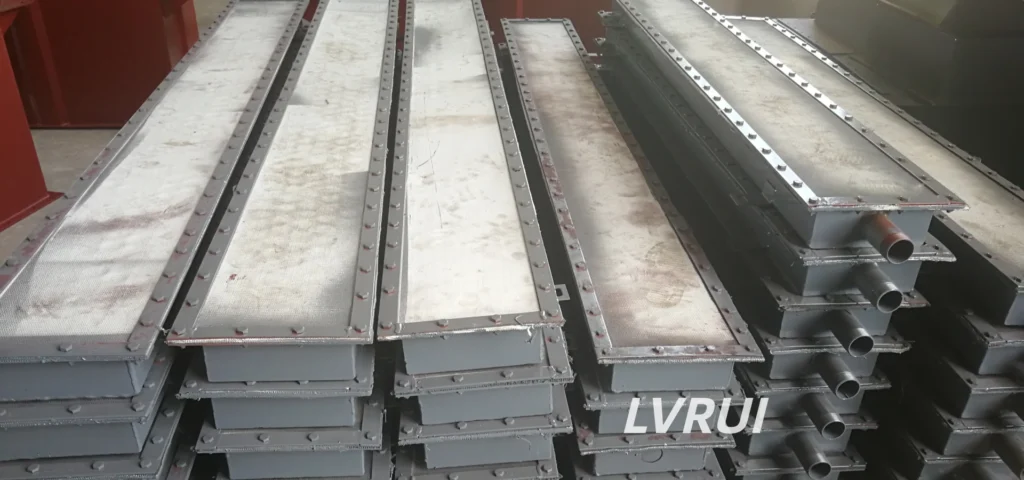
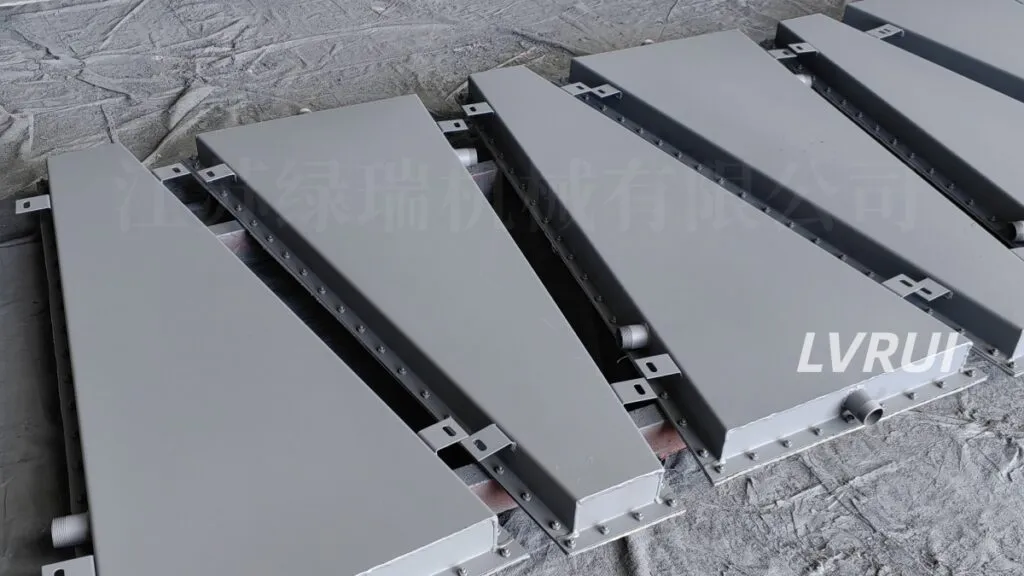
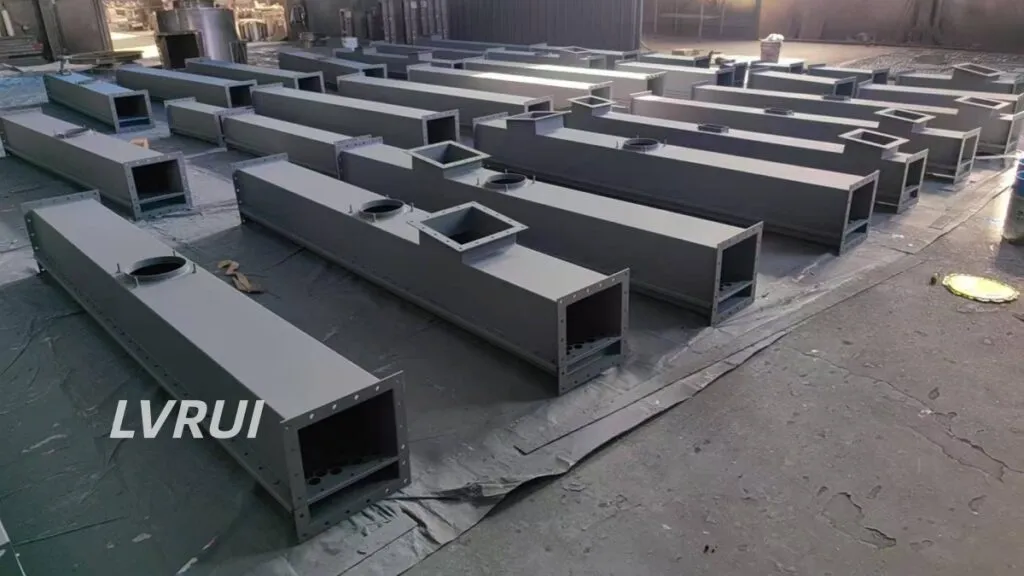
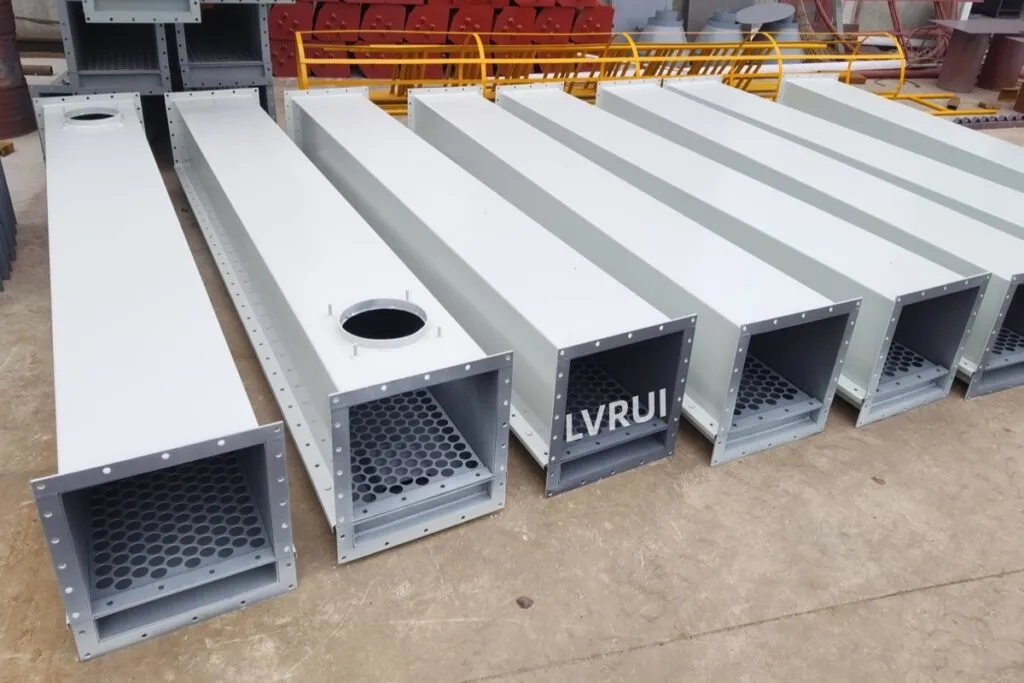
An air slide conveyor, also called an airslide conveyor or air gravity conveyor, is an enclosed conveying system used for dry, fine and fluidizable powders. It consists of an upper material chamber and a lower air chamber separated by permeable air slide fabric supported by a porous or grid plate.
Low-pressure air passes upward through the fabric and aerates the powder above it. This reduces resistance between the particles, allowing the fluidized material to flow toward the outlet under gravity when the conveyor is installed with a suitable downward slope.
Unlike a screw conveyor, chain conveyor or belt conveyor, an air slide has no mechanical conveying element moving through the powder inside the material chamber.
How Does an Air Slide Conveyor Work?
The air slide conveyor working principle combines powder fluidization with gravity. A permeable air slide fabric separates the upper material chamber from the lower air chamber, while a porous or grid support plate holds the fabric in position.
A blower supplies low-pressure air to the lower chamber. The air is distributed beneath the fabric and passes upward through it into the powder layer. As the powder becomes aerated, friction between the particles is reduced and the material behaves more like a fluid.
With a continuous downward slope, gravity then moves the fluidized powder toward the outlet.
The basic conveying process is:
✓ Powder enters the upper material chamber.
✓ Low-pressure air enters the lower air chamber.
✓ Air passes through the support plate and air slide fabric.
✓ The powder above the fabric becomes fluidized.
✓ Gravity moves the fluidized material toward the outlet.
Stable conveying depends on suitable material properties, sufficient and uniform airflow, correct fabric condition, controlled feeding and a continuous downward slope. Excessive moisture, blocked fabric, insufficient airflow or restricted discharge can interrupt fluidization and reduce conveying performance.
Main Components of an Air Slide Conveyor
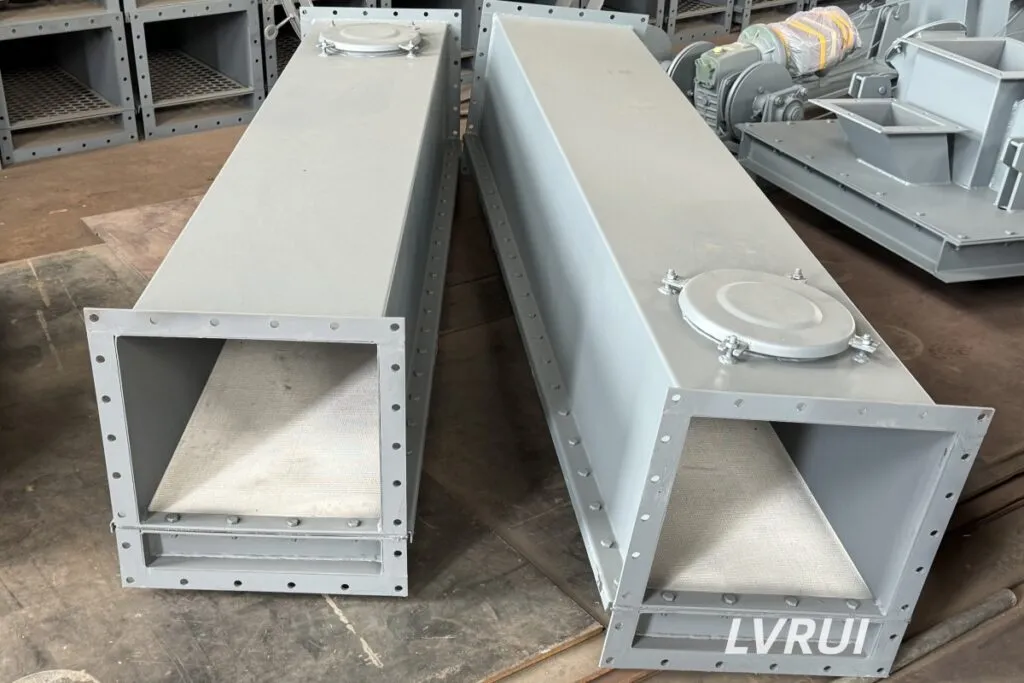
An air slide conveyor is a simple conveying device, but stable operation depends on the correct interaction between the chute, air supply and fluidizing fabric.
| Component | Function |
|---|---|
| Upper Material Chamber | Contains the powder and guides the fluidized material toward the outlet. |
| Lower Air Chamber | Distributes low-pressure air beneath the conveying surface. |
| Air Slide Fabric | Allows air to pass uniformly into the powder while separating the upper and lower chambers. |
| Porous or Grid Support Plate | Supports the fabric, keeps it flat and maintains the airflow passage below it. |
| Low-Pressure Blower | Supplies the air required for powder fluidization. |
| Inlet and Outlet Sections | Connect the air slide with upstream and downstream equipment. |
| Inspection Covers | Provide access for inspection, cleaning and maintenance. |
| Sealing and Connection Parts | Help prevent air and dust leakage between conveyor sections and transfer points. |
| Support Structure | Maintains the required conveyor position and downward slope. |
Among these components, the air slide fabric is particularly important because its permeability and condition directly affect airflow distribution and powder fluidization. Blocked, damaged or incorrectly installed fabric can cause uneven conveying or material buildup.
For general reference on standardized air-permeability testing of textile fabrics, see ISO 9237 – Determination of the permeability of fabrics to air.
Suitable and Unsuitable Materials
Air slide conveyors work best with dry, fine powders that can be fluidized consistently by low-pressure air. Material condition is therefore more important than simply identifying whether the material is a powder.
| Suitable Materials | Generally Unsuitable |
|---|---|
| Cement powder | Wet or sticky powder |
| Fly ash | Large lumps |
| Raw meal | Coarse aggregate |
| Slag powder | Irregular coarse particles |
| Lime powder | High-moisture material |
| Limestone powder | Strongly caking material |
| Dry gypsum powder | Material that cannot be fluidized reliably |
| Other dry mineral fines | — |
The key requirement is stable fluidization. Even a normally suitable material may become difficult to convey if moisture, agglomeration or process conditions significantly change its flow behavior.
If stored cement or mineral powder contains occasional hardened agglomerates, an upstream lump breaker can be used to reduce oversized lumps before the material enters the air slide.
When Is an Air Slide Conveyor a Good Choice?
An air slide conveyor is generally a good option when:
✓ The material is dry, fine and fluidizable.
✓ Continuous enclosed powder transfer is required.
✓ The conveying route can maintain a downward slope.
✓ Low mechanical contact with the material is preferred.
✓ A stable low-pressure air supply is available.
Another conveying method should be considered when:
✓ The material is wet, sticky, coarse or difficult to fluidize.
✓ Large lumps are continuously present.
✓ Vertical or uphill conveying is required.
✓ Precise mechanical feeding or dosing is required.
✓ The installation cannot provide sufficient elevation difference for gravity flow.
Basic Air Slide Conveyor Selection Factors
Because the air slide conveyor working principle depends on fluidization and gravity, selection should not be based on chute width or capacity alone. The material properties and the complete conveying route must be evaluated together.
The main factors to check are:
| Selection Factor | What to Confirm |
|---|---|
| Material Properties | Material type, bulk density, particle size and fluidization behavior. |
| Moisture | Excess moisture may reduce fluidization and increase the risk of buildup. |
| Material Temperature | Confirm compatibility with the fabric, sealing materials and equipment design. |
| Required Capacity | Target conveying rate under normal operating conditions. |
| Distance and Slope | Total conveying length and available elevation difference. |
| Air Supply | Available airflow and pressure for stable fluidization. |
| Inlet and Outlet Arrangement | Feeding conditions, discharge arrangement and downstream equipment. |
These factors determine whether an air slide is suitable before detailed sizing begins.
For material-specific considerations for cement, fly ash and lime powder, see our Air Slide Conveyor Selection Guide.
Air Slide Conveyor vs Screw Conveyor
An air slide conveyor uses fluidization and gravity to move dry, fine powders and therefore requires a suitable downward slope. A screw conveyor mechanically moves the material and can be used where gravity-assisted fluidization is not practical or where controlled feeding is required.
For a detailed comparison of conveying principle, material suitability, energy use and maintenance, see Air Slide Conveyor vs Screw Conveyor.
Common Air Slide Conveyor Applications in Cement Plants
Air slide conveyors are commonly used where dry, fluidizable powders can move between process points with sufficient elevation difference.
| Application | Typical Function |
|---|---|
| Cement Silo Discharge | Transfers cement from silo outlets to downstream conveying, packing or loading equipment. |
| Grinding Station Transfer | Moves cement, raw meal or other fine powders between process equipment. |
| Fly Ash Handling | Transfers dry fly ash between silos, process lines and loading systems. |
| Packing and Bulk Loading | Feeds cement or other powders to packing machines, bulk loaders or loading spouts. |
| Silo or Bin Distribution | Transfers suitable powders between silos, bins or different discharge routes. |
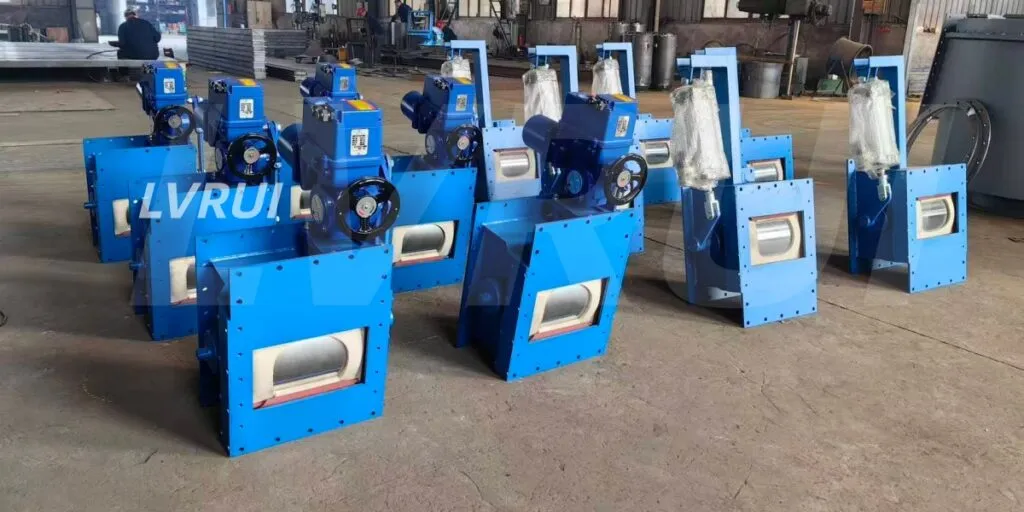
Flow control gates can be installed upstream where controlled material feeding into the air slide is required. The inlet, outlet and downstream equipment should be coordinated with the available conveying slope and system layout.
Common Air Slide Conveyor Operating Issues
Most air slide conveyor problems can be traced to material condition, airflow, fabric performance, feeding conditions or restrictions in the conveying route.
| Problem | Common Checks |
|---|---|
| Poor Fluidization | Check airflow, blower condition, fabric blockage and material moisture. |
| Material Blockage | Check for excessive moisture, agglomerated material, buildup or restricted inlet/outlet flow. |
| Dust or Air Leakage | Inspect flange connections, inspection covers, seals and damaged joints. |
| Reduced Capacity | Check fluidization, feeding rate, material condition, chute slope and discharge restrictions. |
Increasing airflow is not always the correct solution. The actual cause should be identified before operating conditions are changed.
For routine inspection intervals and maintenance items, see the Air Slide Conveyor Maintenance Checklist.
For more detailed causes, inspection steps and corrective actions, see Common Problems of Air Slide Conveyors and How to Fix Them.
Conclusion
The air slide conveyor working principle combines low-pressure air, powder fluidization and gravity to continuously transfer dry, fine and fluidizable powders through an enclosed conveying route.
Successful operation depends on more than conveyor width. Material fluidization, moisture, airflow, fabric condition, feeding, discharge arrangement and system layout must work together. When these conditions are suitable, air slides can provide stable enclosed conveying for cement, fly ash, raw meal and other compatible powders.
Air Slide Conveyor FAQs
Why does an air slide conveyor need a downward slope?
Low-pressure air fluidizes the powder but does not mechanically push it through the conveying chamber. Once fluidized, the material relies mainly on gravity to move toward the outlet, so a continuous downward slope is normally required.
What materials are suitable for air slide conveying?
Air slides are best suited to dry, fine and fluidizable powders such as cement, fly ash, raw meal, slag powder, lime powder and other mineral fines. Wet, sticky, coarse or strongly caking materials may not fluidize reliably.
Does an air slide conveyor have moving parts?
There is no screw, chain or belt moving through the powder inside the conveying chamber. However, the complete system still uses external equipment such as a blower to provide fluidizing air.
Can an air slide conveyor move material uphill or vertically?
Generally, no. Air slide conveying depends on fluidization combined with gravity, so the conveying route requires a downward slope. Vertical or uphill transfer normally requires another conveying method, such as pneumatic conveying, a screw conveyor or a bucket elevator, depending on the material and process requirements.
Need Help Evaluating an Air Slide Conveyor Application?
Send LVRUI your material name, bulk density, particle size or fineness, moisture, material temperature, required capacity, conveying distance, available elevation difference or slope, inlet/outlet arrangement, downstream equipment and layout drawing.
Based on these operating conditions, LVRUI can review whether air slide conveying is suitable and recommend a preliminary conveyor width, section arrangement, air supply configuration and inlet/outlet connection for further technical confirmation.
Email: info@lvrui-conveyor.com
WhatsApp: +86-18261998937
WeChat: +86-18261998937