Manual, Pneumatic and Motorized Selection for Cement and Dry Powder Discharge Systems
Introduction — Why Flow Control Gate Selection Matters
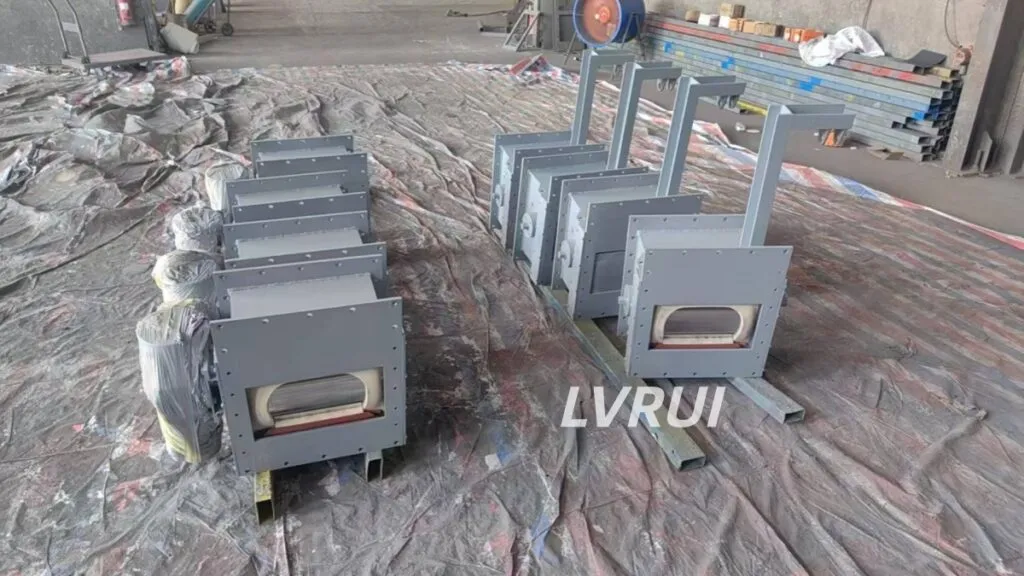
A flow control gate valve regulates the discharge opening between a silo or hopper and downstream handling equipment.
Correct selection should consider more than the outlet dimensions. Material characteristics, required discharge capacity, operating frequency, actuation method, control requirements and available installation space all affect the final configuration. Flow control gate selection should therefore begin with the actual material and process requirements rather than the silo outlet size alone.
This guide focuses on how to choose between manual, pneumatic and motorized flow control gates for cement and dry powder applications.
Manual, Pneumatic or Motorized: Which Flow Control Gate Should You Choose?
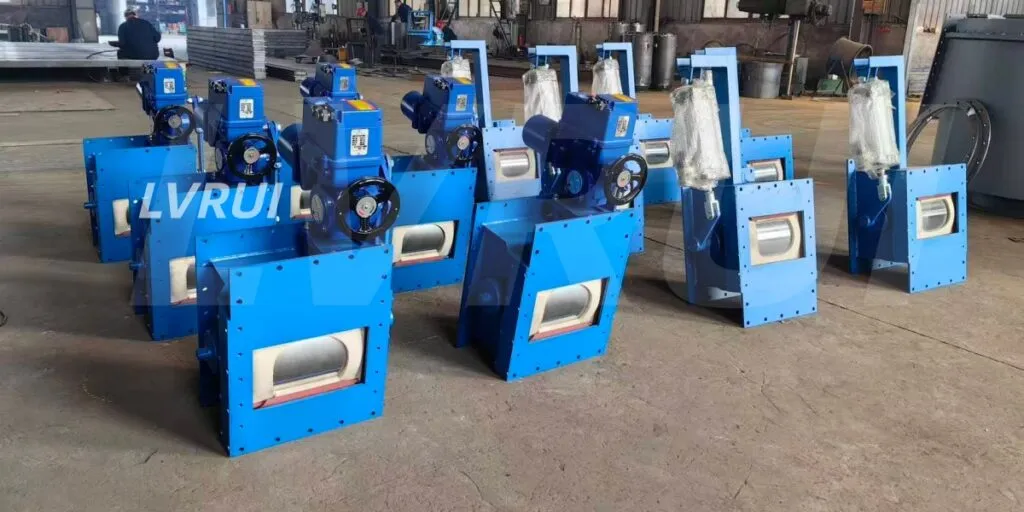
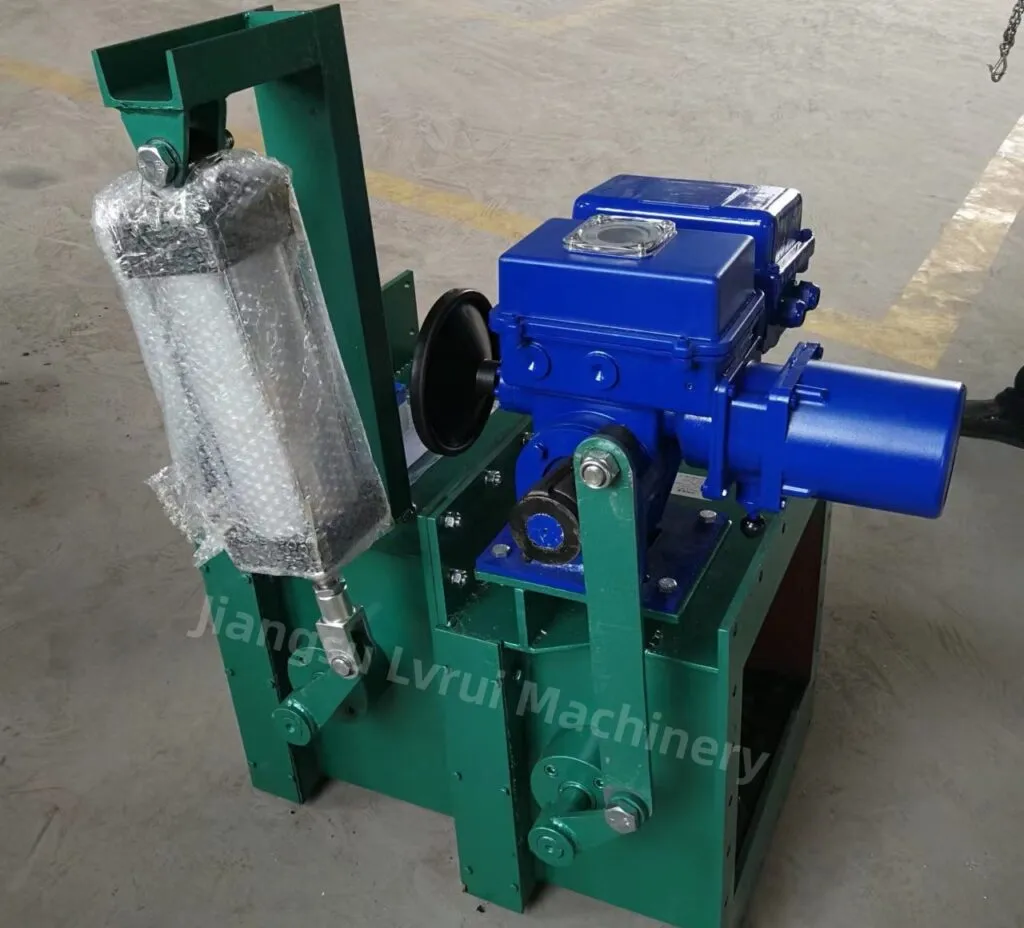
Motorized Flow Control Gate
A motorized flow control gate is suitable where electric actuation, remote operation and adjustable intermediate opening positions are required.
Typical reasons to select motorized operation include:
- Electrical control is preferred
- Remote or PLC operation is required
- Intermediate opening positions are needed
- Plant compressed air is not available
Pneumatic Flow Control Gate
A pneumatic flow control gate is suitable for applications requiring fast and frequent operation where compressed air is available.
Typical reasons to select pneumatic operation include:
- Frequent opening adjustment
- Fast actuator response
- Remote operation
- Existing plant air supply
- Intermediate positioning when a suitable positioner is used
Manual Flow Control Gate
A manual flow control gate is suitable where adjustment is infrequent and local operation is acceptable.
Typical reasons to select manual operation include:
- No electrical or pneumatic utility is required
- Opening adjustments are occasional
- Local control is acceptable
- Simple operation is preferred
Key Factors When Selecting a Flow Control Gate Valve
Material Characteristics
Confirm:
- Material type
- Bulk density
- Particle size
- Moisture
- Flowability
- Abrasiveness
- Temperature
- Presence of lumps
Dry, free-flowing powders such as cement, fly ash and raw meal are typical applications.
Wet, sticky, strongly cohesive or heavily lumpy material requires separate evaluation because a flow control gate only regulates the discharge opening; it does not correct poor material flow inside the silo.
For difficult bulk solids, measured flow properties such as cohesive strength, bulk density and wall friction can provide a more reliable basis for equipment selection than visual judgment alone.
Required Discharge Capacity and Downstream Equipment
Confirm both the required material discharge rate and the capacity of the downstream equipment.
Typical downstream equipment may include:
- Air slide conveyors
- Screw conveyors
- Feeders
- Packing or bulk loading equipment
The flow control gate should regulate the discharge opening without causing the downstream system to be overloaded.
A larger gate opening does not automatically mean that the complete system can handle a higher material flow rate.
Required Opening Control and Operating Frequency
Determine how the gate will actually be operated:
Occasional local adjustment
Manual operation may be sufficient.
Frequent automated adjustment
Pneumatic operation may be appropriate.
Electric remote control with adjustable opening positions
Motorized operation may be preferred.
The gate controls the effective discharge opening but does not directly measure material mass flow.
Applications requiring accurate dosing should use suitable weighing or metering equipment together with the gate.
Actuation Method
| Selection Factor | Manual | Pneumatic | Motorized |
|---|---|---|---|
| Drive | Manual mechanism | Pneumatic actuator | Electric actuator |
| Utility | None | Compressed air | Electricity |
| Operating frequency | Low | High | Medium–high |
| Remote control | No | Yes | Yes |
| Intermediate position | Manual setting | With suitable positioner | Available |
| Typical use | Occasional local adjustment | Frequent automated operation | Electric adjustable control |
Installation and Sealing Checks
Before confirming the gate configuration, check:
- Silo or hopper outlet dimensions
- Inlet and outlet flange arrangement
- Available actuator clearance
- Maintenance access
- Dust sealing requirements
- Material temperature and ambient conditions
- Connection with upstream and downstream equipment
The installation should provide enough space for actuator movement, inspection and future maintenance.
Sealing requirements should be matched to the actual powder and pressure conditions rather than treated as a universal dust-tight standard.
Typical Applications
Flow control gate valves are commonly used below silos and hoppers handling cement, fly ash, raw meal, lime and other suitable dry powders.
They may regulate material entering air slide conveyors, screw conveyors, feeders, packing systems or bulk loading equipment.
Application type alone should not determine the gate configuration. Material condition, operating frequency, required control and downstream capacity remain the main selection factors.
Common Flow Control Gate Selection Mistakes
1. Selecting Only by Outlet Size
Outlet dimensions are important, but material condition, required capacity and actuation requirements must also be considered.
2. Treating Gate Opening as a Fixed Flow Rate
The same opening percentage may produce different material flow depending on bulk density, silo head and powder flowability.
3. Choosing the Wrong Actuation Method
Manual operation may be unsuitable for frequent adjustment, while pneumatic or motorized operation may add unnecessary complexity where only occasional local adjustment is required.
4. Ignoring Downstream Capacity
The gate should not release material faster than the downstream equipment can handle.
5. Ignoring Installation and Maintenance Space
Actuator movement, inspection and component access should be confirmed before the final gate dimensions are approved.
Summary: How to Select the Right Flow Control Gate Valve
A practical flow control gate selection should follow this sequence:
Material → Required Discharge Control → Operating Frequency → Actuation Method → Downstream Capacity → Installation Interface
Manual gates are suitable for occasional local adjustment.
Pneumatic gates are suitable for fast and frequent automated operation where compressed air is available.
Motorized gates are suitable where electric remote control and adjustable intermediate positioning are required.
Final gate size and actuator configuration should be based on actual process conditions rather than silo outlet dimensions alone.
Flow Control Gate Selection FAQs
What information is needed to select a flow control gate valve?
Provide the material, bulk density, particle size, moisture condition, required capacity, silo outlet dimensions, downstream equipment and control requirements.
How do I choose between manual, pneumatic and motorized operation?
Use manual operation for occasional local adjustment, pneumatic operation for fast and frequent automated operation, and motorized operation where electric actuation and adjustable intermediate positions are required.
Can a flow control gate provide accurate dosing?
Not by itself. It regulates the discharge opening but does not directly measure mass flow. Accurate dosing requires suitable weighing or metering equipment.
Should the gate be selected only by silo outlet size?
No. Material flowability, required capacity, actuator type, available utilities and downstream equipment must also be considered.
What materials are suitable?
Typical applications include dry powders such as cement, fly ash, raw meal, lime and mineral powder. Wet, sticky or heavily lumpy materials require separate evaluation.
When should pneumatic or motorized operation be selected?
Choose according to operating frequency, available utilities, response requirements, remote-control needs and whether intermediate positioning is required.
Need Help Selecting a Flow Control Gate Valve?
Send us the material, silo outlet dimensions, required discharge capacity, downstream equipment, operating frequency and preferred control method.
LVRUI can review whether a manual, pneumatic or motorized flow control gate configuration is more suitable for the application.
📧 Email: info@lvrui-conveyor.com
💬 WhatsApp: +86-18261998937
💬 WeChat: +86-18261998937
🌐 Website: https://lvrui-conveyor.com