A Practical Selection Process Based on Material, Lump Size, Capacity and Process Requirements
Why Lump Breaker Selection Matters
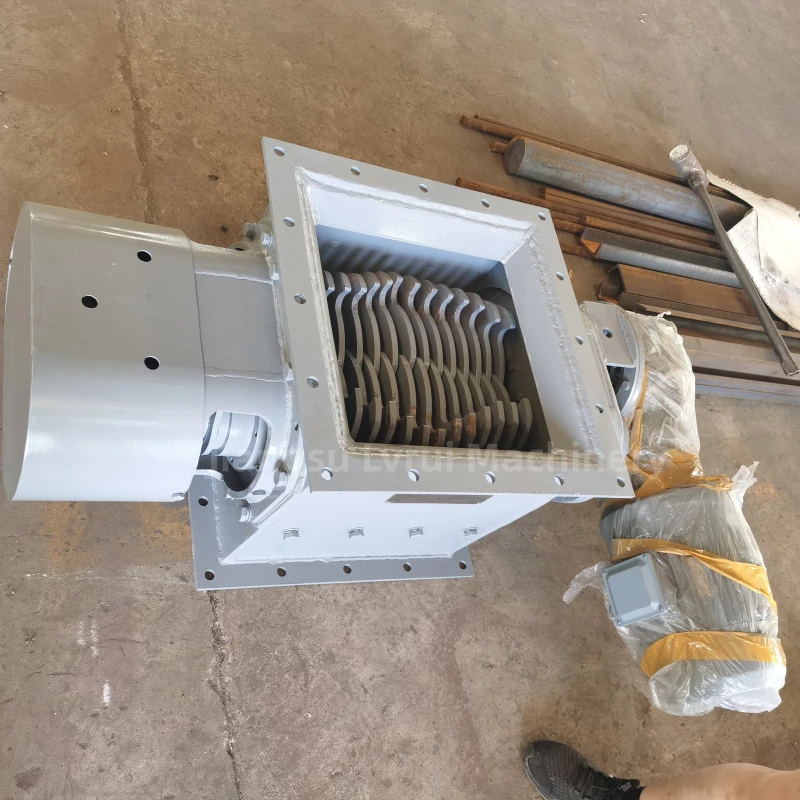
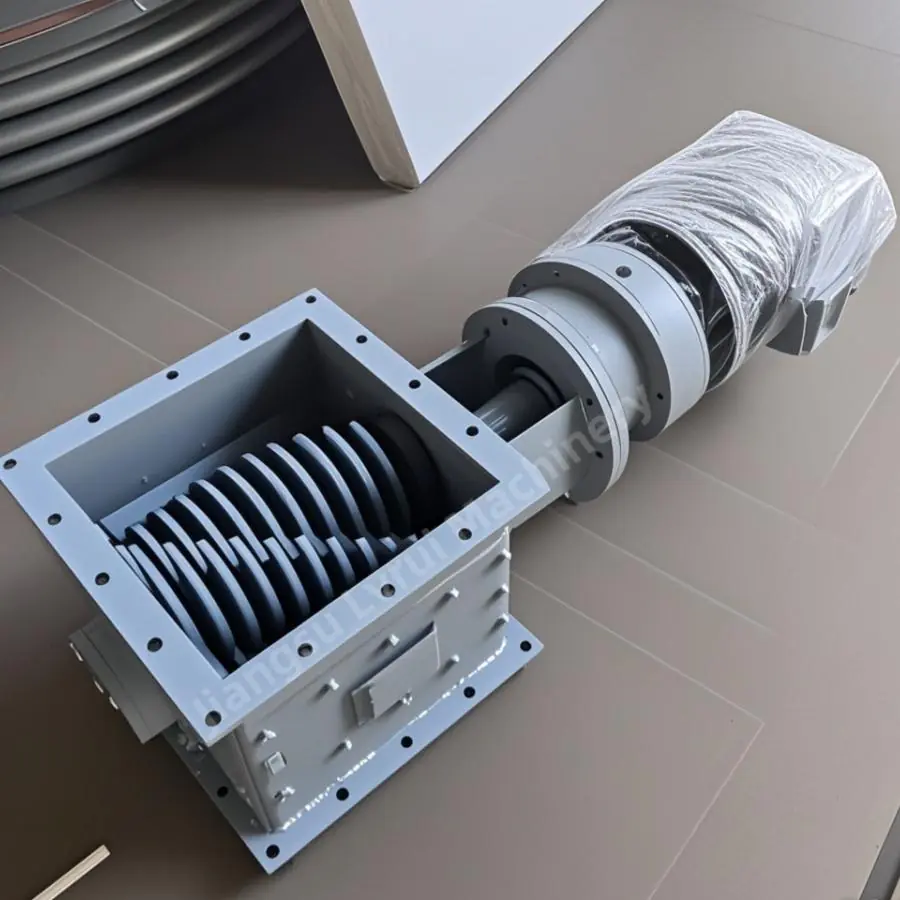
This Lump Breaker Selection Guide focuses on choosing a suitable design based on material condition, lump size, throughput and process requirements. A lump breaker should reduce agglomerates without becoming a bottleneck in the material-handling system.
An oversized machine adds unnecessary cost and space, while an undersized design may struggle with large or hard lumps.
A practical selection should therefore consider:
- Material condition
- Maximum lump size
- Required throughput
- Required output condition
- Shaft structure
- Installation space
- Downstream equipment
The objective is to select the simplest design that can reliably handle the required duty.
Step 1: Check the Material First
Start with the material rather than the machine.
Confirm:
- Material type
- Lump hardness
- Moisture condition
- Abrasiveness
- Stickiness
- Whether lumps are friable or heavily compacted
Dry, friable agglomerates are generally easier to reduce than wet, sticky or highly compacted blocks. Material properties such as particle size, bulk density, cohesiveness, abrasiveness and moisture condition should be evaluated before selecting particle-size-reduction equipment.
Material condition directly affects the required rotor design, torque, blade arrangement and wear protection.
Step 2: Define the Maximum Lump Size and Required Output
Two dimensions are especially important:
Incoming lump size
What is the largest lump that may enter the breaker?
Required output condition
What lump size can the downstream equipment safely accept?
The breaker should be sized to receive the maximum expected lump while reducing it sufficiently for the next process.
Step 3: Match Capacity to the Actual Material Flow
The lump breaker must handle the real process flow without restricting normal discharge.
Confirm:
- Normal throughput
- Peak throughput
- Percentage of lumpy material
- Whether lumps arrive continuously or occasionally
A system handling 50 t/h of powder does not necessarily require the breaker to process 50 t/h of solid lumps.
For detailed capacity evaluation, use a dedicated lump breaker sizing calculation rather than selecting from silo capacity alone.
Step 4: Confirm the Installation Interface
Installation location affects the required inlet, outlet, flange and overall machine dimensions.
Common positions include:
- Below a silo or hopper
- Before a screw conveyor or rotary valve
- Before packing or loading equipment
Before selection, confirm:
- Inlet dimensions
- Outlet dimensions
- Available installation height
- Supporting structure
- Maintenance access
Detailed lump breaker installation and commissioning should be evaluated separately from product selection.
Step 5: Choose Between Single Shaft and Twin Shaft
Shaft structure should match the severity of the breaking duty.
| Factor | Single Shaft | Twin Shaft |
|---|---|---|
| Typical duty | Light to moderate | Moderate to heavy |
| Lump condition | Friable or moderately compacted | Larger or more compacted |
| Throughput | Low to medium | Medium to high |
| Structure | Simpler and compact | More robust |
| Material engagement | One active rotor | Two active rotors |
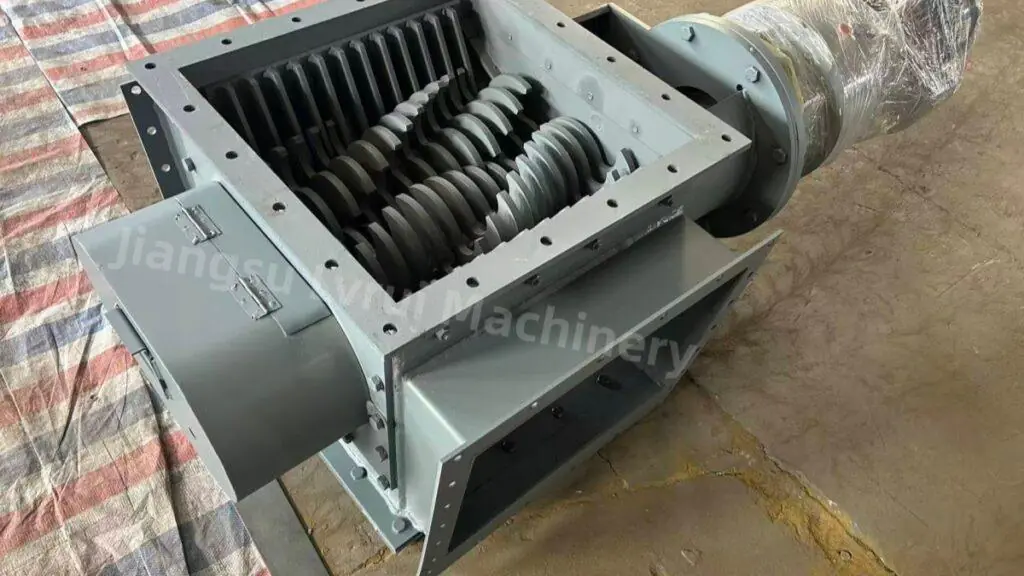
A single shaft design may be sufficient for moderate lumps and stable feed conditions.
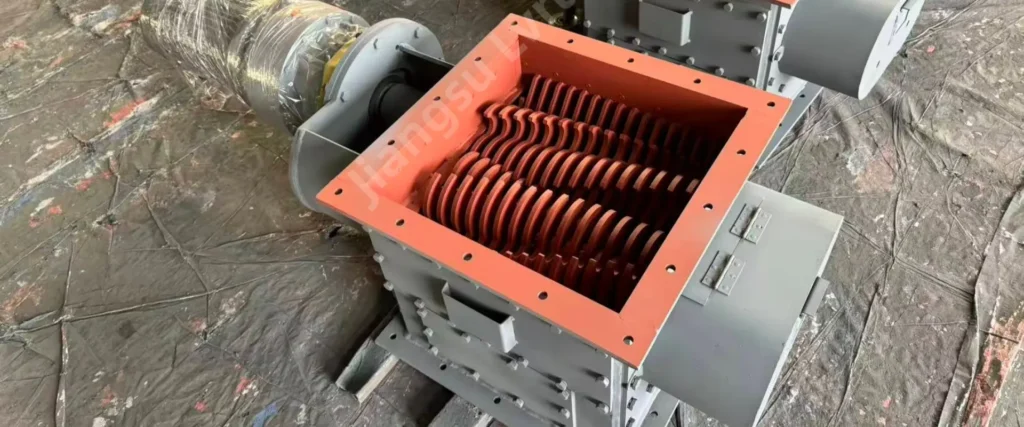
A twin shaft design may be more appropriate when lumps are larger, harder, more frequent or the required duty is heavier.
For detailed structural differences, see the Single Shaft Lump Breaker Design and Twin Shaft Lump Breaker Design guides.
Step 6: Check the Downstream Size Requirement
The downstream equipment often determines how much lump reduction is actually required.
For example:
- Screw conveyors may be sensitive to oversized blocks
- Air slide conveyors require material that can move without large hard lumps
- Rotary valves and feeders may jam if oversized pieces reach the inlet
- Packing or loading systems may require more consistent material flow
The key question is:
What is the maximum lump size the downstream equipment can safely accept?
Do not specify finer reduction than the process actually needs.
Step 7: Review Moisture, Stickiness and Abrasion
Material condition affects both breaking performance and equipment life.
Moisture and stickiness
Damp or adhesive material may build up on the rotor, blades or housing. A standard dry-powder lump breaker should not automatically be applied to highly sticky material.
Abrasiveness
Abrasive powders may require:
- Wear-resistant blades
- Replaceable wear parts
- Protected housing surfaces
- Easier inspection access
Material condition should therefore be confirmed before the final structure and materials are selected.
Step 8: Know When a Lump Breaker Is Not the Right Solution
A lump breaker is designed for coarse deagglomeration, not every material-flow problem.
It may not be the correct solution when:
- The material requires fine grinding
- The product is highly wet or sticky
- Large solid foreign objects must be crushed
- The main problem is bridging high inside the silo
- The process requires controlled particle-size reduction
In these cases, another crusher, flow aid or process change may be more appropriate.
Step 9: Prepare the Required Selection Data
For a practical equipment recommendation, provide:
- Material name
- Maximum lump size
- Lump hardness
- Moisture condition
- Required capacity
- Required output condition
- Inlet and outlet dimensions
- Installation position
- Available height
- Site drawings or photos
This information is normally more useful than simply asking for a lump breaker by motor power or model number.
Lump Breaker Selection Checklist
Before confirming the design, check:
| Selection Factor | Key Question |
|---|---|
| Material | What material is being handled? |
| Lump size | What is the largest incoming lump? |
| Lump hardness | Friable or heavily compacted? |
| Moisture | Dry, damp or sticky? |
| Capacity | What are normal and peak flow rates? |
| Required output | What size can downstream equipment accept? |
| Shaft type | Is single shaft sufficient or is twin shaft justified? |
| Installation | What are the inlet, outlet and available space? |
If several items are unknown, final equipment selection should wait until the process conditions are confirmed.
Common Lump Breaker Selection Mistakes
Selecting Only by Motor Power
Motor power alone does not determine lump-breaking capability.
Ignoring Lump Hardness
Two materials with the same lump size may require very different breaking forces.
Ignoring Downstream Size Limits
The required output should match the equipment after the lump breaker.
Oversizing the Machine
A larger or twin shaft design is not automatically better. The structure should match the actual duty.
Conclusion
As outlined in this Lump Breaker Selection Guide, effective selection starts with the material and process conditions, not the equipment model.
The most important factors are lump size, hardness, moisture, throughput, required output condition, shaft structure and installation interface.
Single shaft designs are often suitable for lighter duties, while twin shaft structures may be justified for larger or more demanding lump loads.
The best selection is the simplest machine that can reliably meet the required breaking duty without restricting the overall process.
FAQs About Lump Breaker Selection
How do I choose the right lump breaker?
Start with the material, maximum lump size, hardness, moisture, required capacity and the maximum lump size acceptable to downstream equipment.
Should I choose a single shaft or twin shaft lump breaker?
Single shaft designs are often suitable for moderate duties. Twin shaft designs may be more appropriate for larger, harder or more frequent lumps and heavier throughput requirements.
Can lump breaker size be selected from silo capacity alone?
No. Silo capacity does not directly determine breaker size. Actual throughput, lump percentage and maximum lump size are more important.
Can a lump breaker handle wet or sticky material?
It depends on the degree of moisture and adhesion. Highly sticky material may build up inside the housing and should be evaluated separately.
Does a lump breaker produce a fixed particle size?
Usually no. A lump breaker is mainly used for coarse deagglomeration rather than precise grinding or particle-size classification.
What information is needed for a quotation?
Provide the material, maximum lump size, capacity, moisture condition, required output, inlet/outlet dimensions and installation drawing or site photos.
Need Help Selecting a Lump Breaker?
Send us the material, maximum lump size, required capacity, moisture condition, inlet/outlet dimensions and available drawings or site photos.
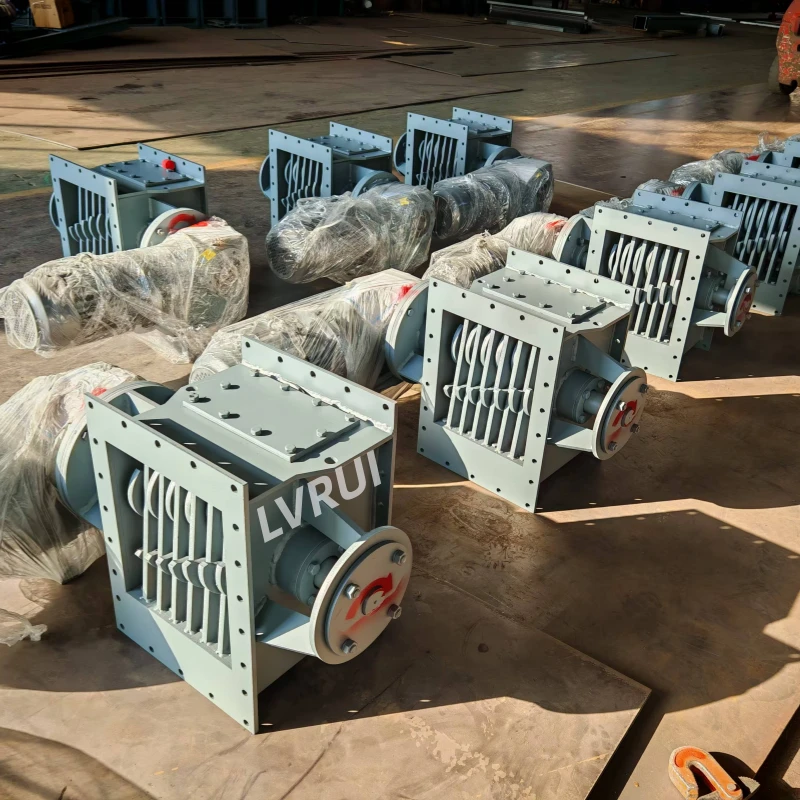
LVRUI can review the operating conditions and recommend a suitable single shaft or twin shaft lump breaker configuration.
WhatsApp: +86-18261998937
WeChat: +86-18261998937
Email: info@lvrui-conveyor.com