(EN) Practical Guide to Blower Power Sizing for Air Slide Conveyors
(ID) Panduan Perhitungan Daya Blower untuk Air Slide Conveyor di Pabrik Semen
Introduction
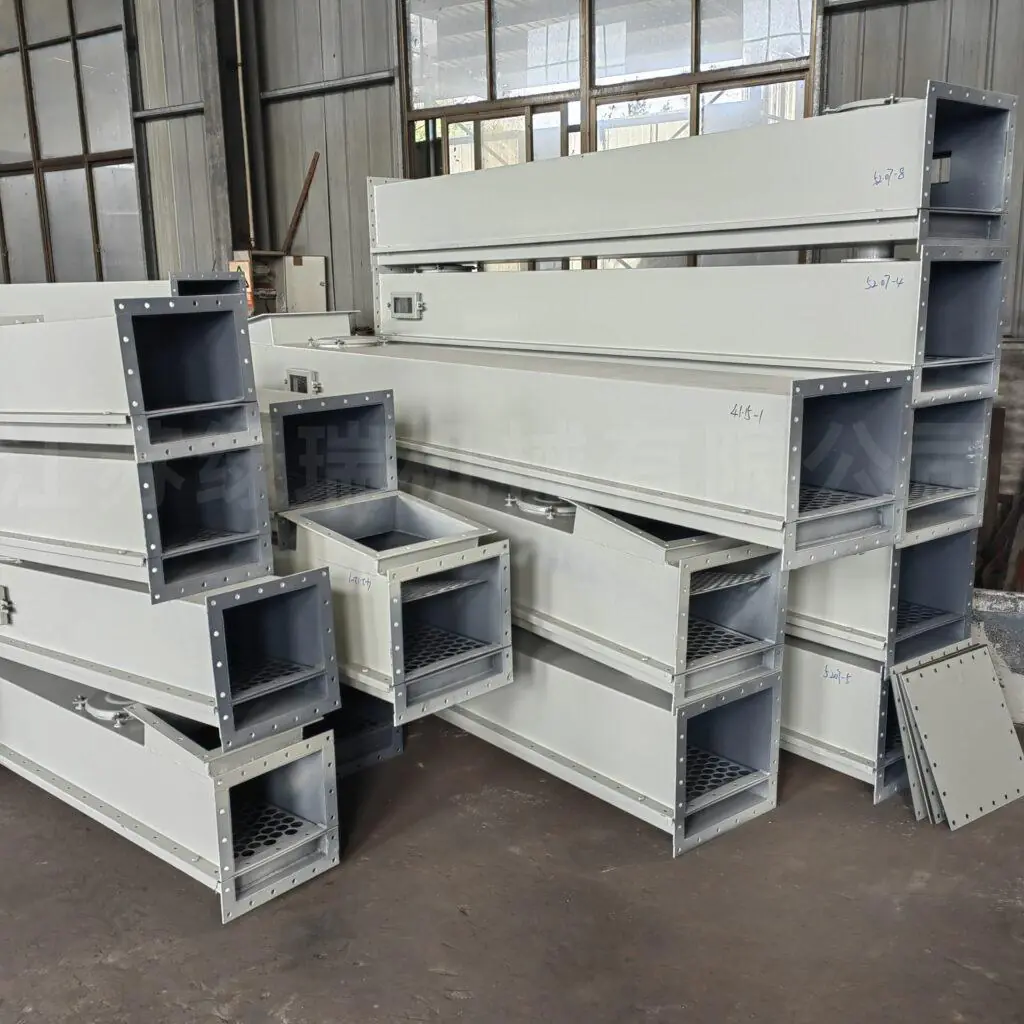
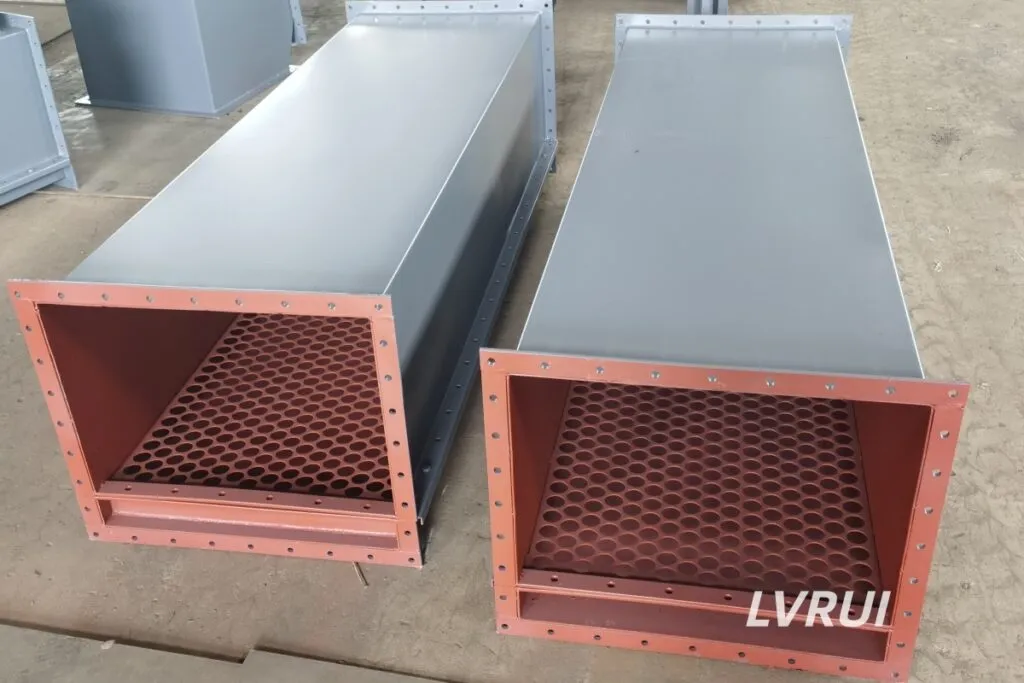
Air slide conveyor power calculation is one of the most important engineering steps when designing cement plant powder conveying systems. Although air slide conveyors have no moving mechanical parts, they still require electrical power to generate airflow for fluidizing and transporting powders such as cement, fly ash, and lime.
If blower power is undersized, materials cannot fluidize properly, leading to unstable conveying and blockages. If blower power is oversized, plants waste electricity and may increase dust carryover, leakage risk, and operating costs. Therefore, accurate power calculation is essential for reliable and energy-efficient operation.
Air Slide Conveyor Power Calculation
Air slide conveyor power calculation refers to the engineering method used to determine the required blower power (kW) based on the system airflow rate, operating pressure, and blower efficiency to ensure stable powder fluidization and continuous gravity-assisted conveying.
What Determines Air Slide Conveyor Blower Power?
Blower power depends on three main variables:
- Airflow rate (Q) needed for stable fluidization
- Operating pressure (ΔP) required to overcome system resistance
- Blower efficiency (η) including motor and mechanical losses
Higher airflow and higher pressure increase blower power demand, while higher blower efficiency reduces energy consumption for the same conveying performance.
Step-by-Step Power Calculation Method
Step 1 — Determine Required Airflow Rate (Q)
Airflow demand is mainly influenced by:
- conveying capacity (t/h)
- channel cross-section
- fabric permeability
- material particle size and bulk density
Typical engineering range (cement plants)
- Cement powder: 0.6–1.2 m³/min per meter of air slide length
- Fly ash: 0.5–1.0 m³/min per meter
- Lime powder: 0.7–1.4 m³/min per meter
📌 Practical rule: longer air slides require higher total airflow, but stable distribution is more important than maximum airflow.
Step 2 — Estimate System Pressure (ΔP)
Total pressure includes:
- air chamber pressure drop
- fabric pressure drop
- duct and valve losses
- leakage margin
Typical operating pressure range
- air slide system pressure: 3–8 kPa (0.03–0.08 bar)
- with ducts/filters: 5–12 kPa
Most air slide systems operate at low pressure; pressure increases usually indicate leakage, clogging, or poor fabric condition.
Step 3 — Use the Blower Power Formula
Standard blower power formula
P(kW)=Q×ΔPη×1000P(kW)=\frac{Q \times \Delta P}{\eta \times 1000}P(kW)=η×1000Q×ΔP
Where:
- P = blower power (kW)
- Q = airflow rate (m³/s)
- ΔP = pressure (Pa)
- η = blower efficiency (0.55–0.75 typical)
- 1000 converts W to kW
Engineering Example — Cement Powder Air Slide Blower Sizing
Example Inputs
- Air slide length: 30 m
- Airflow demand: 1.0 m³/min per meter
- Total airflow: 30 × 1.0 = 30 m³/min
- Convert to m³/s: 30 / 60 = 0.50 m³/s
- Total pressure: 7 kPa = 7000 Pa
- Blower efficiency: 0.65
Calculation
P=0.50×70000.65×1000=3500650≈5.38 kWP=\frac{0.50 \times 7000}{0.65 \times 1000} = \frac{3500}{650} \approx 5.38 \ kWP=0.65×10000.50×7000=6503500≈5.38 kW
Result
A 7.5 kW blower is typically selected to include safety margin, airflow adjustment, and filter losses.
For most cement air slide conveyors, blower sizing is usually within 5–20 kW depending on length, airflow demand, and pressure losses.
How to Avoid Oversizing and Undersizing
Undersizing Risks
- poor fluidization
- unstable flow
- blockage
- reduced capacity
Oversizing Risks
- energy waste
- dust carryover
- leakage risk
- unstable discharge
Practical engineering rule:
Select a blower that can provide stable airflow at the required pressure with 10–30% adjustable margin.
Power Optimization Tips for Cement Plants
Use high-permeability air slide fabric
A stable fabric reduces pressure drop and improves airflow efficiency.
👉 high-permeability air slide fabric engineered for stable fluidization
Maintain sealing integrity
Air leakage increases required blower power and operating pressure.
👉 industrial dust handling safety guidelines for powder conveying environments
Monitor pressure as a maintenance KPI
If pressure rises over time:
- fabric may be clogged
- leakage may increase
- ducts may be blocked
This is a low-cost way to prevent failures early.
How Power Calculation Connects to Common Failures
Many air slide conveyor problems are power-related:
- low airflow → poor fluidization → blockage
- high airflow → energy waste → dust leakage
- unstable pressure → uneven flow
If you want a troubleshooting reference, link to your problems hub (optional internal link if you already published that page).
Authoritative Technical References
For additional engineering background, you may refer to:
- fluidization process in powder conveying systems (Wikipedia engineering overview)
- bulk material handling engineering standards from the Conveyor Equipment Manufacturers Association (CEMA)
- bulk solids handling engineering discussions from the Bulk-Online technical community
FAQ – Air Slide Conveyor Power Calculation
What is the typical blower power for an air slide conveyor?
Most cement plant air slide conveyors use blowers in the range of 5–20 kW, depending on length, airflow rate, pressure losses, and efficiency.
What efficiency should be used in power calculation?
Use 0.55–0.75 as practical blower efficiency. When data is unknown, 0.65 is a conservative engineering assumption.
Why does power consumption increase over time?
Power increases when airflow resistance increases due to fabric clogging, leakage, or duct blockage, raising system pressure requirements.
Can one blower supply multiple air slide lines?
Yes, but only with proper airflow balancing valves and pressure monitoring to prevent uneven distribution and unstable conveying.
Key Engineering Takeaways
Air slide conveyor power calculation is a practical engineering process based on airflow demand, operating pressure, and blower efficiency. Correct blower sizing prevents blockages, reduces energy waste, and ensures stable powder conveying in cement plant operations.
Looking for a reliable Air Slide Conveyor and correctly sized blower solution for cement, fly ash, or powder handling systems?
LVRUI provides:
✓ Air Slide Conveyors
✓ Air Slide Fabrics
✓ Flow Control Gates
✓ Complete Bulk Material Handling Solutions
Email: info@lvrui-conveyor.com
Website: https://lvrui-conveyor.com
Indonesian Version
Perhitungan air slide conveyor power calculation sangat penting dalam sistem penanganan material semen.
Perhitungan daya blower air slide conveyor sangat penting untuk memastikan material bubuk seperti semen, fly ash, dan kapur dapat terfluidisasi secara stabil dan mengalir lancar di dalam saluran conveyor. Daya blower terutama dipengaruhi oleh kebutuhan debit udara (airflow), tekanan operasi sistem (pressure drop), dan efisiensi blower.
Rumus umum perhitungan daya adalah P = (Q × ΔP) / (η × 1000), di mana Q adalah aliran udara (m³/s), ΔP adalah tekanan (Pa), dan η adalah efisiensi blower. Jika daya blower terlalu kecil, fluidisasi tidak stabil dan dapat menyebabkan penyumbatan. Jika terlalu besar, konsumsi listrik meningkat dan risiko kebocoran debu juga lebih tinggi.
Untuk pabrik semen, sebagian besar sistem air slide bekerja pada tekanan rendah sekitar 3–8 kPa, dengan daya blower umumnya berada di kisaran 5–20 kW tergantung panjang conveyor dan kebutuhan airflow. Pemilihan kain air slide dengan permeabilitas yang tepat serta penyegelan sambungan yang baik dapat menurunkan pressure drop dan mengurangi konsumsi energi secara signifikan.