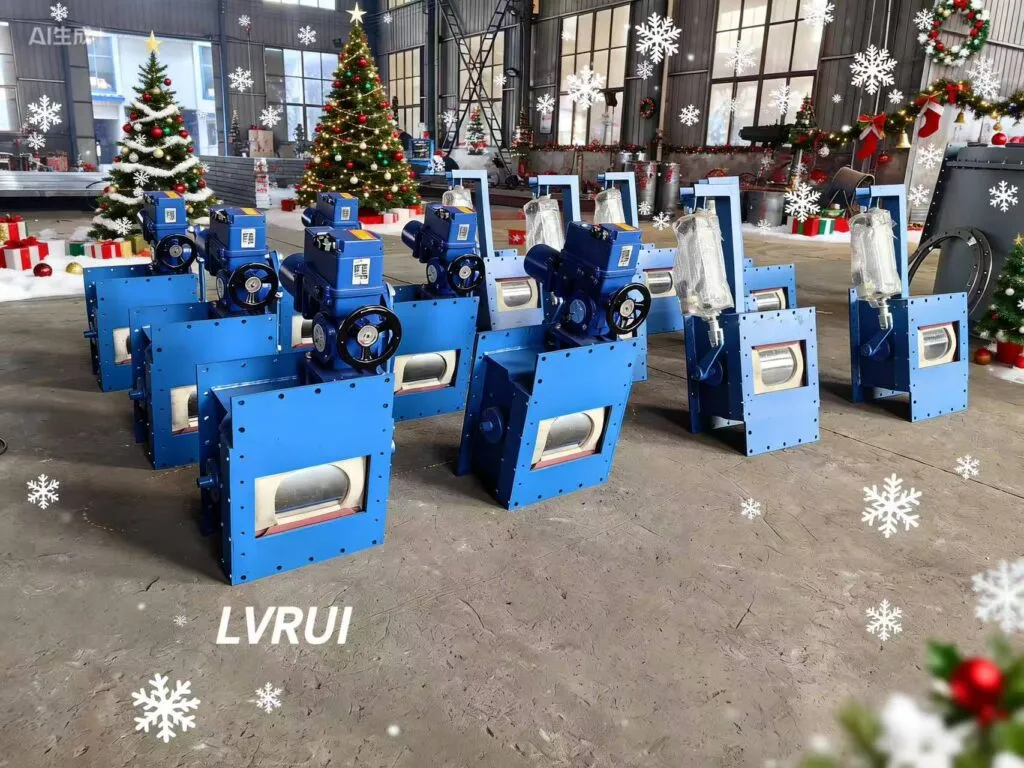
(EN)Understanding Typical Bulk Material Handling Challenges in Cement Production
(ID)Memahami Masalah Aliran Material yang Umum Terjadi di Pabrik Semen
Why Material Flow Problems Are Critical in Cement Plants
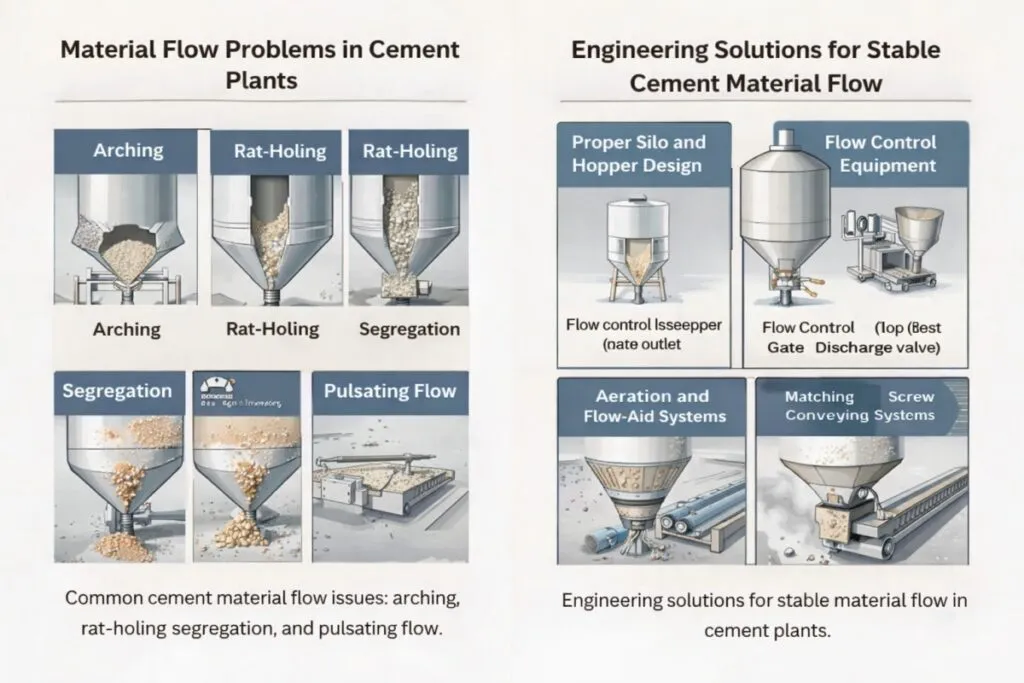
Material flow problems in cement plants refer to issues that disrupt the stable movement of bulk powders such as arching, rat-holing, segregation, and uncontrolled discharge during storage and handling operations.
In industrial engineering, this process is commonly referred to as bulk material handling, which involves the storage, discharge, conveying, and control of bulk solids
When material flow becomes unstable, it can lead to:
- Production interruptions and reduced output
- Excessive dust emissions
- Mechanical overload of downstream equipment
- Increased safety risks for operators
Unlike batch industries, cement plants operate continuously, which makes reliable material flow a fundamental requirement rather than an optimization option.
Common Material Flow Problems in Cement Plants and Handling Systems
These material flow problems occur because fine cement powders are highly cohesive and sensitive to moisture, which increases material friction and adhesion during discharge and conveying.
Arching and Bridging
Arching occurs when bulk material forms a stable structure across a silo or hopper outlet, preventing discharge. This problem is common with fine powders such as cement and fly ash, especially under high moisture or compaction conditions.
Rat-Holing
Rat-holing happens when material flows only through a narrow central channel while material near the walls remains stagnant. Over time, this reduces effective storage capacity and can lead to sudden uncontrolled collapse.
Segregation During Discharge
Particle size segregation can occur during silo filling and discharge, causing inconsistent material quality downstream. This issue is particularly problematic in blended cement production.
Uncontrolled or Pulsating Flow
Poorly designed discharge systems may cause surging flow, placing stress on conveyors, air slides, and dosing equipment, which affects both accuracy and equipment life.
Engineering Solutions for Stable Cement Material Flow
Addressing material flow problems in cement plants requires a combination of proper silo design, flow control equipment, and material-specific conveying solutions.
Proper Silo and Hopper Design
Flow-friendly hopper angles and outlet dimensions should be selected based on material flow properties rather than rule-of-thumb sizing. Mass flow designs are often preferred for fine cementitious materials.
Use of Flow Control Equipment
Flow control gates and discharge valves allow operators to regulate material output and isolate sections safely. Proper selection and positioning are critical for stable operation under automated control.
Aeration and Flow-Aid Systems
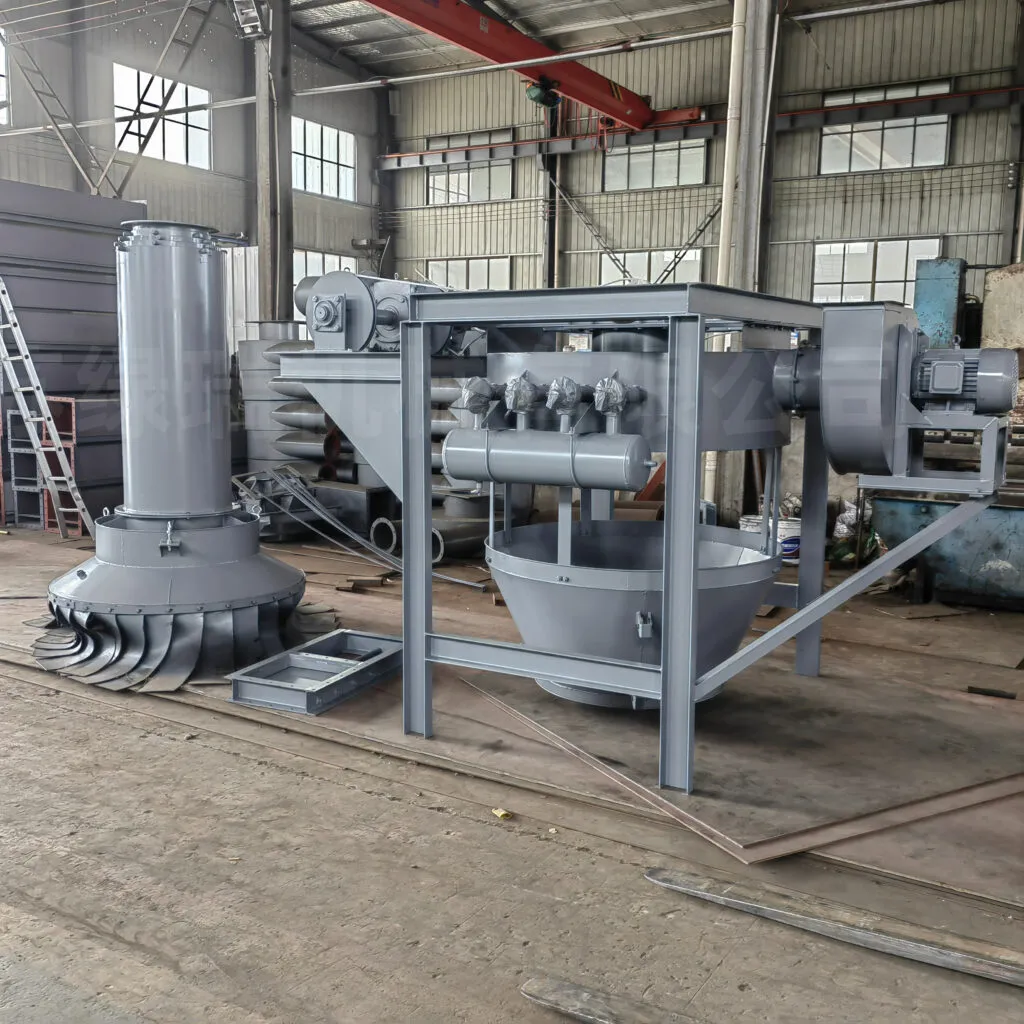
Aeration pads and air injection systems help reduce internal friction and improve powder fluidity, especially in silo cones and air slide feeding zones.
Matching Conveying Systems to Material Behavior
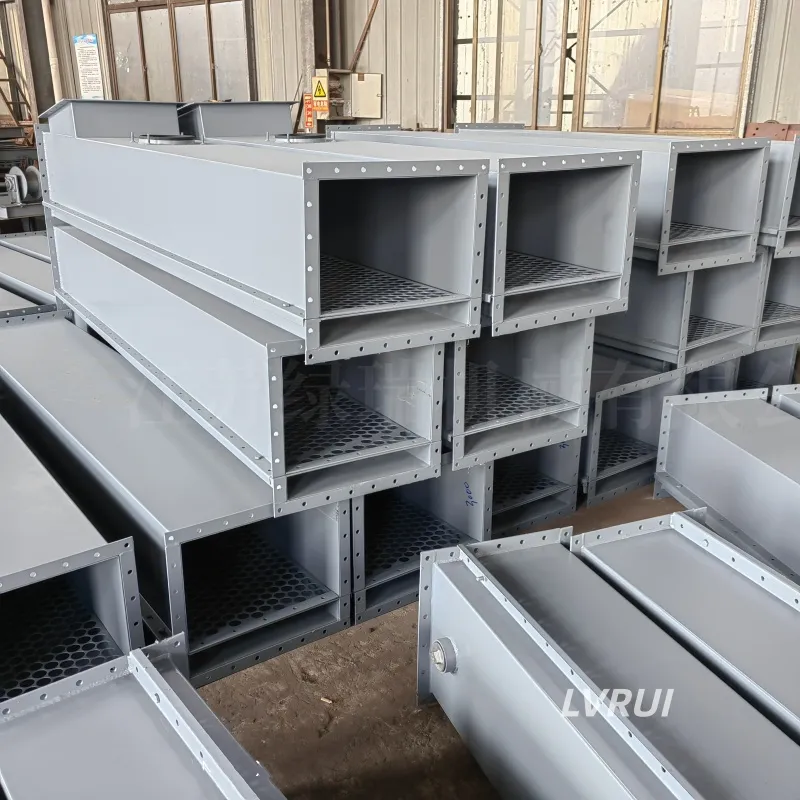
Air slide conveyors are well suited for fine cement powders, while mechanical conveyors may be required for coarser or abrasive materials. Mismatched conveying technology often amplifies flow problems instead of solving them.
Effective management of material flow problems in cement plants requires a system-level engineering approach that integrates silo design, flow control devices, aeration, and conveying systems in a coordinated manner.
Impact of Poor Material Flow on Cement Plant Performance
Ignoring material flow problems can result in:
- Increased energy consumption
- Higher maintenance frequency
- Shortened equipment service life
- Unstable product quality
Over time, these issues significantly increase total operating costs and reduce plant competitiveness.
Suitable and Unsuitable Scenarios for Material Flow Solutions
Material flow problem mitigation strategies are suitable for:
- Cement silo bottom discharge situations with fine powders
- Systems requiring continuous feeding and stable downstream operations
- Automated plants with high throughput requirements
These solutions are not recommended for:
- Materials with high moisture content that inherently clump
- Systems with irregular batch handling instead of continuous flow
- Small-scale facilities without automated discharge controls
Best Practices for Cement Plant Engineers
Experienced cement plant engineers typically follow these principles:
✔ Evaluate material flow behavior during system design
✔ Avoid over-reliance on mechanical force to solve flow problems
✔ Combine discharge control with flow-aiding technologies
✔ Design systems for long-term stability rather than short-term capacity
These engineering practices are widely adopted in the industry and are consistent with design guidance published by organizations such as the
Conveyor Equipment Manufacturers Association (CEMA)
By identifying material flow problems in cement plants at an early stage, engineers can significantly reduce downtime, maintenance costs, and operational risks.
FAQs About Material Flow Problems in Cement Plants
Why do material flow problems occur in cement plants?
Material flow problems in cement plants occur because fine cement powders are cohesive and sensitive to moisture, which increases friction and promotes arching, rat-holing, and unstable discharge during storage and handling.
When are material flow solutions most effective?
Material flow solutions are most effective when applied at silo bottom discharge points, enclosed transfer locations, and continuous conveying systems where stable material flow is critical for downstream operation.
What types of systems are most affected by poor material flow?
Systems handling fine powders with continuous operation requirements, such as cement silos, air slide conveyors, and automated feeding lines, are most affected by poor material flow behavior.
Indonesian Short Version | Versi Singkat Bahasa Indonesia
Masalah aliran material seperti bridging, rat-holing, dan aliran tidak stabil sering terjadi di pabrik semen. Masalah ini dapat mengganggu produksi, meningkatkan biaya perawatan, dan menurunkan keandalan peralatan. Dengan desain silo yang tepat, penggunaan peralatan pengatur aliran, serta sistem aerasi yang sesuai, pabrik semen dapat mencapai aliran material yang stabil dan efisien dalam jangka panjang.
LVRUI focuses on bulk material handling equipment for cement and clinker applications, including discharge, conveying, and bulk loading systems.
Looking for reliable bulk material handling solutions for cement plant applications?
Contact LVRUI Machinery at info@lvrui-conveyor.com or visit https://www.lvrui-conveyor.com to get professional technical support and customized equipment solutions.