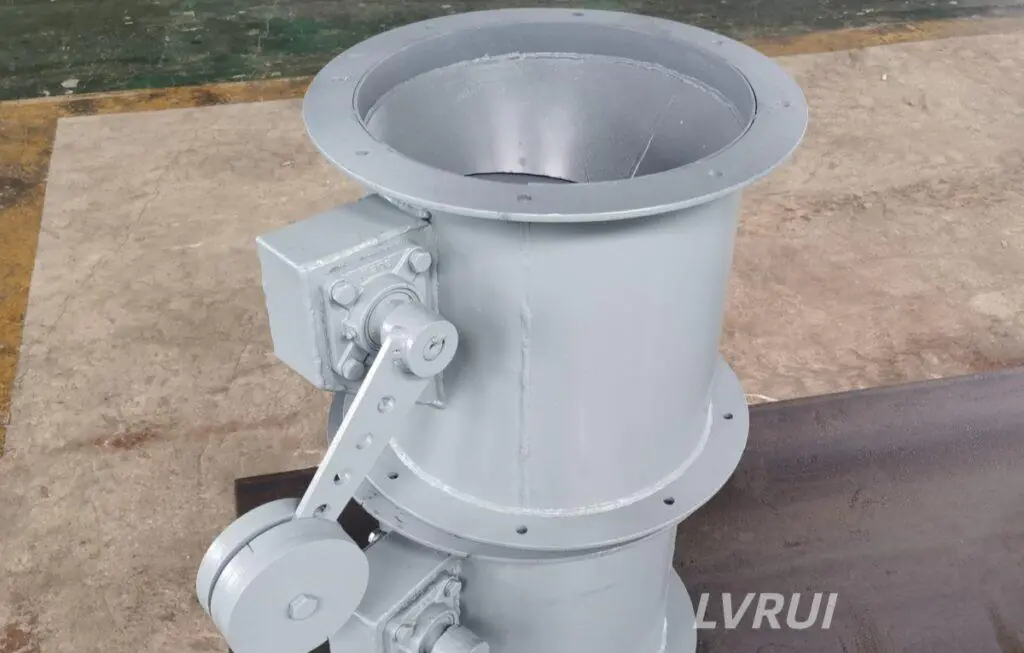
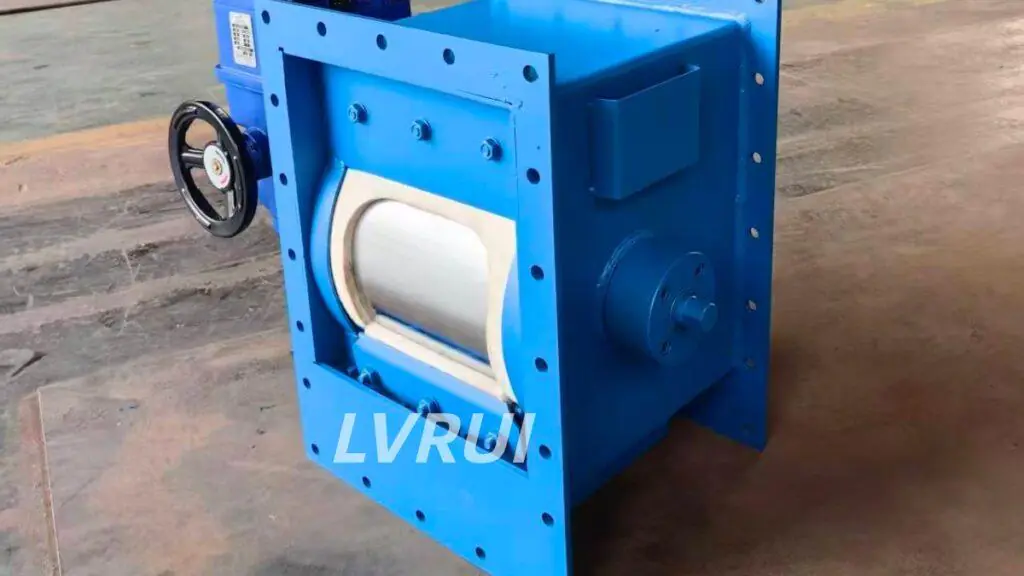
(EN) Engineering-Grade Discharge Control for Fly Ash Silos
(ID) Solusi Kontrol Aliran Presisi untuk Sistem Pengosongan Silo Fly Ash
1. Why Fly Ash Silo Bottom Discharge Requires Precise Flow Regulation
B400 pneumatic flow control gate is specifically designed for fly ash silo bottom discharge systems requiring stable material flow and precise regulation.
Fly ash discharge systems operate under different material behavior conditions compared to cement silos. Fly ash is:
- Extremely fine and cohesive
- Sensitive to aeration instability
- Prone to fluidization collapse and flow surging
In a typical fly ash silo bottom discharge system, the flow control gate is installed between:
- The silo cone outlet
- The aeration zone or air slide conveyor
- The downstream conveying equipment
If discharge cannot be precisely regulated, plants often face:
✔ Sudden material surging
✔ Air slide overloading
✔ Unstable weighing or batching
✔ Excessive dust leakage
For a deeper system understanding, you can reference our engineering guide:
👉 fly ash silo discharge systems
2. What Is a B400 Pneumatic Flow Control Gate?
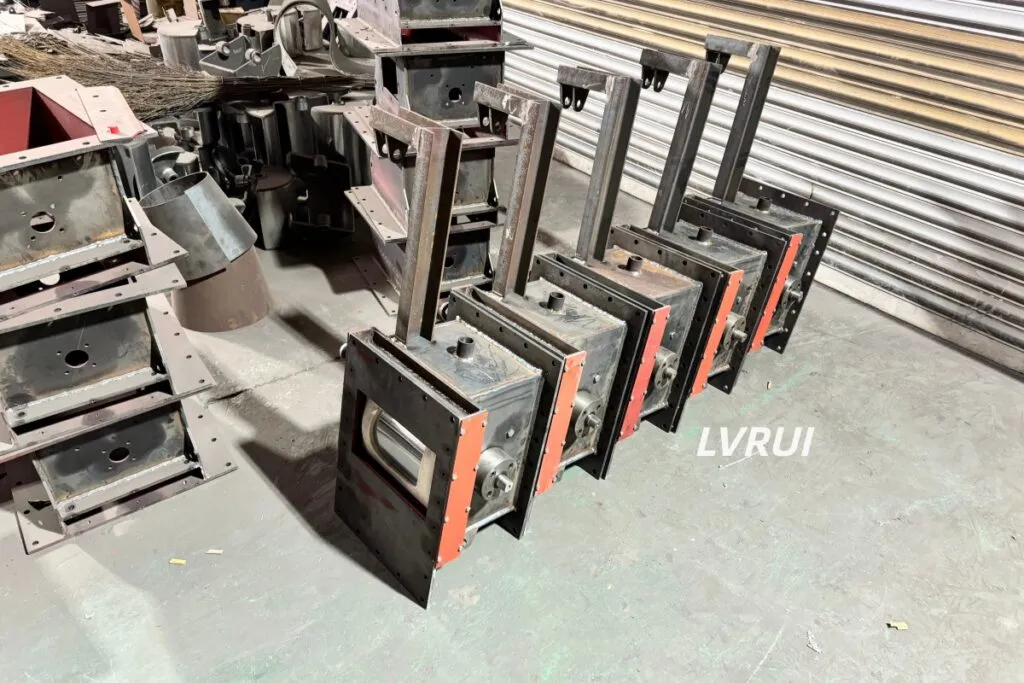
A B400 Pneumatic Flow Control Gate is a rectangular flow-regulating valve designed for bulk powder discharge, with:
- Nominal width: 400 mm
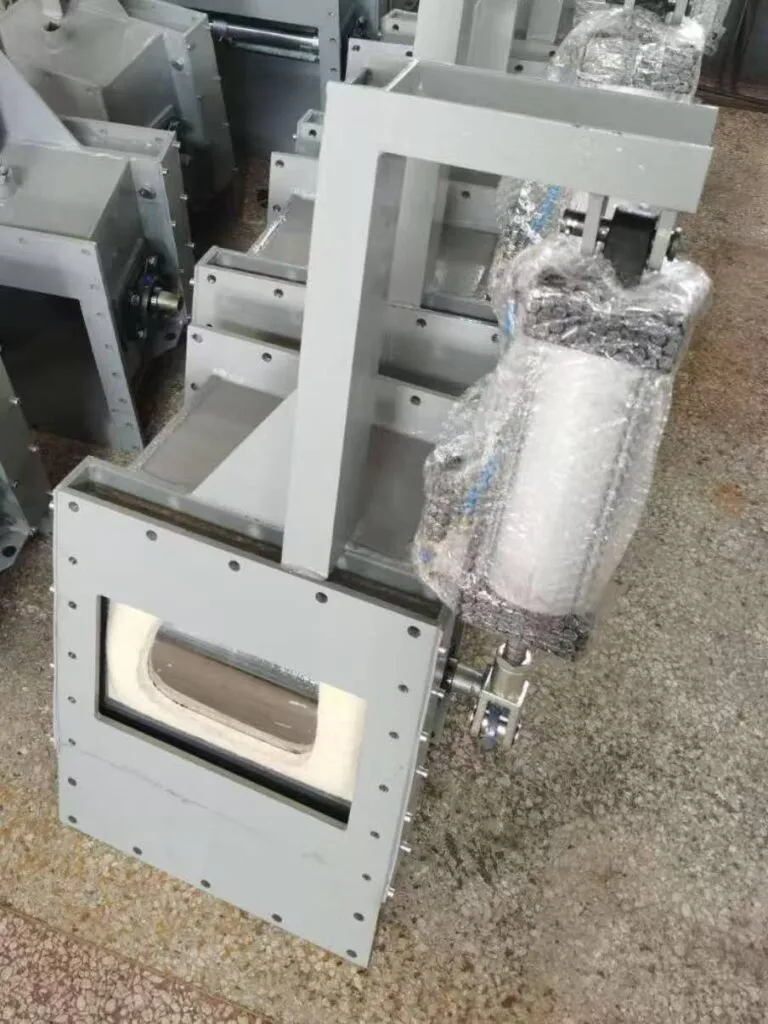
- Pneumatic actuator for automatic positioning
- Adjustable gate opening percentage
- Wear-resistant liner and tight sealing structure
Unlike simple pneumatic slide gates used only for open/close operation, a pneumatic flow control gate enables controlled discharge modulation.
For basic flow control gate principles, see:
👉 pneumatic flow control gate working principle
3. Structural Design of B400 Pneumatic Flow Control Gate
3.1 Body Structure
- Heavy-duty carbon steel welded frame
- Reinforced side plates
- Replaceable wear liners
3.2 Sealing Mechanism
The sealing system must withstand fine fly ash penetration.
High-performance sealing design reduces air leakage and improves pressure stability.
For international bulk material handling standards, see:
👉 bulk material handling systems (CEMA – Conveyor Equipment Manufacturers Association)
3.3 Pneumatic Actuation System
The pneumatic cylinder provides:
- Fast response time
- Adjustable stroke positioning
- Integration with PLC control systems
This makes B400 ideal for automated fly ash conveying systems.
4. System Integration with Fly Ash Silo Bottom Discharge
4.1 Typical Installation Position
The correct engineering sequence is:
Silo cone → Manual isolation gate → B400 pneumatic flow control gate → Air slide conveyor
For understanding air slide integration logic:
👉 air slide conveyor systems
4.2 Flow Stability Logic
Stable discharge depends on:
✔ Aeration uniformity
✔ Gate opening precision
✔ Downstream pressure balance
According to material flow theory see:
👉 powder flow and hopper design principles
Proper hopper geometry combined with adjustable flow gates reduces arching and rat-holing.
5. Engineering Advantages of B400 Pneumatic Flow Control Gate
✔ Precise Modulation
Allows incremental opening for controlled feeding.
✔ Improved Flow Stability
Reduces sudden surges that damage downstream conveyors.
✔ Better Dust Control
Minimizes uncontrolled leakage during partial opening.
✔ Automation Compatibility
Easily integrated into PLC-based discharge systems.
6. Application Boundaries (GEO-Optimized Insight)
Suitable For:
- Fly ash silo bottom discharge
- Cement blending systems
- Powder batching lines
- Air slide conveyor feeding
Not Ideal For:
- Large lump material
- Sticky high-moisture sludge
- Applications requiring zero-pressure airlock (use double flap valve instead)
For airlock alternatives, see:
👉 double flap valve for bulk material handling
7. Long-Tail Keywords Covered
This article intentionally covers:
- B400 pneumatic flow control gate
- Fly ash silo bottom discharge valve
- Pneumatic discharge gate for fly ash
- Fly ash silo flow control system
- Industrial powder discharge regulation
- Adjustable pneumatic flow gate for air slide conveyor
- PLC controlled silo discharge valve
These long-tail keywords enhance both Google ranking and AI semantic indexing.
8. FAQ – Engineering Questions
Q1: What is the difference between a pneumatic slide gate and a pneumatic flow control gate?
A pneumatic slide gate typically operates only in fully open or fully closed positions. A pneumatic flow control gate allows adjustable intermediate positions for controlled material discharge.
Q2: Why is B400 suitable for fly ash silos?
Because fly ash requires stable and adjustable discharge control. The 400 mm width provides adequate flow capacity while maintaining regulation precision.
Q3: Can B400 work with air slide conveyors?
Yes. When properly integrated with aeration systems, B400 ensures stable feeding into air slide conveyors without surging.
📩 Need a Reliable B400 Pneumatic Flow Control Gate for Your Fly Ash Silo System?
Contact LVRUI today for professional engineering support and fast quotation.
✔ Get expert technical consultation within 12 hours
✔ Custom-designed flow control solutions for fly ash discharge systems
Email: info@lvrui-conveyor.com
Website: https://lvrui-conveyor.com
Ringkasan Bahasa Indonesia
B400 Pneumatic Flow Control Gate dirancang untuk sistem pengosongan silo fly ash dengan kontrol aliran presisi dan stabilitas tinggi. Katup ini memungkinkan pengaturan bukaan secara bertahap, terintegrasi dengan air slide conveyor, serta meningkatkan efisiensi sistem dan mengurangi lonjakan material. Cocok untuk sistem otomasi industri semen dan pembangkit listrik.