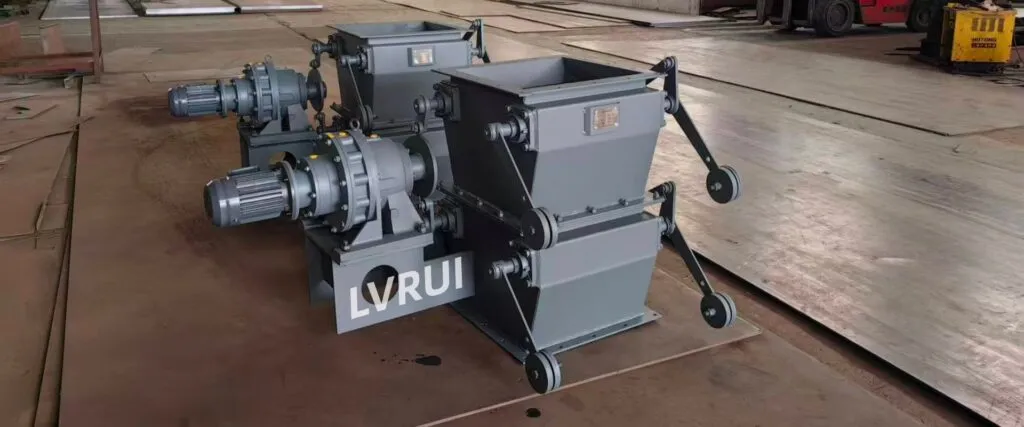
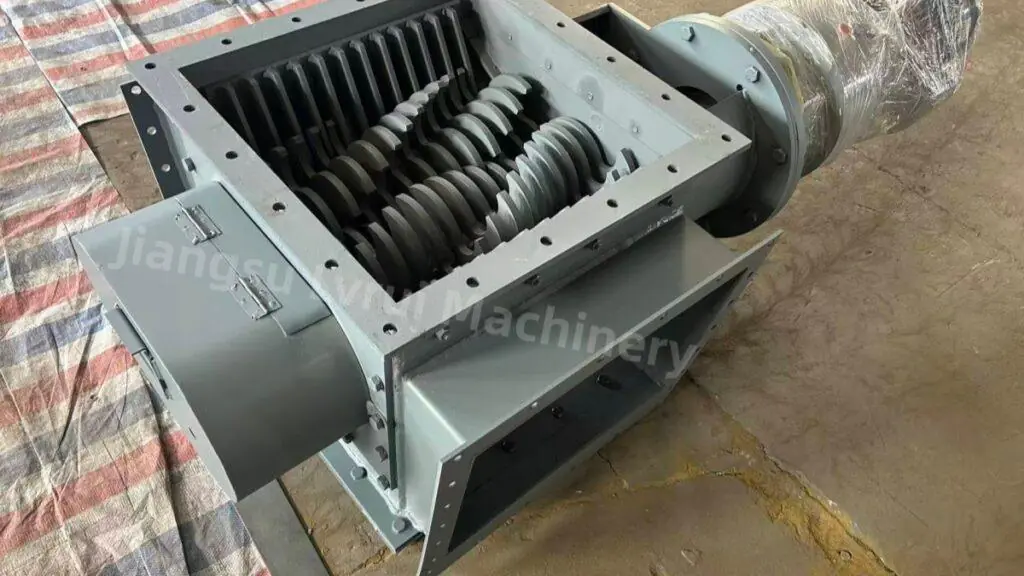
How flow control gates regulate dry bulk discharge while slide gates provide material shut-off and isolation
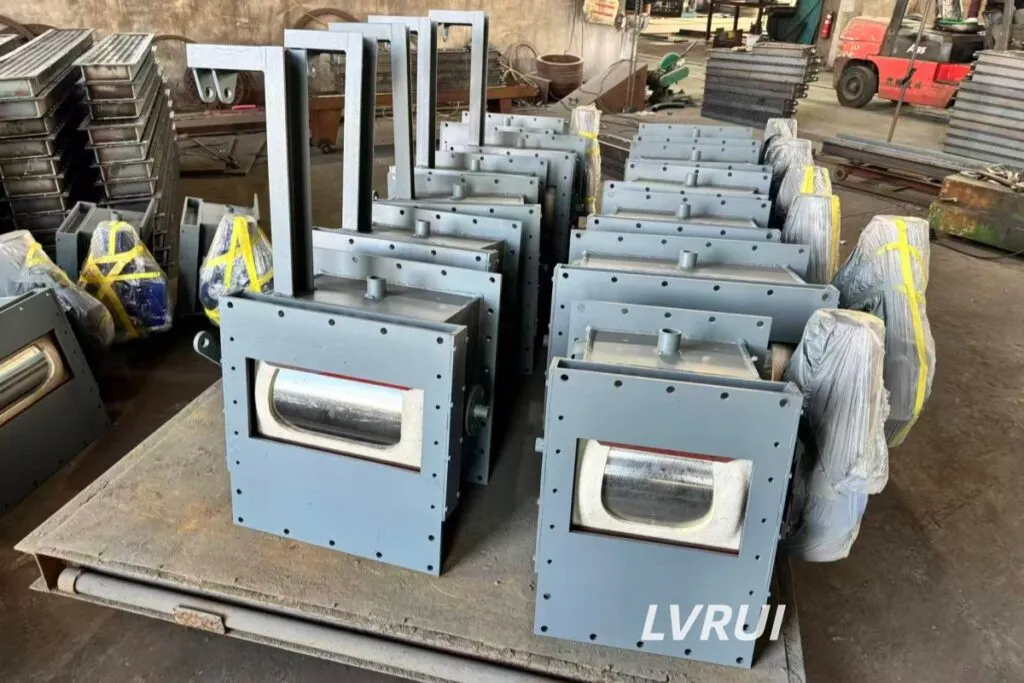
What Is the Main Difference Between a Flow Control Gate and a Slide Gate?
The flow control gate vs slide gate comparison is mainly about their different operating functions: adjustable dry bulk discharge regulation versus material shut-off and isolation.
A flow control gate valve is designed to adjust the effective discharge opening so that dry bulk material flow can be increased or reduced according to process requirements.
A slide gate is primarily used to open or close the material passage for shut-off, isolation, or maintenance access.
This means the selection should not begin with the question “Which valve is better?” Instead, engineers should first determine whether the system requires adjustable material discharge or positive material isolation.
Neither device should automatically be treated as a precision mass-flow metering device. Actual powder discharge also depends on material properties, silo head, aeration, outlet geometry, and downstream resistance.
Structural and Functional Differences
| Comparison Item | Flow Control Gate | Slide Gate |
|---|---|---|
| Primary Function | Adjustable material discharge regulation | Material shut-off and isolation |
| Operating Position | Can operate at intermediate openings | Mainly full-open / full-close |
| Typical Installation | Silo outlet, hopper outlet, air slide feed point | Silo outlet, hopper outlet, chute or maintenance isolation point |
| Intermediate Position Use | Designed for adjustable opening | Possible in some systems, but not normally used for controlled regulation |
| Actuation | Manual, pneumatic or motorized | Manual, pneumatic or motorized |
| Automation | Can be integrated with PLC/DCS where required | Can also be automated for open/close sequencing |
| Isolation Function | Depends on design and sealing arrangement | Main operating purpose |
| Mass-Flow Measurement | Does not directly measure flow rate | Does not measure flow rate |
How a Flow Control Gate Regulates Dry Bulk Discharge
A flow control gate changes the effective material opening beneath a silo, hopper, or transfer point.
Increasing the opening generally allows more material to pass, while reducing the opening restricts the discharge area.
However, gate position and actual mass flow do not have a fixed linear relationship. The resulting discharge rate may also change with:
✓ Material bulk density
✓ Powder flowability
✓ Material head above the gate
✓ Aeration condition
✓ Outlet geometry
✓ Downstream conveying resistance
These factors are consistent with established bulk solids discharge behavior, where powder properties, aeration, outlet geometry, and flow conditions all influence the actual discharge rate.
For this reason, a flow control gate is suitable for adjustable dry bulk discharge regulation, but it should not be described as a precision dosing or weighing device unless the complete system includes suitable measurement and feedback equipment.
How a Slide Gate Provides Material Isolation
A slide gate valve uses a sliding plate to open or close the material passage.
Its main purpose is to provide a clear shut-off point below a silo, hopper, chute, or conveying interface. This is especially useful when downstream equipment requires maintenance, process isolation, or controlled start-stop operation.
A slide gate may physically remain at a partially open position in some applications, but this does not automatically make it a dedicated flow-regulating device.
Where continuous adjustment of dry bulk discharge is required, a flow control gate is generally more suitable.
When Should You Use a Flow Control Gate?
A flow control gate is appropriate when the process requires the discharge opening to be adjusted during operation.
Typical situations include:
✓ Cement, fly ash, or raw meal discharge from a silo
✓ Matching silo discharge with an air slide conveyor
✓ Controlling incoming material to downstream conveying equipment
✓ Applications requiring repeatable intermediate gate positions
✓ Systems where pneumatic or motorized actuation is integrated with plant control logic
A flow control gate can help reduce excessive material surges, but system stability still depends on material flowability, aeration, downstream capacity, and the complete discharge arrangement.
When Is a Slide Gate?
A slide gate is normally the better choice when the primary requirement is material shut-off or isolation rather than continuous discharge adjustment.
Typical situations include:
✓ Silo or hopper outlet isolation
✓ Maintenance shut-off before downstream equipment
✓ Full-open/full-close material control
✓ Emergency or process isolation
✓ Applications where a separate regulating device is installed downstream
The required sealing performance should still be confirmed according to material properties, pressure conditions, gate design, and project requirements.

Can a Flow Control Gate and Slide Gate Be Used Together?
Yes. In many dry bulk handling systems, the two devices can perform complementary functions.
A typical arrangement may be:
Silo or hopper → slide gate / isolation device → flow control gate → conveying equipment
In this arrangement:
Slide Gate
Provides independent material shut-off or maintenance isolation.
Flow Control Gate
Adjusts the effective discharge opening during normal operation.
Using both devices can be useful when a system requires adjustable discharge during production but also needs a separate isolation point for maintenance or shutdown.
The final arrangement should consider installation space, material characteristics, access requirements, and downstream equipment.
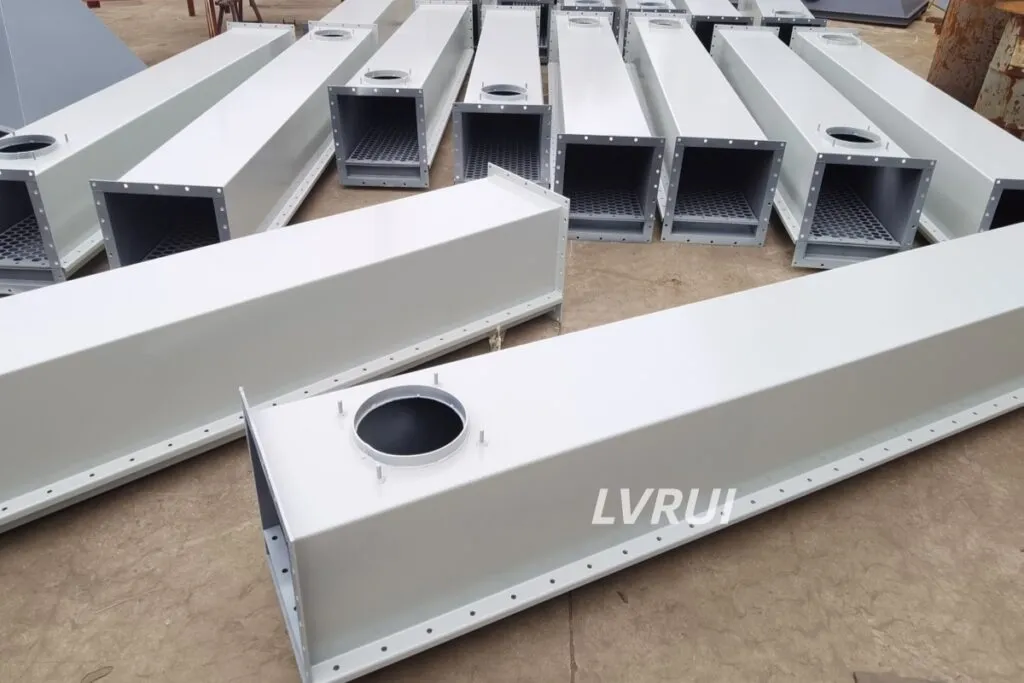
Flow Control Gate vs Slide Gate in Air Slide Systems
When powder is discharged from a silo into an air slide conveyor, the two gates may serve different purposes.
A flow control gate can adjust the incoming powder load so that the discharge opening is better matched to the receiving capacity of the air slide.
A slide gate can provide independent shut-off when the air slide or downstream equipment requires maintenance.
Neither device can correct problems caused by insufficient aeration, damaged air slide fabric, unsuitable conveying slope, or downstream restriction.
For detailed installation and discharge matching, see our Flow Control Gate for Air Slide Conveyor guide.
Applications in Cement and Dry Bulk Handling
The comparison between a flow control gate and a slide gate is most relevant at gravity-discharge and conveying interfaces handling fine dry bulk materials.
Typical materials and systems include cement, fly ash, raw meal, mineral powder, silo discharge systems, hopper outlets, air slide conveyors, screw conveyors, and bulk loading systems.
For abrasive materials, coarse particles, cohesive powders, or materials with a strong tendency to bridge, the gate structure should be evaluated separately according to particle size, abrasion, flowability, opening geometry, and operating conditions.
Key Factors When Choosing Between the Two
The correct choice depends on the required system function rather than the valve name alone. Before selecting either type, confirm the operating conditions and the role the gate must perform within the bulk material handling system.
Key factors include:
✓ Required function: adjustable discharge regulation or material isolation
✓ Material type and bulk density
✓ Powder flowability
✓ Silo or hopper outlet dimensions
✓ Required discharge capacity
✓ Aeration condition
✓ Downstream conveying or process equipment
✓ Operating frequency
✓ Manual, pneumatic, or motorized actuation requirement
✓ Position feedback or remote-control requirements
✓ Maintenance access and isolation requirements
If the main requirement is to adjust the material discharge opening during operation, a flow control gate is generally more suitable. If the primary requirement is full-open/full-close shut-off or maintenance isolation, a slide gate is usually the more appropriate option.
For detailed guidance on manual, pneumatic, and motorized actuation, see our Flow Control Gate Selection Guide.
FAQs About Flow Control Gate vs Slide Gate
What is the main difference between a flow control gate and a slide gate?
A flow control gate is designed to adjust the dry bulk material discharge opening, while a slide gate is mainly used for full-open/full-close material shut-off or isolation.
Can a slide gate regulate material flow?
A slide gate can physically operate at intermediate openings in some systems, but it is not normally used as a dedicated adjustable flow-regulating device. Where continuous discharge adjustment is required, a flow control gate is generally more suitable.
Is a flow control gate suitable for precise dosing?
Not by itself. Gate opening influences material discharge, but actual mass flow also depends on material properties, silo head, aeration, and downstream resistance. Precise dosing normally requires suitable weighing or metering feedback.
Which gate is better for an air slide conveyor?
It depends on the required function. A flow control gate can adjust the powder entering the air slide, while a slide gate can provide independent shut-off or maintenance isolation. Some systems use both.
Can a flow control gate and slide gate be installed in the same silo discharge line?
Yes. A slide gate can provide isolation while the flow control gate adjusts material discharge during normal operation.
Does either gate prevent material bridging or air slide blockage?
No gate should be treated as a universal solution for bridging or conveying blockage. These problems may also involve material flowability, aeration, outlet geometry, air slide condition, or downstream restriction.
Conclusion
The flow control gate vs slide gate comparison is fundamentally a choice between adjustable dry bulk discharge regulation and material shut-off or isolation.
A flow control gate is used when the discharge opening must be adjusted during operation, while a slide gate is mainly used for material shut-off and isolation.
Neither device should be selected only from its name or assumed to provide precise mass-flow control. Material properties, silo conditions, aeration, downstream equipment, sealing requirements, and operating mode all affect the final selection.
In systems requiring both adjustable discharge and independent isolation, the two gate types can also be used together as part of the same silo or hopper discharge arrangement.
Need Help Choosing Between a Flow Control Gate and a Slide Gate?
If you are evaluating a gate for a silo, hopper, or dry bulk conveying system, please provide:
- Material name and bulk density
- Silo or hopper outlet dimensions
- Required discharge capacity
- Main requirement: regulation or isolation
- Aeration condition
- Downstream equipment
- Preferred actuation method, if already known
- Operating frequency
- Layout drawing or available installation space
LVRUI can review the operating conditions and help determine whether a flow control gate, slide gate, or combined arrangement better matches the required system function.
Email: info@lvrui-conveyor.com
WhatsApp / WeChat: +86-18261998937