How gate opening, silo aeration and downstream conveying conditions affect stable fly ash discharge
What Is a Fly Ash Silo Discharge Gate?
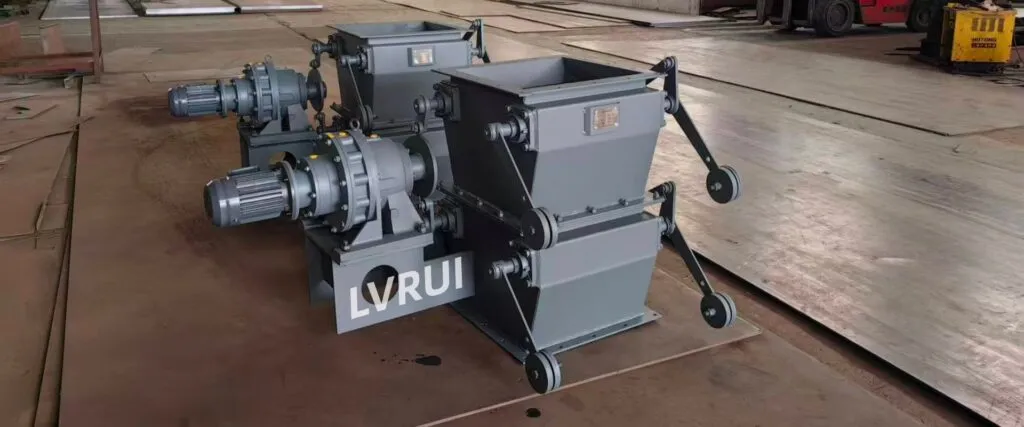
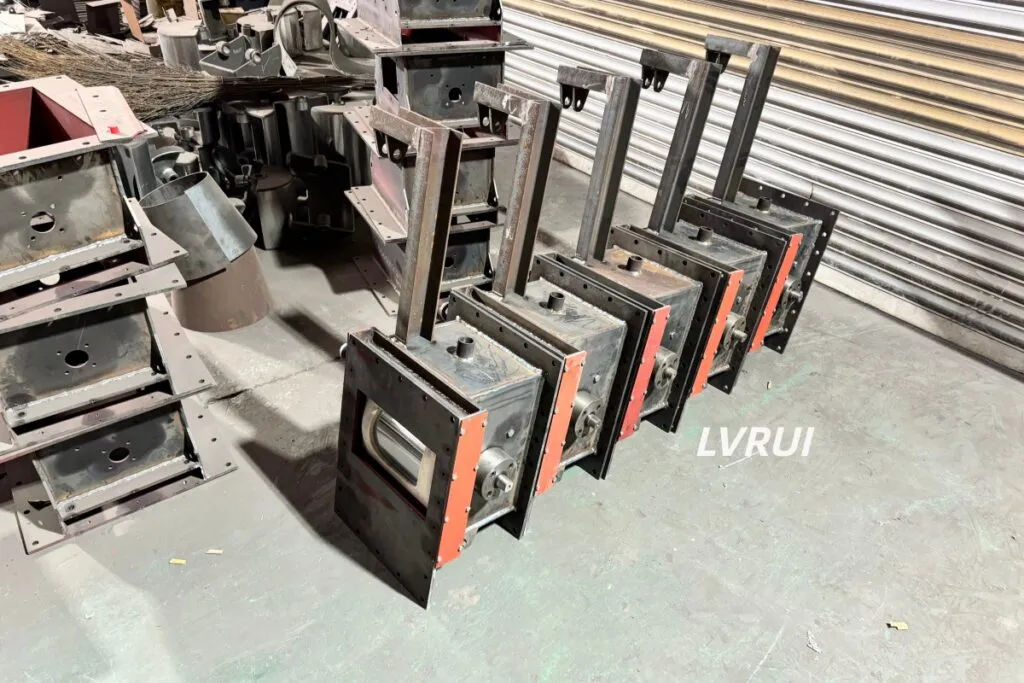
A fly ash silo discharge gate is a device installed below a silo outlet to control the discharge of fly ash before it enters downstream equipment such as an air slide conveyor, pneumatic conveying system or loading system. In fly ash handling systems, the fly ash silo discharge gate works as an interface between the storage silo and downstream conveying equipment.
Unlike a shut-off gate that mainly provides isolation, a discharge gate adjusts the effective opening to match the material flow requirement of the following process.
In a typical fly ash handling system, stable discharge depends on the interaction between the silo outlet design, aeration condition, gate opening and downstream conveying capacity.
Why Fly Ash Silo Discharge Control Is Important
Fly ash is a fine powder material commonly stored in silos before transportation or processing. During discharge, its flow behavior can vary depending on factors such as fly ash characteristics, bulk density, moisture content, particle size distribution, and storage conditions.
✓ Bulk density
✓ Moisture content
✓ Powder flowability
✓ Material consolidation
✓ Silo geometry
✓ Aeration condition
A properly selected discharge gate helps adjust the material outlet condition and avoid problems caused by excessive or insufficient material loading.
However, the gate itself does not create powder flow. It works together with silo aeration and downstream conveying equipment.
How a Pneumatic Discharge Gate Works
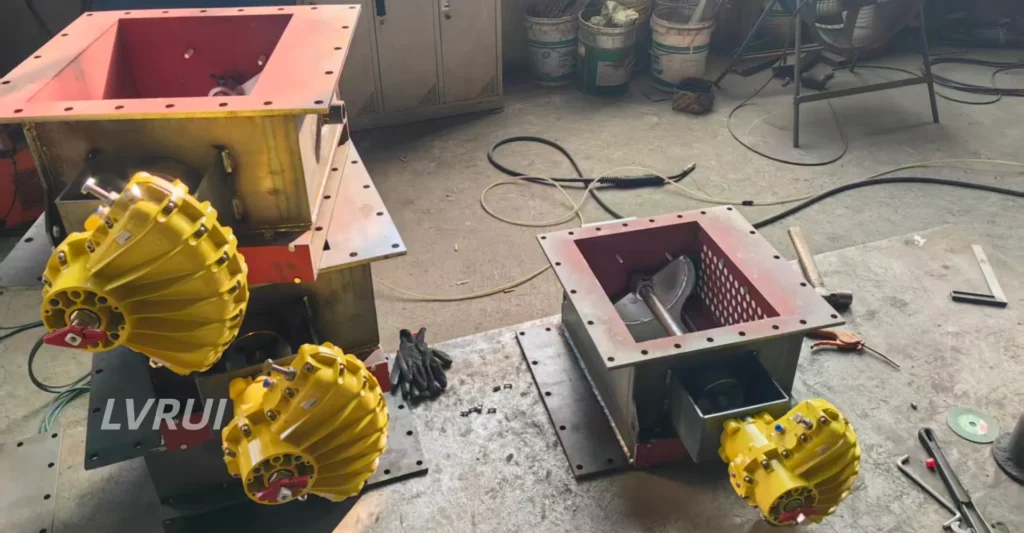
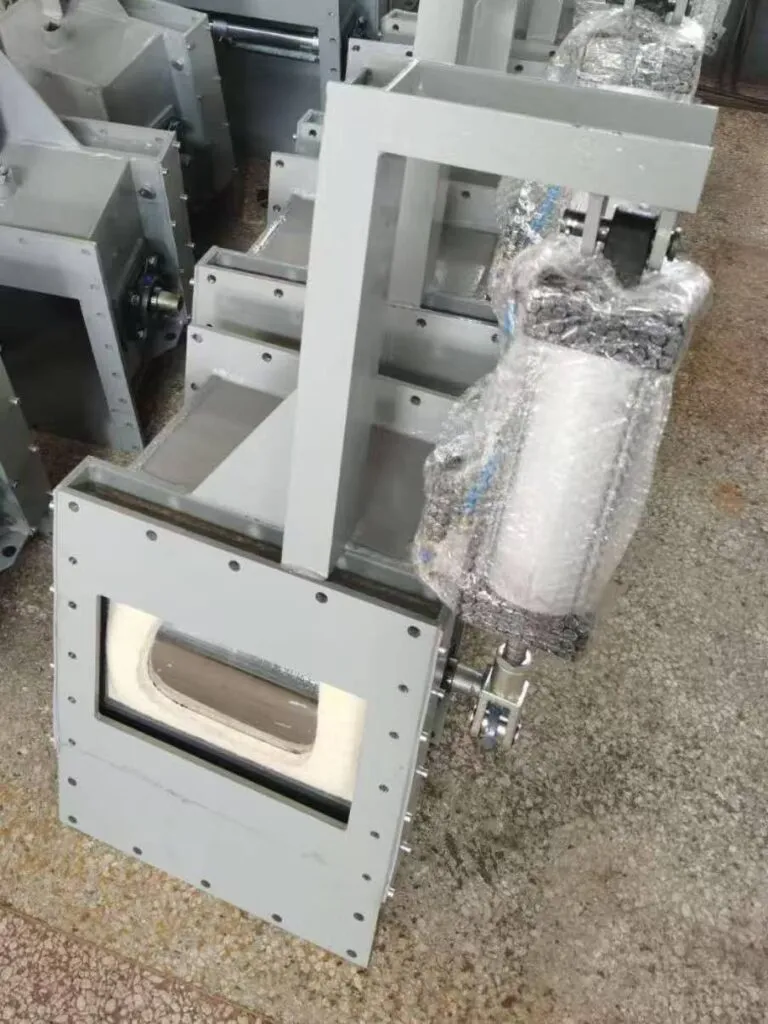
A pneumatic fly ash silo discharge gate uses compressed air to operate the gate mechanism. For applications requiring remote adjustment and automatic operation, a pneumatic flow control gate can be integrated with the silo discharge system.
The basic process is:
Silo outlet → Pneumatic discharge gate → Air slide conveyor / downstream equipment
The pneumatic actuator moves the gate plate to adjust the effective opening.
The gate position affects how much material enters the downstream section, while actual material flow is also influenced by powder properties and system conditions.
For applications requiring frequent adjustment, pneumatic actuation can provide faster response and easier integration with plant control systems.
B400 Pneumatic Flow Control Gate Application for Fly Ash Silo
In this application, B400 refers to a gate size designation with an approximate 400 mm nominal opening width.
The B400 designation does not directly define the discharge capacity.
The actual performance depends on:
✓ Fly ash characteristics
✓ Silo outlet dimensions
✓ Required conveying capacity
✓ Air slide receiving capacity
✓ Aeration arrangement
✓ Installation conditions
Therefore, selecting a fly ash silo discharge gate requires evaluating the complete discharge system rather than only the gate size.
Relationship Between Silo Aeration and Discharge Gate Operation
A common misunderstanding is that the discharge gate controls powder flow independently.
In a fly ash silo system:
- Aeration improves powder mobility near the outlet
- The discharge gate adjusts the outlet opening
- The downstream equipment determines the receiving capacity
Stable operation requires these three parts to work together.
If aeration is insufficient, increasing gate opening may not solve poor discharge.
If the gate opening is too large, the downstream conveyor may become overloaded.
Matching the Discharge Gate with Downstream Equipment
A fly ash silo discharge gate should be selected according to the equipment receiving the material.
For example, when feeding an air slide conveyor, consider:
✓ Air slide width
✓ Conveying capacity
✓ Inclination angle
✓ Material loading condition
✓ Required continuous operation rate
An oversized opening may cause excessive material entering the air slide, while a restricted opening may reduce system utilization.
The goal is not maximum opening, but a stable material supply matched with the conveying system.
Common Problems with Fly Ash Silo Discharge Gates
1. Unstable Material Discharge
Possible causes:
- Changing fly ash properties
- Poor aeration distribution
- Incorrect gate adjustment
- Downstream equipment restriction
2. Material Accumulation Near the Outlet
Possible causes:
- Insufficient powder mobility
- Silo outlet design issues
- Moisture or material consolidation
The discharge gate cannot correct all silo flow problems. For troubleshooting gate movement, unstable discharge, or material blockage issues, see our flow control gate troubleshooting guide.
3. Gate Movement Problems
Possible causes:
- Pneumatic actuator issues
- Material buildup around the gate plate
- Mechanical alignment problems
- Insufficient maintenance
Installation Considerations
When installing a fly ash silo discharge gate, consider:
Installation Position
The gate should be installed where discharge control is required while allowing sufficient space for:
✓ Inspection
✓ Actuator maintenance
✓ Connection adjustment
Mechanical Alignment
Incorrect alignment may cause:
- Increased resistance
- Leakage
- Uneven gate movement
Connection with Air Slide System
The gate outlet should match the downstream conveying equipment to maintain stable material transfer.
Information Required for Selecting a Fly Ash Silo Discharge Gate
Before selecting a suitable gate, provide:
✓ Fly ash type and bulk density
✓ Silo outlet size
✓ Required discharge capacity
✓ Downstream equipment type
✓ Air slide dimensions (if applicable)
✓ Aeration arrangement
✓ Available compressed air supply
✓ Manual or pneumatic control requirement
These parameters help determine the suitable gate configuration. For more detailed considerations, refer to our flow control gate selection guide.
FAQs About Fly Ash Silo Discharge Gate
What is a fly ash silo discharge gate?
A fly ash silo discharge gate controls the opening below a silo outlet to regulate material entering downstream equipment.
Does a discharge gate control fly ash flow completely?
No. Actual flow also depends on material properties, silo condition, aeration and downstream capacity.
Is a pneumatic gate suitable for fly ash silos?
Yes, pneumatic actuation is commonly used where remote operation or automatic control is required.
What does B400 mean for a discharge gate?
B400 generally refers to the nominal gate width. It does not directly indicate the achievable discharge rate.
Can a discharge gate solve fly ash blockage problems?
Only when the problem is related to excessive discharge restriction. It cannot replace proper aeration or correct poor silo design.
What information is needed before choosing a fly ash silo discharge gate?
Material characteristics, silo dimensions, required capacity and downstream equipment information are required for evaluation.
Conclusion
A fly ash silo discharge gate is an important interface between storage equipment and downstream conveying systems. Its main function is to adjust the material outlet condition rather than independently control the complete powder flow.
For B400 pneumatic applications, stable operation depends on matching the gate opening with fly ash characteristics, silo aeration, and downstream conveying capacity.
A properly selected and integrated discharge gate can help improve operational stability and provide more reliable fly ash handling performance.
Need Help Selecting a Fly Ash Silo Discharge Gate?
If you are evaluating a fly ash silo discharge gate, please provide:
- Fly ash material information
- Bulk density and flow characteristics
- Silo outlet dimensions
- Required discharge capacity
- Downstream conveying equipment
- Aeration arrangement
- Actuation requirements
LVRUI can help evaluate the gate configuration, installation position and integration with the complete material handling system.
WhatsApp: +86 18261998937
WeChat: +86 18261998937
Email: info@lvrui-conveyor.com