
Cement Silo Discharge System | Reliable Powder Flow
Silo Semen Handal untuk Aliran Bubuk
Common Silo Discharge Problems in Cement Plants
In cement plants, unstable silo discharge is one of the most frequent causes of process interruption.
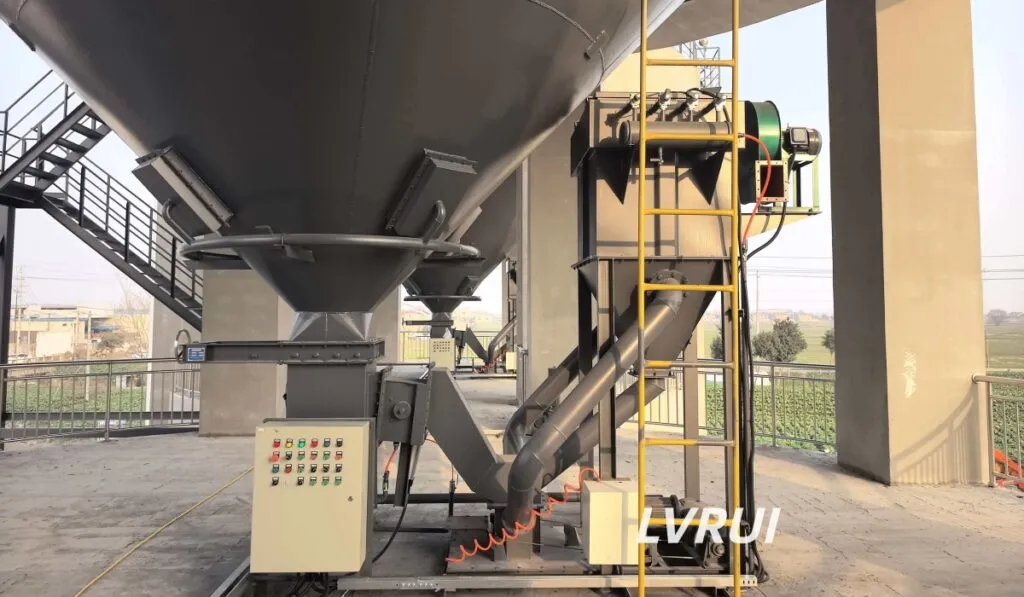
Typical issues include:
✅ Material arching
✅ Rat-holing
✅ Flow stagnation
✅ Uneven discharge
✅ Sudden blockages
These problems may lead to:
- kiln feeding instability
- inaccurate batching
- unexpected downtime
- dust leakage
A properly engineered Cement Silo Discharge System ensures:
👉 Continuous material flow
👉 Controlled discharge rate
👉 Smooth downstream transfer
What Is a Cement Silo Discharge System?
A Cement Silo Discharge System is an integrated flow-assistance and discharge-control solution designed to ensure stable powder movement from storage silos to downstream processes.
Unlike mechanical unloading methods, this system utilizes:
- aeration-assisted flow
- gravity-based transfer
- controlled discharge mechanisms
This approach minimizes compaction and improves material fluidity.
Key Components of the System
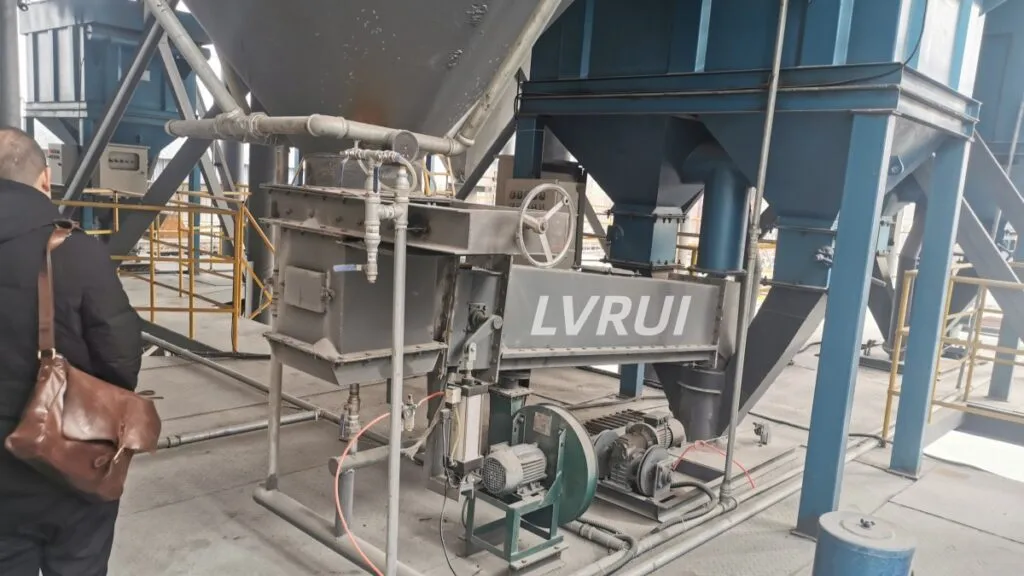
A complete silo discharge system typically includes:
✅ Aeration System
Fluidizes cement powder to prevent arching and compaction.
✅ Flow Control Gate
Regulates discharge rate precisely.
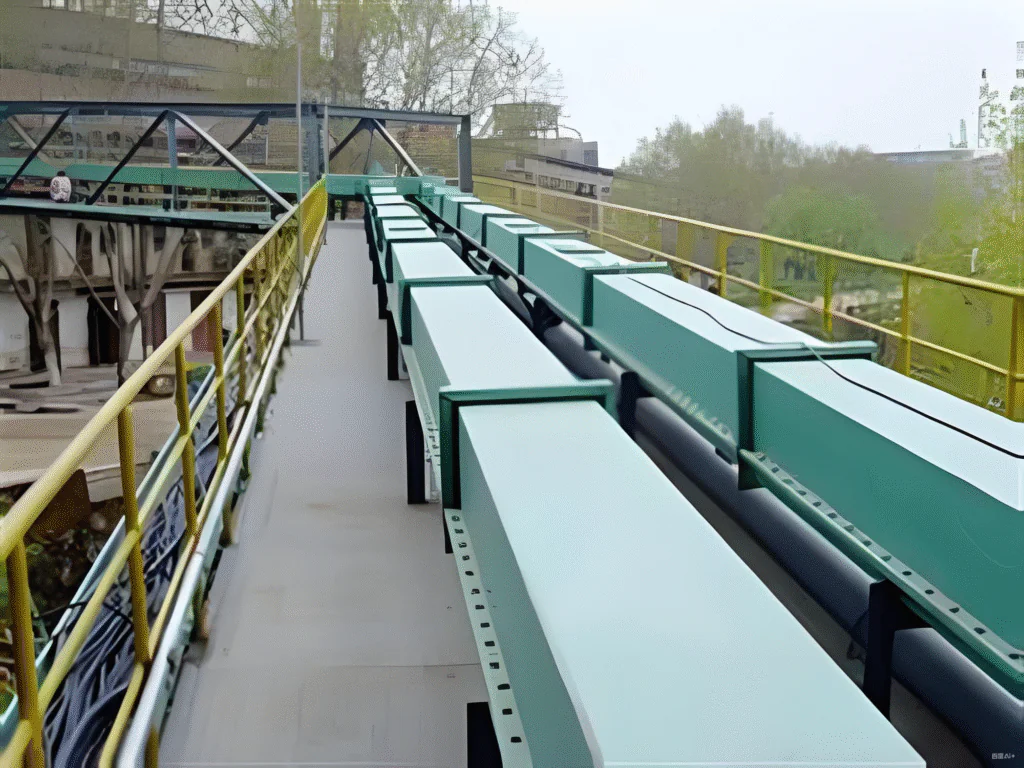
✅ Air Slide Conveyor
Transfers material smoothly using low-energy pneumatic assistance.
✅ Discharge Bend
Ensures stable material transition without flow disruption.
Together, these components form a gravity-assisted pneumatic discharge solution.
How the System Works
Inside the silo cone, aeration pads introduce low-pressure air to fluidize cement powder.
Once fluidized, the material moves toward the outlet where a flow control gate regulates discharge volume.
After controlled release, cement is transferred through an air slide conveyor toward:
- blending systems
- bulk loading stations
- transfer conveyors
This design eliminates mechanical stress and reduces maintenance.
Engineering Advantages
A well-designed system offers:
✅ Stable discharge behavior
✅ Reduced silo blockage risk
✅ Low energy consumption
✅ Minimal mechanical wear
✅ Improved operational continuity
According to bulk material handling standards by the CEMA – Conveyor Equipment Manufacturers Association
gravity-assisted discharge systems improve handling reliability for fine powders.
System Design Considerations
Designing an effective Cement Silo Discharge System requires more than simply selecting equipment.
Proper engineering must consider both material characteristics and silo geometry.
Key design factors include:
✅ Silo Cone Angle
The cone angle directly influences material flow behavior.
An improperly designed cone may increase the risk of arching or rat-holing.
✅ Bulk Material Properties
Cement powder density, moisture content and particle size distribution affect discharge performance.
Fine powders with poor flowability require optimized aeration support.
✅ Aeration Layout
Strategic placement of aeration pads inside the cone ensures uniform fluidization.
Uneven aeration may cause localized flow stagnation.
✅ Controlled Discharge
Flow control gates must be selected based on:
- required discharge rate
- process continuity
- downstream system capacity
A mismatch between silo discharge and conveying capacity can lead to process instability.
By integrating proper aeration design with controlled discharge, the system achieves:
👉 Consistent material flow
👉 Reduced downtime
👉 Improved operational safety
Typical Applications
This system is widely used in:
- Cement plants
- Fly ash storage systems
- Lime powder silos
- Dry bulk terminals
- Grinding stations
FAQS about Cement Silo Discharge System
What causes instability in cement silo discharge?
Fine powders compact under pressure and form blockages. Proper aeration and controlled discharge ensure smooth, stable material flow.
Why is an air slide essential for cement powder transfer?
Air slide conveyors provide smooth, wear-free transfer of cement powder. They reduce dust emissions and ensure efficient material flow without clogging.
How does the system improve environmental compliance?
The system prevents airborne dust and ensures compliance with environmental standards, such as EPA and CEMA regulations. It helps businesses avoid penalties and maintain sustainable operations.
What maintenance is required for the system?
Regular inspection of dust collection filters and calibration of flow control gates are needed. Routine cleaning and maintenance of the air slides ensure optimal dust-free operation.
How does the system save operational costs?
By reducing dust-related health risks and minimizing downtime, the system saves on medical costs, insurance premiums, and maintenance fees. It also improves the overall efficiency of material handling, reducing operational costs.
Can the system be tailored for specific industries?
Yes, the Cement Silo Discharge System is customizable to meet the needs of industries like cement, lime, fly ash, and coal. Tailored solutions are available for varying material handling requirements.