
Cement Silo Discharge System for Stable Powder Flow
Aeration, Lump Breaking, Isolation and Controlled Discharge
What Is a Cement Silo Discharge System?
A Cement Silo Discharge System combines flow-assistance and discharge-control equipment at the lower section of a cement silo to help stored powder move reliably toward downstream equipment. Depending on the material condition and process layout, the system may include aeration devices, a lump breaker, isolation gates, flow control gates and a connection to an air slide conveyor, screw conveyor, weighing system or bulk loading equipment.
The system focuses on reliable material release from the silo. Downstream conveying, flow routing and loading are separate process functions that must be matched to the required discharge
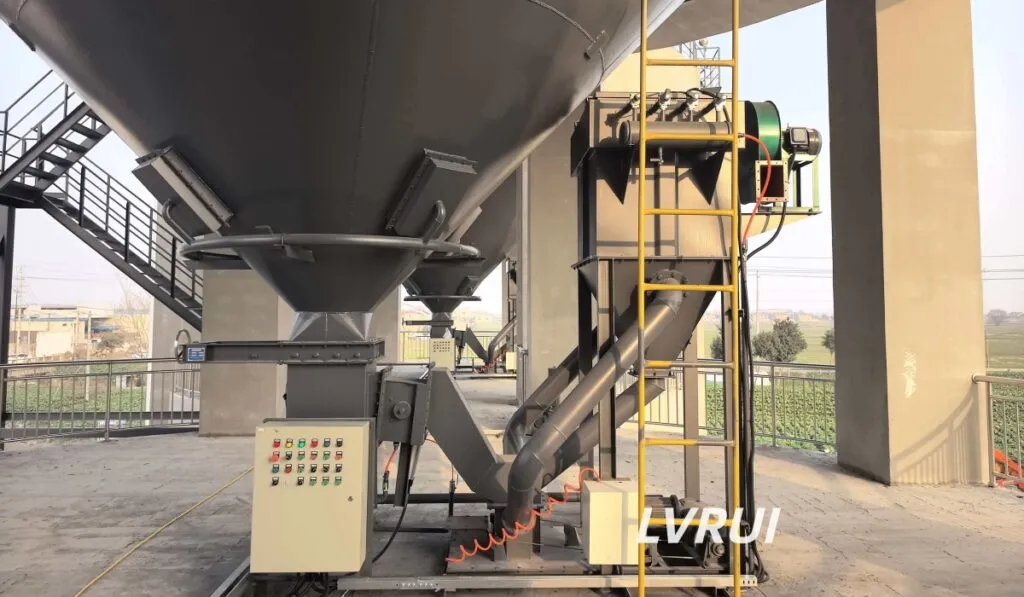
Common Cement Silo Discharge Problems
Fine powders stored under pressure may become compacted or develop unstable flow conditions near the silo outlet. Common discharge problems include:
✓ Material arching above the outlet
✓ Rat-holing and incomplete material withdrawal
✓ Compacted or caked powder
✓ Hardened lumps entering downstream equipment
✓ Irregular discharge or sudden material surges
✓ Discharge capacity exceeding downstream equipment capacity
The correct solution depends on the actual cause. Aeration can improve powder flowability, a lump breaker can handle hardened lumps, while isolation and flow control equipment manage material release to downstream equipment.
Powder flow behavior in silos is influenced by material properties and hopper conditions; external research also identifies arching and ratholing as common bulk-solids flow problems.
Equipment Functions in a Cement Silo Discharge System
Aeration Equipment
Aeration pads, aeration boxes or suitable silo-bottom aeration devices introduce low-pressure air into the lower material zone to improve the flowability of compatible fine powders and encourage movement toward the discharge outlet.
Lump Breaker — When Required
Where hardened cement lumps or compacted material may obstruct downstream valves or conveyors, a lump breaker can be installed before the flow-control equipment to reduce large lumps to a manageable size.
Isolation Gate
A manual slide gate or pneumatic shut-off valve can provide full-open/full-close isolation for operation, inspection or downstream maintenance.
Flow Control Gate
A flow control gate adjusts the effective discharge opening to match material feeding with downstream capacity. It regulates the opening but does not provide precision mass-flow measurement by itself.
Downstream Discharge Interface
Depending on the process, discharged cement may enter an air slide conveyor, screw conveyor, weighing equipment or bulk loading system. The downstream equipment should be selected separately according to the transfer route and required capacity.
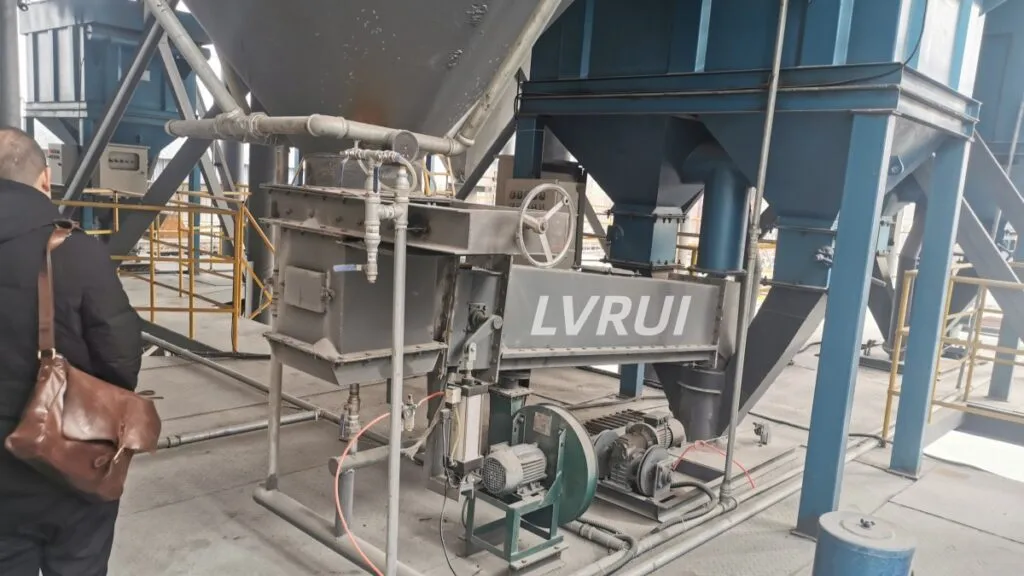
How Does a Cement Silo Discharge System Work?
Step 1 — Flow assistance is activated where required.
Aeration equipment introduces low-pressure air into the lower powder zone to improve flow toward the silo outlet.
Step 2 — Hardened lumps are handled when present.
If caking or large lumps are expected, an upstream lump breaker can reduce material before it reaches the valves or downstream conveying equipment.
Step 3 — The material passage is opened.
An isolation gate allows cement to enter the discharge line when downstream equipment is ready.
Step 4 — The discharge opening is adjusted.
A flow control gate regulates the effective opening according to downstream capacity and process requirements.
Step 5 — Cement enters the downstream equipment.
The discharged powder may then be transferred by an air slide conveyor, screw conveyor or other equipment selected for the next process stage. For downstream conveying-route selection, see our Powder Transfer System solution.
Actual discharge performance depends on material flowability, silo geometry, aeration condition, outlet dimensions and downstream capacity.
Information Required for Silo Discharge System Selection
✓ Material type and bulk density
✓ Moisture, flowability and caking condition
✓ Material temperature
✓ Silo cone and outlet dimensions
✓ Required discharge capacity
✓ Existing aeration arrangement, if any
✓ Downstream equipment and capacity
✓ Installation layout or connection drawing
These data help determine whether aeration assistance, lump breaking, isolation and adjustable flow control are required, as well as the connection dimensions between the silo outlet and downstream equipment.
Match the Discharge Problem to the Equipment
| Operating Problem | Equipment Direction |
|---|---|
| Cement does not move toward the outlet | Check aeration and silo flow conditions |
| Arching or rat-holing occurs | Review aeration layout and material flowability |
| Hardened lumps reach the outlet | Add or evaluate a lump breaker |
| Complete material isolation is required | Use a shut-off or slide gate |
| Discharge exceeds downstream capacity | Use adjustable flow control |
| Downstream conveying is restricted | Check conveyor capacity rather than only the silo outlet |
Reliable silo discharge depends on identifying the actual restriction instead of adding the same device for every flow problem.
Typical Cement Silo Discharge Arrangements
Cement Silo to Air Slide Conveyor
For fluidizable powder where an inclined air slide is used for downstream horizontal transfer.
Cement Silo to Screw Conveyor
For layouts requiring mechanical conveying or controlled short-distance transfer.
Cement Silo to Weighing or Process Equipment
For applications where silo discharge feeds downstream weighing, batching or process equipment.
Cement Silo to Bulk Loading Equipment
For silos feeding tanker or truck loading equipment, with discharge capacity matched to the loading system.
For applications that combine silo discharge, powder conveying, flow control, loading and dust collection, see our Cement Bulk Material Handling Solutions.
Cement Silo Discharge System FAQs
What is a Cement Silo Discharge System used for?
A Cement Silo Discharge System helps stored cement and other compatible dry powders move reliably from the lower silo section to downstream conveying, weighing, processing or loading equipment. The configuration may combine aeration, lump breaking, isolation and adjustable discharge control.
What causes unstable cement discharge from a silo?
Common causes include material compaction, poor flowability, arching, rat-holing, caking, inadequate aeration, restricted outlet dimensions or insufficient downstream capacity. The actual cause should be identified before selecting additional discharge equipment.
Does every cement silo require aeration?
Not necessarily. Aeration is mainly used with compatible fine powders where flow assistance is required. The type and arrangement of aeration equipment should be selected according to the material properties, silo geometry and existing discharge condition.
When is a lump breaker required at the silo outlet?
A lump breaker should be evaluated when hardened cement lumps or compacted material may obstruct valves, conveyors or downstream equipment. It is normally installed upstream of equipment that could otherwise be blocked or damaged by oversized lumps.
Is an air slide conveyor required in every silo discharge system?
No. An air slide conveyor is one possible downstream conveying method for suitable fluidizable powders. Screw conveyors, weighing equipment, feeders or loading systems may also receive material directly from the silo discharge arrangement.
What information is required to select a silo discharge system?
Typical information includes the material, bulk density, moisture and caking condition, required capacity, silo cone and outlet dimensions, existing aeration arrangement, downstream equipment and installation layout.
Discuss Your Cement Silo Discharge Requirements
Send LVRUI your material properties, silo outlet dimensions, required discharge capacity, existing aeration arrangement, downstream equipment and installation layout. LVRUI can recommend the suitable flow-assistance, lump-breaking, isolation and discharge-control configuration.
✓ Aeration equipment configuration
✓ Optional lump breaker for hardened material
✓ Isolation and flow control equipment selection
✓ Connection drawings and remote technical support