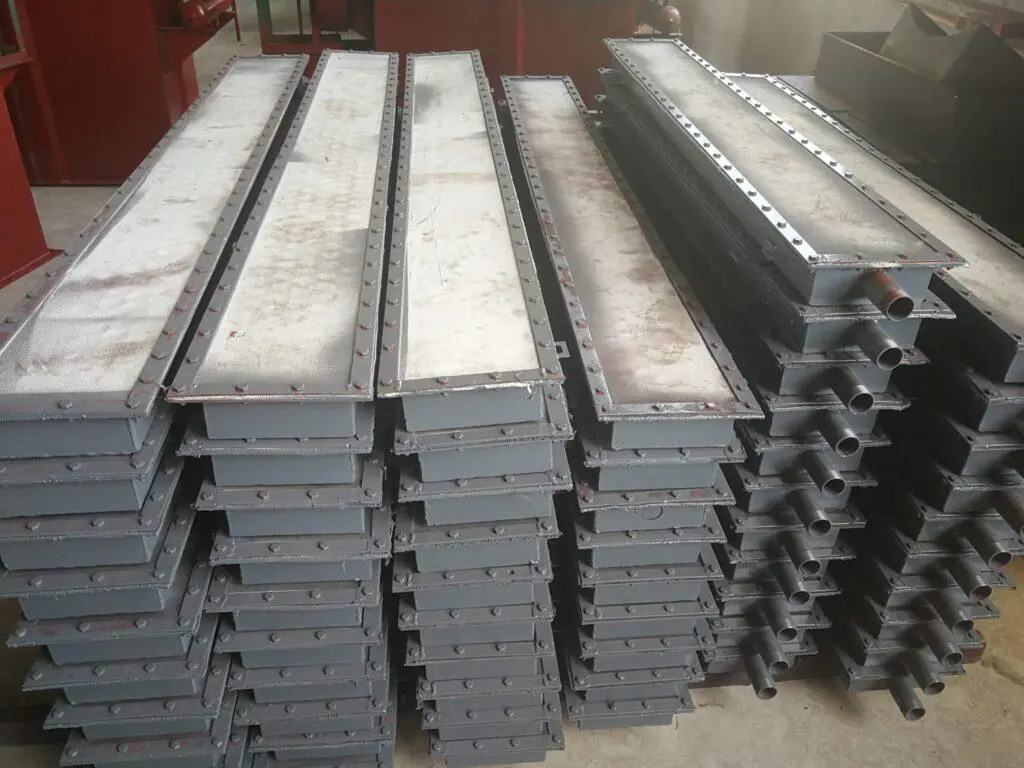
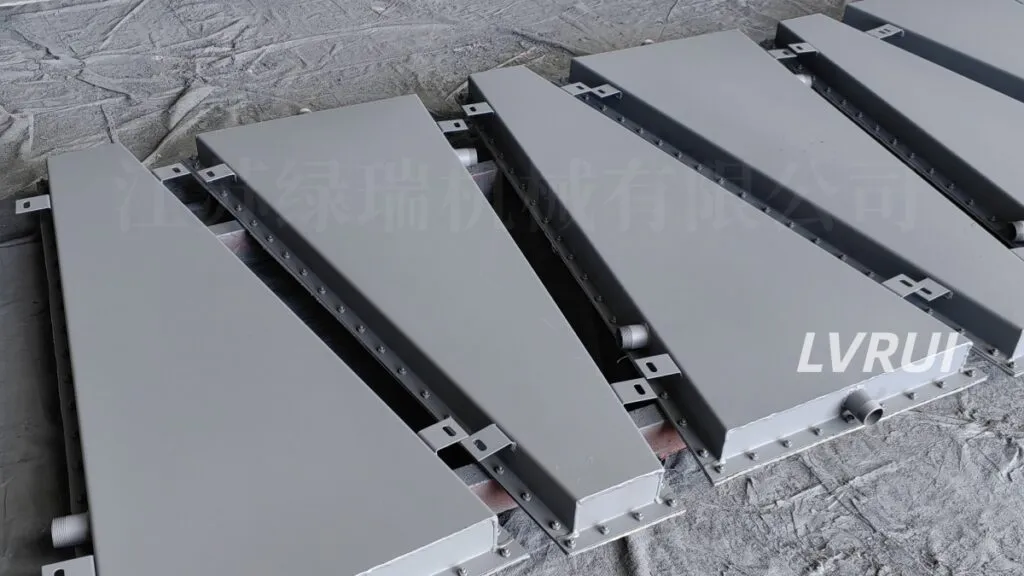
(EN)How to Troubleshoot Air Slide Conveyor Blockages in Cement Plants
(ID)Cara Mengatasi Penyumbatan pada Air Slide Conveyor di Pabrik Semen
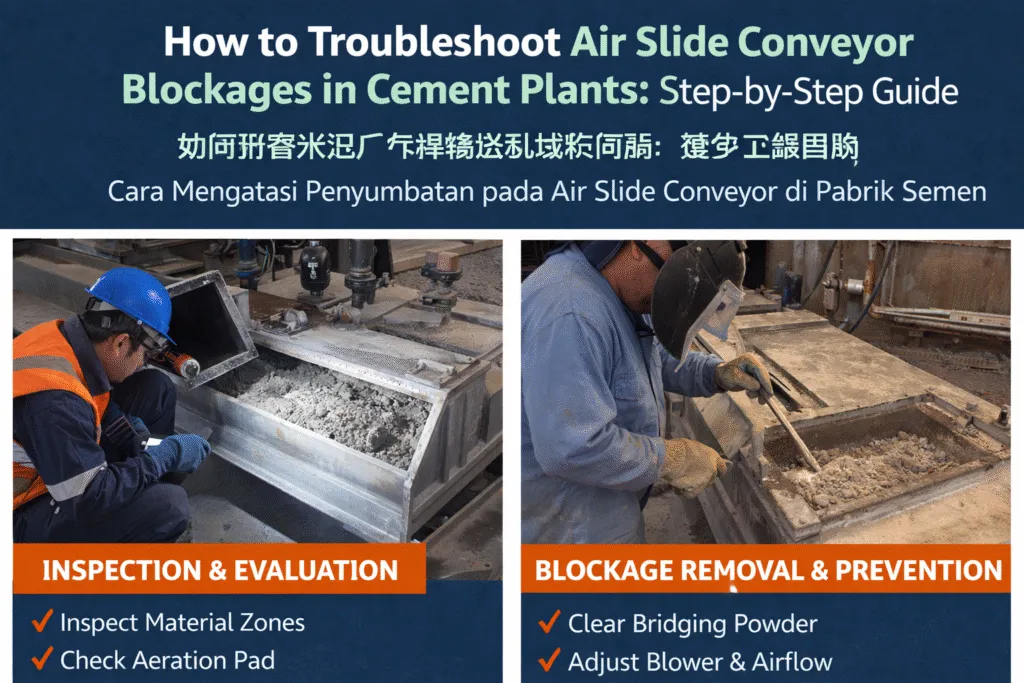
What Is an Air Slide Conveyor Blockage?
An air slide conveyor blockage refers to a situation where fine bulk powders such as cement, fly ash, lime, or raw meal stop flowing through the conveyor channel due to bridging, arching, or compacted material zones. Blockages disrupt production, increase downtime, and may cause equipment stress or increased energy consumption.
Common Causes of Air Slide Conveyor Blockages in Cement Plants
A. Inadequate Aeration or Fluidization
Poorly distributed air through the membrane (fabric/porous plate) leads to loss of fluidized bed and causes material to compact or bridge.
B. Material Property Variations
Fine particle size, high moisture content, cohesive powders (e.g., fly ash), and wide density ranges increase blockage susceptibility.
C. Incorrect Conveyor Slope or Geometry
Too low slope or sharp directional changes impede gravity‑assisted flow.
D. Operational Conditions
Low air pressure, fluctuating blower performance, vibrating structures, temperature variations, or improper isolation valves can trigger flow stoppage.
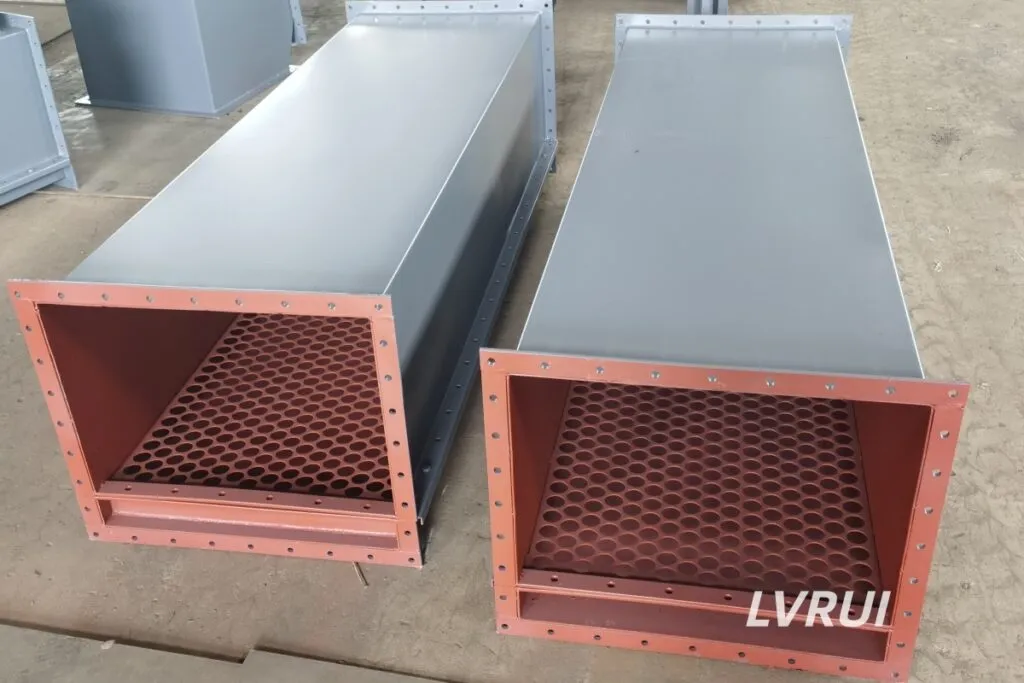
Step‑by‑Step Troubleshooting Guide
Step 1 – Visual and Sensor Inspection to Detect Air Slide Conveyor Blockages
- Inspect material accumulation zones visually.
- Use installed pressure and flow sensors to detect atypical readings.
- Check aeration membrane condition and uniformity.
👉 Check our detailed guide on Air Slide Conveyor Design Parameters Explained: Air Flow, Length, Slope & Capacity
👉 Aeration principles and fluidization theory
Step 2 – Evaluate Air Supply & Blower System
- Confirm blower pressure and volume meet design requirements.
- Inspect ducts and silencers for leakage or restriction.
Step 3 – Assess Material Characteristics
- Test powder moisture, bulk density, and flowability.
- If fly ash or wet cement is cohesive, consider moisture control or pre‑conditioning.
👉 Fly ash and cement properties overview
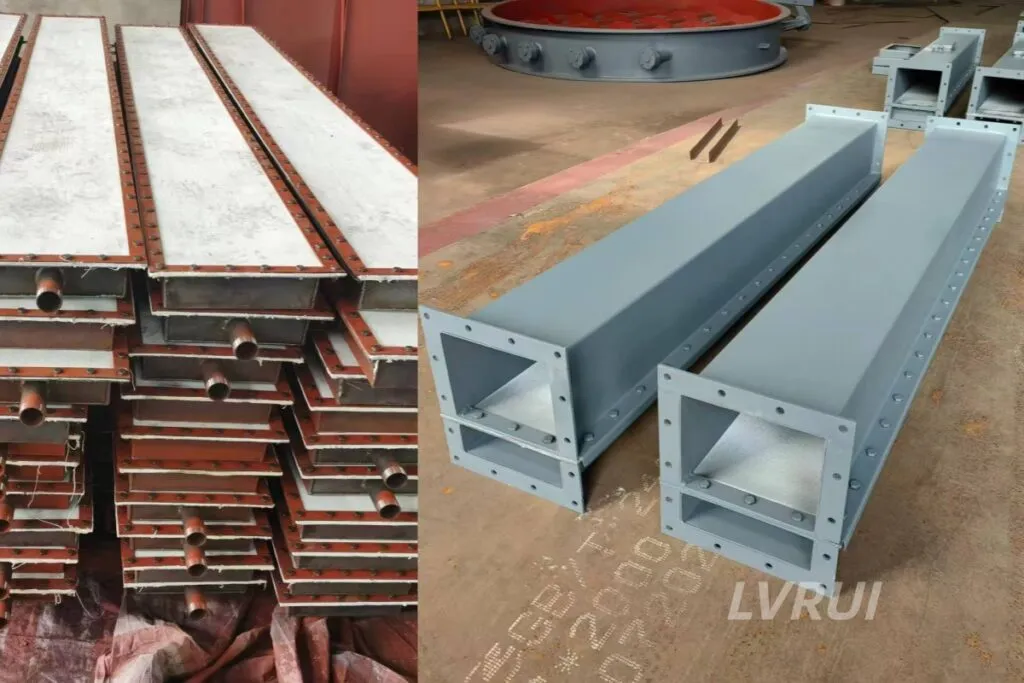
Step 4 – Aeration Pad / Membrane Replacement or Rearrangement
- Replace worn aeration membranes.
- Ensure pad spacing supports material fluidization evenly.
👉 For differences between pads and aeration boxes
Step 5 – Conveyor Slope & Geometry Adjustment
- Validate whether the incline and directional changes match design specs.
- Adjust transition sections to avoid dead zones.
Step 6 – Operational Correction & Testing
- Run controlled test flow.
- Adjust blower set points, valve sequences, and isolation procedures.
Preventive Measures to Reduce Future Blockages
✔ Routine Aeration System Checks — monitor aeration pressure and membrane integrity.
✔ Material Conditioning Practices — keep powders dry and homogenous before conveying.
✔ Proper System Design — validate slope, length, and airflow during installation.
✔ Automation & Alarms — set up early warning for pressure drops or material buildup.
👉 Air Slide Conveyor Maintenance Checklist for Cement Plants
FAQ — Air Slide Conveyor Blockages
Q1: What triggers most air slide conveyor blockages in cement plants?
A1: Most blockages are triggered by insufficient aeration, cohesive powder properties (moisture/particle size), incorrect geometry or slope, and fluctuating air pressure. Stable fluidization is key to preventing bridges.
Q2: How do I know if Air Slide Conveyor Blockages are caused by aeration membrane failure?
A2: Signs include uneven material flow, dead zones in the conveyor, pressure drops on aeration sensors, and visible wear or perforation on membranes.
Q3: Can I resume production immediately after fixing Air Slide Conveyor Blockages?
A3: Not without verifying air pressure stability, membrane condition, and material moisture content. Immediate restart without corrective action may cause recurrence.
Q4: Are there quick field fixes before an engineering overhaul?
A4: Temporary fixes include increasing aeration pressure, adjusting blower output, manually clearing initial bridging zones, or redistributing load until a full maintenance intervention.
Q5: Does material type affect blockage frequency?
A5: Yes. Cohesive materials like fly ash with high moisture content are more prone to arching and bridging than free‑flowing dry powders like limestone.
Call to Action
If your cement plant is experiencing air slide conveyor blockages or you need expert system optimization consulting, contact LVRUI today for tailored engineering solutions and reliable spare parts support.
📩 Email: info@lvrui-conveyor.com
🌐 Website: https://lvrui-conveyor.com
Versi Singkat Bahasa Indonesia
Cara Mengatasi Penyumbatan pada Air Slide Conveyor di Pabrik Semen
Penyumbatan pada air slide conveyor sering terjadi di pabrik semen karena aerasi yang tidak optimal, sifat material yang kohesif, atau konfigurasi saluran yang tidak tepat. Panduan ini menjelaskan langkah‑langkah inspeksi visual, pemeriksaan blower, evaluasi karakter material, penggantian aerasi membran, dan tindakan pencegahan untuk aliran material yang stabil. Pertanyaan umum: penyebab blok, ciri aerasi gagal, langkah pencegahan, solusi cepat di lapangan, dan pengaruh jenis material terhadap frekuensi penyumbatan.