
LS Type Screw Conveyor for Cement and Bulk Powder
Standardized LS screw conveyor for cement plants and dry powder handling systems
What Is an LS Type Screw Conveyor?
An LS Type Screw Conveyor is a standardized shafted screw conveyor series designed for transporting cement, powder and other dry bulk materials.
It uses a rotating screw flight inside a U-shaped trough to move materials horizontally or at a slight incline. Standard models with different diameters, lengths and drive configurations are available for cement plants and powder handling systems.
LS screw conveyors are commonly used for material transfer, silo discharge and controlled feeding applications.
For a broader comparison of screw conveyor structures and selection factors, see our screw conveyor types and selection guide.
Typical Applications
LS Type Screw Conveyors are mainly used for standardized horizontal or low-incline powder conveying applications:
✅ Cement silo discharge
✅ Powder feeding equipment
✅ Material transfer between process equipment
✅ Dust collection and return systems
✅ Connecting storage equipment and production lines
The LS series is suitable for standardized conveying requirements where reliable and compact screw conveying is required.

Suitable Materials and Operating Limits
Common materials include:
✅ Cement
✅ Fly ash
✅ Lime powder
✅ Mineral powder
✅ Gypsum powder
✅ Dry mortar materials
For wet, sticky or highly abrasive materials, additional evaluation is required before selecting the conveyor configuration.
How Does an LS Type Screw Conveyor Work?
Material enters the conveyor through the inlet and is pushed forward by the rotating screw flight inside the trough.
The conveying performance depends on screw diameter, screw speed, filling rate, material properties, conveying length and installation angle.
Proper selection helps achieve stable material transfer and reduces risks of overload or blockage.
LS Type Screw Conveyor Technical Specifications
| Model | Diameter (mm) | Capacity (t/h) | Speed (rpm) | Motor (kW) | Material Temp |
|---|---|---|---|---|---|
| LS200 | 200 | 3–8 | 60–90 | 2.2–4 | ≤ 120°C |
| LS250 | 250 | 5–15 | 60–90 | 3–5.5 | ≤ 120°C |
| LS315 | 315 | 10–25 | 50–80 | 4–7.5 | ≤ 150°C |
| LS400 | 400 | 15–40 | 50–80 | 5.5–11 | ≤ 200°C |
| LS500 | 500 | 25–60 | 40–70 | 7.5–15 | ≤ 200°C |
The above values are reference specifications for preliminary model selection. Actual conveying capacity and motor power depend on material density, particle size, moisture, filling rate, conveying length, inclination and operating conditions. For general engineering reference, screw conveyor dimensions and applications are also covered by CEMA standards.
Key Features
✅ Standardized LS Series Models
Multiple model sizes are available for common cement and powder conveying applications.
✅ Modular Trough Construction
Sectional design allows flexible transportation, installation and maintenance.
✅ Customized Connections
Inlet, outlet and flange arrangements can be adapted to project requirements.
✅ Horizontal and Low-Incline Installation
Suitable for horizontal and low-incline conveying layouts.
✅ Wear-Resistant Components
Wear-resistant flights and liners are available for abrasive materials.
Main Components
A typical LS Type Screw Conveyor includes:
✅ U-shaped steel trough
✅ Sectional upper covers
✅ Screw shaft and helical flights
✅ End bearings and intermediate bearings
✅ Gear motor and coupling
✅ Shaft seals
✅ Material inlets and outlets
✅ Support brackets or legs
✅ Inspection and maintenance openings
The final configuration depends on the total length, material, operating duty and installation layout. Longer units may require intermediate bearings and sectional assembly.
LS Type Screw Conveyor vs U-Type Screw Conveyor vs Tubular Screw Conveyor
| Comparison | LS Type Screw Conveyor | U Type Screw Conveyor | Tubular Screw Conveyor |
|---|---|---|---|
| Main Positioning | Standardized shafted series | Customized U-trough design | Enclosed round-tube design |
| Casing | Covered U-shaped trough | U-shaped trough with removable covers | Continuous circular tube |
| Model Selection | Standard LS model sizes | More flexible custom dimensions | Standard tube diameter options |
| Inspection | Access through sectional covers | Easier internal access and cleaning | More disassembly may be required |
| Installation | Mainly horizontal or low incline | Horizontal or low incline | Compact horizontal or inclined routing |
| Typical Use | General cement and powder conveying | Applications requiring frequent inspection | Enclosed transfer in limited space |
Choose an LS type screw conveyor when standardized model selection and modular construction are important.
Choose a U type conveyor when regular inspection, cleaning or customized trough dimensions are the main requirements.
Choose a tubular conveyor when a continuous round casing and compact routing are priorities.
LS Type Screw Conveyor Selection Information
| Required Information | Details |
|---|---|
| Material | Name, bulk density, particle size and moisture |
| Required Capacity | Conveying rate in t/h, kg/h or m³/h |
| Conveying Length | Total horizontal and inclined distance |
| Installation Angle | Horizontal or required inclination |
| Inlet Arrangement | Quantity, position and feeding method |
| Outlet Arrangement | Position, direction and flange dimensions |
| Material Temperature | Normal and maximum temperature |
| Construction Material | Carbon steel, stainless steel or other requirement |
| Operating Duty | Continuous or intermittent operation |
| Power Supply | Voltage and frequency |
| Layout Drawing | Installation dimensions and connecting equipment |
Please also confirm whether the machine will be used mainly for material transfer, controlled feeding or both.
Material name and required capacity alone are not sufficient for final selection. Inlet loading, installation angle and downstream resistance can significantly affect performance.
Manufacturing and Inspection
LVRUI manufactures LS Type Screw Conveyors according to project requirements and installation conditions. Customization includes:
✅ Conveyor length, diameter and connections
✅ Drive configuration and material options
Before shipment, main dimensions, assembly condition and external appearance are inspected. Long conveyors can be supplied in sections for transportation.
Recent LS Type Screw Conveyor Projects
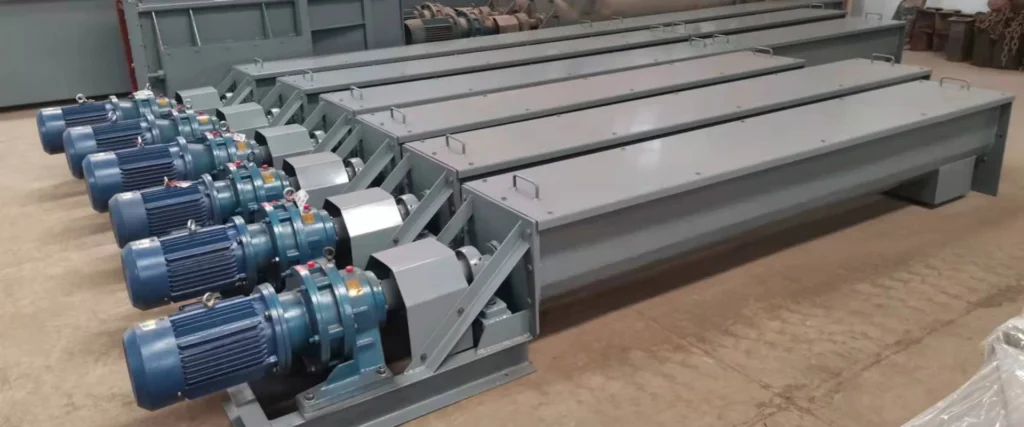
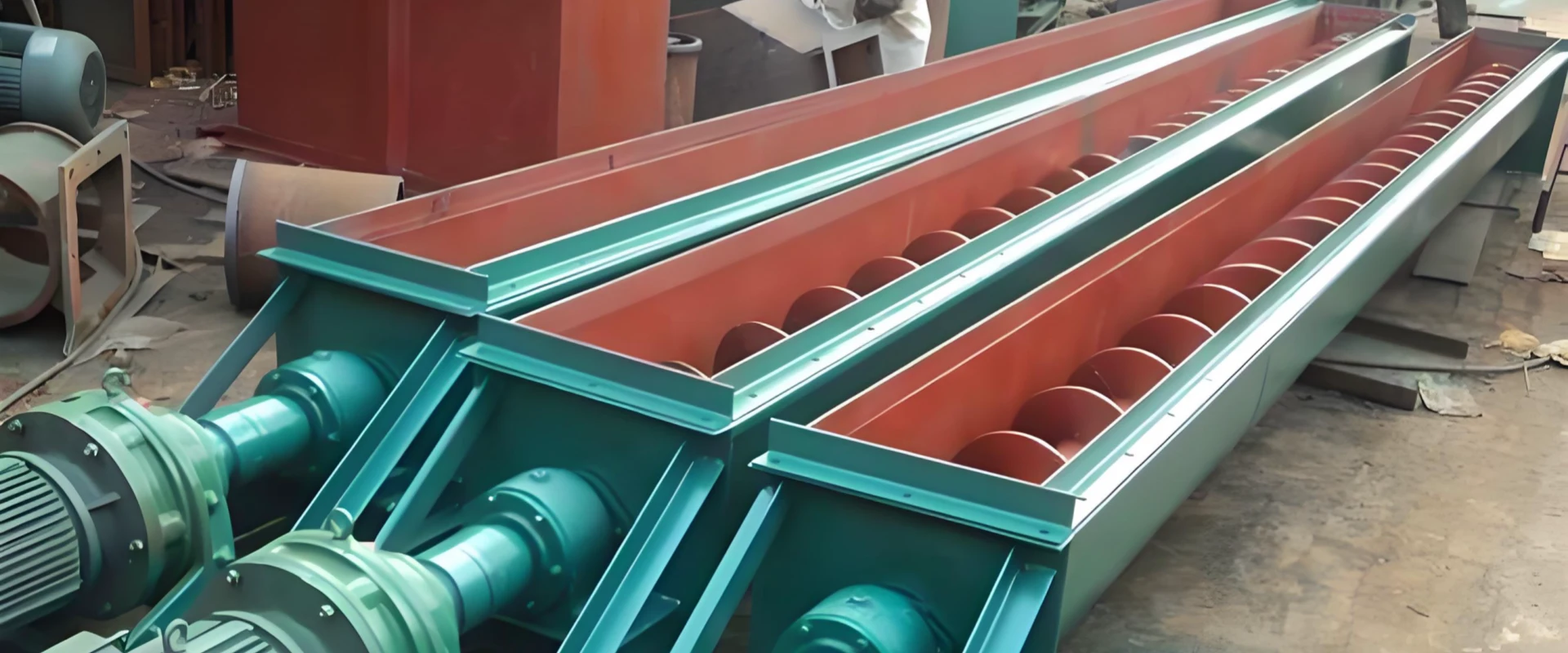
These LS type screw conveyors were manufactured according to customer requirements for screw diameter, conveying length, drive arrangement, inlet and outlet connections, and construction material. Each unit was assembled and inspected before packing and delivery.
LS Type Screw Conveyor FAQs
What is the difference between different LS screw conveyor models?
Different LS models mainly vary in screw diameter, conveying capacity, speed and motor power. Larger models are generally selected for higher capacity applications, while smaller models are suitable for lower material flow requirements.
When should I choose an LS type screw conveyor?
An LS type screw conveyor is suitable when standardized model diameters, modular trough sections, and customized conveying lengths are required for conventional dry powder handling. Material properties, capacity, conveying distance, and installation angle must still be confirmed before selection.
LS Type Screw Conveyor vs U-Type Screw Conveyor: What Is the Difference?
An LS screw conveyor is a standardized shafted screw conveyor series with common diameters and modular sections. A U-type screw conveyor provides more flexibility in trough dimensions, cover arrangement and maintenance access for customized applications.
Can an LS type screw conveyor operate on an incline?
Yes, but conveying capacity normally decreases as the inclination increases. Screw diameter, speed, filling level, and motor power must be recalculated for inclined operation.
What causes blockage in an LS screw conveyor?
Common causes include excessive feeding, sticky materials, incorrect screw speed, material buildup, foreign objects and poor alignment. The conveyor should be stopped and inspected before maintenance.
What information is required for an LS screw conveyor quotation?
Please provide the material, required capacity, conveying length, installation angle, bulk density, particle size, inlet and outlet dimensions, operating temperature, operating schedule, power supply, and site layout drawing.
How is the capacity of an LS screw conveyor determined?
LS screw conveyor capacity depends on screw diameter, speed, filling rate, material bulk density, conveying length and installation conditions. The technical specification table provides reference values for preliminary selection.
Need an LS Type Screw Conveyor for Your Application?
Send us your material information, required capacity, conveying length, installation angle and connection requirements. LVRUI will recommend a suitable LS screw conveyor model and configuration according to your operating conditions.
✅ Standard LS series models for cement and powder conveying
✅ Customized length, diameter and connection arrangements
✅ Carbon steel, stainless steel and wear-resistant options
✅ Technical support for selection and project requirements