
Rod Gate for Clinker and Coarse Bulk Material Discharge
Heavy-Duty Parallel Rod Gate for Clinker Silos and Aggregate Hoppers
What Is a Rod Gate?
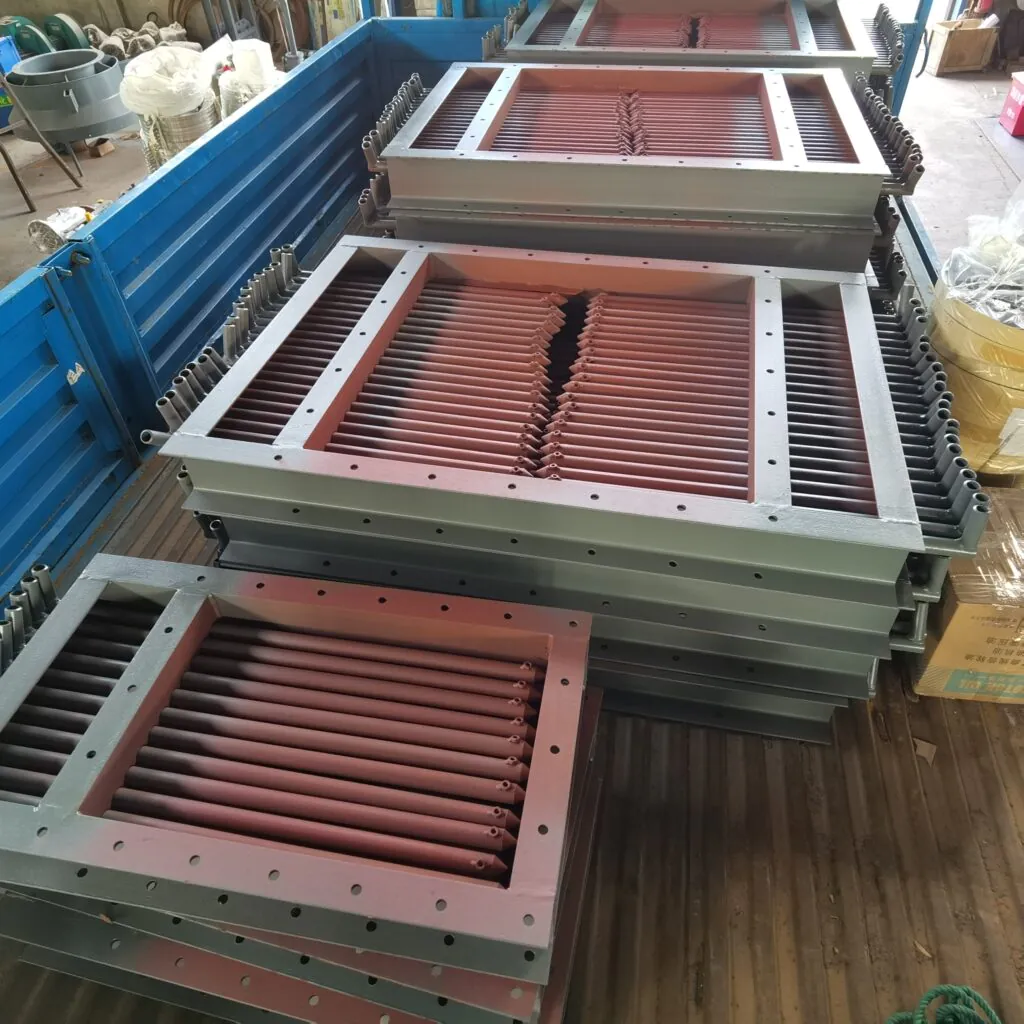
A rod gate, also known as a pin gate, is a heavy-duty bulk material isolation device consisting of multiple parallel steel rods installed across the outlet of a silo, hopper or bunker.
These gates are primarily designed for cement clinker, aggregates, limestone and other coarse or lumpy bulk solids. The rods can be withdrawn to open the material passage and reinserted to provide material isolation.
Four rod arrangements are available, with manual, pneumatic or electric operation according to project requirements.
In clinker and aggregate discharge systems, they are commonly combined with sector gates or clamshell gates to separate material isolation from downstream discharge control.
How Does a Rod Gate Work?
When the gate is closed, parallel steel rods extend across the material outlet and support the bulk material above the downstream equipment.
To open the gate, the rods are withdrawn individually or in groups, depending on the selected structure and operating mechanism.
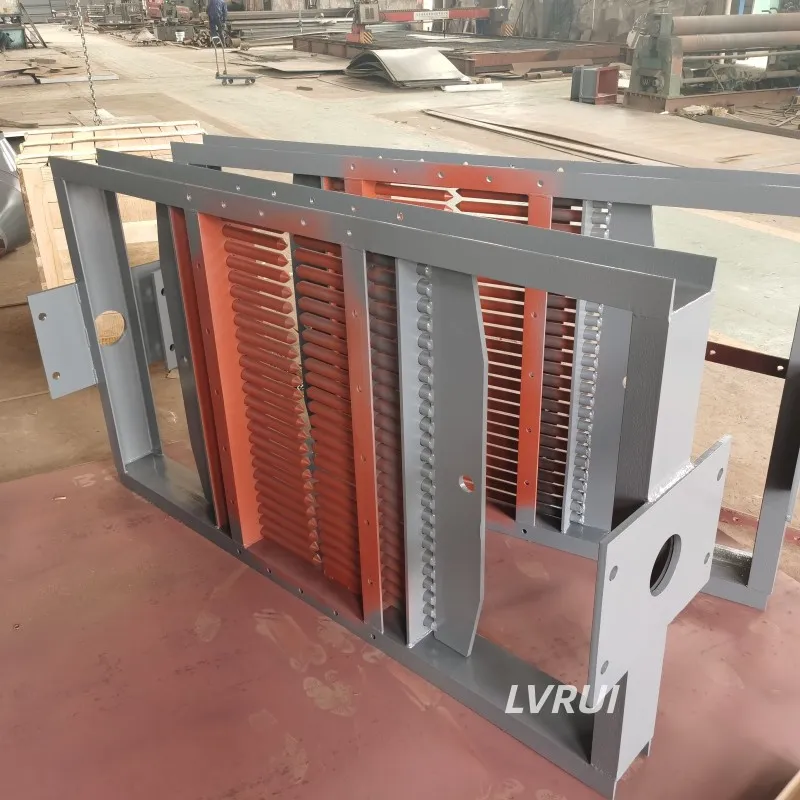
The rods may be withdrawn from one side or opposite sides of the gate. The number of rod layers, withdrawal direction and operating method depend on the outlet dimensions, material characteristics and available installation space.
Rod gates are primarily used for isolating coarse bulk materials. They are not intended for precise flow regulation or tight sealing of fine powders.
Key Features
✅ Four Parallel Rod Arrangements
Single-layer and double-layer configurations are available with single-direction or double-direction rod withdrawal.
✅ Designed for Coarse and Lumpy Materials
Suitable for clinker, aggregates, limestone and other compatible coarse bulk solids.
✅ Three Operating Methods
Manual, pneumatic and electric operating options are available according to project requirements.
✅ Customized Rod and Frame Dimensions
Rod diameter, quantity, spacing, frame dimensions and withdrawal direction can be customized according to the outlet and material conditions.
✅ Compatible with Downstream Discharge Gates
They can be configured for use with sector gates or clamshell gates in clinker and aggregate discharge systems.
✅ Project-Specific Manufacturing
Equipment dimensions, drive arrangements and connection interfaces are determined according to the approved production drawing.
Four Available Rod Arrangements
LVRUI manufactures four parallel-rod gate configurations for different outlet dimensions, installation spaces and operating requirements.
| Configuration | Structure |
|---|---|
| Single-Layer, Single-Direction | One rod layer, withdrawn from one side |
| Single-Layer, Double-Direction | One rod layer, withdrawn from opposite sides |
| Double-Layer, Single-Direction | Two rod layers, withdrawn from one side |
| Double-Layer, Double-Direction | Two rod layers, withdrawn from opposite sides |
The appropriate configuration depends on material properties, outlet dimensions, available withdrawal space and customer-specific requirements.
Drive Options
Manual Gate
A manual rod gate normally allows the operator to withdraw and insert the rods individually or in a defined sequence.
This configuration has a simple structure and is suitable for maintenance isolation points or applications that do not require frequent operation.
Handles, locking devices and rod guides can be configured according to the available operating space.
Pneumatic Gate
A pneumatic rod gate uses air cylinders and a mechanical linkage to operate individual rods or grouped rod assemblies.
It is suitable where compressed air is available and remote or automatic operation is required. Solenoid valves, limit switches and PLC interfaces can be added according to the required operating sequence.
The cylinder force must be selected according to the material load, rod quantity and expected operating resistance.
Electric Gate
An electric rod gate uses a motor-driven mechanism to operate the parallel steel rods.
Electric operation can be selected when motorized opening and closing or integration with the specified plant control system is required.
The motor, transmission arrangement, operating stroke and required driving force should be determined according to the rod configuration, material load and project requirements.
Suitable Materials and Applications
These are primarily used for isolating coarse and lumpy bulk materials at silo, hopper and bunker outlets.
Typical materials include cement clinker, aggregates, limestone, crushed stone, coke and other compatible coarse bulk solids.
Typical installations include clinker silos, aggregate hoppers, limestone bunkers and discharge outlets connected to downstream material handling equipment.
For clinker and aggregate applications, they can be combined with sector gates or clamshell gates according to the required discharge arrangement.
Material suitability depends on particle size, maximum lump size, bulk density, temperature, abrasiveness and operating conditions.
For clinker truck loading applications, explore LVRUI’s clinker bulk loader for the downstream loading operation.
Combined Use with Sector and Clamshell Gates
In clinker and aggregate handling systems, a rod gate is commonly installed as part of a combined isolation and discharge-control arrangement.
The rod gate provides material isolation, while the accompanying discharge gate can control material release into downstream equipment.
A sector gate uses a single curved blade for gravity discharge control.
A clamshell gate uses two synchronized curved blades to create a central discharge opening.
The appropriate combination depends on outlet dimensions, material properties, required discharge control and installation conditions.
Where tight isolation of fine powders is required, a suitable solid-blade valve should be evaluated instead.
Typical Technical Configuration
| Parameter | Typical Configuration |
|---|---|
| Product Type | Rod Gate / Pin Gate |
| Main Structure | Parallel withdrawable steel rods |
| Rod Layers | Single-layer or double-layer |
| Withdrawal Direction | Single-direction or double-direction |
| Drive Options | Manual, pneumatic or electric |
| Suitable Materials | Clinker, aggregates, limestone and other coarse bulk solids |
| Rod Diameter and Spacing | Customized according to operating requirements |
| Outlet Dimensions | Customized according to approved drawings |
| Connection Interface | Silo, hopper or accompanying discharge gate |
| Position Feedback | Optional according to project requirements |
| Control Mode | According to the selected drive and control arrangement |
| Surface Treatment | According to project requirements |
Final dimensions, rod quantity, rod spacing, frame strength and drive configuration must be confirmed according to the actual material load and operating conditions.
How to Select a Rod Gate
For project-specific rod gate selection, please provide the material type, bulk density, maximum lump size, outlet dimensions, available installation space and preferred drive method.
If the rod gate will be combined with a sector gate or clamshell gate, please also provide the accompanying gate configuration and connection drawings.
For further technical guidance, refer to our Rod Gate Selection Guide.
Manufacturing and Inspection
LVRUI manufactures each rod gate according to the confirmed operating data and approved production drawing.
Before shipment, the main checks include:
✅ Frame, flange and opening dimensions
✅ Rod diameter, quantity, spacing and alignment
✅ Rod insertion and withdrawal movement
✅ Manual, pneumatic or electric drive operation according to the approved configuration.
✅ Surface coating, marking and packing, with limit-switch inspection where applicable.
LVRUI provides technical drawings, installation instructions and remote technical guidance for overseas projects. On-site installation is completed by the customer or its appointed local contractor. For other clinker, aggregate, powder and silo discharge configurations, view LVRUI’s complete range of industrial valves.
Installation and Maintenance Safety
Before servicing the gate or connected discharge equipment, operators should follow site-specific hazardous-energy isolation procedures. Closing the rods alone must not be treated as a substitute for an approved lockout/tagout procedure. For U.S. facilities, refer to OSHA’s lockout/tagout guidance.
Rod Gate FAQs
What is a rod gate used for?
A rod gate is primarily used to isolate coarse or lumpy bulk materials such as cement clinker, aggregates and limestone at silo, hopper and bunker outlets. It uses parallel withdrawable steel rods to open or close the material passage.
What rod gate configurations does LVRUI offer?
LVRUI manufactures four configurations: single-layer single-direction, single-layer double-direction, double-layer single-direction and double-layer double-direction. Each configuration can be customized according to outlet dimensions, material characteristics and available installation space.
What drive options are available for rod gates?
LVRUI offers manual, pneumatic and electric rod gates. The appropriate drive depends on operating frequency, material load, available utilities and automation requirements. Pneumatic and electric options can be configured for remote operation.
Can a rod gate be used with a sector gate or clamshell gate?
Yes. They are commonly combined with sector gates or clamshell gates in clinker and aggregate discharge systems. The rod gate provides material isolation, while the accompanying gate controls downstream material discharge. The arrangement depends on the approved system design.
Can a rod gate handle fine cement powder or fly ash?
A standard rod gate is not recommended for applications requiring tight isolation of fine powders. Fine particles may pass through the gaps between the rods. For cement powder or fly ash, a suitable solid-blade or other sealing valve should be considered.
What information is required for a custom rod gate quotation?
Please provide the material type, bulk density, maximum lump size, outlet dimensions, available installation space and preferred drive method. If the rod gate will be combined with a sector gate or clamshell gate, include the relevant connection drawings and installation requirements.
Request a Custom Rod Gate for Your Application
Send LVRUI your material properties, outlet dimensions, maximum lump size, preferred drive method and available installation drawings.
Our team can review the required rod configuration and its compatibility with the accompanying discharge equipment.
✅ Four rod gate configurations
✅ Manual, pneumatic and electric options
✅ Customized rod and connection dimensions
✅ Technical drawings and remote guidance