
Cement Bulk Loader | Dust-Free Silo & Truck Loading
Sealed Cement Loading System for Accurate Control & Low Dust
What Is a Cement Bulk Loader?
A cement bulk loader is a loading assembly used to transfer cement, fly ash, and other fine powders from a silo outlet into bulk trucks or tankers. Depending on the site layout and operating requirements, it may include a loading chute, flow-control or shut-off valves, dust-extraction connections, and the required control interfaces. LVRUI supplies the specified loading equipment and related control interfaces; the weighing equipment itself is not included in the supply scope, although external weighing signals can be interfaced when required.
Why Cement Bulk Loaders Are Used in Silo Discharge
During silo discharge, uncontrolled material flow into trucks or tankers can lead to:
- Dust escaping around the loading point
- Material spillage and product loss
- Unstable or inconsistent loading flow
A cement bulk loader provides a controlled loading interface between the silo outlet and the truck or tanker. When configured with suitable flow-control valves and dust-extraction equipment, it helps regulate material flow and reduce dust escape and spillage. Actual performance depends on the equipment configuration, loading arrangement, and operating conditions.
Features
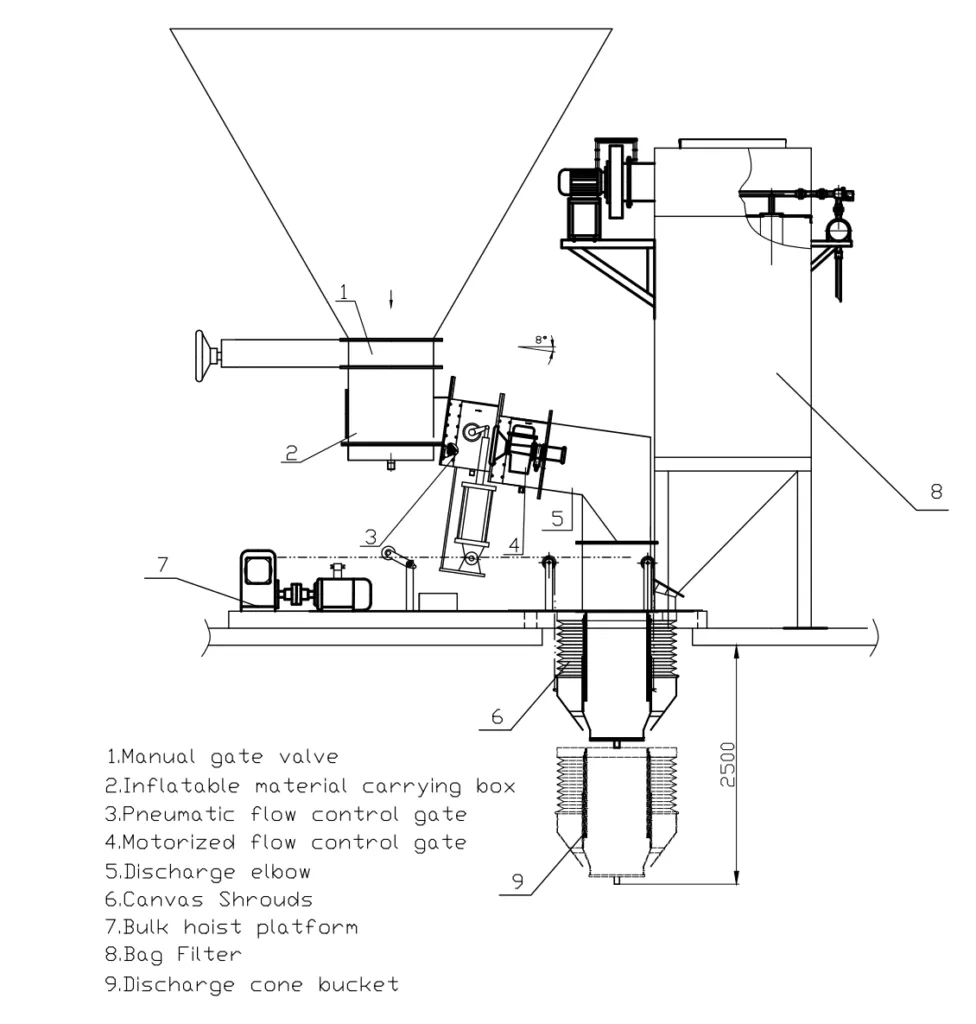
✅ Sealed loading interface designed to help reduce dust escape
✅ Pneumatic or motorized flow-control gates, configured according to project requirements
✅ Level detection and loading-stop control where specified
✅ Optional bag filter and air-return arrangement for dust collection
✅ Configurable lifting height and loading chute length to suit the silo and truck layout
✅ Suitable for cement, fly ash, and other compatible fine powders
The LVRUI Cement Bulk Loader can be configured with flow-control gates and a bag filter system to suit the required material discharge and dust-collection arrangement.
For flow regulation, see our Flow Control Gate Valves. For dust collection, see our Bag Filter Dust Collectors.
System-Level Benefits
A properly configured cement bulk loading system can help:
✅ Maintain consistent material flow during loading
✅ Reduce dust escape when combined with suitable sealing and dust collection
✅ Support safer operation through appropriate level detection and control interlocks
These measures help support more controlled and reliable truck and tanker loading, depending on the system configuration and site conditions.
Working Principle
The LVRUI Cement Bulk Loader connects to the silo bottom discharge outlet. During loading, cement flows through the flow-control gate and discharge chute into the bulk tanker. Where fitted, a flexible canvas shroud and bag filter system help contain and collect dust generated during loading.
The system provides a controlled loading interface between the silo outlet and the bulk tanker. LVRUI can supply the agreed control interfaces for integration with the customer’s plant control system and external weighing equipment. The weighing equipment itself is excluded from the standard supply scope unless explicitly specified in the quotation.
For a complete system-level solution, see our Bulk Loading System.
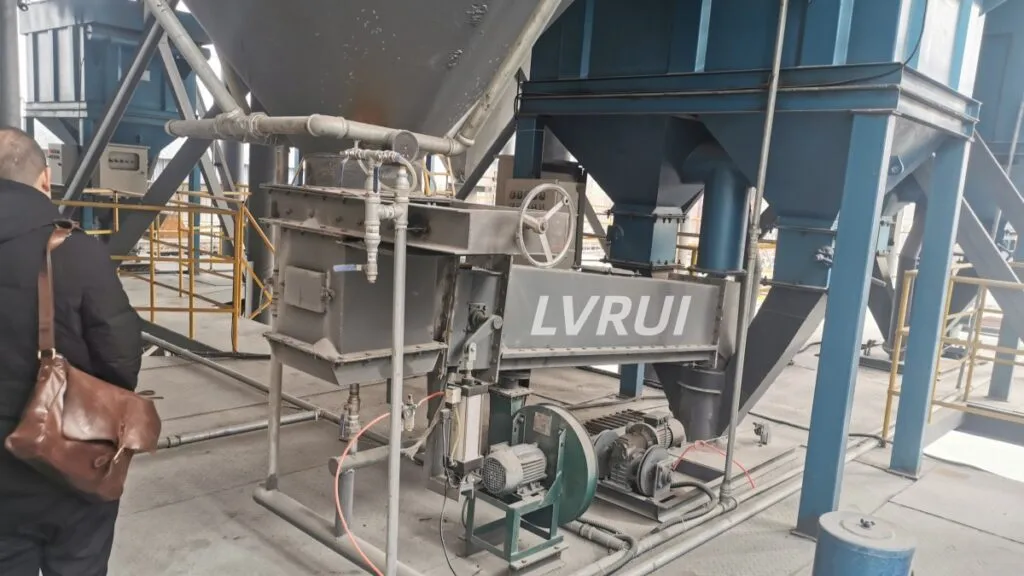
Cement Bulk Loader vs Telescopic Loading Chute
Cement Bulk Loader
A cement bulk loader integrates silo-bottom discharge, flow control, and loading equipment, with dust collection and lifting mechanisms configured as required.
Telescopic Loading Chute
A telescopic loading chute guides bulk materials into trucks or tankers. It can operate independently or be integrated into a bulk loading system.
Which Solution Do You Need?
Choose a cement bulk loader for integrated silo discharge and loading, or a telescopic loading chute when the main requirement is controlled material delivery into a vehicle. The two can also be combined, depending on the project layout.
Technical Specification
| Item | LRZSQ150-I (Under Silo) | LRZSQ150-II (Side of Silo) |
|---|---|---|
| Loading Capacity (t/h) | 50–300 | 50–300 |
| Drop Height (m) | 1.5–6 | 1.5–6 |
| Loading Head Lifting Speed (m/min) | 8 | 8 |
| Chute Working Air Pressure (Pa) | — | 3.5–5.5×10³ |
| Chute Working Air Volume (m³/min) | 2.5-5 | |
| Air Slide Blower (kw) | 2.2 (selected according to the air slide length) | |
| Roots Blower (kw) | 3 | 3 |
Technical parameters are selected according to the material properties, silo layout, required loading capacity, and site conditions. The air slide blower is sized according to the air slide length. Final specifications and equipment configuration are confirmed based on the project requirements.
Applications
✅ Cement grinding stations
✅ Bulk cement truck loading stations
✅ Fly ash loading terminals
✅ Silo bottom discharge systems
Cement bulk loaders are used in cement plants, grinding stations, and bulk powder terminals to load cement, fly ash, and other compatible fine powders from silos into trucks or tankers. Equipment configuration depends on the silo outlet, required loading capacity, vehicle arrangement, and site layout. Where horizontal powder conveying is required, an Air Slide Conveyor may be integrated according to the plant layout.
Where dust control is required, the loading system can be configured with suitable flexible shrouds and dust-collection connections according to project requirements and applicable local regulations.
Why Choose LVRUI Cement Bulk Loader?
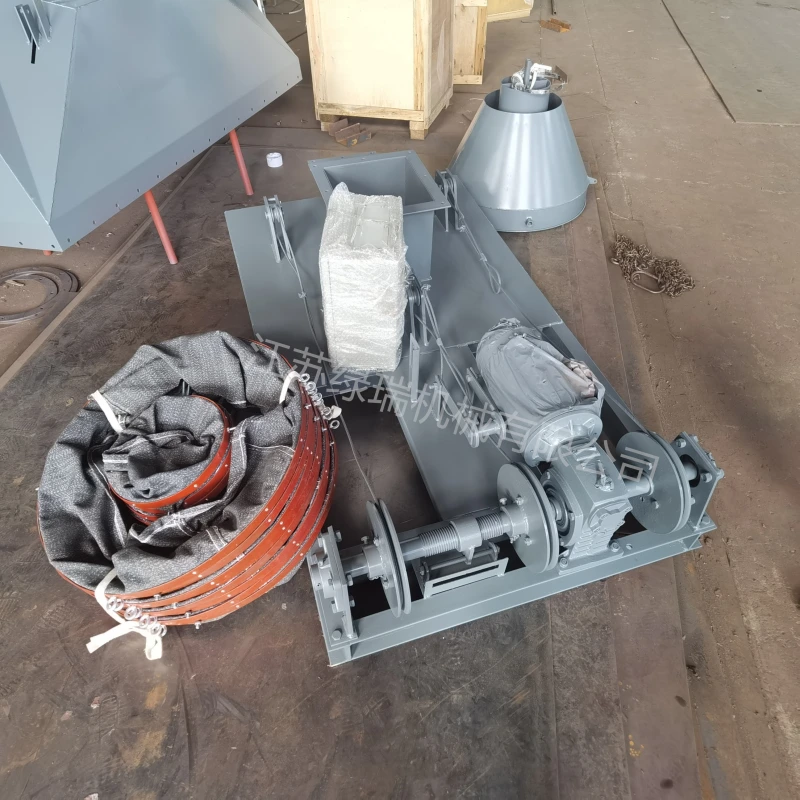
LVRUI supplies cement bulk loading equipment tailored to different silo layouts and project requirements. Each configuration is determined by the silo outlet, required loading capacity, loading height, dust-control requirements, and plant control interfaces.
✅ Under-silo and side-of-silo loading configurations
✅ Flow-control gates and shut-off valves matched to discharge requirements
✅ Optional bag filter connections and flexible shrouds for dust control
✅ Customized equipment dimensions and control interfaces based on project specifications
Cement Bulk Loader FAQs
What materials can a cement bulk loader handle?
A cement bulk loader is suitable for cement, fly ash, slag powder, limestone powder, lime powder and similar fine dry materials. Material temperature, bulk density and flowability should be confirmed before selection.
Can a cement bulk loader be installed under a silo?
Yes. The under-silo type is installed directly below the silo outlet. A side-of-silo type can be used when the vehicle loading lane is offset from the silo outlet, depending on the site layout.
How is dust controlled during cement tanker loading?
A flexible shroud and suitable dust-collection system can help capture displaced air and reduce dust escape during loading. The required arrangement depends on the loading configuration and site dust-control requirements.
Can a cement bulk loader operate automatically?
Yes. The cement bulk loader can be configured with the required level detection, limit signals and control interfaces for integration with the plant control system. Where an external weighing system is used, LVRUI can provide the agreed interface signals for coordinated operation. The weighing equipment itself is supplied separately unless explicitly included in the quotation.
What information is required for a cement bulk loader quotation?
Please provide the material, required capacity, silo outlet dimensions, tanker inlet diameter, loading height, installation layout and dust collection requirements. Site drawings or photographs will help us recommend the correct configuration.
Need Help Selecting a Cement Bulk Loader?
Send LVRUI your material type, required loading capacity, silo outlet dimensions, tanker inlet dimensions, loading height, and site layout. We will review your requirements and recommend a suitable under-silo or side-of-silo configuration.
✅ Under-silo or side-of-silo layout options
✅ Loading capacity and lifting travel matched to site conditions
✅ Discharge chute configured for the tanker inlet
✅ Optional dust collection, level detection, and control interfaces