
Loading Spouts for Bulk Material Loading
Telescopic Loading Spouts for Tankers, Trucks, Railcars, Ships, Barges and Stockpiles
What Are Loading Spouts?
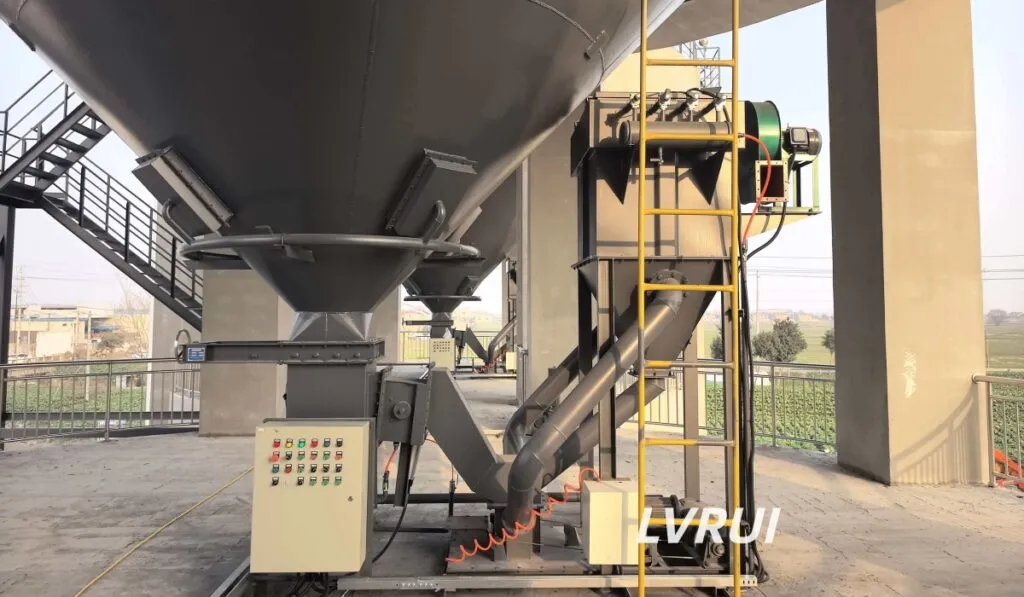
Loading spouts are retractable bulk material loading devices installed below silos, hoppers or conveyor discharge points. They guide dry bulk materials into tankers, open trucks, railcars, ships, barges or stockpiles while reducing the free-fall distance and helping contain material and airborne dust around the loading point. LVRUI supplies loading spouts as standalone units for integration with the customer’s existing conveying, storage or port loading equipment.
How Do Loading Spouts Work?
Before loading, the telescopic spout is lowered toward the receiving point. Bulk material flows by gravity through the inner discharge chute, while the outer passage provides a separate path for extracting dust-laden air.
For enclosed tanker loading, a sealing cone connects with the tanker inlet. For open trucks, railcars, ships, barges and stockpiles, the discharge outlet is positioned close to the receiving surface to help reduce material free fall, dust dispersion and spillage.
Optional level sensors and automatic lifting controls can adjust the discharge height during loading. Material feed rate is controlled by suitable upstream equipment.
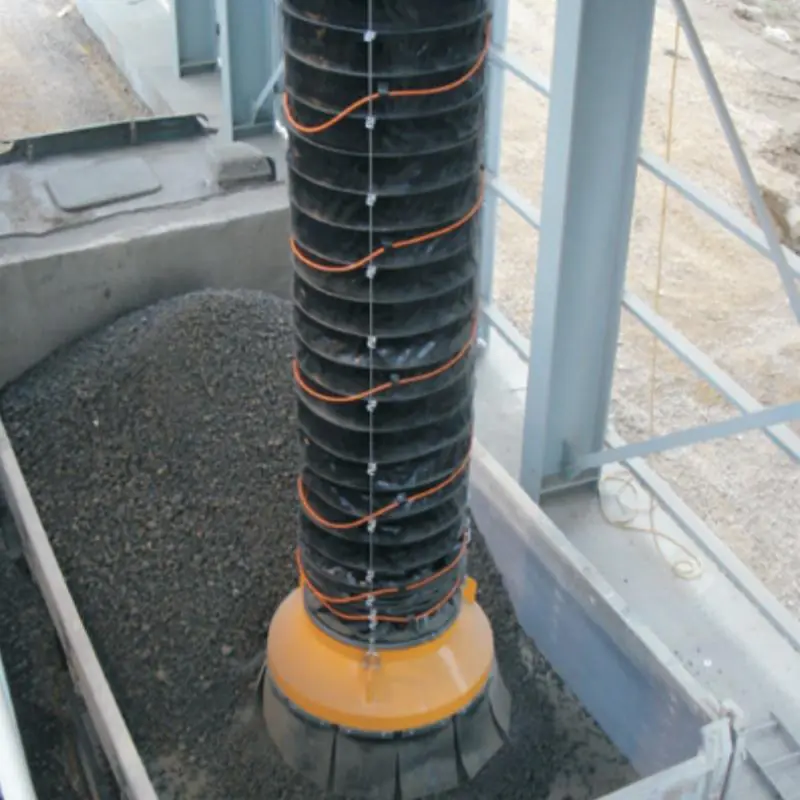
For open truck loading, keeping the discharge outlet close to the rising material surface helps reduce free-fall distance and dust generation, as documented in a NIOSH engineering-control study.
Key Features of LVRUI Loading Spouts
✅ Enclosed and Open Loading Configurations
Available for enclosed tankers and open loading applications, including trucks, railcars, ships, barges and stockpiles.
✅ Customizable Inner and Outer Chutes
Inner material chutes and outer dust-extraction sleeves can be manufactured using flexible fabric, carbon steel or application-specific wear-resistant construction.
✅ External or Integrated Dust Collection
Connect to an existing baghouse or select an integrated system equipped with an extraction fan, bag filter unit and filter cleaning system.
✅ Material-Specific Wear Protection
Steel discharge sections and optional wear-resistant components are available for abrasive materials such as clinker, gravel and crushed stone.
✅ Customized Telescopic Travel
Extended length, retracted height, lifting travel and discharge outlet dimensions can be matched to the installation layout.
✅ Flexible Lifting and Control Options
Electric lifting mechanisms, limit switches, optional level sensors and local or PLC-compatible control interfaces are available according to project requirements.
Main Components
LVRUI loading spouts are configured according to the material, loading destination and dust-control requirements. The main components may include:
| Component | Function |
|---|---|
| Upper Inlet and Connection Flange | Connects the loading spout to the upstream silo, hopper or conveyor outlet. |
| Inner Material Discharge Chute | Guides bulk material from the inlet to the discharge outlet. |
| Outer Dust Extraction Sleeve | Provides a separate passage for extracting dust-laden air during loading. |
| Lifting Mechanism | Raises and lowers the telescopic assembly according to the required loading height. |
| Discharge Outlet | Uses a sealing cone for enclosed tankers or a suitable discharge hood or skirt for open loading. |
| Dust Collection Arrangement | Connects to an external baghouse or an integrated filtration unit. |
| Control and Safety Components | May include limit switches, level sensors, a local control box and PLC-compatible interfaces. |
The final component arrangement depends on the approved equipment configuration and project requirements.
Suitable Materials and Applications
LVRUI loading spouts can be configured for suitable dry powders, granular materials and selected coarse bulk solids.
✅ Fine Powders: Cement, fly ash, lime powder, mineral powder and slag powder.
✅ Granular Materials: Sand, grain and suitable dry fertilizers.
✅ Coarse and Abrasive Materials: Cement clinker, limestone, gravel and crushed stone.
Equipment construction should be selected according to material particle size, abrasiveness, flowability and loading conditions. For dedicated sand, gravel and crushed stone truck loading equipment, see our Aggregate Loading Chute. Wet, sticky or highly cohesive materials require separate evaluation because material buildup may restrict discharge and telescopic movement.
Loading Spout Types
LVRUI loading spouts are primarily configured for enclosed loading or open loading. The receiving opening, material characteristics and dust-control requirements determine the appropriate outlet and chute construction.
| Loading Type | Typical Applications | Main Configuration |
|---|---|---|
| Enclosed Tanker Loading Spout | Cement tankers, fly ash tankers and enclosed bulk trailers | Sealing cone, enclosed discharge channel, dust extraction arrangement and optional level sensor |
| Open Loading Spout | Open trucks, open railcars, ship holds, barges and stockpiles | Telescopic discharge chute, suitable dust hood or skirt, optional automatic lifting and material-specific wear protection |
Both configurations can use flexible or steel inner chutes and can be connected to external dust collection or equipped with integrated filtration. The receiving opening determines the basic loading arrangement. For example, a railcar with an enclosed loading hatch may use a tanker-style sealing connection, while an open railcar requires an open loading outlet.
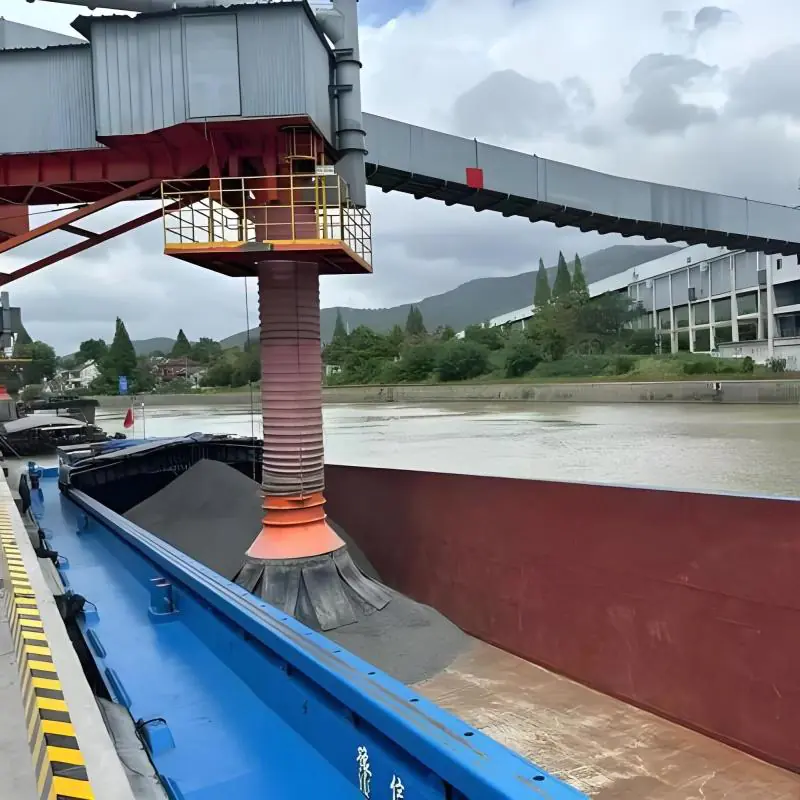
For applications involving ships or barges, LVRUI can supply standalone telescopic loading spouts for integration with existing conveying equipment. A complete Ship Loader is a separate system that may include a boom, conveyors and travelling or slewing mechanisms.
The terms loading spout, loading bellows and telescopic loading chute are often used interchangeably. Loading Bellows typically emphasize flexible telescopic construction, while Telescopic Loading Chutes emphasize adjustable discharge height and lifting travel. The final equipment selection depends on the actual application and required configuration.
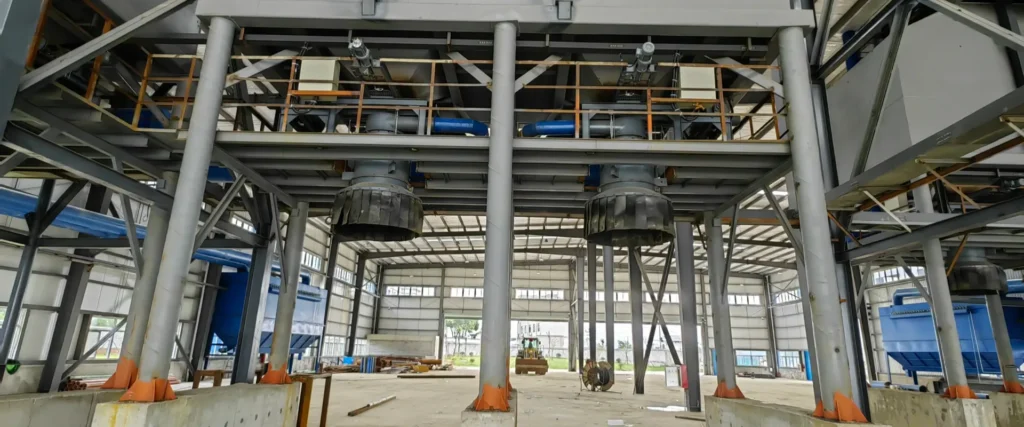
Inner and Outer Chute Construction
LVRUI loading spouts use separate inner and outer passages. The inner chute guides the bulk material, while the outer sleeve provides a passage for dust-laden air extraction. Both parts can be manufactured with different materials to suit the application.
| Component | Available Construction | Selection Considerations |
|---|---|---|
| Inner Material Chute | Flexible fabric, carbon steel or suitable wear-resistant construction | Material particle size, abrasiveness, loading rate and impact conditions |
| Outer Dust Extraction Sleeve | Flexible fabric or carbon steel | Dust extraction arrangement, durability, installation requirements and customer specifications |
Flexible outer sleeves are commonly used because they accommodate telescopic movement. For fine powders such as cement and fly ash, a flexible inner chute may also be suitable. For abrasive materials such as clinker, gravel and crushed stone, steel or wear-resistant internal construction is recommended. Where required, both the inner and outer chutes can be manufactured with steel construction. Final materials, chute dimensions and wear protection are determined according to the operating conditions and approved drawings.
Dust Collection and Level Control Options
LVRUI loading spouts can be supplied with either external or integrated dust collection, depending on the loading application and site requirements.
External Dust Collection
The upper dust extraction connection is connected to an external baghouse dust collector. Negative pressure draws dust-laden air from the loading area through the outer passage into the external filtration system.
This configuration is suitable for loading stations with an existing dust collection system or a separately installed baghouse.
Integrated Dust Collection
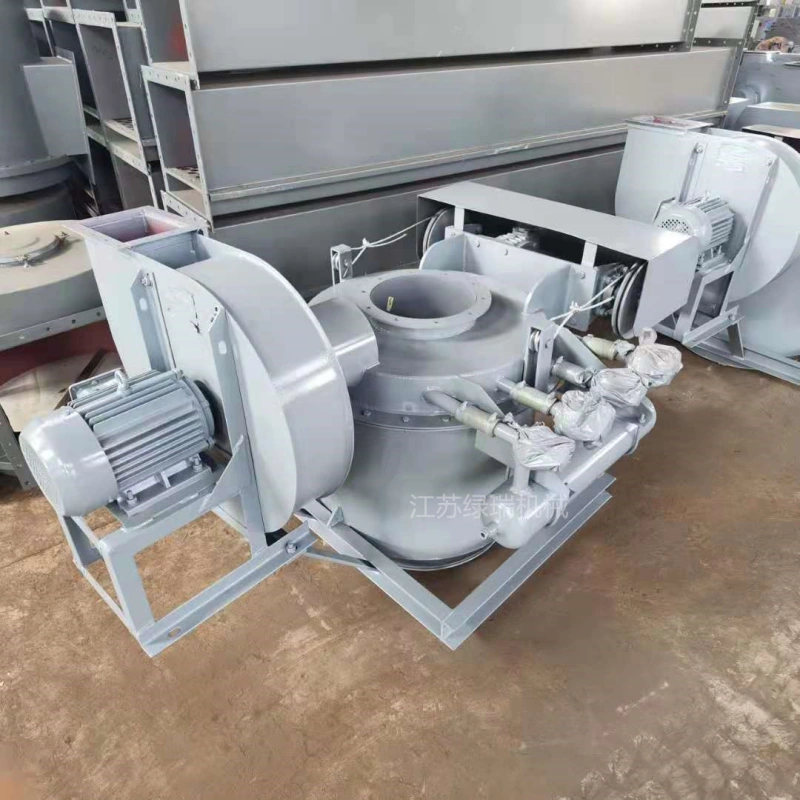
The loading spout can be supplied with an integrated dust collection system consisting of an extraction fan, bag filter unit and filter cleaning system.
This configuration provides dust extraction and filtration within the loading equipment assembly, eliminating the need for a separate standalone baghouse for the loading spout.
Level Control and Automatic Lifting
Optional level sensors can detect the rising material level and provide signals for automatic lifting or loading control. Upper and lower limit switches, local control panels and PLC-compatible interfaces can also be provided.
Dust collection performance depends on the extraction airflow, material characteristics, loading rate, sealing arrangement and outlet position. The extraction and filtration system must be sized according to the operating conditions. For related filtration equipment, see our Dust Collection System.
Information Required for Selection
Please provide the following information before quotation:
| Required Information | Details |
|---|---|
| Material Properties | Material name, bulk density, maximum particle size, moisture, flowability and abrasiveness |
| Loading Capacity | Required loading rate in t/h or m³/h |
| Loading Destination | Enclosed tanker, open truck, railcar, ship, barge or stockpile |
| Inlet Connection | Upstream equipment type, flange dimensions and connection details |
| Loading Height | Installation height, required extended length and retracted height |
| Telescopic Travel | Required lifting stroke and working positions |
| Receiving Opening | Tanker inlet diameter, truck body dimensions or vessel loading area |
| Chute Construction | Preferred inner and outer materials, including any wear-resistance requirements |
| Dust Collection | External baghouse connection or integrated dust collection; available extraction requirements |
| Electrical Supply | Voltage, frequency and available power supply |
| Lifting and Control | Electric lifting, local or remote control, level sensors and PLC interface requirements |
| Site Conditions | Indoor or outdoor installation, material temperature, available space and site drawings |
The loading capacity alone is not sufficient for final equipment selection. Please provide a layout drawing or site photos whenever possible to help confirm the chute dimensions, outlet configuration and installation requirements.
Manufacturing and Inspection
Before shipment, inspection may cover:
- Main dimensions, inlet flange and chute assembly
- Extended length, retracted height and lifting mechanism
- Limit switches, sensors and control functions where included
- Discharge outlet, sealing components and dust collection connections
- Surface treatment, assembly condition and general appearance
LVRUI normally supplies loading spouts as standalone equipment for installation and connection by the customer or their local installation team, unless otherwise agreed.
Selected Loading Spout Applications
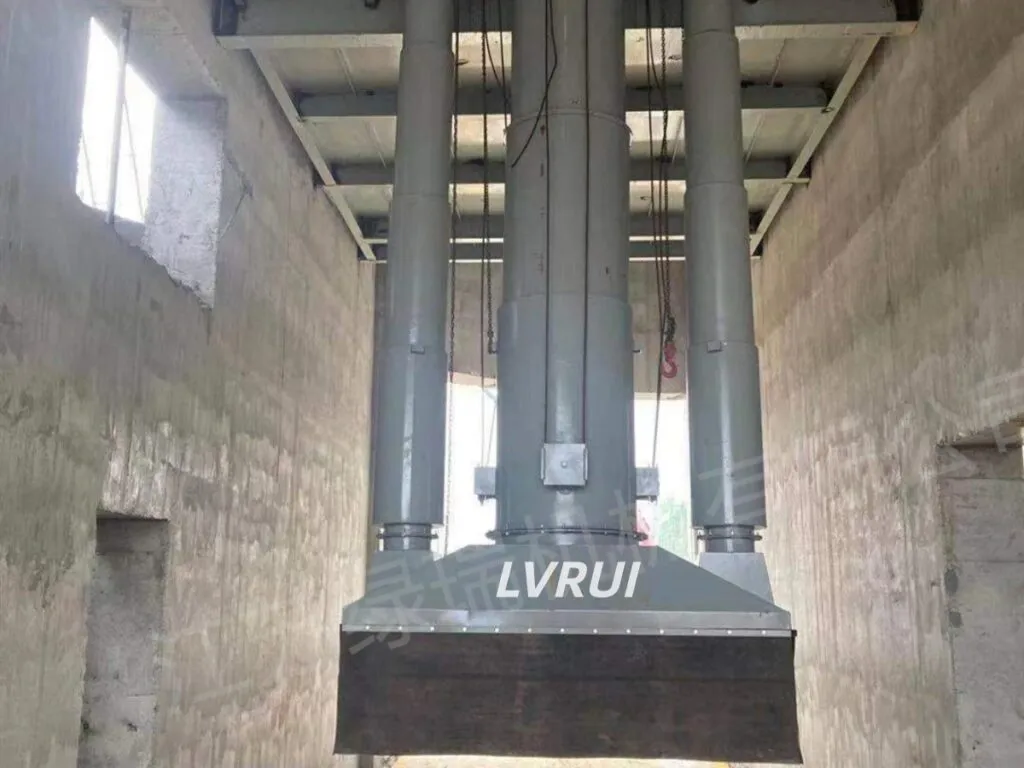
The following photos show LVRUI loading spouts operating at customer sites for open bulk loading, indoor loading and vessel loading applications. The equipment was supplied according to the customer’s material, loading height, connection dimensions and dust-control requirements.
Explore more real-world installations, including a slag truck bulk loading retrofit at Xinyangfeng, in our project references.
Loading Spout FAQs
Can a loading spout be connected to an existing silo or conveyor?
Yes. LVRUI loading spouts can be supplied as standalone assemblies for connection to existing silos, hoppers or conveyor discharge points. The inlet flange, installation height and supporting arrangement should be confirmed before manufacturing.
Is a flexible fabric chute suitable for clinker or crushed stone?
For highly abrasive materials such as clinker and crushed stone, steel or suitable wear-resistant inner chute construction is recommended. A flexible outer dust extraction sleeve may still be used according to the operating conditions.
Can both the inner and outer chutes be made of steel?
Yes. LVRUI can manufacture both the inner material chute and outer dust extraction sleeve using steel construction when required. The telescopic arrangement and wear protection are designed according to the application.
Can an existing baghouse be used with a loading spout?
Yes. The loading spout can connect to an existing baghouse through an upper dust extraction connection, provided that the extraction airflow and system capacity are suitable. An integrated dust collection configuration is also available.
How is the required telescopic travel determined?
Telescopic travel depends on the installation height, receiving vehicle dimensions, loading outlet position and required working range. Site drawings and extended or retracted height requirements are needed for selection.
Can the loading spout lift automatically as the material level rises?
Yes. Optional level sensors can provide signals to control the lifting mechanism during loading. The sensor arrangement, control logic and PLC interface are selected according to the loading application.
Need a Loading Spout for Your Application?
Send LVRUI your material, required loading capacity, loading destination, loading height, telescopic travel, receiving opening dimensions, dust-control requirements and site layout. LVRUI will confirm a suitable loading spout structure, travel, outlet configuration and dust-control arrangement according to your operating conditions.
✅ Configurations for tankers, trucks, railcars, ships, barges and stockpiles
✅ Telescopic travel and inlet/outlet dimensions matched to the site
✅ Structure selected for powder, granular or coarse bulk materials
✅ Optional dust extraction and level-sensing configurations