
FIBC Bag Filling Machine for Cement Powder
Big Bag Filling Equipment for Cement, Fly Ash, Mineral Powder and Other Dry Bulk Powders
What Is a FIBC Bag Filling Machine?
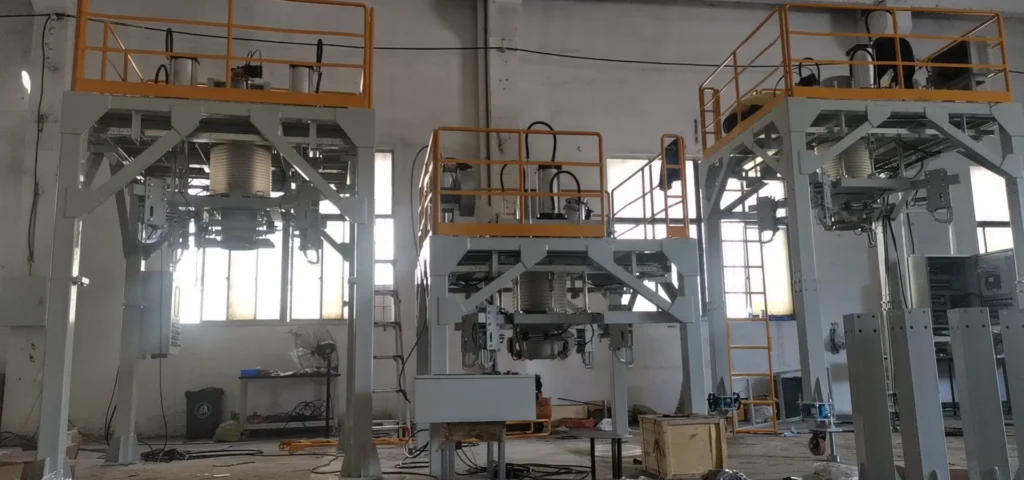
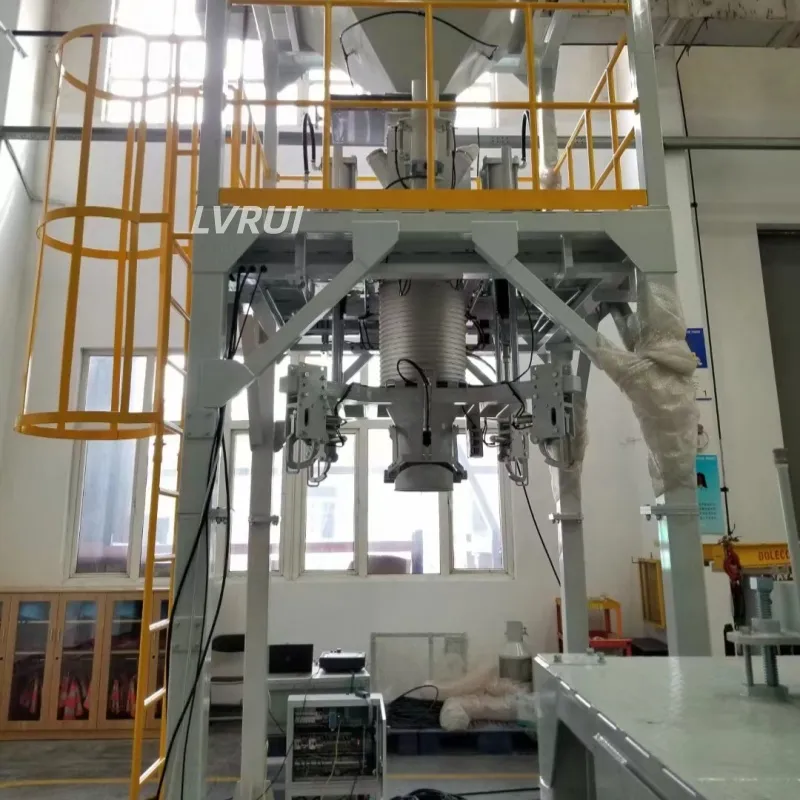
A FIBC bag filling machine is industrial packaging equipment used to fill dry bulk powders into flexible intermediate bulk containers (FIBCs), commonly known as big bags, bulk bags, jumbo bags or ton bags. LVRUI supplies FIBC filling equipment for cement, fly ash, mineral powder, lime powder and other flowable dry powders. The feeding system, filling head, bag support structure, weighing configuration, dust extraction connection and filled-bag handling arrangement can be customized according to the material properties, FIBC dimensions, target bag weight, required filling capacity and site layout.
How Does the Filling Process Work?
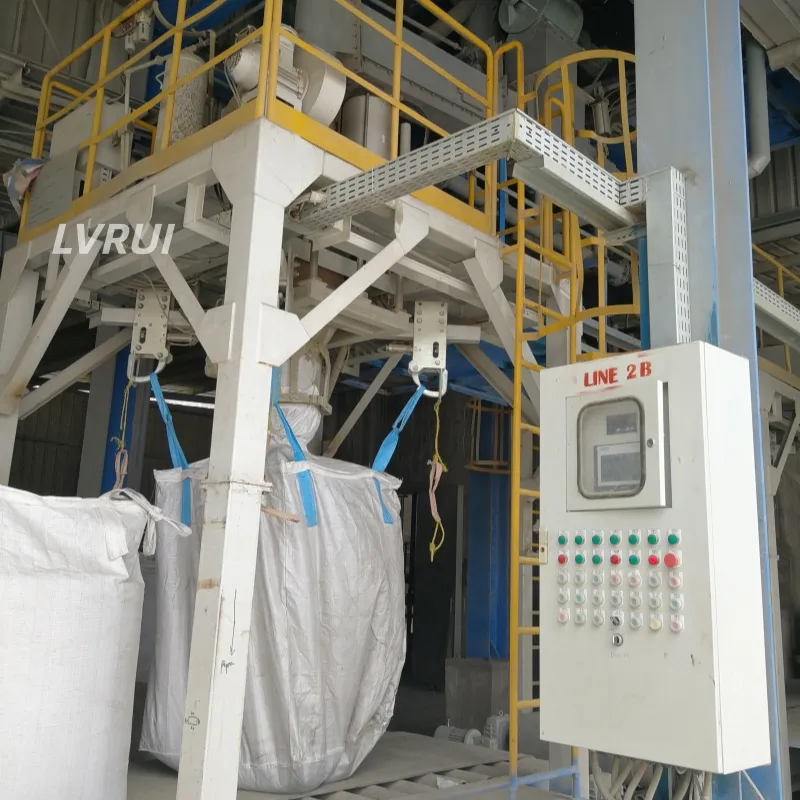
An empty FIBC is positioned below the filling head, with the lifting loops attached to the support hooks and the bag inlet secured by a pneumatic or mechanical clamp.
Material is fed from a silo, hopper or upstream conveyor by gravity, screw feeder or another controlled feeding device. For weighing configurations, load cells monitor the bag weight while the controller switches from fast to slow feeding as the preset target is approached.
Once the target weight is reached, feeding stops and the filled bag is removed by forklift, pallet truck or conveyor. Displaced air and airborne dust can be extracted through a connection around the filling head.
Bag positioning, loop hanging and removal are normally manual unless additional handling equipment is included.
Key Features
Gravity or Screw Feeding Options
Gravity feeding, screw feeding or another controlled arrangement can be selected according to material flowability, installation height and filling requirements.
Optional Load-Cell Weighing
Load cells, fast and slow feeding stages and automatic feed cut-off can be included when controlled filling weight is required.
Adjustable Bag Support and Clamping
Pneumatic or mechanical bag clamping, adjustable loop hooks and support frames can be matched to the FIBC dimensions and target bag weight.
Dust Extraction Connection
The filling head can include an extraction connection for the customer’s central dust collection system or an optional local filter.
Customized Frame and Controls
Frame height, filling head, removal method and control sequence can be configured according to the FIBC drawing and site layout.
Suitable Materials
The machine is mainly intended for dry and flowable powder materials, including:
✅ Cement powder
✅ Fly ash
✅ Mineral powder
✅ Slag powder
✅ Limestone powder
✅ Lime powder
✅ Gypsum powder
✅ Dry mortar ingredients
✅ Selected chemical powders
✅ Other non-sticky dry powders
Wet, sticky or highly cohesive materials may require flow-assistance devices or a different feeding arrangement. Materials with very low bulk density, high air content, elevated temperature or severe abrasiveness should also be evaluated separately before equipment selection.
Main Components
A typical FIBC filling machine may include:
✅ Supporting frame and adjustable bag hooks
✅ Material inlet and filling spout
✅ Pneumatic or mechanical bag clamp
✅ Gravity gate or screw feeder
✅ Weighing frame and load cells, when required
✅ Weighing controller or PLC
✅ Dust extraction connection
✅ Bag support platform or removal interface
The exact supply scope depends on the selected filling and weighing configuration.
Feeding Options
Gravity Feeding
Gravity feeding is suitable for materials that discharge freely from an elevated silo or hopper. A slide gate or flow control device can start, stop or regulate the material flow.
This configuration has a relatively simple structure but requires sufficient installation height and stable material flow.
Screw Feeding
A screw conveyor or screw feeder can provide controlled material delivery for powder filling applications.
The screw can operate at different speeds during fast and slow filling stages. This arrangement is useful when gravity discharge is unstable or when a more controlled final feed rate is required.
Other Feeding Arrangements
Depending on the material and plant layout, the FIBC filling equipment may also be connected to:
✅ An air slide conveyor
✅ An intermediate surge hopper
✅ A rotary valve
✅ A flow control gate valve
✅ Another upstream conveying device
The feeder capacity should match the required filling rate and the operating limits of the weighing and dust extraction systems.
Weighing and Filling Control
For a weighing-type machine, load cells monitor the increasing bag weight while the controller manages the feeding sequence.
Fast feeding is used during the main filling stage, followed by slower feeding as the preset target is approached. The feeder stops when the target value is reached.
Actual filling accuracy depends on material flowability, bulk-density variation, feeding method, load-cell configuration, control settings and site conditions. Final weighing calibration is normally completed after installation using the customer’s actual material.
Bag Support and Removal Options
The support structure should be matched to the FIBC dimensions, lifting-loop arrangement and filled-bag handling method.
Available configurations may include:
✅ Adjustable bag hooks
✅ Adjustable filling-head height
✅ Pallet-supported filling
✅ Forklift or pallet-truck removal
✅ Conveyor discharge where required
These requirements should be confirmed before the frame dimensions are finalized.
For general reference on FIBC construction, dimensions and handling considerations, see the FIBCA Bulk Bag Resource Center.
Reference Technical Specifications
| Item | Reference Range or Option |
|---|---|
| Target Bag Weight | Commonly 500–2,000 kg |
| Bag Type | FIBC, big bag, bulk bag, jumbo bag or ton bag |
| Suitable Material | Dry powder and selected flowable bulk solids |
| Feeding Method | Gravity, screw feeder or customized device |
| Weighing System | Optional load-cell weighing |
| Filling Control | Manual, semi-automatic or automatic sequence |
| Bag Connection | Pneumatic or mechanical clamping |
| Bag Support | Adjustable hooks and supporting frame |
| Dust Control | Extraction connection or optional local filter |
| Control System | Local panel, weighing controller or PLC interface |
| Main Structure | Carbon steel or stainless steel option |
| Filled-Bag Removal | Forklift, pallet truck or conveyor |
These specifications are provided for preliminary comparison. Final dimensions, filling capacity, feeder size, weighing configuration and structural design depend on the confirmed bag and material data.
The actual number of bags filled per hour depends on the target bag weight, material flowability, feeder capacity, operator handling time and filled-bag removal method.
Optional Configurations
✅ Load-cell weighing system
✅ Fast and slow feeding control
✅ Screw feeder or controlled feed device
✅ Pneumatic bag inlet clamp
✅ Empty-bag inflation connection
✅ Bag vibration or settling device
✅ Dust extraction connection
✅ Conveyor discharge or PLC interface
Optional equipment is selected according to the material, bag handling method and project requirements.
Information Required for Selection
| Required Information | Details |
|---|---|
| Material | Name, bulk density and particle size |
| Material Condition | Moisture and operating temperature |
| Target Bag Weight | Required net weight per FIBC |
| FIBC Dimensions | Width, length, height and inlet diameter |
| Bag Loops | Number, position and loop length |
| Required Capacity | Bags/hour or tonnes/hour |
| Feeding Source | Silo, hopper or conveyor |
| Feeding Method | Gravity, screw or other method |
| Weighing / Dust Control | Required configuration |
| Bag Removal | Forklift, pallet truck or conveyor |
| Site Conditions | Available height, power supply, drawing and connection dimensions |
An FIBC drawing should be provided whenever possible. The bag height, filling inlet, loop position and filled-bag removal method directly affect the machine structure.
Manufacturing and Inspection
LVRUI manufactures each FIBC bag filling machine according to the approved drawing and confirmed supply scope.
Before shipment, the main checks may include:
✅ Overall dimensions and connection sizes
✅ Bag clamping and support structure
✅ Feeder operating direction
✅ Load-cell signal and weighing sequence, where included
✅ Pneumatic and electrical control functions
✅ Surface condition and export packing
The machine is normally supplied for installation and system connection by the customer or its local installation team.
FIBC Bag Filling Machine FAQs
Is weighing standard on every FIBC bag filling machine?
No. Weighing can be configured according to the application. A basic filling machine may operate without load-cell weighing, while weighing-type configurations use load cells and controlled feeding stages to reach the preset bag weight.
What FIBC bag weights are available?
Common target bag weights range from 500 to 2,000 kg. The suitable range depends on the FIBC dimensions, bag loop arrangement, material bulk density, support structure and weighing configuration.
How is the filling weight controlled?
A weighing-type FIBC bag filling machine uses load cells to monitor the increasing bag weight. The controller can switch from fast feeding to slow feeding before stopping the feeder at the preset target value. Actual filling accuracy depends on the material characteristics, feeding method, weighing configuration and site conditions.
How is dust controlled during big bag filling?
The filling head can include a dust extraction connection around the bag inlet. Displaced air and airborne powder can be extracted to the customer’s central dust collection system or an optional local filter. The required extraction airflow depends on the material properties and filling rate.
Can a FIBC bag filling machine be installed directly below a silo?
Yes. The machine can be installed below a silo or intermediate hopper when sufficient installation height and structural support are available. A slide gate, screw feeder, flow control device or other discharge equipment may be installed between the silo and filling head.
What information is required for a quotation?
Please provide the material name, bulk density, particle size, moisture, material temperature, target bag weight, FIBC dimensions, bag inlet size, bag loop arrangement, required bags per hour, feeding source, weighing requirement, installation height, dust-control arrangement, filled-bag removal method, power supply and site drawing.
Need Help Selecting a FIBC Bag Filling Machine?
Send LVRUI your material, FIBC dimensions, target bag weight, required capacity, feeding source, available installation height and dust-control requirements. LVRUI will confirm a suitable feeding, bag-support, weighing and filled-bag handling configuration according to your operating conditions.
✅ Gravity or screw feeding options
✅ Optional load-cell weighing and feed cut-off
✅ Bag support matched to FIBC dimensions and lifting loops
✅ Dust extraction and filled-bag removal configurations