From Raw Materials and Clinker Production to Cement Grinding, Storage, and Dispatch
What Is the Cement Manufacturing Process?
Cement manufacturing is a multi-stage process that converts calcium-, silica-, alumina- and iron-bearing raw materials into clinker and then grinds the clinker with gypsum and other permitted constituents to produce finished cement.
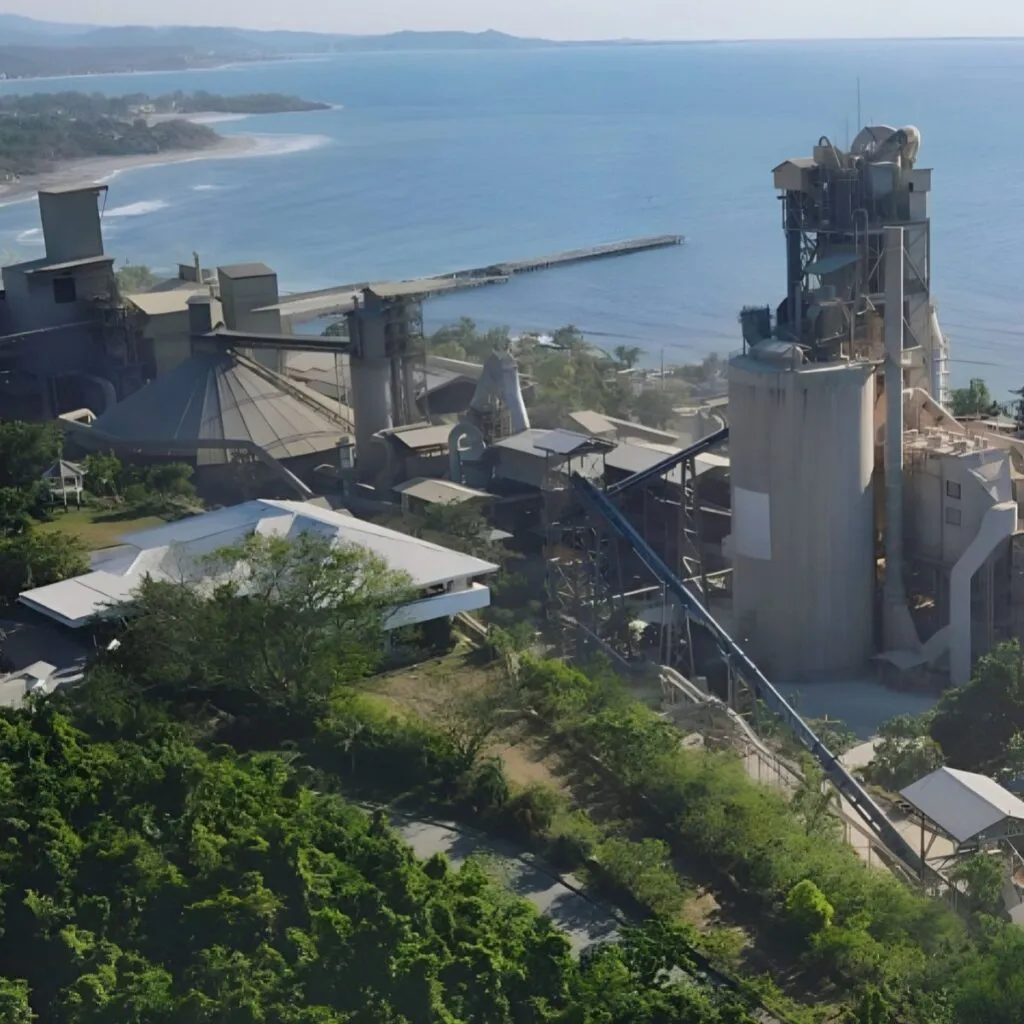
A typical modern dry-process cement plant includes raw material extraction and crushing, raw meal preparation, preheating and precalcination, clinker formation in a rotary kiln, clinker cooling, cement grinding, storage and final dispatch. Plant layouts and cement formulations vary, but these major stages describe the general production route used in modern Portland cement manufacturing. For an industry overview of the complete production sequence, see the American Cement Association’s How Cement Is Made guide.
Cement Manufacturing Process at a Glance
| Stage | Material | Main Process |
|---|---|---|
| Raw material preparation | Limestone, clay and corrective materials | Quarrying, crushing and proportioning |
| Raw meal preparation | Crushed raw materials | Grinding, drying, blending and homogenization |
| Preheating and precalcination | Raw meal | Heat recovery and partial or extensive calcination |
| Kiln pyroprocessing | Heated raw meal | Formation of cement clinker |
| Clinker cooling | Hot clinker | Rapid cooling and heat recovery |
| Cement grinding | Clinker, gypsum and other constituents | Finish grinding and blending |
| Storage and dispatch | Finished cement | Silo storage, bag packing or bulk loading |
Step 1: Raw Material Extraction and Crushing
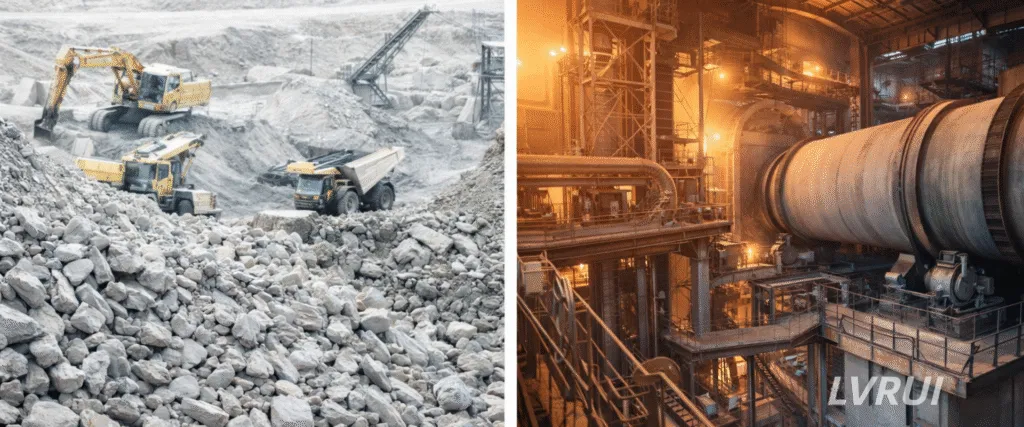
Cement production begins with raw materials that provide the calcium, silicon, aluminum and iron required for clinker formation. Limestone is the principal calcium-bearing material, while clay, shale, silica-bearing materials and iron-bearing corrective materials may be used to obtain the required raw mix composition.
After extraction from the quarry, large rocks are reduced in size by crushing equipment. The crushed material is then transported or stored before proportioning and raw grinding.
Raw material selection and proportioning depend on the actual chemical composition of the available materials, so the exact raw mix varies between cement plants.
Step 2: Raw Meal Grinding, Proportioning and Homogenization
Crushed raw materials are proportioned according to the required chemical composition and ground into a fine raw meal. In a modern dry-process plant, grinding may also remove moisture from the raw materials using hot process gases.
The ground raw meal is then blended and homogenized before entering the pyroprocessing system. Stable raw meal composition helps maintain consistent kiln operation and clinker quality.
Material transport around the raw mill and homogenization system may involve different conveying equipment depending on plant layout and material characteristics. This material-handling function should be distinguished from the chemical and thermal production process itself.
Step 3: Preheating and Precalcination
In many modern dry-process cement plants, raw meal passes through a multi-stage preheater before entering the rotary kiln. Hot gases from the pyroprocessing system transfer heat to the descending raw meal, improving heat utilization.
Plants equipped with a precalciner introduce part of the fuel outside the rotary kiln so that a substantial portion of the calcination process can occur before the material enters the kiln.
During calcination, calcium carbonate begins to decompose into calcium oxide and carbon dioxide:
CaCO₃ → CaO + CO₂
The exact preheater and precalciner configuration varies by plant design. For additional technical background on dry-process cement manufacturing and pyroprocessing, refer to the U.S. EPA’s AP-42 Portland Cement Manufacturing reference.
Step 4: Clinker Formation in the Rotary Kiln
The preheated and partially calcined raw meal enters the rotary kiln. As the material moves toward the burning zone, its temperature rises, reaching approximately 1450°C during the main clinker-forming reactions.
As the material moves through the kiln, a series of high-temperature reactions form the principal mineral phases of cement clinker. The resulting clinker leaves the kiln as hot, nodular material.
Kiln operation depends on factors such as raw meal chemistry, temperature profile, fuel input and material residence conditions. These parameters are controlled according to the specific kiln and production process rather than by a single universal setting.
Step 5: Clinker Cooling and Storage
Hot clinker leaving the rotary kiln must be cooled before storage and downstream handling. A clinker cooler reduces the material temperature while recovering part of the heat for reuse in the pyroprocessing system.
After cooling, clinker may be transferred to storage before cement grinding. Conveying equipment used in this area must be selected according to clinker temperature, particle size, abrasiveness and the plant layout.
Step 6: Cement Grinding and Final Blending
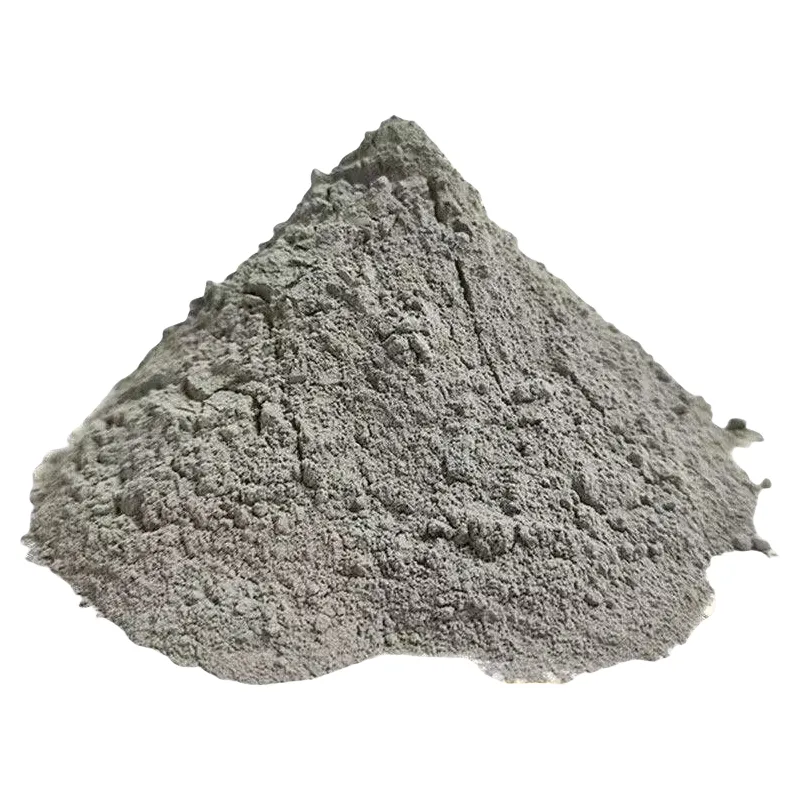
Cooled clinker is ground with gypsum and, depending on the cement type, other permitted constituents to produce finished cement. Gypsum helps control setting behavior, while limestone, slag, pozzolanic materials or other components may be incorporated according to the required cement specification.
Finish grinding controls important physical characteristics of the cement, including particle-size distribution and fineness. The exact grinding and blending arrangement depends on the cement type and plant configuration.
Portland cement and blended cement are produced according to different composition requirements and product standards. Depending on the cement type and applicable specification, finish grinding may include clinker, gypsum, limestone and other permitted constituents. Blended cements may incorporate additional supplementary cementitious materials such as slag or pozzolanic materials. For a comparison between plants that manufacture clinker and facilities that begin with externally supplied clinker, see our cement grinding plant vs integrated cement plant guide.
Step 7: Cement Storage, Packing and Bulk Dispatch
Finished cement is transferred to storage silos before final dispatch. Depending on the customer and distribution method, cement may be packed into bags or dispatched in bulk to trucks, tankers, railcars or other receiving systems. For truck and tanker applications, suitable bulk loading systems can connect the cement silo with the receiving vehicle.
Stable discharge from the silo and controlled transfer to the loading point are part of the material-handling stage rather than the cement-making reaction itself. Suitable conveying, flow-control and dust-collection equipment may therefore be required between cement storage and final dispatch.
For a broader explanation of how materials move through these areas, see our cement plant material handling guide.
Key Process Control Considerations in Cement Manufacturing
Stable cement production depends on controlling several connected stages rather than optimizing individual machines in isolation.
Important operating considerations include:
- Raw material chemistry and proportioning
- Raw meal fineness and homogenization
- Preheater and kiln temperature conditions
- Clinker cooling performance
- Cement grinding and final product specification
- Stable material transport between process stages
Dust collection systems and other emission-control equipment are also used at relevant process points. However, the required control measures depend on the specific equipment, material and applicable environmental requirements.
Cement Manufacturing Process FAQs
What are the main stages of cement manufacturing?
The main stages are raw material extraction and crushing, raw meal preparation, preheating and calcination, clinker formation in the rotary kiln, clinker cooling, cement grinding, storage and final dispatch.
What is clinker in cement manufacturing?
Clinker is the intermediate nodular material formed when properly prepared raw meal undergoes high-temperature reactions in the cement kiln. After cooling, clinker is ground with gypsum and other permitted constituents to produce cement.
Why is gypsum added during cement grinding?
Gypsum is added during finish grinding to help control the setting behavior of cement. The required amount depends on the cement formulation and applicable product specification.
What is the difference between clinker production and cement grinding?
Clinker production involves raw material preparation and high-temperature pyroprocessing in a kiln. Cement grinding begins with cooled clinker and produces finished cement by grinding it with gypsum and other applicable constituents.
What is the difference between Portland cement and blended cement?
Portland cement and blended cement are produced according to different composition requirements and product specifications. Blended cements typically incorporate supplementary cementitious materials such as slag, pozzolans or other permitted constituents in addition to the Portland cement component.
The exact composition depends on the cement type and the applicable product standard.
How is finished cement stored and dispatched?
Finished cement is typically stored in silos before being packed into bags or dispatched in bulk. Silo discharge, conveying, flow control, dust collection and loading equipment are selected according to the plant layout and required handling capacity.
Conclusion
The cement manufacturing process converts carefully proportioned raw materials into clinker and then transforms the clinker into finished cement through grinding and blending.
Although individual plant layouts vary, the fundamental stages remain closely connected: raw material preparation, preheating and calcination, clinker formation, cooling, finish grinding, storage and dispatch. Understanding these stages helps distinguish the cement production process itself from the conveying, dust collection and loading equipment that supports plant operation.
Need Equipment for Cement Handling and Dispatch?
LVRUI supplies conveying, silo discharge, flow control, dust collection and bulk loading equipment for cement and dry bulk material handling applications.
If you are planning or upgrading a material handling section of a cement plant, please provide the material, required capacity, equipment layout and available drawings. For a broader overview of compatible equipment categories, see our cement plant bulk material handling equipment solutions.
✓ Conveying and powder transfer equipment
✓ Silo discharge and flow control equipment
✓ Dust collection equipment
✓ Bulk loading systems and related components
WhatsApp: +86 18261998937
WeChat: +86 18261998937
Email: info@lvrui-conveyor.com