Field Troubleshooting Guide for Dust Leakage in Cement, Fly Ash, and Dry Powder Loading Systems
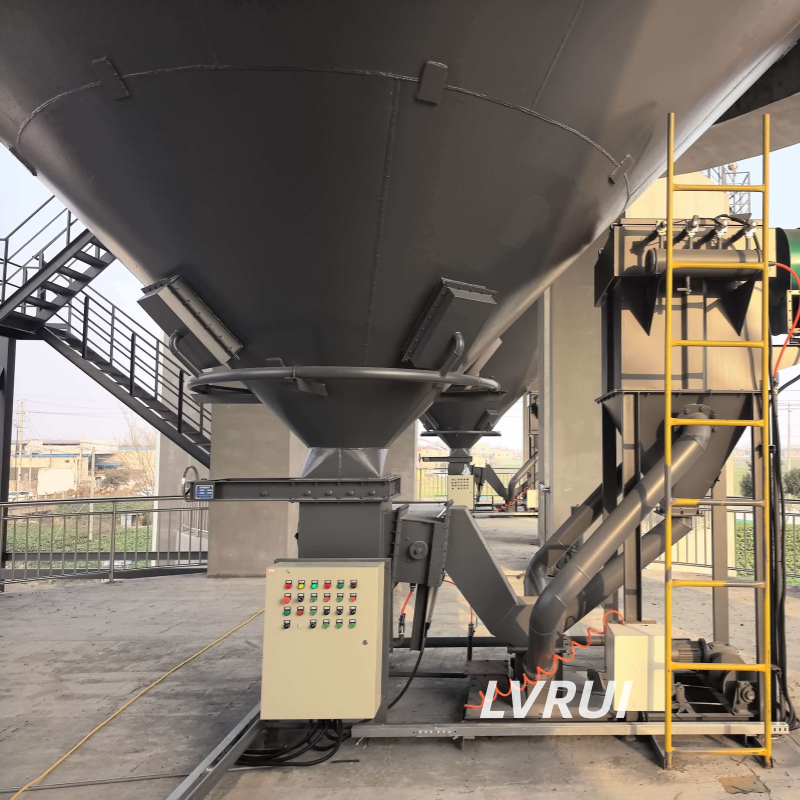
Loading Spout Dust Leakage in Cement and Fly Ash Loading Systems
Loading spout dust is a common issue in cement plants, fly ash terminals, grinding stations, and dry bulk loading facilities. In many cases, the loading equipment itself is not completely damaged. The problem usually comes from poor alignment, worn sealing parts, weak dust extraction, or unstable material flow during truck or tanker loading.
A loading spout, also known as a bulk loading spout, telescopic loading chute, or loading bellows, is designed to guide powder from a silo or conveyor into a truck, tanker, railcar, or container. For cement and fly ash loading, the equipment must handle fine powder, fast discharge speed, displaced air, and repeated lifting cycles.
When dust leakage becomes serious, it may cause material loss, poor working conditions, higher cleaning costs, complaints from drivers, and extra load on the dust collection system. For plants handling cement, fly ash, slag powder, lime powder, or other dry bulk materials, dust leakage should not be treated as a small cosmetic problem. It is usually a signal that the loading system needs checking.
A reliable dust-free loading system depends on three things working together: proper sealing, stable material feeding, and effective dust extraction.
Why Dust Leakage Happens During Loading
During loading, cement or fly ash falls through the loading spout into the truck or tanker. At the same time, the air inside the vehicle is pushed upward by the incoming material. If this displaced air is not collected, filtered, or returned correctly, it will carry fine powder out from the loading point.
That is why loading spout dust leakage is not only a sealing problem. It is also related to airflow, feeding speed, dust extraction capacity, and vehicle positioning.
In actual field operation, dust usually escapes from one of these areas:
✔ Around the truck inlet
✔ From the edge of the sealing skirt
✔ Through the dust return pipe connection
✔ From damaged bellows or fabric sections
✔ Near the end of loading when the tanker is almost full
✔ At the beginning of loading when material flow surges
The exact leakage position often tells engineers where to start troubleshooting.
For this reason, loading spout dust should be checked as a system problem rather than only a sealing problem.
For broader equipment categories used in bulk material transfer, CEMA provides references for engineered bulk handling equipment.
Cause 1: Truck Inlet Is Not Aligned with the Loading Spout
Poor alignment is one of the most common causes of loading spout dust leakage. If the truck inlet or tanker manhole is not directly under the loading spout, the sealing skirt cannot sit evenly on the opening.
Even a small offset may create a side gap. Once cement or fly ash starts flowing, dust will escape through that gap.
Field Signs
✔ Dust escapes mainly from one side
✔ The sealing skirt looks tilted during loading
✔ Some trucks load cleanly, but others create heavy dust
✔ Operators need to adjust the truck position repeatedly
✔ Dust leakage changes depending on vehicle type
Field Troubleshooting
Check whether the loading spout is vertically aligned with the truck inlet. Then check the ground markings, wheel stopper, platform layout, and operator visibility. If different truck sizes are used at the same loading point, the spout may need more flexible positioning tolerance.
In some projects, the loading spout is correctly designed, but truck parking is inconsistent. This is common when the loading area has no clear guide marks or when the driver cannot see the correct stopping position.
Practical Solution
Use clear parking marks, wheel stoppers, or positioning guides. Before loading starts, the operator should confirm that the telescopic chute can lower naturally without side pulling. If the plant handles different tanker sizes, a more flexible sealing skirt can help improve contact around the inlet.
Cause 2: Sealing Skirt Is Worn, Hardened, or Wrongly Sized
The sealing skirt is a small part, but it directly affects dust control. It forms the contact area between the loading spout and the truck inlet.
After long-term operation, the skirt may become worn, cracked, hardened, or deformed. Once this happens, it cannot seal the inlet properly, and dust will escape from the edge.
Field Signs
✔ Dust escapes around the loading point
✔ The skirt edge has cracks, cuts, or uneven wear
✔ Rubber has become hard and less flexible
✔ The skirt does not fully cover the tanker inlet
✔ Dust leakage becomes worse after months of operation
Field Troubleshooting
Stop the equipment and inspect the sealing skirt carefully. Check the edge condition, clamp position, rubber flexibility, diameter, and contact surface. Also confirm whether the replacement skirt matches the original size and material.
Many dust problems start after using a cheaper replacement part. The shape may look similar, but the thickness, flexibility, and abrasion resistance may be different.
Practical Solution
Replace worn sealing skirts before the damage becomes serious. For cement and fly ash loading, the skirt should be flexible enough to fit the truck inlet and strong enough to resist abrasion from repeated operation.
Cause 3: Dust Extraction Airflow Is Too Weak
A loading spout needs enough dust extraction airflow to control displaced air during loading. If the suction is too weak, fine powder will escape from the loading area.
This problem is often related to the bag filter, fan, duct, damper, or filter bags. In many plants, operators keep replacing sealing parts, but the real problem is weak extraction airflow.
Field Signs
✔ Dust rises upward during loading
✔ Dust becomes worse at higher loading capacity
✔ Filter differential pressure is abnormal
✔ Fan suction feels weak
✔ Filter bags are blocked, old, or overloaded
✔ Dust leakage decreases when loading speed is reduced
Field Troubleshooting
Check the complete dust extraction path from the loading spout to the bag filter. Inspect the fan, filter bags, duct connection, damper opening, flexible hose, and pressure difference.
If possible, compare the actual airflow with the original design value. A loading spout used for high-capacity cement truck loading needs a dust collection system sized for real operating conditions, not just theoretical loading capacity.
Practical Solution
Clean or replace blocked filter bags, check fan performance, remove duct blockage, and adjust airflow according to the loading rate. For high-frequency loading stations, the dust extraction system should be designed together with the loading spout.
If the dust extraction system is too weak, loading spout dust will increase even when the sealing skirt is still in good condition.
Cause 4: Dust Return Pipe or Venting Path Is Blocked
Some loading spout systems use a dust return pipe or venting channel to guide displaced air and fine dust back to the filter or silo. If this path is blocked, air pressure builds up near the loading point and dust may burst out suddenly.
This problem is common in cement and fly ash systems because fine powder can slowly build up inside bends, flexible hoses, and horizontal pipe sections.
Field Signs
✔ Dust leakage appears suddenly instead of continuously
✔ Loading starts normally, then dust bursts out
✔ Dust return pipe has powder buildup inside
✔ The problem becomes worse after long operation
✔ The system improves after manual pipe cleaning
Field Troubleshooting
Open inspection points and check the dust return pipe. Look for powder buildup, collapsed hoses, sharp elbows, damaged flexible connections, and long horizontal sections where powder may settle.
Also check the pipe slope. Even if the filter is working, a poorly arranged return pipe can still cause repeated blockage.
Practical Solution
Clean the return pipe regularly and improve the duct layout if blockage happens often. Avoid sharp bends, dead corners, and long horizontal sections. The venting path should allow displaced air to move smoothly without carrying too much settled powder.
Cause 5: Material Flow Surge Causes Instant Dust Escape
Dust leakage is not always caused by poor sealing. Sometimes the feeding system sends too much material into the loading spout at once.
When the upstream flow control gate opens too quickly, or when the silo discharge is unstable, cement or fly ash may rush into the loading spout. This sudden material surge pushes air out quickly and causes short, heavy dust leakage.
Field Signs
✔ Dust appears mainly at the beginning of loading
✔ Dust comes out in short bursts
✔ Material flow is not steady
✔ Weighing data or loading current fluctuates
✔ Operators hear sudden impact inside the loading spout
Field Troubleshooting
Check the upstream feeding equipment, including the flow control gate, silo discharge valve, screw conveyor, air slide conveyor, or rotary valve. Review the opening sequence and loading speed setting in the control system.
If the gate opens fully at the start, the first material impact may be too strong for the loading spout and dust collector to handle.
Practical Solution
Use gradual feeding instead of sudden full opening. Adjust the flow control gate and loading sequence so the material enters the loading spout smoothly. For cement and fly ash systems, stable flow is usually more important than maximum instant loading speed.
Cause 6: Level Sensor Fails or Reacts Too Late
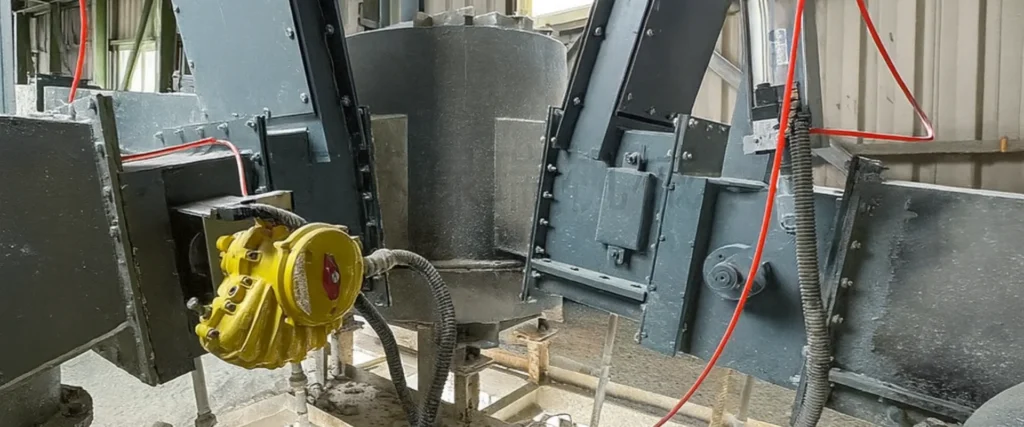
A level sensor helps stop loading when the truck or tanker is nearly full. If the sensor is dirty, wrongly positioned, slow to react, or not suitable for dusty powder, overfilling may happen near the inlet.
When the powder level rises too close to the loading point, dust and material can escape around the sealing skirt.
Field Signs
✔ Dust leakage happens near the end of loading
✔ The truck inlet area becomes overfilled
✔ Loading does not stop at the correct time
✔ Sensor signal is unstable
✔ Operator has to stop loading manually
Field Troubleshooting
Check whether the level sensor is clean and correctly installed. Make sure the sensor type is suitable for cement, fly ash, slag powder, or lime powder. Some sensors are affected by dust coating, vibration, material buildup, or poor wiring.
Also check the response time in the control system. A sensor may work normally, but if the stop signal is delayed, overfilling can still occur.
Practical Solution
Clean and test the level sensor regularly. For high-speed loading systems, make sure the sensor and control system can stop material flow quickly enough to avoid overfilling.
Cause 7: Telescopic Bellows Does Not Fully Extend or Seat Properly
The telescopic bellows must lower far enough to create a stable sealing position. If the loading spout stops too high, moves unevenly, or is pulled to one side, the sealing skirt cannot sit firmly on the truck inlet.
This may happen because of lifting cable wear, limit switch setting errors, mechanical friction, material buildup, or incorrect operation.
Field Signs
✔ The spout stops before reaching the correct position
✔ The sealing skirt only partly touches the inlet
✔ Bellows is tilted or pulled to one side
✔ Lifting movement is not smooth
✔ Dust leakage still happens even with a good sealing skirt
Field Troubleshooting
Inspect the lifting mechanism, steel cables, guide parts, limit switches, and stroke setting. The loading spout should move smoothly up and down without tilting.
Also confirm the operating procedure. In some cases, the equipment is normal, but the operator starts material discharge before the spout is fully seated.
Practical Solution
Adjust the limit switch and lifting stroke. Repair worn lifting parts and remove material buildup from moving sections. Operators should confirm sealing contact before starting the discharge process.
Field Troubleshooting Checklist for Loading Spout Dust Leakage
When dust leakage happens, do not replace parts blindly. A simple field check can save time and avoid unnecessary maintenance cost.
Start with these points:
✔ Is the truck inlet centered under the loading spout?
✔ Is the sealing skirt worn, cracked, or too hard?
✔ Is the dust extraction airflow strong enough?
✔ Is the dust return pipe blocked?
✔ Is the upstream material flow stable?
✔ Does the level sensor stop loading on time?
✔ Does the telescopic bellows fully extend and sit correctly?
✔ Does dust appear at the start, middle, or end of loading?
The timing of leakage is very useful:
✔ Dust at the start often means poor initial sealing or material surge
✔ Dust during the whole loading process often means weak extraction or worn sealing
✔ Dust near the end often means overfilling or slow level detection
✔ Dust from one side often means alignment or uneven skirt contact
This troubleshooting sequence helps operators find the real cause faster instead of treating every dust problem as a sealing failure.
How to Reduce Loading Spout Dust in Long-Term Operation
Dust control should be part of daily operation management, not only emergency repair.
For cement plants and powder terminals, the following practices are useful:
✔ Keep truck positioning consistent
✔ Inspect the sealing skirt regularly
✔ Clean dust return pipes before serious blockage occurs
✔ Maintain the bag filter and fan system
✔ Avoid sudden material flow surges
✔ Test level sensors before high-frequency loading
✔ Check bellows movement and lifting cable wear
✔ Record when and where dust leakage happens
✔ Train operators to start loading only after proper sealing
A dust-free loading system depends on the full process. The loading spout, bag filter, flow control gate, silo discharge system, and operator procedure must work together.
When Should the Loading Spout Be Replaced?
Not every dust problem means the whole loading spout must be replaced. Many issues can be solved by replacing the sealing skirt, cleaning the return pipe, improving airflow, or adjusting the truck position.
However, replacement or major repair should be considered when:
✔ Bellows fabric is badly worn or torn
✔ The lifting mechanism is unstable
✔ Dust leakage remains after sealing and airflow repair
✔ The actual loading capacity is higher than the original design
✔ The loading spout no longer matches current truck sizes
✔ The dust extraction interface is too small
✔ The equipment body is deformed or corroded
If a plant has changed from low-frequency loading to high-frequency bulk truck loading, the old loading spout may no longer meet the operating requirement.
Conclusion
Loading spout dust leakage usually comes from a combination of several field problems. Poor truck alignment, worn sealing skirts, weak dust extraction, blocked return pipes, unstable material flow, level sensor failure, and incorrect telescopic chute positioning can all cause dust escape during loading.
For cement, fly ash, slag powder, lime powder, and other dry bulk materials, the best solution is to check the complete loading process instead of focusing only on one part.
A properly selected and maintained loading spout can reduce dust leakage, improve loading efficiency, keep the loading area cleaner, and support more stable powder handling in cement plants and bulk material terminals.
FAQs – Loading Spout Dust Leakage and Troubleshooting
What causes loading spout dust leakage during cement truck loading?
Loading spout dust leakage during cement truck loading is usually caused by poor truck inlet alignment, worn sealing skirts, weak dust extraction airflow, blocked dust return pipes, unstable material flow, level sensor failure, or incorrect telescopic chute positioning. In many cement and fly ash loading systems, dust leakage is a system problem related to sealing, airflow, feeding speed, and vehicle positioning.
How do you troubleshoot loading spout dust during cement truck loading?
To troubleshoot loading spout dust during cement truck loading, first check whether the truck inlet is centered under the loading spout. Then inspect the sealing skirt, dust extraction airflow, bag filter condition, dust return pipe, upstream flow control gate, level sensor, and telescopic bellows movement. The leakage position and timing can help identify the root cause faster.
Why does dust leak from one side of the loading spout?
Dust leaking from one side of the loading spout usually means the truck inlet is not aligned with the spout, or the sealing skirt is not sitting evenly on the tanker inlet. This type of loading spout dust problem is often solved by improving truck positioning, checking the lifting stroke, and replacing a deformed or wrongly sized sealing skirt.
Can a bag filter reduce loading spout dust leakage?
Yes. A properly sized and maintained bag filter can reduce loading spout dust leakage by collecting displaced air and fine powder during cement, fly ash, lime powder, or dry bulk loading. However, if filter bags are blocked, fan airflow is weak, or the duct connection is clogged, dust leakage may still occur around the loading point.
Is loading spout dust leakage related to material flow surge?
Yes. Sudden material flow surge can cause loading spout dust leakage, especially at the beginning of loading. When the upstream flow control gate opens too quickly or the silo discharge system feeds material unevenly, cement or fly ash may rush into the loading spout and push dust out from the truck inlet area.
What causes dust leakage in a telescopic loading chute?
Dust leakage in a telescopic loading chute is commonly caused by poor alignment, damaged bellows, worn sealing skirt, short lifting stroke, weak dust extraction, blocked venting pipe, or poor sealing contact with the truck inlet. Before loading starts, the telescopic loading chute should fully extend and sit properly on the inlet.
What is the difference between a loading spout and a telescopic loading chute?
A loading spout and a telescopic loading chute usually refer to the same type of extendable bulk loading equipment. It is used to load cement, fly ash, lime powder, clinker, slag powder, and other dry bulk materials into trucks, tankers, railcars, containers, or ships while reducing dust escape during loading.
How can cement plants prevent loading spout dust problems?
Cement plants can prevent loading spout dust problems by keeping truck positioning accurate, maintaining sealing skirts, cleaning dust return pipes, checking bag filter airflow, controlling material flow, and testing level sensors regularly. Stable feeding, proper sealing, and effective dust extraction are the key factors for long-term dust control.
When should the sealing skirt be replaced?
The sealing skirt should be replaced when it becomes worn, cracked, hardened, deformed, or unable to cover the truck inlet properly. A damaged sealing skirt is one of the most common causes of loading spout dust leakage in cement truck loading and fly ash loading systems.
How do you reduce fly ash loading spout dust leakage?
To reduce fly ash loading spout dust leakage, operators should check the sealing skirt, bag filter airflow, dust extraction fan, return pipe blockage, truck inlet alignment, and feeding speed. Fly ash is very fine, so even small sealing gaps or weak suction airflow can cause visible dust leakage during loading.
Indonesian Short Version
Kebocoran Debu pada Loading Spout dalam Sistem Loading Semen dan Fly Ash
Masalah loading spout dust sering terjadi pada proses loading semen, fly ash, slag powder, kapur, dan material bubuk kering lainnya. Debu biasanya keluar saat material mulai mengalir ke truk, tanker, railcar, atau sistem loading curah.
Penyebab utama kebocoran debu biasanya bukan hanya satu komponen. Dalam banyak kasus, masalah berasal dari kombinasi beberapa faktor, seperti posisi truk yang tidak tepat, sealing skirt yang aus, airflow dust extraction yang lemah, pipa return debu yang tersumbat, aliran material yang tidak stabil, sensor level yang terlambat bekerja, atau telescopic bellows yang tidak turun dengan benar.
Untuk troubleshooting di lapangan, operator sebaiknya memeriksa posisi inlet truk, kondisi sealing skirt, kekuatan airflow pada dust extraction system, kebersihan dust return pipe, stabilitas aliran material dari silo, respon level sensor, dan gerakan telescopic loading chute.
Jika debu keluar dari satu sisi, biasanya masalahnya adalah alignment. Jika debu keluar selama seluruh proses loading, kemungkinan besar sealing skirt aus atau airflow dust extraction terlalu lemah. Jika debu muncul di akhir loading, masalah bisa berasal dari overfilling atau level sensor.
Sistem loading yang baik harus menggabungkan loading spout, bag filter, flow control gate, silo discharge system, dan prosedur operator yang benar. Dengan desain dan perawatan yang tepat, dust leakage dapat dikurangi, area kerja menjadi lebih bersih, dan proses loading semen atau fly ash menjadi lebih stabil.
CTA
Need a reliable Loading Spout for cement, fly ash, or powder loading systems?
Contact LVRUI today for fast delivery and expert technical support.
Email: info@lvrui-conveyor.com
Website: https://lvrui-conveyor.com
✅ Get expert quotation and customized solution within 12 hours
✅ Factory direct supply with strict quality control
✅ Professional engineering support from experienced team
✅ Stable delivery for overseas industrial projects