How to Locate, Clear and Prevent Recurring Powder Blockages in Cement Air Slide Systems
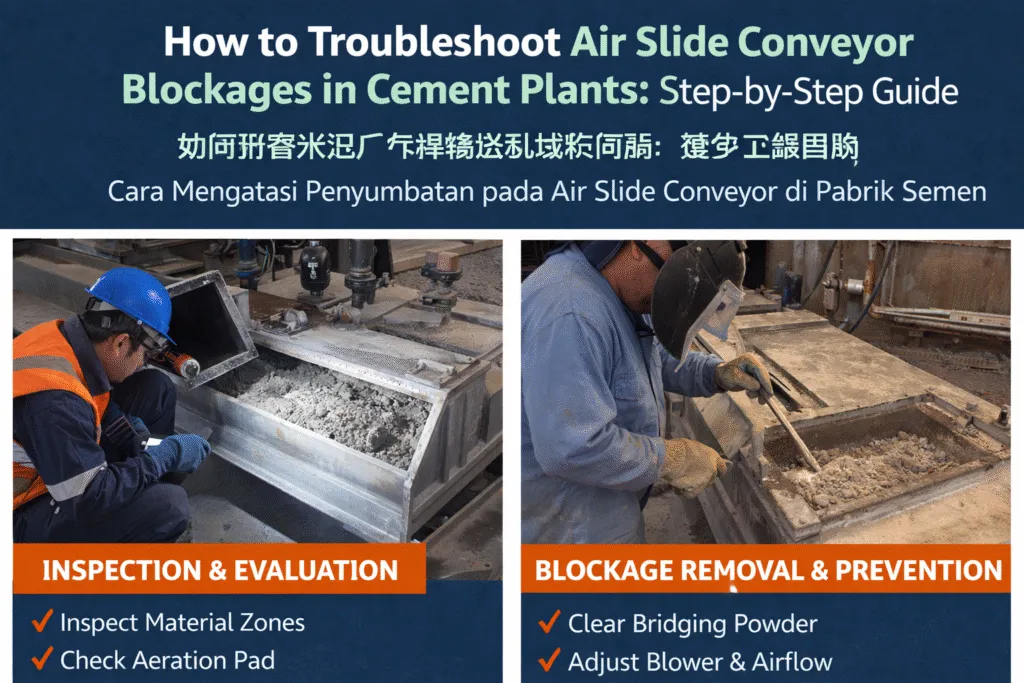
What Is an Air Slide Conveyor Blockage?
Air slide conveyor blockages can develop when powder flow is interrupted by material buildup, unstable fluidization, fabric restriction, overfeeding or downstream discharge problems.
The blockage may be localized at an inlet, section connection, transfer point or outlet, or it may develop gradually over a longer area where fluidization becomes unstable.
A blockage should be distinguished from a general reduction in conveying capacity. If material still moves through the complete route but at a lower rate, first-level troubleshooting may be more appropriate. A blockage normally involves a persistent accumulation or restricted section that must be located and corrected before normal conveying can resume.
For first-level diagnosis of other operating symptoms such as poor flow, leakage, uneven fluidization or reduced capacity, see Common Problems of Air Slide Conveyors.
Where Air Slide Conveyor Blockages Commonly Develop
The location of air slide conveyor blockages can provide an important clue to the underlying cause.
| Blockage Location | Likely Causes |
|---|---|
| Near the inlet | Overfeeding, compacted incoming powder, poor initial fluidization |
| Middle of one section | Local fabric restriction, air leakage, powder buildup |
| Section connection | Misalignment, restricted transition, accumulated material |
| Direction change | Poor transition geometry or material accumulation |
| Near the outlet | Restricted discharge or downstream equipment limitation |
| Repeatedly in the same area | Local fabric, sealing, air-distribution or structural issue |
| Appears along several sections | Material-condition change or broader fluidizing-air problem |
Then add:
Material moisture, cohesion and agglomeration can increase blockage risk, but detailed material suitability should be evaluated separately in the Air Slide Conveyor Material Compatibility Guide.
Before Opening the Conveyor: Isolate the Equipment Safely
Before opening inspection covers or manually clearing accumulated powder, follow the plant’s approved energy-isolation procedure. For general reference, see OSHA Control of Hazardous Energy (Lockout/Tagout).
The blower, upstream feeding equipment, valves and any connected moving equipment should be isolated according to site safety requirements. Residual air pressure and stored material should also be considered before access points are opened.
Do not enter or reach into equipment that can restart unexpectedly.
Step 1: Locate the Blocked Section
Before changing blower settings or opening the conveyor, determine where normal powder movement stops.
Check:
✓ Where material flow begins to slow or stop
✓ Whether the blockage is near the inlet, middle section or outlet
✓ Pressure or airflow readings before and after the affected area, if available
✓ Whether downstream equipment is accepting material normally
✓ Whether the same location has blocked previously
The blockage location should be recorded before the material is disturbed. This makes it easier to identify whether the problem is related to feeding, fabric condition, a section connection, downstream restriction or a broader operating change.
Step 2: Check Fluidizing Air at the Affected Section
Confirm that fluidizing air is reaching the section where material has accumulated.
Check the blower operating status, open valves, air piping, local leakage and any abnormal pressure trend. If other sections operate normally while one section repeatedly blocks, the problem is more likely to be local than a general blower-capacity issue.
Do not increase blower output automatically. A blocked fabric, wet powder or restricted outlet may remain blocked even when additional air is supplied.
For blower sizing and power calculations, see the Air Slide Conveyor Power Calculation Guide.
Step 3: Check Whether the Powder Condition Has Changed
Compare the blocked material with normal operating material.
Look for:
✓ Moist or caked powder
✓ Hardened agglomerates
✓ Unusual coarse contamination
✓ Compaction after prolonged storage
✓ A recent change in material source or process condition
If the powder condition has changed, correcting only the conveyor may not prevent the blockage from returning.
For a detailed assessment of powder suitability and fluidization behavior, see the Air Slide Conveyor Material Compatibility Guide.
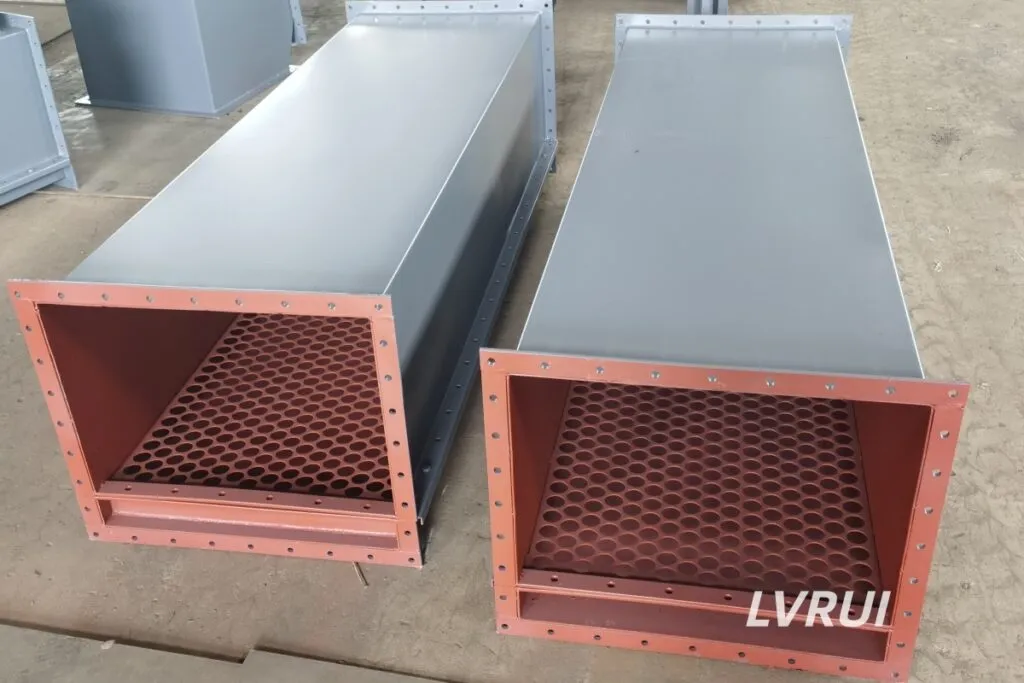
Step 4: Inspect the Air Slide Fabric and Lower Air Chamber
If the blockage is repeatedly concentrated in one section, inspect the air slide fabric after the equipment has been safely isolated.
Check for:
✓ Powder or moisture blocking the fabric surface
✓ Tears, holes or loose edges
✓ Uneven fabric installation
✓ Powder entering the lower air chamber
✓ Restricted air inlet or contamination below the fabric
✓ Damage or deformation around the support plate
Do not replace the fabric simply because a blockage occurred. Replacement is justified when visible damage is present or when cleaning and normal operating checks cannot restore reasonably uniform fluidization.
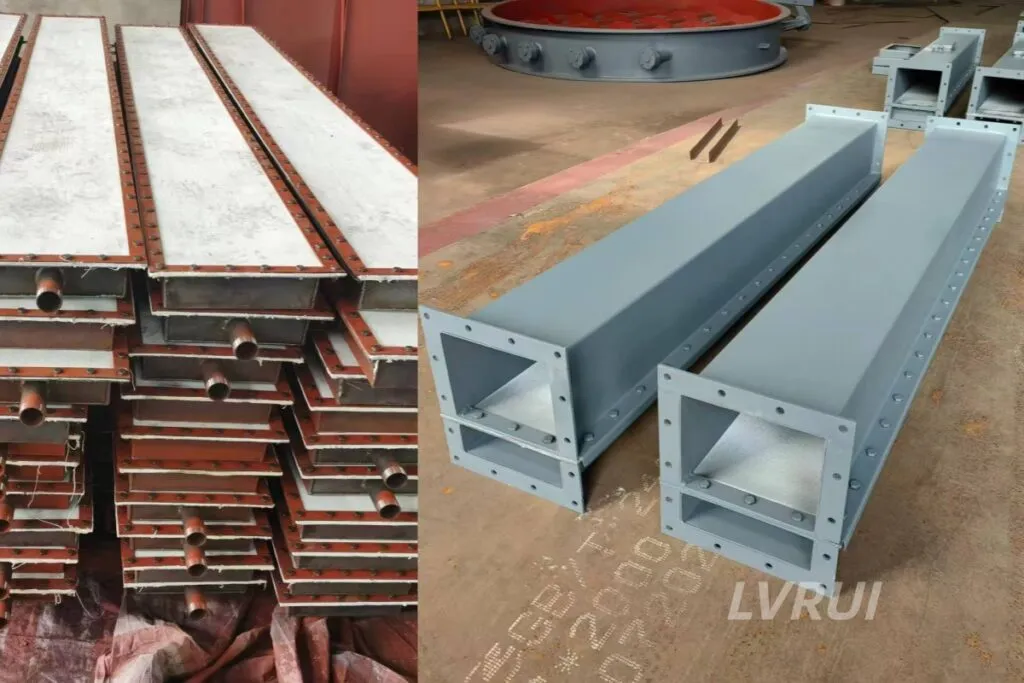
Step 5: Inspect Local Restrictions and Section Connections
Once material and fluidizing air have been checked, inspect the mechanical area where the blockage occurred.
Look for:
✓ Accumulation at flange or section connections
✓ Misalignment between adjoining sections
✓ Restricted transition openings
✓ Deformation or internal obstruction
✓ Outlet restriction
✓ Direction changes where powder repeatedly accumulates
Do not change the overall conveyor slope as a first-line blockage correction. If the conveying profile itself is suspected, compare the installed layout with the approved equipment drawing before making structural changes.
Step 6: Clear the Accumulated Material
After the affected section has been safely isolated and the likely cause has been recorded, remove accumulated material according to the plant’s approved maintenance procedure.
Avoid damaging the air slide fabric, seals or support components during cleaning.
After clearing, inspect the exposed area for evidence that explains the blockage, such as wet powder, hardened lumps, fabric contamination, damaged sealing or a restricted transition.
Do not treat removal of the accumulated powder as the final repair. If the underlying cause is not corrected, the same blockage may return shortly after restart.
Step 7: Perform a Controlled Restart
Before returning to full production:
- Confirm inspection covers and connections are closed correctly.
- Restore the required fluidizing-air supply.
- Confirm the selected downstream discharge route is available.
- Begin material feeding at a controlled rate.
- Observe the previously blocked section before increasing throughput.
- Compare pressure, powder movement and discharge with normal operating conditions.
If the same area begins accumulating material again, stop the test and reassess the root cause rather than repeatedly increasing airflow.
How to Determine Whether the Blockage Is Really Fixed
A blockage can be considered corrected only when normal conveying remains stable after the accumulated material has been removed.
Ask:
| Question | What It Indicates |
|---|---|
| Does the same area block again? | Local unresolved cause |
| Has blower pressure returned toward normal? | Air resistance may have been restored |
| Is powder flow stable through the outlet? | Downstream restriction likely removed |
| Is material condition unchanged? | Conveyor-related cause becomes more likely |
| Does blockage occur only after high feed rate? | Feeding or capacity limitation |
| Does blockage appear after moisture changes? | Material-condition issue |
Preventing the Same Blockage from Returning
After the blockage has been cleared, record:
✓ Blockage location
✓ Material condition
✓ Blower or pressure condition
✓ Fabric condition
✓ Feed rate
✓ Outlet condition
✓ Corrective action taken
Repeated blockages at the same location usually justify a deeper inspection of that specific section rather than repeated temporary adjustments.
Recurring air slide conveyor blockages at the same location usually indicate that the underlying material, airflow, fabric or mechanical condition has not been fully corrected.
For routine preventive inspection schedules, see the Air Slide Conveyor Maintenance Checklist.
Air Slide Conveyor Blockages FAQs
What should I check first when an air slide conveyor becomes blocked?
First determine where material flow stops and whether the blockage is localized or affects several sections. Then check material condition, downstream discharge and fluidizing air before opening the conveyor.
Should I increase blower pressure to clear a blockage?
Not automatically. Additional air may not clear wet powder, hardened material, blocked fabric or a restricted outlet. Identify the cause before changing blower settings.
Why does the same air slide section keep blocking?
Repeated blockage in one location can indicate a local fabric problem, air leakage, section misalignment, restricted transition, outlet condition or recurring material accumulation.
When should the air slide fabric be replaced after a blockage?
Replace the fabric when it is visibly damaged or when cleaning and normal operating checks cannot restore sufficiently uniform fluidization. A single blockage alone does not prove that replacement is required.
How should the conveyor be restarted after clearing a blockage?
Restart under controlled feeding after confirming the air supply, downstream route, covers and connections are ready. Observe the previously blocked section before returning to normal throughput.
Need Help Identifying a Recurring Air Slide Blockage?
Send LVRUI the blockage location, conveyed material, photos of the affected section, current conveying capacity, available blower or pressure information, and any recent changes in material or operating conditions.
Based on this information, LVRUI can help review whether the recurring blockage is more likely related to material condition, fluidizing air, air slide fabric, section connections or downstream restriction.
Email: info@lvrui-conveyor.com
WhatsApp: +86-18261998937
WeChat: +86-18261998937