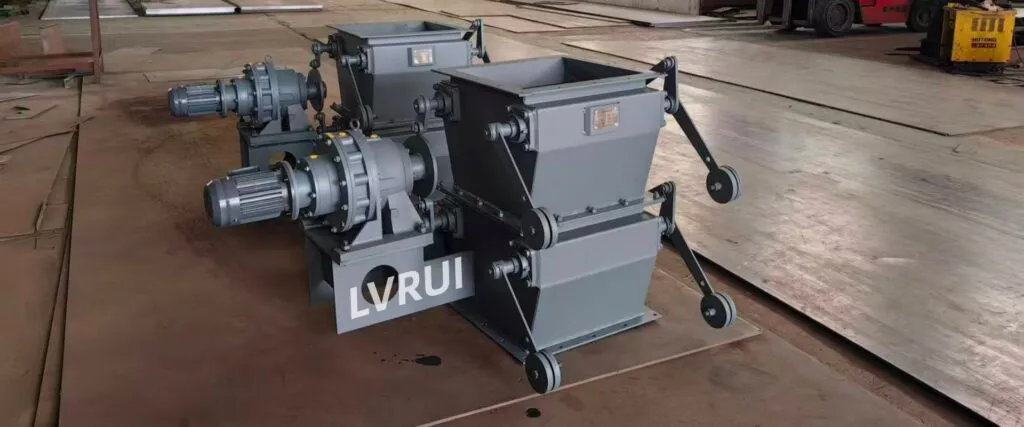
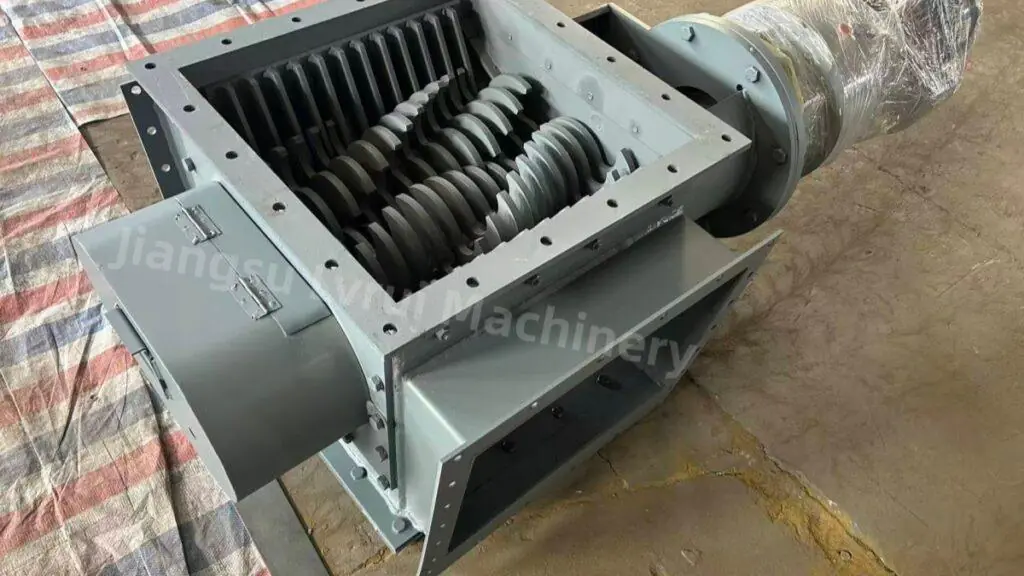
Where Flow Control Gates Are Used and What Affects Their Discharge Performance
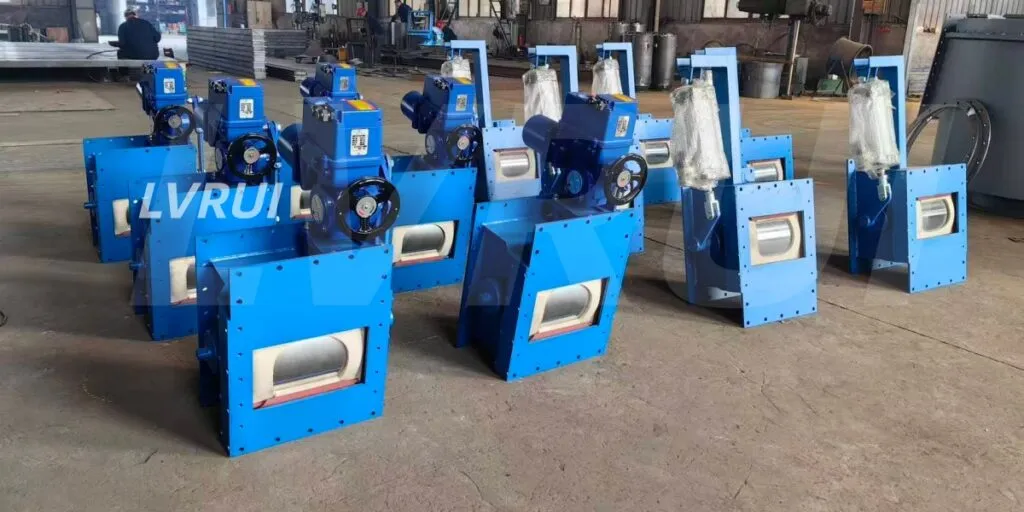
Flow control gate applications are common in cement, fly ash and other bulk powder systems where gravity discharge must be adjusted before downstream conveying or feeding equipment. Actual performance depends on material flowability, gate opening, sealing, wear, actuation and installation conditions.
What Does a Flow Control Gate Do?
A flow control gate regulates the amount of dry bulk material discharged through an opening by changing the effective flow area.
It is commonly used where powder must leave a silo, hopper or transfer point at a controlled rate before entering downstream conveying or feeding equipment.
Typical materials include:
- Cement
- Fly ash
- Raw meal
- Lime powder
- Mineral powders
- Other suitable dry bulk materials
A flow control gate can provide adjustable or coarse flow regulation, but it should not be treated as a precision metering device by itself.
Its main role is:
Control the material opening and regulate discharge into the downstream process.
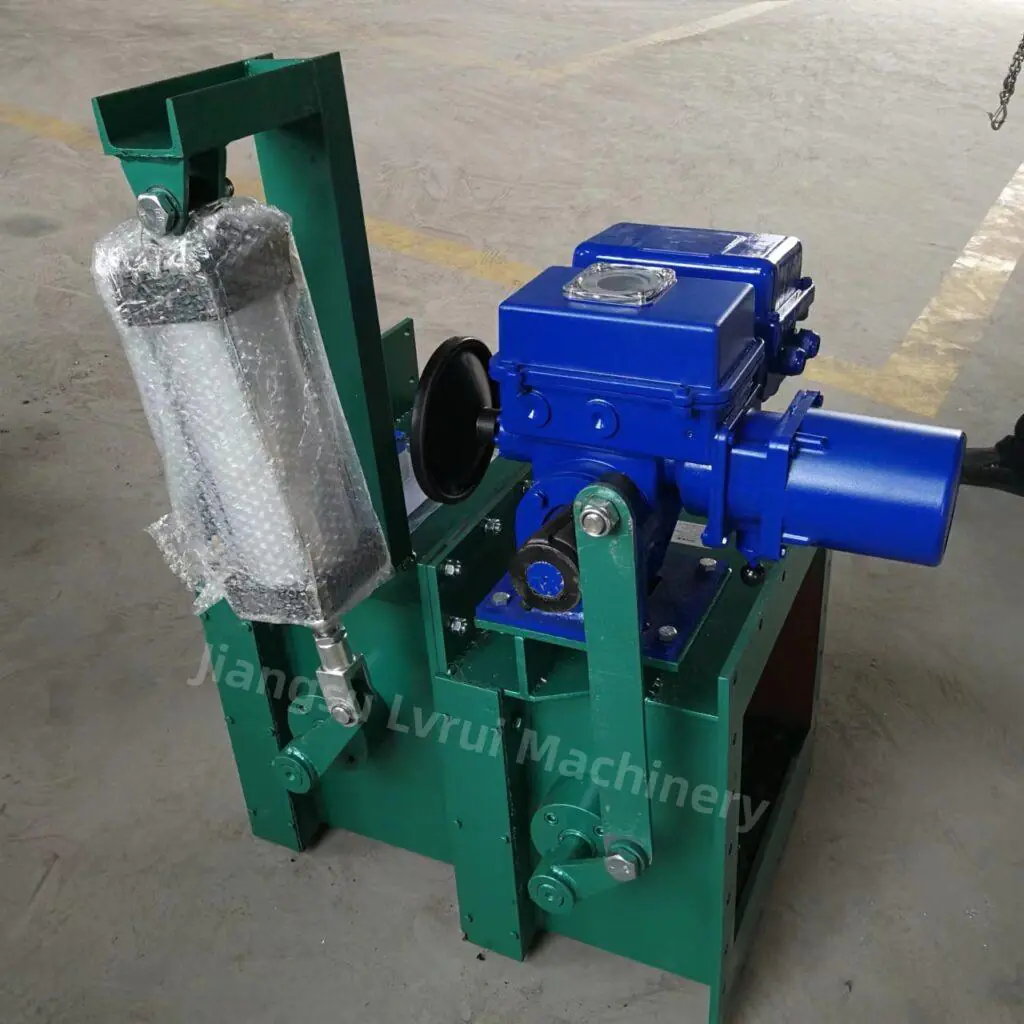
For product configurations, technical specifications and available drive options, see our Flow Control Gate Valve product page.
Typical Flow Control Gate Applications
Under Cement Silos
Flow control gates are commonly installed below silo outlets where the discharge rate must be adjusted before material enters downstream equipment.
Typical objectives include:
- Limiting sudden material surges
- Matching discharge to downstream capacity
- Adjusting flow during startup or process changes
Hopper Discharge
A flow control gate can be installed below a hopper where gravity-fed powder requires an adjustable outlet rather than simple full-open/full-close isolation.
Before Air Slide Conveyors
The gate may regulate how much powder enters an air slide conveyor so that the upstream discharge is matched to the downstream conveying requirement.
For detailed installation positions and discharge-control considerations, see our flow control gates in air slide conveyors guide.
Before Screw Conveyors or Feeders
Where a downstream conveyor or feeder has a limited receiving capacity, a flow control gate may help restrict excessive gravity discharge into the equipment.
Powder Transfer and Process Interfaces
Flow control gates may also be used at transfer points where dry material moves between storage, conveying or processing equipment and adjustable discharge is required.
Key Factors Affecting Flow Control Gate Performance
The same gate opening can produce different discharge behavior with different materials.
For this reason, performance should be evaluated from both the valve and material conditions.
Material Flow Characteristics
Important material properties include:
- Bulk density
- Particle size
- Flowability
- Moisture
- Stickiness
- Abrasiveness
Dry, free-flowing powder usually responds more predictably to changes in gate opening than sticky or heavily compacted material.
A gate cannot correct every upstream flow problem. If material bridges or cakes inside the silo, the root cause should be evaluated separately.
Bulk-material characteristics such as flowability, density and other handling properties are also addressed in industry classifications such as ANSI/CEMA 550.
Material Properties and Gate Response
Fine Powders
Fine powders such as cement and fly ash require attention to sealing, dust leakage and wear at the gate interface.
Abrasive Powders
Abrasive materials can accelerate wear on the gate plate, guide surfaces and housing.
Depending on the duty, wear-resistant materials or replaceable wear components may be required.
Damp or Sticky Materials
Moist or adhesive material may not respond consistently to gate opening changes and may build up around the flow path.
A larger actuator or different gate position does not automatically solve material bridging or caking.
Sealing and Leakage Control
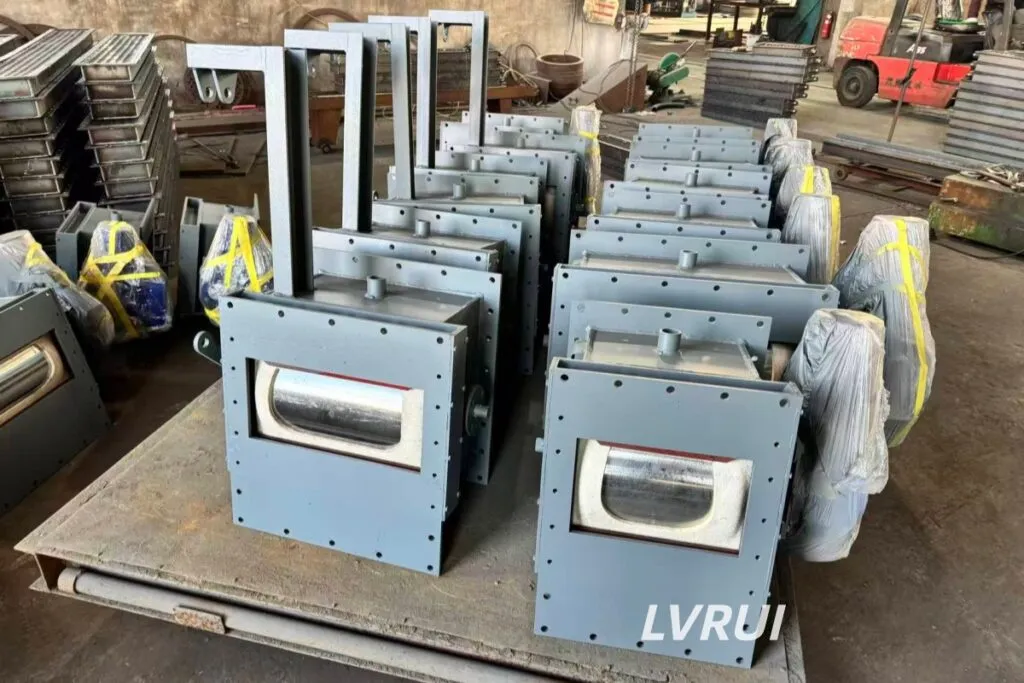
Sealing design mainly affects material leakage and dust escape around the moving gate plate.
Important areas include:
- Gate plate edges
- Guide channels
- Shaft or actuator interfaces
- Flange connections
Wear, dust accumulation or misalignment can gradually increase leakage.
Good sealing supports cleaner operation, but it does not by itself determine the actual discharge rate.
How Actuation Affects Gate Response
The actuation method affects how quickly and consistently the gate position can be changed.
Manual operation is suitable where adjustment is infrequent.
Pneumatic actuation provides remote or automated movement where compressed air is available.
Motorized actuation is useful where controlled intermediate positions or electrical remote control are required.
The actuator should be selected according to the required control method rather than assuming one drive type is universally better.
For detailed drive selection, see our Flow Control Gate Selection Guide.
Gate Opening Does Not Equal a Fixed Flow Rate
A flow control gate changes the available discharge area, but the actual material flow is also influenced by:
- Material bulk density
- Flowability
- Head of material above the outlet
- Outlet geometry
- Gate position
- Downstream resistance
For this reason, a 50% gate opening does not automatically mean 50% of maximum material flow.
Where a specific discharge rate is required, gate position should be verified against actual operating conditions or feedback from the process.
Installation Conditions That Affect Performance
Even a correctly selected flow control gate can perform poorly if the installation creates uneven material loading or mechanical interference.
Check:
- Inlet and outlet alignment
- Flange dimensions
- Free gate movement
- Structural support
- Actuator clearance
- Maintenance access
- Downstream receiving capacity
Where possible, material should enter the gate without severe side loading or abrupt transitions.
The gate should also be accessible for inspection of the plate, guides, seals and actuator.
Typical Industries
Flow control gates are mainly used where dry bulk material must discharge from storage or process equipment at an adjustable rate.
Typical sectors include:
- Cement and building materials
- Fly ash and power-plant material handling
- Mineral and powder processing
- Selected chemical and dry bulk applications
Actual suitability should be determined from the material characteristics and operating conditions rather than the industry name alone.
What Should Be Monitored During Operation?
During routine operation, check for:
- Changes in discharge behavior
- Material leakage
- Gate plate wear
- Abnormal actuator movement
- Material buildup around guides
- Difficulty reaching the commanded position
Inspection frequency should be based on operating hours, material abrasiveness, dust exposure and actual wear condition rather than a universal fixed interval.
What a Flow Control Gate Cannot Do
A flow control gate is designed to regulate discharge opening, but it should not automatically be used to solve every silo or powder-flow problem.
It does not replace:
A shut-off gate
when positive isolation is required. For a detailed comparison of adjustable regulation and full-open/full-close isolation, see our Flow Control Gate vs Slide Gate guide.
A lump breaker
when hardened agglomerates must be reduced.
An aeration system
when powder mobility inside the silo must be improved.
A feeder or weighing system
when precise metering is required.
Defining these boundaries helps prevent incorrect valve selection and unrealistic performance expectations.
Where isolation, regulation and material routing must work together, these devices can be coordinated as part of a complete flow control system.
Conclusion
Flow control gate applications are most suitable where dry bulk material must be discharged at an adjustable rate between storage and downstream handling equipment.
Their performance depends on more than actuator type or gate opening. Material flowability, moisture, abrasiveness, sealing condition, installation alignment and downstream capacity all influence actual discharge behavior.
The most suitable application is one where the process requires:
Adjustable Discharge Opening → Controlled Bulk Material Flow
without expecting the gate to perform precision metering, lump breaking or silo aeration.
FAQs About Flow Control Gate Applications
Where are flow control gates commonly installed?
They are commonly installed below silos and hoppers or upstream of conveyors, feeders and other equipment where adjustable gravity discharge is required.
What materials are suitable for flow control gates?
Typical materials include cement, fly ash, raw meal, lime and other suitable dry powders. Moisture, abrasiveness and flowability should be checked before final selection.
Can a flow control gate provide precise metering?
Not by itself. A flow control gate adjusts the discharge opening, but actual flow also depends on material properties, head pressure and process conditions.
Can a flow control gate be used as an isolation valve?
Some designs may reach a closed position, but a flow control gate should not automatically be treated as the plant’s dedicated maintenance or safety isolation valve.
What affects the actual discharge rate?
Gate opening, material bulk density, flowability, outlet geometry, material head and downstream resistance can all affect the actual flow.
Which actuator should be used?
Manual, pneumatic and motorized drives are available. The correct choice depends on operating frequency, available utilities, remote-control requirements and required intermediate positioning.
Need Help Reviewing a Flow Control Gate Application?
Send us the material, bulk density, moisture condition, required discharge rate, silo or hopper outlet size, downstream equipment, preferred control method, and available drawings or site photos.
LVRUI can review the application and recommend a suitable flow control gate configuration for equipment supply.
WhatsApp: +86 18261998937
WeChat: +86 18261998937
Email: info@lvrui-conveyor.com