(EN)Understanding the Role of Belt Conveyor Systems in Cement Plant Material Handling
(ID)Memahami Peran Sistem Belt Conveyor dalam Penanganan Material di Pabrik Semen
What Is a Belt Conveyor for Cement Plants?
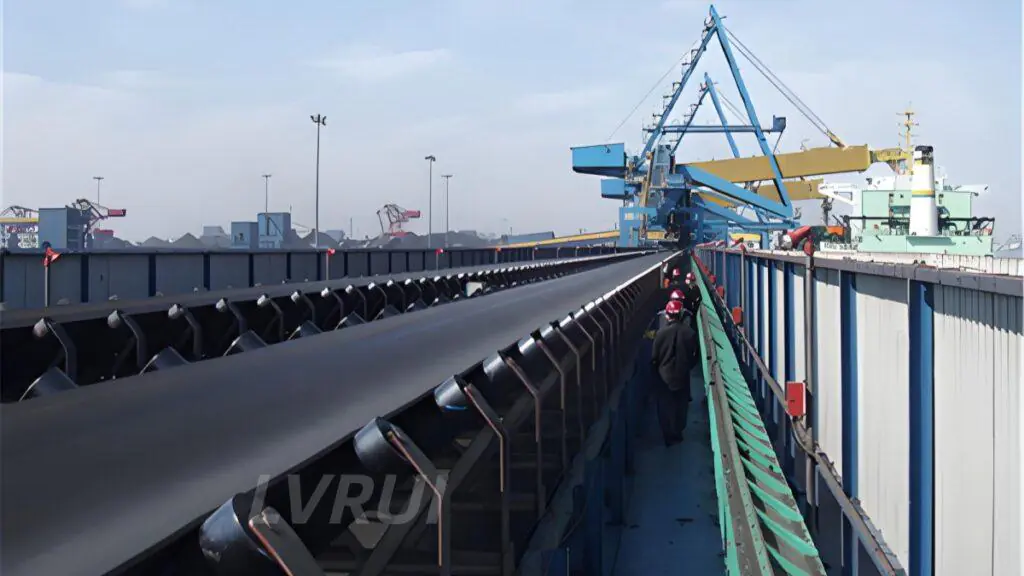
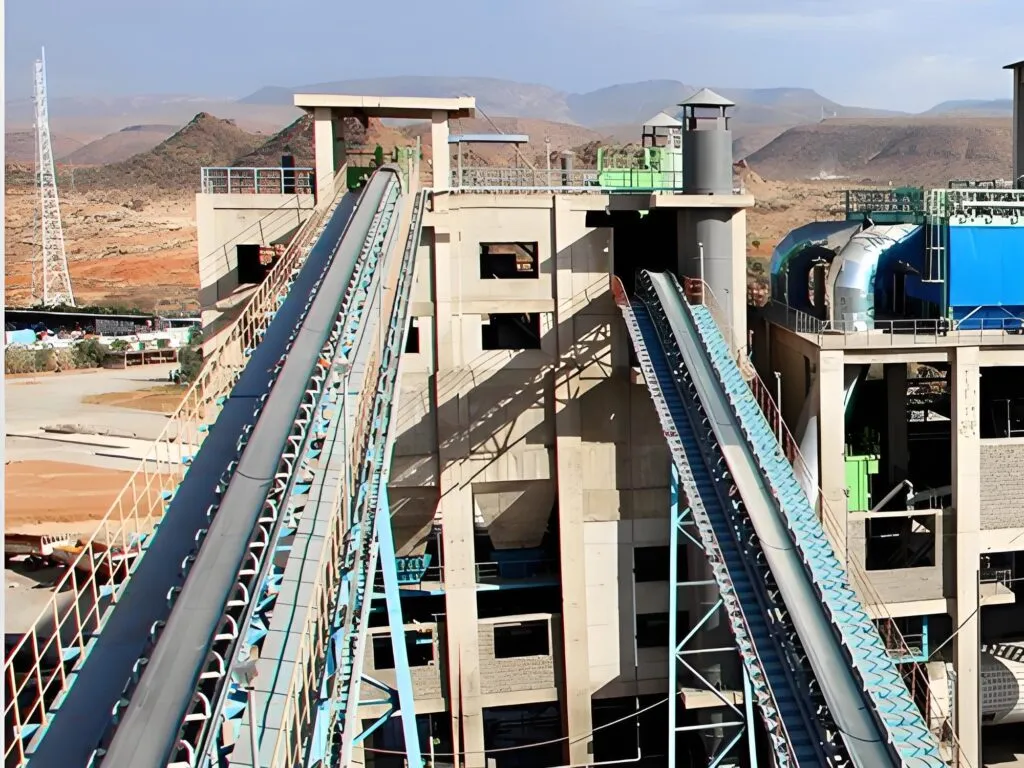
A belt conveyor for cement plants is a continuous material handling system designed to transport bulk materials such as clinker, limestone, coal, gypsum, and fly ash across different production stages. It uses a moving belt supported by rollers to ensure stable, energy-efficient, and long-distance conveying.
A belt conveyor for cement plants is essential for ensuring continuous, stable, and energy-efficient material transport throughout the production process. In cement production lines, belt conveyor systems serve as the backbone of automated material transfer, enabling smooth flow between crushing, grinding, storage, and packaging processes.
Why Belt Conveyors Are Essential in Cement Plants
A properly designed belt conveyor for cement plants directly determines material flow stability and overall production efficiency.
Without properly designed belt conveyor systems, cement plants may face:
- Material spillage and dust leakage
- Transport bottlenecks between process units
- Increased manual handling costs
- Reduced production efficiency
Belt conveyors provide continuous, high-capacity material transport that supports stable plant operation and improves overall automation levels.
Working Principle of Belt Conveyors in Cement Plants
Belt conveyors operate through a drive pulley that rotates the conveyor belt, moving materials along the conveying path. Bulk materials are loaded through feeding chutes and transported across troughing idlers until they reach discharge points.
Key components include:
- Conveyor belt
- Drive and tail pulleys
- Idlers and rollers
- Feeding and discharge chutes
- Dust protection covers
These elements work together to ensure stable material flow and minimize dust emission.
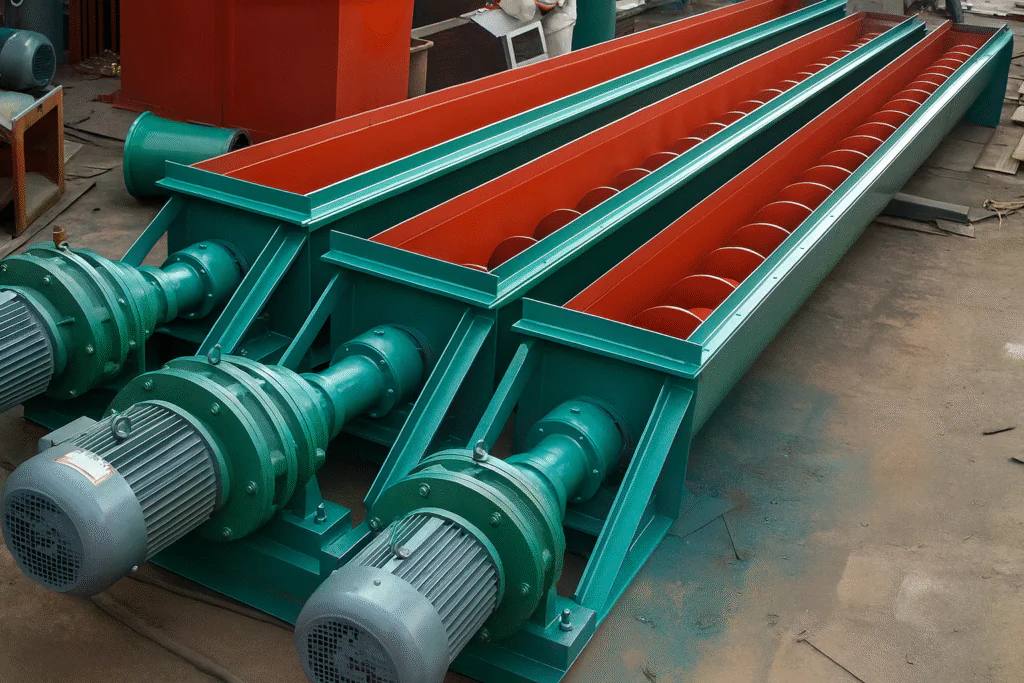
👉 Air Slide Conveyor for cement powder transport
👉 belt conveyor working principle
Key Functions of Belt Conveyor Systems in Cement Production
Continuous Material Transport
Belt conveyors allow uninterrupted movement of raw materials and finished products across long distances.
High Capacity Handling
They support large throughput volumes required in modern cement plants.
Energy-Efficient Operation
Compared with other conveying equipment, belt conveyors provide lower energy consumption per ton of material transported.
Integration with Automated Systems
They seamlessly connect with crushers, mills, silos, and packing lines.
Typical Applications in Cement Plants
Belt conveyors are widely used for:
- Limestone and raw material transport
- Clinker conveying from kiln to storage
- Coal handling systems
- Fly ash transfer systems
- Cement packing line material movement
👉 bulk material handling solutions
Suitable and Not Suitable Applications
Suitable For
- Long-distance bulk material transport
- High-capacity cement production lines
- Continuous industrial conveying systems
Not Suitable For
- Precise dosing applications
- Small batch material transfer
- Extremely sticky materials without protection
System-Level Engineering Insight
In modern cement plants, belt conveyors play a critical role in ensuring continuous material flow between processing units. Their ability to handle high volumes over long distances makes them essential for maintaining production stability, reducing operational costs, and enabling automated plant operation.
FAQs About Belt Conveyors in Cement Plants
What materials can a belt conveyor handle in cement plants?
Belt conveyors are designed to transport bulk materials such as clinker, limestone, coal, gypsum, fly ash, and cement powder across different stages of cement production.
Why are belt conveyors preferred over other conveying equipment?
Belt conveyors offer continuous transport, high capacity, energy efficiency, and stable operation, making them ideal for large-scale cement production systems.
Can belt conveyor systems be customized for cement plants?
Yes. Industrial belt conveyor systems can be customized based on plant layout, material characteristics, conveying distance, and production capacity requirements.
What is the typical conveying distance of a cement plant belt conveyor?
Belt conveyors can transport materials over distances ranging from tens of meters to several kilometers depending on system design.
Indonesian Short Version
Belt conveyor di pabrik semen adalah sistem transportasi material curah yang digunakan untuk memindahkan klinker, batu kapur, batubara, dan abu terbang secara efisien dalam jarak jauh. Sistem ini sangat penting untuk memastikan aliran material yang stabil dan meningkatkan efisiensi produksi otomatis di pabrik semen modern.
Need a reliable belt conveyor for cement plant material handling systems?
Contact LVRUI today for a customized engineering solution.
✔ Get expert quotation within 12 hours
✔ Factory direct supply with strict quality control
✔ Professional engineering support for cement projects
✔ Stable delivery for overseas industrial plants
📧 Email: info@lvrui-conveyor.com
🌐 Website: https://lvrui-conveyor.com/