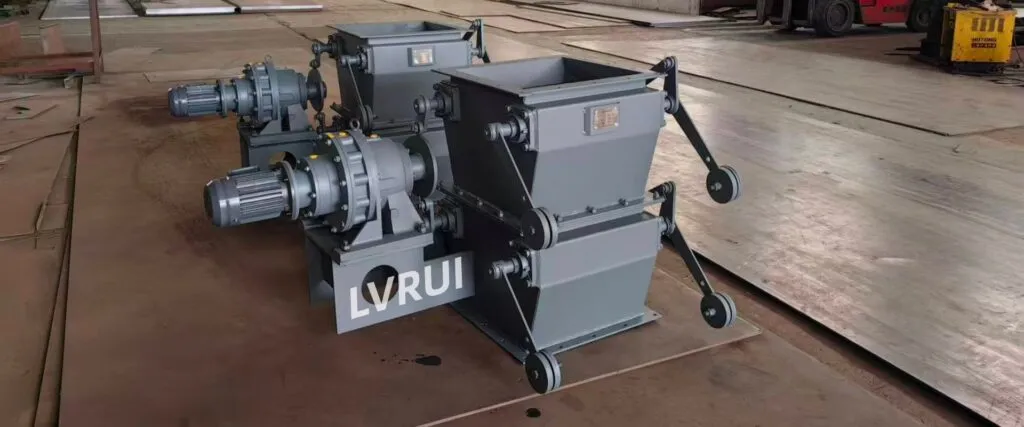
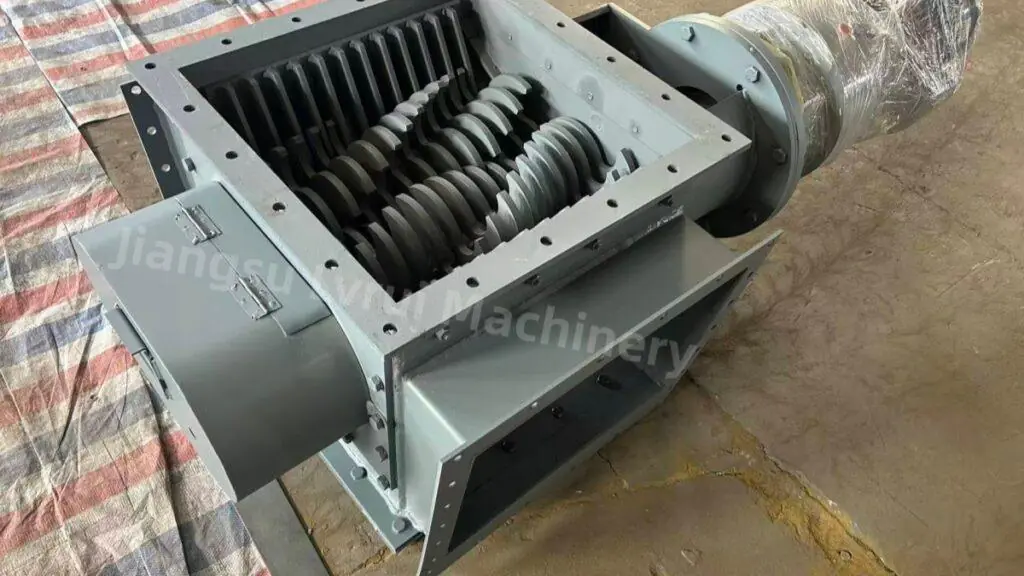
A field-based look at rod gate and electric sector gate operation in clinker silo discharge systems.
Introduction
Clinker silo discharge systems must handle coarse, abrasive material while accommodating downstream loading or conveying requirements. Within these systems, material isolation and discharge control are two distinct functions.
A rod gate in clinker silos can provide upstream material isolation through parallel withdrawable steel rods. A separate sector gate installed downstream can then manage the release of clinker into connected handling equipment.
LVRUI has supplied an installation in Shaoyang, China, where a rod gate is combined with an electrically driven sector gate beneath a clinker silo. The equipment has been installed and put into operation.
This article uses that installation to explain the functions of both gates, their coordination during silo discharge and the engineering considerations involved in integrating them into a clinker handling system.
What Is the Role of a Rod Gate in Clinker Silos?
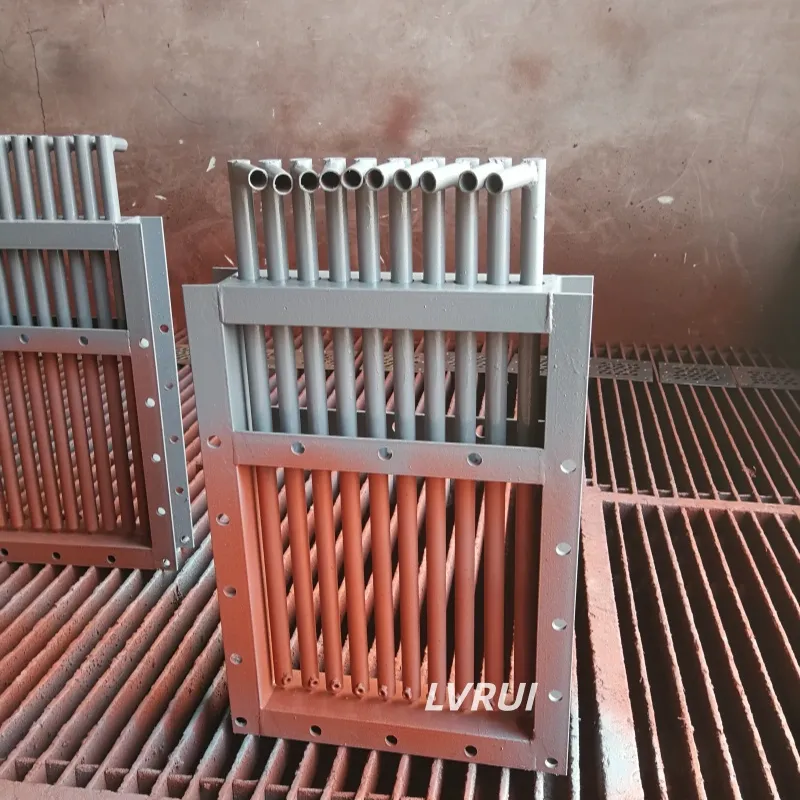
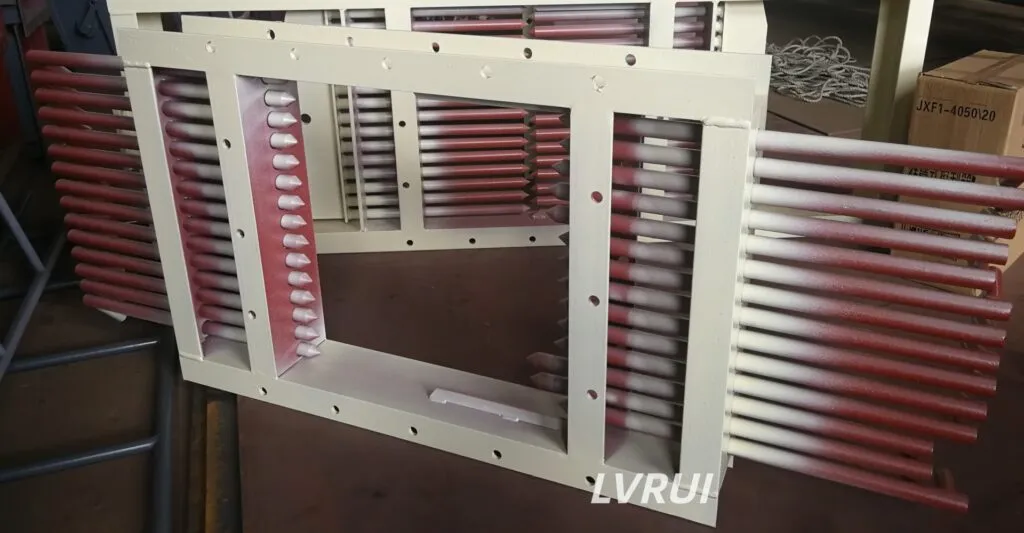
The primary role of a rod gate in clinker silos is to provide a mechanical barrier between the stored clinker and the downstream discharge equipment.
Its parallel steel rods extend across the discharge opening. When withdrawn, they create a passage through which the material can move toward the equipment below.
Unlike a flow-control feeder, a rod gate is not intended to deliver precise mass-flow regulation. It is primarily used for material isolation and opening the discharge passage.
When combined with a downstream discharge gate, the two devices can perform separate functions within the same system.
This functional separation is particularly relevant where clinker must be isolated from equipment below the silo during certain operating or maintenance conditions.
For available structures and drive configurations, see LVRUI’s Rod Gate product page.
Actual Rod Gate and Electric Sector Gate Installation in Shaoyang, China
An operating installation in Shaoyang, China, illustrates the role of a rod gate in clinker silos when combined with a downstream electric sector gate.
The installation consists of an upper rod gate and a lower electrically driven sector gate.
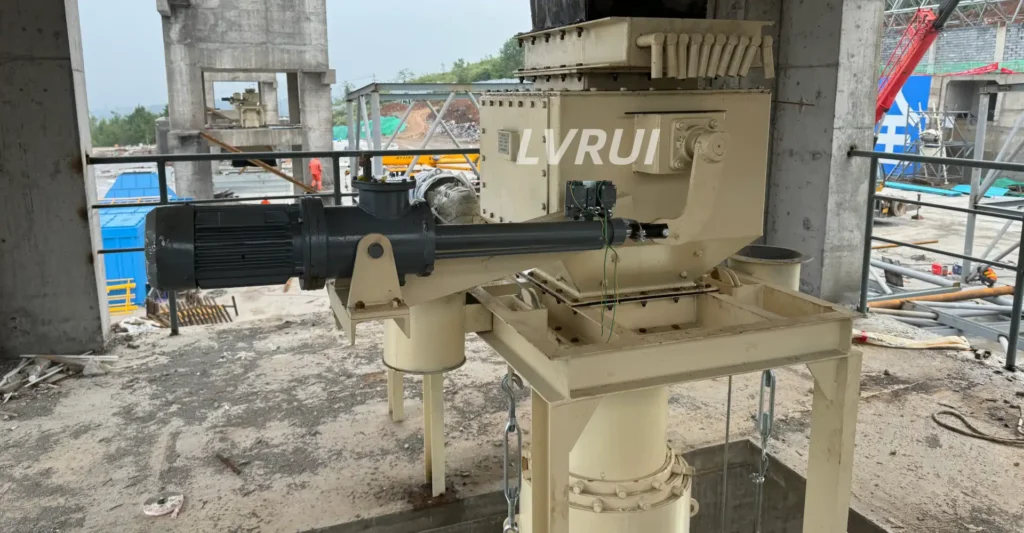
The upper rod gate is connected to the clinker silo discharge passage. Its parallel withdrawable rods provide the upstream material-isolation function.
Below it, the sector gate is equipped with an electric drive and an external operating mechanism. The sector gate serves as the downstream gravity-discharge control device.
The photograph also shows the surrounding structural platform, supporting frame and discharge connection beneath the combined gate assembly.
This project illustrates how material isolation and discharge control can be assigned to separate devices installed at the same silo outlet.
The equipment has been installed and put into operation. This field installation demonstrates how upstream material isolation and electrically driven discharge control can be integrated beneath a clinker silo. The specific operating sequence and control settings depend on the approved project design.
How the Rod Gate and Electric Sector Gate Work Together
The two gates perform different but complementary functions.
Upstream Material Isolation
The upper rod gate provides the material-isolation function at the silo outlet.
Its parallel steel rods can be inserted across the discharge opening or withdrawn according to the specified operating arrangement.
Rod dimensions, structural supports and operating mechanisms must be appropriate for the material load and actual operating conditions.
The rod gate is not a precision feeder, nor should it be treated as a guaranteed material-tight barrier under every operating condition.
Downstream Gravity-Discharge Control
The lower electric sector gate uses a curved blade connected to a rotating shaft and an electric drive mechanism.
By changing the position of the curved blade, the gate opens or closes the material passage.
Intermediate positioning can also provide coarse discharge regulation when the electric actuator and control arrangement are designed to support it.
The Sector Gate is not a precision weighing device. Applications requiring accurate mass-flow control need suitable feeding or weighing equipment.
Separate Functions Within One System
Combining two gates allows material isolation and gravity-discharge control to be handled by separate devices. Their operating requirements, connections and control functions must be coordinated according to the approved clinker silo discharge system design.
Downstream Clinker Loading Equipment
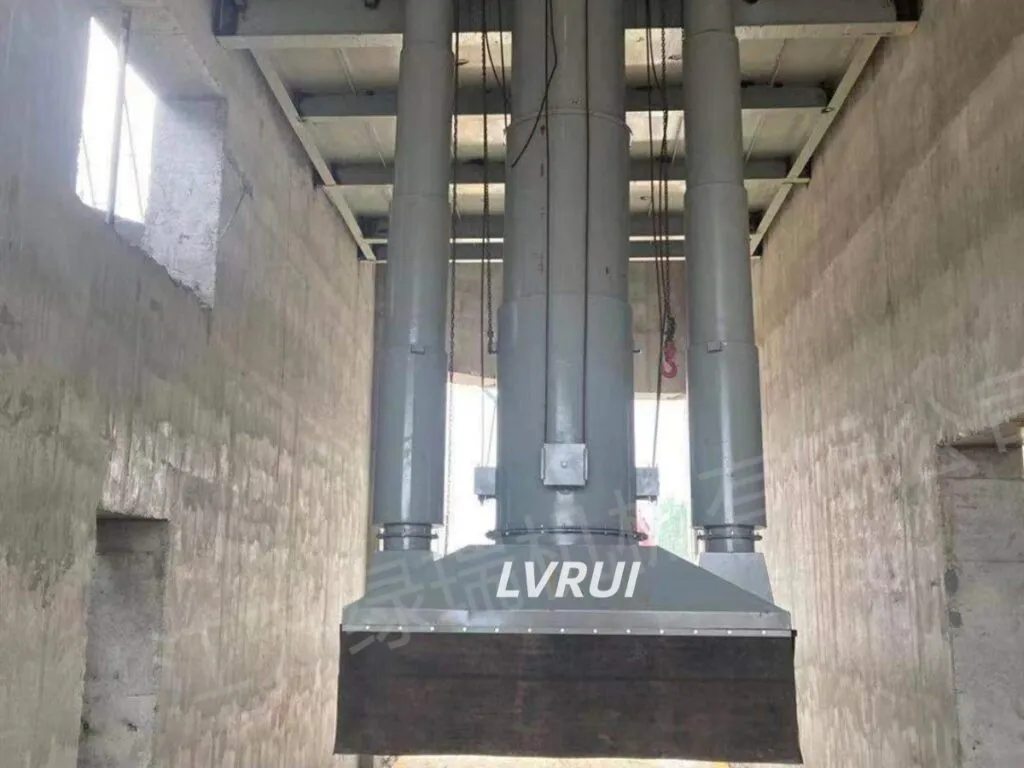
In clinker bulk loading systems, a telescopic loading chute can be installed below the sector gate to receive discharged clinker and direct it toward the receiving vehicle.
The accompanying photograph shows a telescopic loading chute installed beneath a sector gate at a separate project site. Although this is not the Shaoyang installation, it illustrates a similar downstream equipment arrangement.
The specific combination of the rod gate, sector gate and loading chute depends on the project layout and operating requirements. For equipment specifications and available loading configurations, see LVRUI’s clinker bulk loader.
Operating Coordination in a Clinker Silo Discharge System
In systems using a rod gate in clinker silos, coordination with the electric sector gate and downstream equipment is an important operating consideration.
The following operating scenarios describe the functions that must be considered during engineering design. They are not a prescribed operating sequence for the Shaoyang installation.
Normal Discharge Operation
During normal discharge, the rod gate must be in the position specified for the required material passage.
The electric sector gate can then perform its intended discharge-control function according to the selected actuator and the plant’s operating requirements.
The downstream equipment must be able to receive and handle the discharged clinker.
Actual discharge behavior depends on clinker properties, outlet geometry, gate opening, material load and the capacity of the connected equipment.
Planned Shutdown
During a planned shutdown, the operation of the rod gate and electric sector gate should follow the approved system operating procedure.
The procedure must account for material remaining above, between and below the gates.
The required gate positions, confirmation methods and any control interlocks depend on the installed equipment and approved project design.
Abnormal Discharge Conditions
If abnormal discharge, incomplete gate movement or downstream equipment faults occur, the problem should be investigated according to the actual system configuration.
The rod gate, sector gate and receiving equipment should be evaluated separately to determine which component or operating condition is responsible.
A downstream blockage or insufficient equipment capacity cannot automatically be attributed to the rod gate.
Operators should follow the approved fault-response procedure rather than forcing either gate to operate against an unidentified obstruction.
What a Rod Gate Can and Cannot Solve in Clinker Silos
A rod gate is an isolation component within the clinker silo discharge system. Its main function should not be confused with the performance of the silo as a whole.
It can provide a mechanical barrier across the discharge outlet and, when opened, allow material to pass toward the downstream equipment.
However, installing a rod gate does not by itself prevent arching, eliminate stagnant zones or guarantee mass flow inside the clinker silo.
Clinker discharge behavior is also influenced by material properties, storage conditions, hopper geometry, outlet dimensions and downstream handling requirements.
Similarly, a rod gate cannot replace an appropriately selected discharge-control gate or precision feeding system.
Clearly defining these functional boundaries helps engineers evaluate the entire discharge arrangement without assigning unsupported performance claims to a single device.
System Integration and Maintenance Considerations
Combining a rod gate and electric sector gate requires the equipment to be considered as part of one clinker discharge system.
Equipment Connections and Structural Support
The connection between the upper and lower gates must be compatible with the silo outlet and the downstream discharge passage.
The structural arrangement must accommodate the equipment weight, expected material loads and operating forces.
Adequate access should also be provided for rod withdrawal, electric actuator inspection and maintenance of the sector gate’s rotating components.
Electrical Control and Position Confirmation
An electric sector gate requires a suitable power supply and control arrangement.
Depending on the project design, the control system may include open and closed position feedback, local operation or integration with the plant’s control system.
Any required interlocks with the rod gate or downstream equipment must be confirmed during system engineering.
The presence of an electric drive alone does not establish that intermediate positioning, automatic sequencing or PLC interlocks are included in a particular installation.
Inspection and Safe Isolation
Inspection should consider both devices and the material that may remain within the connecting discharge passage.
For the rod gate, relevant checks include rod condition, movement, alignment and the operating mechanism. For the sector gate, inspection should cover the curved blade, shaft, actuator and other applicable components. For detailed inspection, lubrication and troubleshooting procedures, refer to our rod gate maintenance guide.
Before maintenance, personnel must follow approved procedures for hazardous-energy isolation and control of stored material.
Closing the rod gate alone must not be treated as sufficient protection against uncontrolled release of clinker or unexpected equipment movement.
For additional guidance on equipment servicing, see OSHA’s control of hazardous energy (lockout/tagout).
FAQs About Rod Gate in Clinker Silos
What is the main role of a rod gate in clinker silos?
The main role of a rod gate in clinker silos is upstream material isolation. Its parallel steel rods form a mechanical barrier across the silo outlet and can be withdrawn to open the discharge passage.
Why is a sector gate installed below a rod gate?
The two gates perform different functions. The rod gate provides upstream isolation, while the downstream sector gate can be used to open, close or regulate the gravity discharge of clinker according to its configuration.
Can an electric sector gate regulate clinker discharge?
Yes. When equipped with a suitable actuator and position-control arrangement, an electric sector gate can provide coarse discharge regulation through intermediate opening positions. It is not a substitute for precision weighing or dosing equipment.
Does a rod gate prevent arching or bridging in clinker silos?
A rod gate is primarily an isolation device. It does not independently prevent arching or bridging. These problems require evaluation of material properties, hopper geometry, outlet conditions and the complete discharge system.
Can rod gates and sector gates be integrated with automated control systems?
They can be configured for integration with suitable control systems. Position feedback, operating sequences and interlocks depend on the selected drive mechanisms and the approved project design. Such features should not be assumed to be present in every installation.
What should engineers check when integrating both gates beneath a clinker silo?
Engineers should review clinker properties, expected material loads, outlet and connection dimensions, gate operating requirements, available maintenance space, downstream equipment and the required control arrangement.
The operating procedure must also address stored-material hazards and safe equipment isolation.
Conclusion
A rod gate in clinker silos performs an important material-isolation function within the overall discharge system.
The operating installation in Shaoyang, China, demonstrates a practical combination of an upper rod gate and a lower electrically driven sector gate.
Each device has a distinct purpose: the rod gate provides upstream isolation, while the sector gate handles downstream gravity-discharge control.
Effective system integration requires appropriate equipment connections, operating coordination, structural support and maintenance provisions.
By defining the functions and limitations of each component, engineers can develop clinker silo discharge arrangements suited to the actual material and operating requirements.
Need Help Planning a Rod Gate and Sector Gate Arrangement?
If you are planning a clinker silo discharge system, please provide:
- Clinker particle size, maximum lump size, bulk density and temperature
- Silo outlet dimensions and expected material load
- Required isolation and discharge-control functions
- Preferred drive methods and control requirements
- Downstream handling equipment and required discharge capacity
- Existing system drawings or site photographs
LVRUI can review your application requirements and provide technical suggestions for rod gate and sector gate configurations, connection dimensions and equipment compatibility.
Email: info@lvrui-conveyor.com
WhatsApp / WeChat: +86 18261998937