A Practical Guide to Equipment Price, Configuration and Quotation Factors
Why Does Air Slide Conveyor Cost Vary?
Air slide conveyor cost cannot be determined accurately from conveyor length alone.
The main cost factors normally include:
- Conveyor width and total length
- Required conveying capacity
- Conveyed material
- Operating temperature
- Casing material and construction
- Air slide fabric specification
- Blower and air-supply scope
- Number of inlets and outlets
- Gates or diverters
- Transition sections
- Packing and documentation requirements
For this reason, a meaningful quotation should be based on the complete conveying duty and supply scope rather than a simple price per meter.
1. Conveyor Width and Total Length
Conveyor dimensions directly affect the quantity of steel, air slide fabric, support components and fabricated sections required.
A wider air slide normally requires more:
- Casing material
- Fabric area
- Internal support area
- Flange material
- Structural reinforcement
Total length also affects the number of conveyor sections, flange connections and packing volume.
However, two conveyors of the same length may still have different prices.
A straight conveyor with one inlet and one outlet is generally simpler than a route that requires several sections, special transitions or multiple discharge points.
Therefore, width and length are important pricing inputs, but they should always be considered together with the actual layout.
2. Required Conveying Capacity
Required throughput can affect the preliminary conveyor size and supporting equipment.
Higher capacity may require:
- A wider conveying section
- Larger inlet and outlet connections
- Different air-supply requirements
- Greater discharge capacity
- Additional conveying sections in some layouts
However, capacity alone does not determine the final configuration.
Material bulk density, fluidization behavior, conveying route and available elevation difference also need to be considered.
If the required conveyor size has not yet been established, complete the air slide conveyor selection process before comparing final equipment prices.
3. Conveyed Material and Operating Conditions
The material being handled can significantly influence equipment specification.
Common air slide applications include:
- Cement
- Fly ash
- Raw meal
- Fine mineral powders
- Other dry, fluidizable bulk solids
Important material information includes:
Bulk Density
Bulk density affects the relationship between volumetric flow and required mass throughput.
Moisture and Flowability
Materials that are cohesive, wet or difficult to fluidize may require further evaluation before an air slide conveyor is selected.
Material Temperature
Operating temperature can influence fabric, sealing and component selection.
Abrasiveness
More abrasive powders may require additional consideration of material-contact surfaces and service conditions.
These properties should be confirmed before the conveyor specification and quotation are finalized.
If material suitability is uncertain, review air slide conveyor material compatibility before finalizing the conveyor specification.
4. Construction and Air Slide Fabric Specification
The material of construction can have a major effect on air slide conveyor cost.
Typical requirements may include:
- Carbon steel
- Stainless steel
- Increased plate thickness
- Wear-resistant sections
- Special coating
- Corrosion-resistant construction
For many cement and fly ash applications, carbon steel may be suitable, but the final choice depends on the operating environment and material characteristics.
The air slide fabric is another important specification.
Fabric selection may depend on:
- Conveyed material
- Operating temperature
- Required permeability
- Mechanical strength
- Installation arrangement
The internal conveying section also requires the appropriate fabric fixing, sealing and support arrangement.
When comparing quotations, make sure that both the casing construction and fabric specification are equivalent. Comparing only external dimensions can hide important differences in the actual supply.
5. Blower and Air-Supply Scope
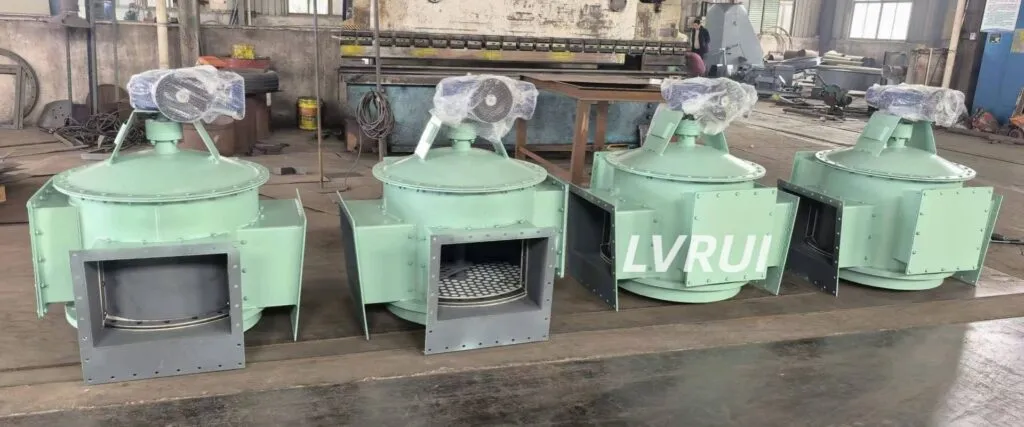
The blower can represent a significant part of the complete equipment package.
Some quotations include only the air slide conveyor body, while others may also include:
- Blower
- Motor
- Air piping
- Branch connections
- Isolation valves
- Air-control components
This difference can substantially change the total quotation value.
Blower selection should be based on the required airflow and pressure for the actual conveying system rather than a fixed motor power selected only from conveyor length. For preliminary blower sizing, see the air slide conveyor power calculation guide.
When comparing quotations, confirm clearly:
Is the blower included, and what components are included in the air-supply scope?
This prevents a lower equipment price from being mistaken for a lower total system cost when important components have simply been excluded.
6. Inlets, Outlets, Gates and Diverters
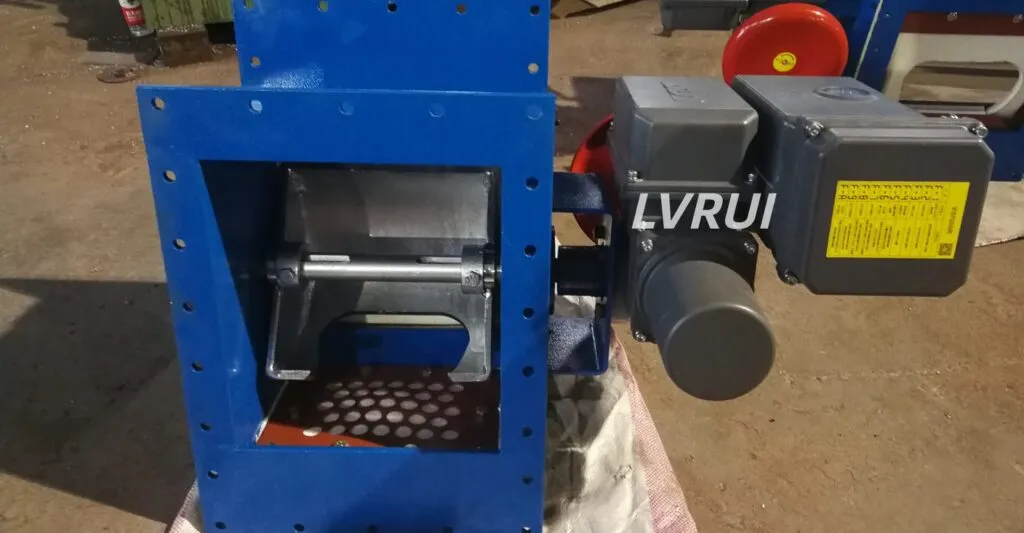
Material-routing components can also affect the final equipment price.
A simple air slide with one inlet and one outlet requires fewer fabricated interfaces than a system with several discharge points or material-routing devices.
Additional equipment may include:
- Multiple feeding points
- Multiple discharge points
- Flow control gates
- Slide gates
- Diverters
- Inlet transition sections
- Outlet transition sections
- Inspection openings
- Connection adapters
These components should be defined according to the actual plant layout rather than added after the main conveyor has already been priced.
A quotation for the same conveyor length can therefore vary significantly depending on the number and complexity of these interfaces.
7. Installation and Site Interfaces
Equipment supply cost and site installation cost should be considered separately.
LVRUI mainly supplies the air slide conveyor and related equipment. Site installation requirements depend on the actual plant arrangement and are normally evaluated separately by the customer or installation contractor.
Site-related costs may include:
- Supporting steelwork
- Platforms and access
- Lifting
- Connection to existing equipment
- Electrical wiring
- Blower foundations
- Modification of existing structures
- Site ducting or piping
Providing a layout drawing during the quotation stage helps identify required interfaces and reduces the risk of missing transition pieces or connection components.
8. What Affects Air Slide Conveyor Operating Cost?
Purchase price is not the only cost associated with an air slide conveyor.
The two main recurring cost areas are normally fluidizing-air energy and service components.
Blower Electricity
The blower provides the low-pressure fluidizing air required for conveying.
Actual energy consumption depends on operating duty, airflow, pressure, system resistance, operating hours and overall fan system efficiency.
Conveyor length alone is therefore not sufficient to estimate electricity consumption.
Service Components
Depending on operating conditions, service requirements may involve components such as:
- Air slide fabric
- Seals
- Blower service parts
- Connected valves or actuators
There is no universal replacement interval that applies to every installation.
For an existing system with unusually high blower energy consumption or repeated maintenance problems, those issues should be evaluated separately rather than estimated through a generic cost formula.
9. How to Compare Air Slide Conveyor Quotations
The lowest quoted price does not necessarily represent the same technical scope.
Before comparing suppliers, confirm that each quotation covers the same technical scope.
| Item | What Should Be Compared? |
|---|---|
| Conveyor width | Same conveying width? |
| Total length | Same supplied length? |
| Number of sections | Same quantity and configuration? |
| Casing material | Same steel specification? |
| Plate construction | Equivalent thickness and structure? |
| Air slide fabric | Same material and temperature suitability? |
| Blower | Included or excluded? |
| Motor | Included with blower? |
| Gates / valves | Included or separately quoted? |
| Inlet / outlet sections | Included? |
| Diverters | Included where required? |
| Air piping | Included or site supplied? |
| Supports | Included or excluded? |
| Export packing | Included? |
| Technical drawings | Included in supply scope? |
This comparison is especially important when quotations appear to differ significantly in total price.
The difference may come from supply scope rather than from the conveyor body itself.
10. What Information Is Needed for an Accurate Quote?
For an initial air slide conveyor cost evaluation, provide the following information where available:
✓ Conveyed material
Cement, fly ash, raw meal or another powder.
✓ Required capacity
Target throughput in t/h.
✓ Conveying distance
Approximate total route length.
✓ Inlet and outlet elevations
Required for evaluating the conveying profile.
✓ Material temperature
✓ Bulk density, if available
✓ Inlet dimensions
✓ Outlet dimensions
✓ Number of feeding and discharge points
✓ Required gates or diverters
✓ Whether a blower is required
✓ Layout drawing or site sketch
These inputs allow the conveyor configuration and supply scope to be defined before the formal quotation is prepared.
Air Slide Conveyor Cost FAQs
How much does an air slide conveyor cost?
There is no universal price. Cost depends on conveyor width, length, required capacity, material, construction, air slide fabric, blower scope, valves, outlets and other project-specific requirements.
Is air slide conveyor cost calculated by meter?
Length can be used for preliminary budgeting, but a final quotation should not be based on price per meter alone. Conveyor width, construction, number of sections, blower scope and additional components can significantly change the total cost.
What factors usually have the greatest effect on price?
Conveyor size, total length, material of construction, fabric specification, blower configuration and the number of inlets, outlets, gates or diverters are normally among the main cost factors.
Is the blower included in an air slide conveyor quotation?
It depends on the requested supply scope. Some quotations cover only the conveyor body, while others include the blower and related air-supply components. This should always be confirmed when comparing prices.
What information should I provide for an accurate quotation?
Provide the conveyed material, required capacity, conveying distance, inlet and outlet elevations, material temperature, connection dimensions and layout drawing if available. Also specify whether blowers, gates or diverters are required.
Conclusion
Air slide conveyor cost should be evaluated according to the complete equipment configuration rather than conveyor length or width alone.
Material properties, required capacity, casing construction, fabric specification, blower arrangement, material-routing components and supply scope can all influence the final quotation.
When comparing suppliers, first confirm that the technical specifications and included equipment are equivalent. A clear project specification produces a more meaningful price comparison and reduces the risk of missing components during later engineering or installation.
Request an Air Slide Conveyor Cost Review
To prepare an initial technical proposal and quotation, send LVRUI your material, required capacity, conveying distance, inlet and outlet elevations, operating temperature, connection dimensions and layout drawing if available.
Based on these parameters, LVRUI can review the required air slide conveyor configuration and provide the corresponding equipment proposal, drawing and quotation.
Email: info@lvrui-conveyor.com
WhatsApp: +86-18261998937
WeChat: +86-18261998937