How to Choose the Right Powder Conveying System for Cement, Fly Ash and Dry Bulk Materials
What Is the Difference Between an Air Slide Conveyor and a Screw Conveyor?
Air slide conveyor vs screw conveyor is an important comparison for cement plants and dry bulk powder handling systems. Both conveyors are used for bulk material handling, but they work in very different ways.
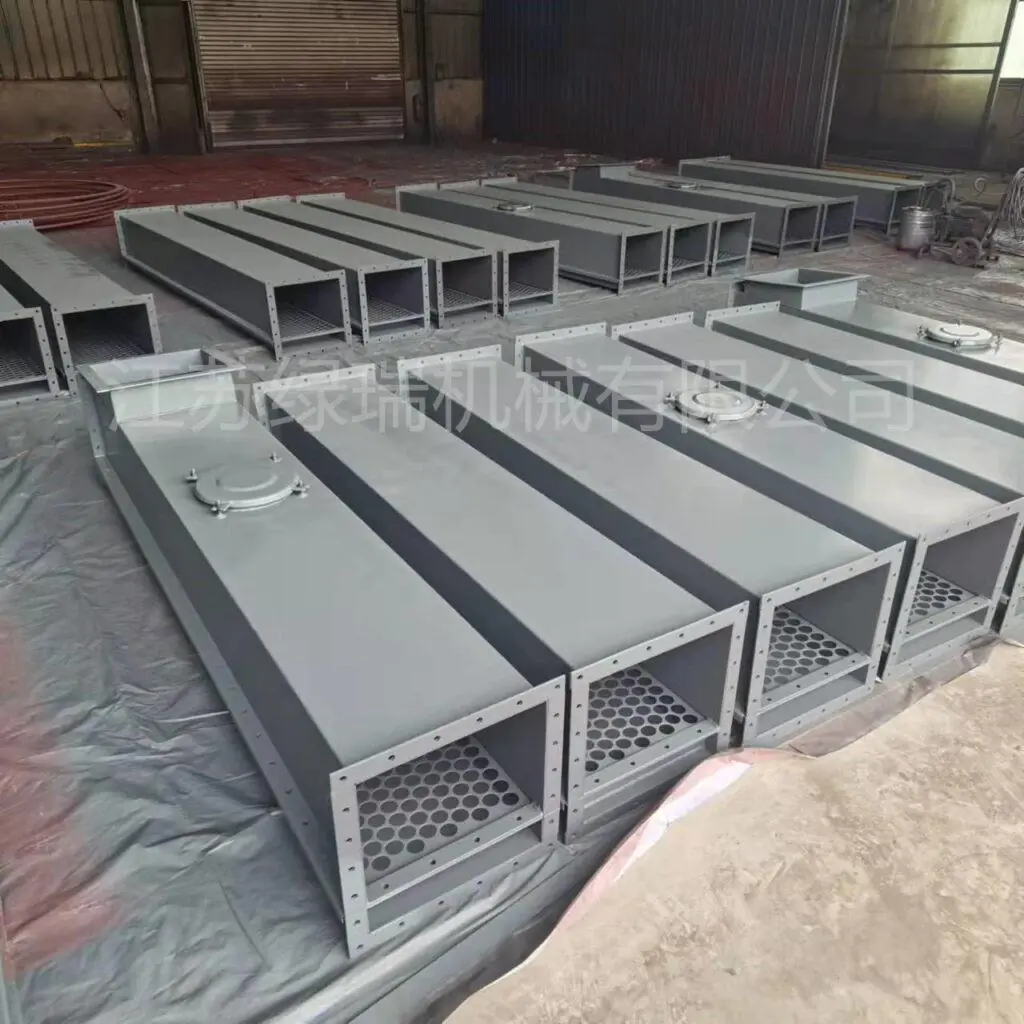
An air slide conveyor uses low-pressure air and gravity to move dry powder along a slightly inclined enclosed chute. It is commonly used for cement, fly ash, raw meal, lime powder and other fine materials that can be fluidized.
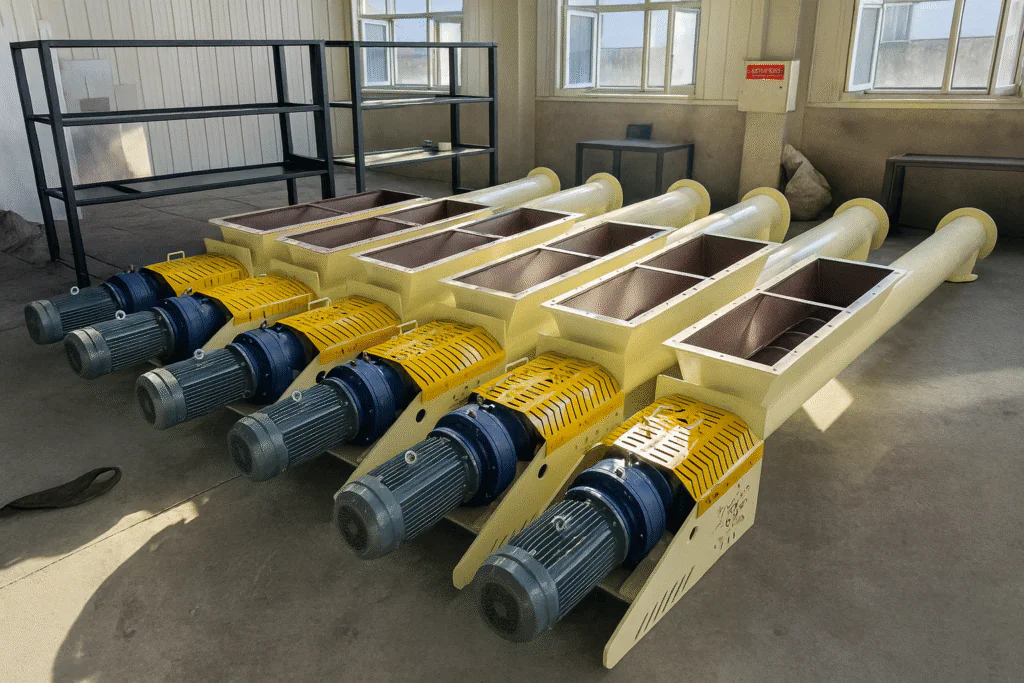
A screw conveyor uses a rotating screw blade inside a trough or pipe to push material forward mechanically. It is often used for short-distance conveying, silo discharge, controlled feeding, dosing and transferring materials into downstream equipment.
In simple terms:
✅ Air slide conveyor is better for long-distance, low-wear, low-energy powder conveying.
✅ Screw conveyor is better for short-distance, controlled feeding and mechanical discharge.
✅ Air slide conveyor requires dry and fluidizable powder.
✅ Screw conveyor can handle a wider range of material conditions, but has more mechanical wear.
✅ Many cement plants use both systems together instead of choosing only one.
For cement plants, the key question is not “which conveyor is better?” The correct question is:
Which conveyor is more suitable for this material, distance, feeding purpose and installation layout?
In the air slide conveyor vs screw conveyor comparison, the air slide conveyor is usually stronger when the plant needs continuous dry powder conveying with lower mechanical wear.
What Is an Air Slide Conveyor?
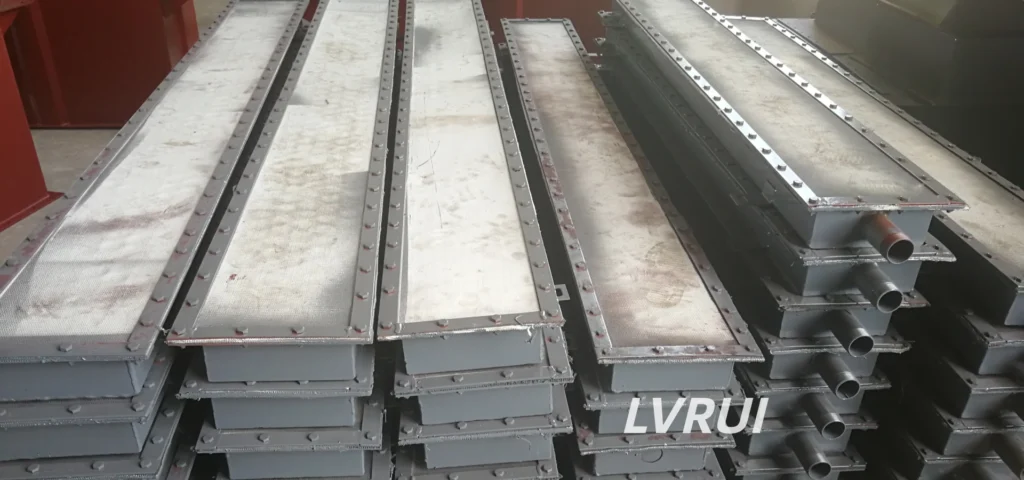
An air slide conveyor is an enclosed powder conveying system that uses air fluidization and gravity flow. Low-pressure air passes through air slide fabric at the bottom of the chute. The dry powder above the fabric becomes fluidized and moves along the chute under a slight downward slope.
In cement plants, air slide conveyors are widely used for continuous powder conveying between silos, mills, bins, packing systems and bulk loading systems.
Typical air slide conveyor applications include:
✅ Cement powder conveying
✅ Fly ash conveying
✅ Raw meal conveying
✅ Lime powder conveying
✅ Cement mill to silo conveying
✅ Silo to packing system conveying
✅ Silo to bulk loading system conveying
✅ Long-distance enclosed powder transfer
✅ Powder conveying with low mechanical wear
An air slide conveyor is usually selected when the material is dry, fine, free-flowing and easy to fluidize. Because the material moves with low-pressure air and gravity, there are fewer mechanical contact parts compared with screw conveyors. This makes the system suitable for continuous powder transport with low wear and relatively low energy consumption.
However, an air slide conveyor is not suitable for every material. Wet, sticky, coarse, lumpy or poorly fluidized materials may block the chute or reduce conveying efficiency.
What Is a Screw Conveyor?
A screw conveyor is a mechanical conveying system that uses a rotating screw blade to move material inside a trough or pipe. The screw pushes the material forward as it rotates, making it useful for feeding, dosing, short-distance transfer and controlled discharge.
In cement plants, screw conveyors are often installed under silos, hoppers, bag filters, mixers, weighing systems and batching equipment.
Typical screw conveyor applications include:
✅ Cement silo discharge
✅ Fly ash silo discharge
✅ Hopper bottom feeding
✅ Short-distance powder transfer
✅ Controlled feeding into weighing systems
✅ Feeding before mixers or batching equipment
✅ Bag filter dust discharge
✅ Powder dosing and metering
✅ Transfer where mechanical control is required
A screw conveyor is usually selected when the process requires controlled feeding, mechanical discharge or short-distance material transfer. Compared with an air slide conveyor, a screw conveyor can work in more installation angles and is easier to use where space is limited.
The trade-off is that screw conveyors have more mechanical contact with the material. Screw blades, bearings, seals, troughs and drive parts require more inspection and maintenance, especially when handling abrasive powder.
For general screw feeder and screw conveyor engineering reference, see this CEMA engineering standard for screw feeders.
Air Slide Conveyor vs Screw Conveyor: 7 Key Differences
| Comparison Item | Air Slide Conveyor | Screw Conveyor |
|---|---|---|
| Conveying principle | Low-pressure air fluidization and gravity flow | Mechanical rotation of screw blade |
| Best material | Dry, fine and free-flowing powder | Powder, granules and some less fluid materials |
| Typical cement plant use | Long-distance cement or fly ash powder conveying | Short-distance feeding, dosing and silo discharge |
| Energy consumption | Low, mainly blower power | Medium, motor drives screw rotation |
| Mechanical wear | Low, no screw blade in direct contact with material | Higher, screw blade and trough contact material |
| Dust control | Very good when fully enclosed and properly sealed | Good when the trough and inlet/outlet are properly sealed |
| Feeding accuracy | Not designed for precise dosing | Better for controlled feeding and metering |
| Conveying distance | Better for longer straight or slightly inclined routes | Better for short to medium distances |
| Installation angle | Requires a slight downward slope | Can be horizontal or inclined |
| Maintenance focus | Air slide fabric, blower and air chamber inspection | Screw blade, bearings, seals and drive inspection |
| Main limitation | Not suitable for wet, sticky, coarse or lumpy materials | More mechanical wear and higher maintenance demand |
1. Conveying Principle
The biggest difference is the conveying principle.
An air slide conveyor moves powder by air fluidization. The material becomes fluid-like after low-pressure air passes through the air slide fabric. With a slight slope, the material flows along the chute by gravity.
A screw conveyor moves material mechanically. The rotating screw blade pushes the material forward inside the trough or pipe.
This difference affects almost everything else: energy use, wear, maintenance, material suitability, conveying distance and feeding control.
If the material can be fluidized well, an air slide conveyor can move it efficiently with fewer mechanical contact parts. If the process needs mechanical control, a screw conveyor is often more practical.
2. Material Suitability
Material condition is the first factor in conveyor selection.
Air slide conveyors are suitable for dry, fine and fluidizable powders. Cement powder, fly ash, raw meal and lime powder are common materials.
Screw conveyors can handle a wider range of materials, including powder and some granular materials. They are also more suitable when the material needs to be mechanically forced forward.
Material condition is often the most important factor in the air slide conveyor vs screw conveyor decision.
| Material Condition | Better Choice | Reason |
|---|---|---|
| Dry fine cement powder | Air slide conveyor | Easy to fluidize and suitable for continuous conveying |
| Dry fly ash | Air slide conveyor | Fine powder with good fluidization behavior |
| Short-distance silo discharge | Screw conveyor | Better mechanical feeding control |
| Dosing or metering | Screw conveyor | More suitable for controlled feeding |
| Wet or sticky powder | Usually neither without special design | May cause blockage, buildup or unstable discharge |
| Lumpy material | Screw conveyor may still need pretreatment | Large lumps can damage or block the system |
| Abrasive powder | Depends on distance and control need | Wear protection should be considered |
For wet, sticky or lumpy material, the conveyor should not be selected only by product name. Material moisture, particle size, flowability and abrasiveness must be checked first.
3. Conveying Distance
Air slide conveyors are often better for longer powder conveying routes in cement plants. They are especially useful when cement or fly ash needs to move continuously from one process section to another.
Screw conveyors are better for short to medium distances. They are commonly used under silos, hoppers or filters where material only needs to be transferred to nearby equipment.
| Conveying Requirement | Recommended Conveyor |
|---|---|
| Long-distance cement powder transfer | Air slide conveyor |
| Silo to nearby screw feeder or equipment | Screw conveyor |
| Mill to storage silo powder conveying | Air slide conveyor |
| Hopper bottom discharge | Screw conveyor |
| Short transfer before weighing system | Screw conveyor |
| Continuous powder transport across plant layout | Air slide conveyor |
If the route is long, straight and slightly sloped, an air slide conveyor is usually more efficient. If the route is short, compact or needs mechanical control, a screw conveyor is usually more suitable.
4. Energy Consumption
Air slide conveyors usually have lower energy consumption because they mainly use low-pressure air and gravity. The blower supplies air for fluidization, but there is no screw blade pushing the material along the full route.
Screw conveyors use motor power to rotate the screw blade and push the material mechanically. Energy consumption depends on screw diameter, conveying length, material load, inclination, speed and friction.
In many cement powder applications:
✅ Air slide conveyor is more energy-efficient for continuous long-distance powder conveying.
✅ Screw conveyor consumes more power when material load, length or inclination increases.
✅ Screw conveyor power demand increases when material is abrasive, dense or difficult to move.
✅ Air slide conveyor performance depends heavily on proper air volume and air slide fabric condition.
Energy cost should not be judged alone. A lower-power conveyor may not be the best choice if it cannot control feeding or match the process requirement.
5. Dust Control
Both systems can support dust-controlled operation, but the design is different. This is why conveying distance should be checked carefully before making an air slide conveyor vs screw conveyor selection.
An air slide conveyor is fully enclosed by design. When the chute, inspection doors, fabric layer and inlet/outlet connections are properly sealed, it can provide clean powder transfer with limited dust leakage.
A screw conveyor can also be enclosed, but dust leakage may occur around inlet points, discharge points, seals, inspection covers and shaft ends if the design is not properly sealed.
| Dust Control Point | Air Slide Conveyor | Screw Conveyor |
|---|---|---|
| Enclosed structure | Good | Good |
| Shaft sealing issue | No screw shaft along the chute | Shaft seals need attention |
| Transfer point leakage | Depends on inlet/outlet sealing | Depends on inlet/outlet and cover sealing |
| Dust collector integration | Often used with bag filters at transfer points | Often used under bag filters or connected to dust systems |
| Maintenance effect | Fabric and cover sealing affect performance | Shaft seals, covers and bearings affect performance |
For cement and fly ash handling, dust control should be considered as a system issue. Conveyor sealing, transfer chute design, bag filter connection and loading equipment must work together.
For broader industrial minerals dust control reference, see the NIOSH Dust Control Handbook for Industrial Minerals Mining and Processing.
6. Maintenance and Wear
Air slide conveyors have fewer mechanical moving parts in direct contact with the material. This usually means lower mechanical wear. Main maintenance points include the air slide fabric, blower, air chamber, inspection doors and sealing parts.
Screw conveyors have more mechanical wear points. The screw blade, trough, bearings, shaft seals, drive unit and intermediate supports need regular inspection.
| Maintenance Item | Air Slide Conveyor | Screw Conveyor |
|---|---|---|
| Main wear part | Air slide fabric | Screw blade and trough |
| Moving parts | Few | More |
| Bearing maintenance | Usually less | Important |
| Seal maintenance | Chute and inspection sealing | Shaft seals, covers and inlet/outlet sealing |
| Blockage risk | High if material is wet or not fluidized | High if material is sticky, overloaded or compacted |
| Maintenance frequency | Usually lower for suitable dry powder | Usually higher due to mechanical contact |
If the material is dry and fine, an air slide conveyor is often easier to maintain over long conveying routes. If the system requires controlled discharge or dosing, screw conveyor maintenance is the cost of getting better mechanical control. From a maintenance point of view, the air slide conveyor vs screw conveyor choice depends on whether low wear or mechanical feeding control is more important.
7. Feeding Accuracy and Process Control
A screw conveyor is usually better when the process requires controlled feeding, dosing, batching or metering. Its speed can be adjusted to control material flow more directly.
An air slide conveyor is better for continuous powder transport, but it is not mainly designed for precise feeding control. Flow control devices are usually needed before or after the air slide conveyor.
Typical controlled feeding applications include:
✅ Feeding cement into a weighing hopper
✅ Dosing fly ash into a mixing system
✅ Controlled discharge from a silo
✅ Feeding before a batching plant
✅ Feeding process equipment at a stable rate
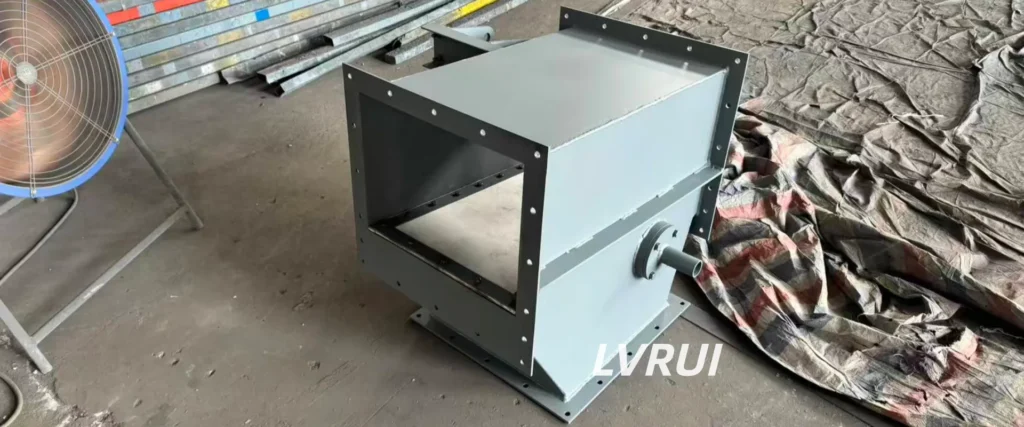
For air slide conveyor systems, flow control gates, shut-off valves, diverters, aeration devices and loading equipment may be required to complete the process.
When Should You Choose an Air Slide Conveyor?
Choose an air slide conveyor when the material is dry, fine, free-flowing and easy to fluidize. In cement plants, air slide conveyors are commonly used for continuous powder transport between silos, cement mills, storage bins, packing systems and bulk loading systems.
An air slide conveyor is suitable for:
✅ Long-distance cement powder conveying
✅ Fly ash conveying
✅ Low-energy continuous transport
✅ Fully enclosed powder transfer
✅ Cement mill to silo conveying
✅ Silo to packing system conveying
✅ Silo to loading system conveying
✅ Applications where mechanical wear must be reduced
Do not choose an air slide conveyor if the material is wet, sticky, coarse or lumpy. If the material cannot be fluidized properly, the system may suffer from poor flow, blockage or unstable conveying.

When Should You Choose a Screw Conveyor?
Choose a screw conveyor when the process needs controlled feeding, short-distance conveying, metering, dosing or mechanical discharge from a silo or hopper. In cement plants, screw conveyors are often installed under silos, hoppers, filters, mixers or weighing systems.
A screw conveyor is suitable for:
✅ Cement silo discharge
✅ Hopper bottom feeding
✅ Short-distance powder transfer
✅ Controlled feeding into weighing systems
✅ Feeding before mixers or batching equipment
✅ Bag filter dust discharge
✅ Applications with limited installation space
✅ Materials that are not suitable for air slide conveying
Screw conveyors require more attention to screw blade wear, bearing protection, sealing, drive power and material buildup. For abrasive cement powder, fly ash or mineral powder, the structure and wear parts should be selected carefully.
Can Air Slide Conveyors and Screw Conveyors Work Together?
Yes. In many cement plants, the best solution is not choosing only one system. Air slide conveyors and screw conveyors are often used together because they solve different material handling problems.
A typical layout may include:
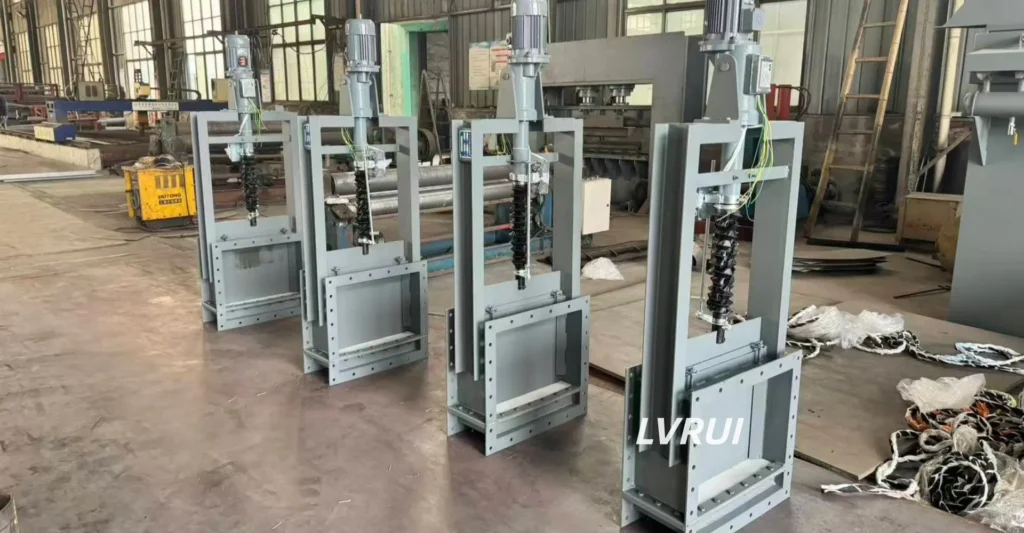
✅ Flow control gate under the silo for discharge control
✅ Screw conveyor for short-distance controlled feeding
✅ Air slide conveyor for longer powder transport
✅ Bag filter for dust collection at transfer points
✅ Bulk loader or loading spout for final loading
This combination helps the plant balance flow control, energy efficiency, dust control and maintenance cost. The screw conveyor controls how much material enters the system, while the air slide conveyor moves dry powder efficiently over a longer route.
For example, a cement silo discharge system may use a flow control gate or slide gate valve under the silo, a screw conveyor for controlled short transfer, and an air slide conveyor for continuous transport to a packing system or bulk loading system.
Selection Checklist Before Buying
Before making an air slide conveyor vs screw conveyor decision, check the following project information.
| Selection Factor | Why It Matters |
|---|---|
| Material type | Cement, fly ash, lime powder and raw meal have different flowability. |
| Moisture condition | Air slide conveyors require dry and fluidizable powder. |
| Particle size | Screw conveyors can handle a wider material range than air slide conveyors. |
| Conveying distance | Air slide conveyors are better for longer straight routes; screw conveyors are better for short routes. |
| Required capacity | Capacity affects chute width, screw diameter, motor power and system layout. |
| Feeding accuracy | Screw conveyors are better for controlled feeding and dosing. |
| Installation angle | Air slide conveyors require a slight slope; screw conveyors can be horizontal or inclined. |
| Dust control requirement | Both systems can be enclosed, but the sealing design must match the site condition. |
| Maintenance priority | Air slide conveyors have fewer moving parts; screw conveyors need more mechanical inspection. |
| Downstream equipment | Weighing systems, mixers, loading spouts and silos require different feeding stability. |
If the project requires long-distance dry powder conveying, air slide conveyor should usually be considered first. If the project requires short-distance controlled feeding, screw conveyor is usually the better starting point.
Common Mistakes When Choosing Between Air Slide Conveyor and Screw Conveyor
Mistake 1: Choosing only by price
A lower equipment price does not always mean lower total cost. Energy consumption, wear parts, downtime, installation layout and maintenance labor must also be considered.
Mistake 2: Ignoring material moisture
Air slide conveyors rely on fluidization. If the material is wet or sticky, the air slide fabric may become blocked and the powder may not flow properly.
Mistake 3: Using screw conveyors for long routes without checking wear
Screw conveyors can work well in many short-distance applications, but long-distance abrasive powder conveying may increase wear and power consumption.
Mistake 4: Ignoring dust control at transfer points
Even if the conveyor itself is enclosed, dust leakage can still happen at inlet, outlet, inspection door, silo discharge or loading points.
Mistake 5: Treating the conveyor as a single machine
In real cement plant projects, conveyors work with silos, valves, filters, loading equipment, chutes and control systems. The full layout must be considered.
Practical Recommendation for Cement Plants
For dry cement powder or fly ash over a longer route, an air slide conveyor is usually the better option because it provides low-wear, enclosed and energy-efficient conveying.
For silo discharge, short-distance transfer, controlled feeding or dosing, a screw conveyor is usually more practical because the material flow can be mechanically controlled.
For many cement plant systems, the most reliable design is a combination of both:
✅ Use a flow control gate or slide gate valve to control silo discharge.
✅ Use a screw conveyor when short-distance controlled feeding is required.
✅ Use an air slide conveyor for longer dry powder transport.
✅ Use a bag filter or dust collection system at dust-generating points.
✅ Use a bulk loader or loading spout for final truck or tanker loading.
This is why conveyor selection should be based on the complete material handling process, not only on one equipment name.
FAQ About Air Slide Conveyor vs Screw Conveyor
What is the main difference between an air slide conveyor vs screw conveyor?
The main difference between an air slide conveyor vs screw conveyor is the conveying principle. An air slide conveyor uses low-pressure air and gravity to move dry, fine powder, while a screw conveyor uses a rotating screw blade to push material mechanically. In cement plants, air slide conveyors are better for longer powder conveying routes, and screw conveyors are better for short-distance controlled feeding and silo discharge.
Which is better for cement plants, air slide conveyor vs screw conveyor?
There is no single better choice in the air slide conveyor vs screw conveyor comparison. An air slide conveyor is better for dry cement powder, fly ash and fine materials over longer routes. A screw conveyor is better for controlled feeding, dosing, batching and short-distance transfer. The right choice depends on material condition, conveying distance, required capacity and process purpose.
When should I choose an air slide conveyor instead of a screw conveyor?
Choose an air slide conveyor instead of a screw conveyor when the material is dry, fine, free-flowing and easy to fluidize. In the air slide conveyor vs screw conveyor selection process, air slide conveyors are usually preferred for long-distance cement powder conveying, fly ash transfer, silo-to-silo conveying and low-wear continuous powder transport.
When should I choose a screw conveyor instead of an air slide conveyor?
Choose a screw conveyor instead of an air slide conveyor when the process needs short-distance transfer, controlled feeding, dosing, batching or silo discharge. In the air slide conveyor vs screw conveyor comparison, screw conveyors are more suitable when material flow must be mechanically controlled before weighing systems, mixers, hoppers or downstream equipment.
Can an air slide conveyor replace a screw conveyor?
An air slide conveyor cannot completely replace a screw conveyor. In an air slide conveyor vs screw conveyor application, the air slide conveyor is mainly used for continuous dry powder conveying, while the screw conveyor is used for controlled feeding and mechanical discharge. Many cement plants need both systems in different positions.
Which conveyor uses less power, air slide conveyor or screw conveyor?
In most dry powder conveying applications, an air slide conveyor uses less power than a screw conveyor. This is because an air slide conveyor depends mainly on low-pressure air and gravity, while a screw conveyor requires mechanical rotation. However, in the air slide conveyor vs screw conveyor selection, energy consumption should be considered together with feeding accuracy, distance, layout and maintenance.
Which conveyor is better for cement powder, air slide conveyor vs screw conveyor?
For dry cement powder and longer conveying routes, an air slide conveyor is usually the better choice. For cement silo discharge, batching, weighing or controlled feeding, a screw conveyor is usually more suitable. So the answer to air slide conveyor vs screw conveyor for cement powder depends on whether the main purpose is continuous conveying or controlled feeding.
Which conveyor is better for fly ash, air slide conveyor or screw conveyor?
For dry and fine fly ash, an air slide conveyor can be a good choice when the material can be fluidized properly. A screw conveyor may be better when the fly ash needs short-distance transfer, controlled discharge or feeding into another process. In an air slide conveyor vs screw conveyor decision for fly ash, moisture condition and flowability are very important.
Why is an air slide conveyor not suitable for wet or sticky materials?
An air slide conveyor relies on air fluidization. Wet or sticky material may block the air slide fabric, reduce airflow and cause unstable conveying. In the air slide conveyor vs screw conveyor comparison, screw conveyors can handle a wider range of material conditions, but wet or sticky powder may still cause buildup and should be checked carefully.
Which conveyor is easier to maintain, air slide conveyor vs screw conveyor?
An air slide conveyor usually has fewer moving parts, so mechanical wear is lower. Main maintenance points include air slide fabric, blower, air chamber and sealing parts. A screw conveyor has more mechanical contact with material, so screw blades, bearings, seals and drive parts need more inspection. In the air slide conveyor vs screw conveyor comparison, air slide conveyors are usually easier to maintain for suitable dry powder applications.
Can air slide conveyors and screw conveyors work together?
Yes. In many cement plants, air slide conveyors and screw conveyors work together. A screw conveyor can be used for short-distance controlled feeding or silo discharge, while an air slide conveyor can move dry powder over a longer route. This combined system is often better than choosing only one side of the air slide conveyor vs screw conveyor comparison.
What information is needed before choosing between air slide conveyor vs screw conveyor?
Before choosing between air slide conveyor vs screw conveyor, you should provide the material name, bulk density, moisture condition, particle size, conveying distance, required capacity, installation angle, feeding accuracy requirement, upstream equipment and downstream equipment. These details help determine whether an air slide conveyor, screw conveyor or combined conveying system is more suitable.
Conclusion
The air slide conveyor vs screw conveyor comparison is not about choosing one better machine in every situation. They are different conveying systems designed for different process requirements.
An air slide conveyor is the preferred choice for dry, fine, fluidizable powder over longer conveying routes. It is suitable for cement powder, fly ash and similar materials where low wear, enclosed conveying and low energy consumption are important.
A screw conveyor is the preferred choice for short-distance transfer, silo discharge, dosing and controlled feeding. It is suitable when the process needs mechanical movement and flow control.
For cement plants, the best solution often combines both systems. The right choice depends on material properties, conveying distance, capacity, installation space, dust control and downstream process requirements.
Ready to Get a Reliable Air Slide Conveyor Solution?
Need help choosing between an air slide conveyor and a screw conveyor for your cement plant, fly ash system or dry powder handling project?
Send us your material name, conveying distance, required capacity, moisture condition, installation layout and downstream equipment. LVRUI can help check whether an air slide conveyor, screw conveyor or combined conveying system is more suitable for your project.
Website: https://lvrui-conveyor.com/
Email: info@lvrui-conveyor.com
WhatsApp / Tel: +86 133 5817 5667
Short Indonesian Version
Air slide conveyor dan screw conveyor digunakan untuk material bubuk di pabrik semen, tetapi keduanya memiliki fungsi yang berbeda. Air slide conveyor lebih cocok untuk material kering, halus dan mudah terfluidisasi seperti semen dan fly ash, terutama untuk jarak conveying yang lebih panjang dengan konsumsi energi rendah dan keausan mekanis yang kecil.
Screw conveyor lebih cocok untuk jarak pendek, silo discharge, feeding terkontrol, dosing dan batching system. Sistem ini menggunakan screw blade untuk mendorong material secara mekanis, sehingga lebih sesuai ketika aliran material perlu dikontrol.
Dalam banyak proyek pabrik semen, kedua sistem dapat digunakan bersama. Screw conveyor mengontrol feeding jarak pendek, sedangkan air slide conveyor memindahkan powder secara efisien ke proses berikutnya.