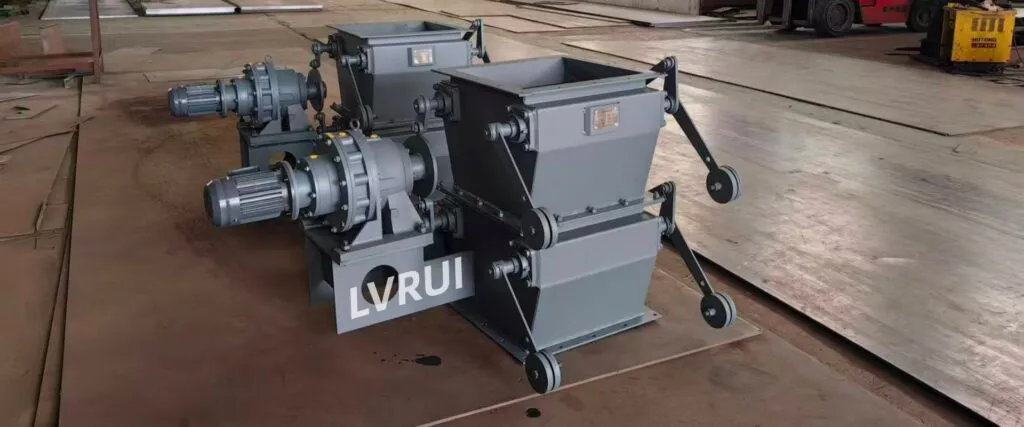
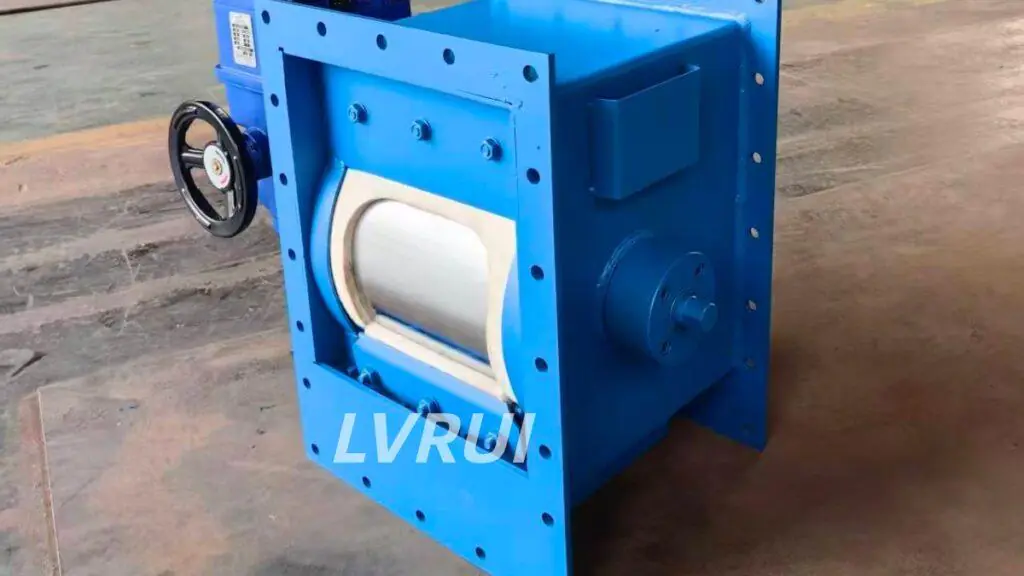
Accurate Flow Regulation for Cement Plants and Industrial Conveying Systems
Pengaturan Aliran Material yang Akurat untuk Pabrik Semen dan Sistem Konveyor Industri
Introduction
Selecting the correct flow control gate is crucial for cement plants and bulk material handling systems. Pneumatic and motorized flow control gates differ in automation, precision, and energy consumption. Understanding these differences ensures optimal system performance.
What Is a Pneumatic Flow Control Gate?
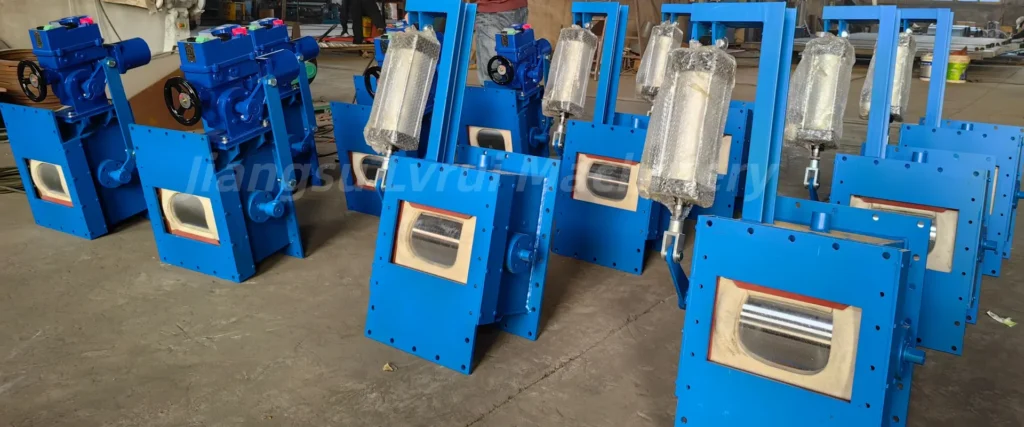
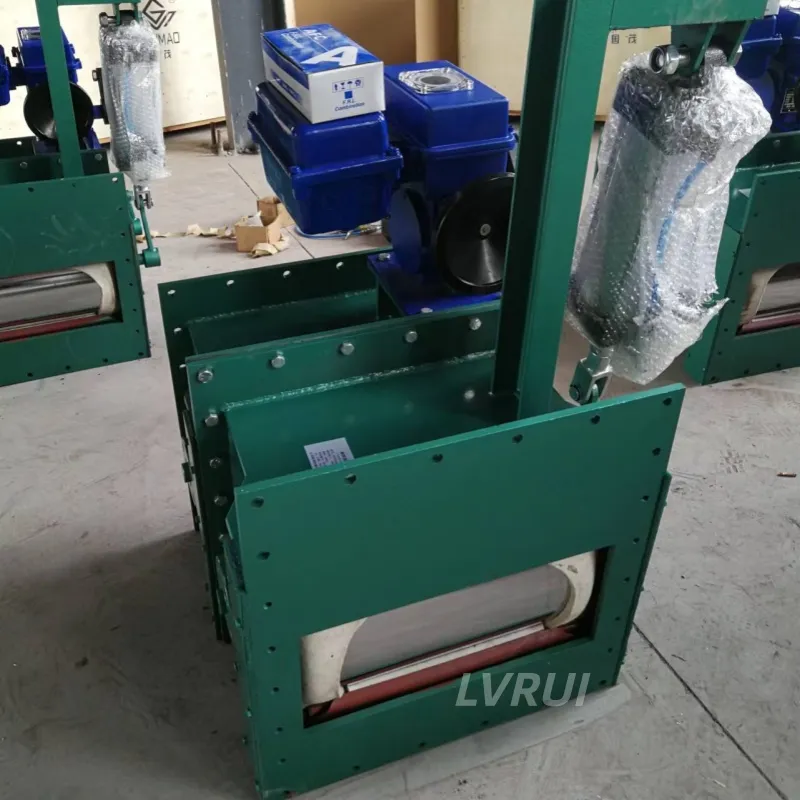
A pneumatic flow control gate uses compressed air to open and close the gate blade. It is suitable for fast, frequent operations and requires minimal electrical components.
Typical Characteristics
- Fast response time
- Simple structure
- Suitable for frequent open/close operations
- Common in cement plants with existing air systems
Typical Applications
- Silo discharge with ON/OFF control
- Bulk loading systems
- Transfer points where precision is not critical
👉 flow control gate working principle
What Is a Motorized Flow Control Gate?
A motorized flow control gate uses an electric actuator (gear motor + screw or gearbox) to precisely position the gate blade. It provides high-precision flow control and can integrate with PLC/DCS systems.
Typical Characteristics
- High positioning accuracy (0–100%)
- Stable and repeatable control
- Easy integration with PLC / DCS systems
- Slower but smoother movement
Typical Applications
- Feeding weigh feeders
- Cement packing lines
- Systems requiring precise flow regulation
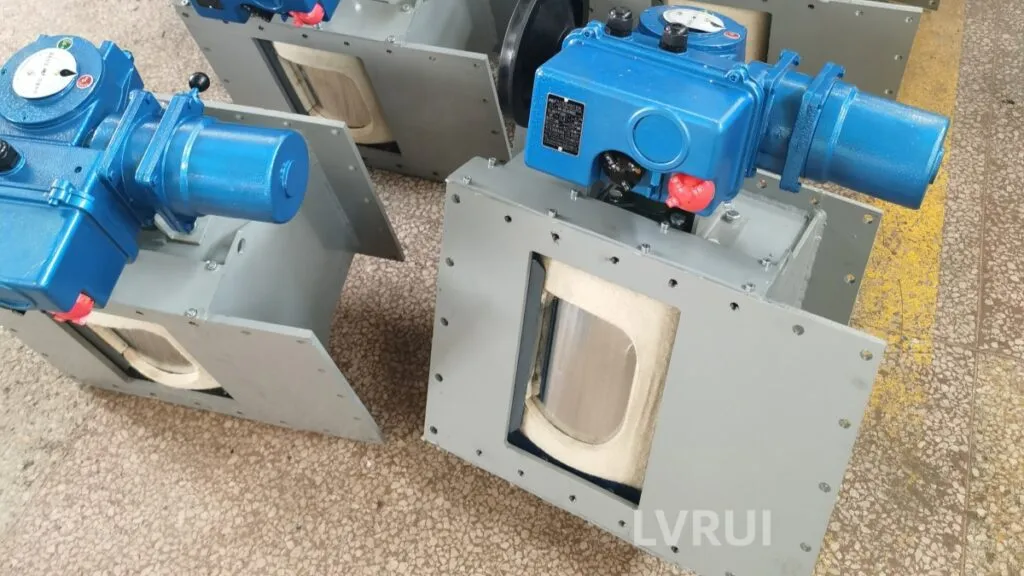
Pneumatic vs Motorized: Key Differences
| Comparison Item | Pneumatic Flow Control Gate | Motorized Flow Control Gate |
|---|---|---|
| Control type | ON/OFF or step control | Continuous modulating control |
| Accuracy | Medium | High |
| Response speed | Very fast | Moderate |
| Position holding | Limited | Excellent |
| Power source | Compressed air | Electricity |
| Automation level | Basic | Advanced |
| Typical cost | Lower initial | Higher initial |
| Long-term stability | Medium | High |
Maintenance and Reliability Comparison
Pneumatic Flow Control Gate
- Requires clean and dry compressed air
- Air leakage or valve failure affects performance
- Easier mechanical maintenance
Motorized Flow Control Gate
- Minimal routine maintenance
- Electrical components must be protected from dust
- Higher reliability for long-term continuous operation
👉 Electrical components must be protected from dust and moisture, typically following IP65 / IP67 actuator protection standards.
Energy Consumption and Operating Cost
- Pneumatic gates consume continuous compressor energy
- Motorized gates consume power only during movement, reducing energy cost
- Motorized gates are recommended for automation-focused, energy-efficient plants
Which One Should You Choose?
Choose a Pneumatic Flow Control Gate if:
- You need fast ON/OFF operation
- Control accuracy is not critical
- Compressed air is already available
- Budget is a primary concern
Choose a Motorized Flow Control Gate if:
- You need precise flow regulation
- The gate feeds weigh feeders or packing systems
- Stable, repeatable control is required
- Integration with PLC/DCS is needed
In many cement plants, the best solution is a combination:
- Slide gate or pneumatic gate for isolation
- Motorized flow control gate for regulation
FAQs
What is the main advantage of a pneumatic flow control gate?
Pneumatic gates offer fast response and simple operation, ideal for frequent open/close applications.
When should a motorized flow control gate be used?
Motorized gates provide high-precision flow regulation and PLC/DCS integration.
How does energy consumption differ?
Pneumatic gates use continuous compressed air; motorized gates use electricity only during movement.
Can gates handle abrasive materials?
Both can be built with wear-resistant materials for cement, clinker, fly ash, and powders.
Which gate type is easier to maintain?
Pneumatic gates have simpler maintenance; motorized gates need minimal routine check for long-term reliability.
How to select the right gate for cement plants?
Pneumatic for budget-friendly, fast ON/OFF; motorized for precise, repeatable control and automation.
CAT
Need a reliable flow control gate for your cement or bulk material handling system? Contact LVRUI today for fast delivery and expert technical support.
- Get expert quotation and customized solution within 12 hours
- Factory direct supply with strict quality control
- Professional engineering support from experienced team
- Stable delivery for overseas industrial projects
📧 Email: info@lvrui-conveyor.com
🌐 Website: https://lvrui-conveyor.com
Indonesian Short Version
Masih ragu memilih pneumatic atau motorized flow control gate?
LVRUI menyediakan solusi pneumatic dan motorized flow control gate untuk industri semen, fly ash, klinker, dan material bubuk lainnya.
✔ Kontrol aliran material yang stabil dan akurat
✔ Desain kedap debu untuk lingkungan kerja bersih
✔ Material tahan aus untuk aplikasi abrasif
✔ Mudah diintegrasikan dengan silo dan sistem konveyor
Hubungi LVRUI sekarang untuk mendapatkan solusi flow control gate sesuai kebutuhan sistem Anda.
📧 Email: info@lvrui-conveyor.com
🌐 Website: https://lvrui-conveyor.com