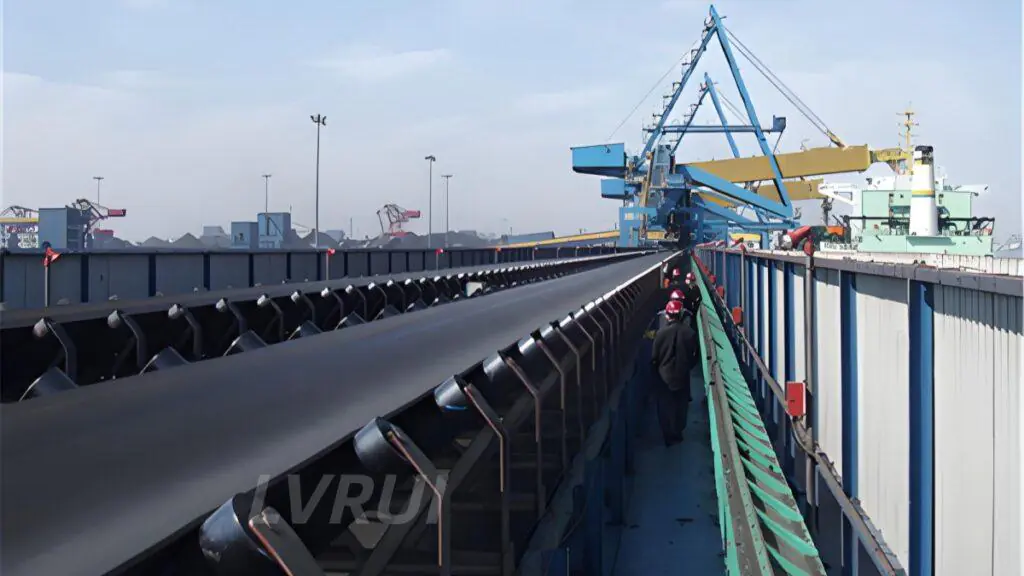
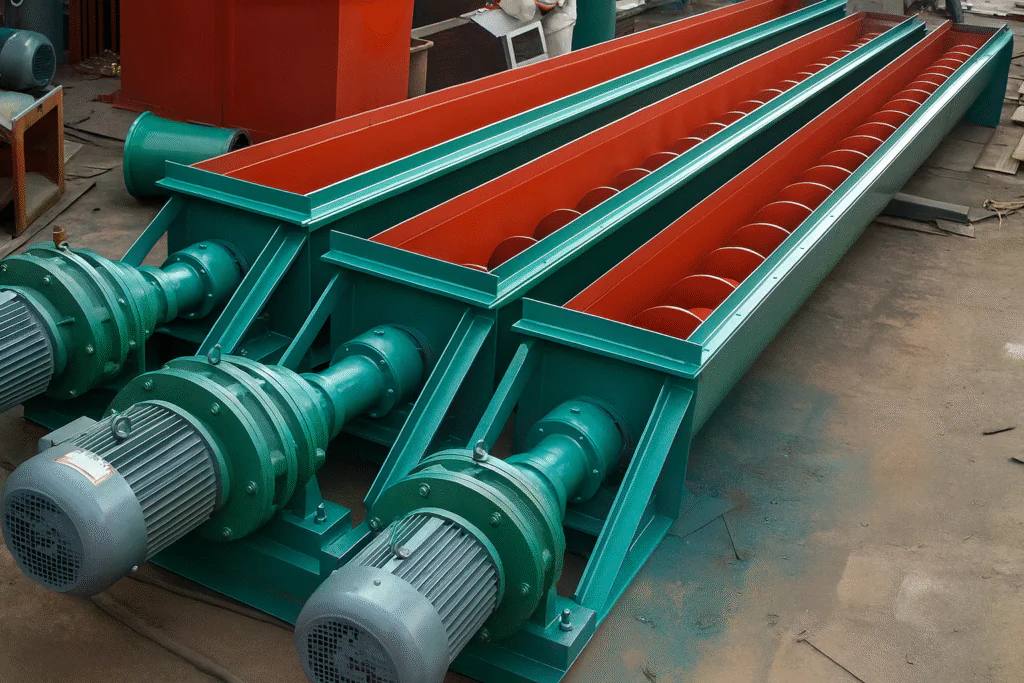
Field Troubleshooting Guide for Cement, Fly Ash, and Dry Powder Screw Conveying Systems
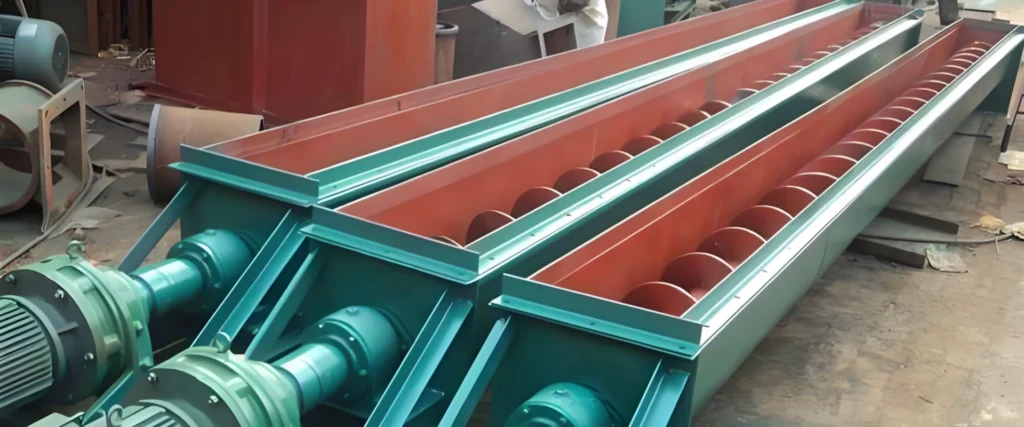
Screw Conveyor Blockage in Cement and Fly Ash Handling Systems
Screw conveyor blockage is a common field problem in cement plants, grinding stations, fly ash storage terminals, lime powder systems, and dry bulk material handling projects. A screw conveyor is often used under silos, hoppers, dust collectors, rotary valves, flow control gates, or weighing systems to transfer powder from one process point to another.
In many projects, the screw conveyor itself is not always the only problem. Blockage may come from material moisture, unstable silo discharge, poor inlet design, wrong conveyor angle, worn screw flights, or a mismatch between feeding capacity and conveyor speed.
For cement powder and fly ash handling, blockage can cause:
✔ Unstable material feeding
✔ Motor overload
✔ Reduced conveying capacity
✔ Frequent equipment shutdown
✔ Material buildup near the inlet
✔ Bearing and seal damage
✔ Higher maintenance cost
✔ Production delay at the loading or batching point
A reliable screw conveyor system should not only move powder. It should also maintain stable feeding, reduce material accumulation, and match the upstream and downstream equipment.
Why Screw Conveyor Blockage Happens
A screw conveyor works by rotating a helical blade inside a trough or tube. As the screw rotates, material is pushed forward along the conveyor body. For dry powder materials, the conveying process looks simple, but actual field conditions are often more complicated.
Cement powder, fly ash, slag powder, lime powder, and mineral powder may behave differently depending on moisture, particle size, bulk density, temperature, and storage time. If the powder becomes sticky, compacted, or fed too quickly, it may accumulate inside the screw conveyor.
Screw conveyor blockage usually happens in three areas:
✔ At the inlet, where material enters too fast or forms a bridge
✔ Inside the conveyor body, where material builds up around the screw flights
✔ Near the outlet, where discharge is restricted or downstream equipment is not ready
The key to solving screw conveyor blockage is to identify where the blockage happens and when it appears during operation.
For broader conveyor and bulk handling equipment categories, CEMA provides useful references for engineered bulk handling equipment.
Cause 1: Moisture Makes Cement Powder Sticky
Moisture is one of the most common causes of screw conveyor blockage in cement powder handling. Cement, fly ash, and lime powder can absorb moisture during storage, transportation, or silo discharge. Once moisture enters the material, the powder may become sticky and start forming lumps.
When sticky powder enters the screw conveyor, it may attach to the screw flights, trough wall, inlet area, or outlet section. Over time, this buildup reduces the effective conveying space and finally causes blockage.
Field Signs
✔ Material sticks to the screw blade or trough wall
✔ Blockage becomes worse during rainy or humid weather
✔ Cement powder forms small lumps before entering the conveyor
✔ Motor current slowly increases during operation
✔ Conveyor capacity drops even when the motor is running
Field Troubleshooting
Check whether moisture is entering the silo, hopper, inlet chute, or conveyor cover. Inspect the material condition before it enters the screw conveyor. If the powder already contains lumps or sticky particles, the blockage may not be caused by the conveyor design alone.
Also check whether the screw conveyor is fully sealed. Poor sealing allows external moisture to enter, especially in outdoor installations.
Practical Solution
Keep the powder storage and conveying system dry. Improve silo sealing, inlet chute sealing, and conveyor cover sealing. If the material often contains lumps, a lump breaker or better upstream discharge control may be needed before the screw conveyor.
Cause 2: Unstable Feeding from the Silo or Hopper
A screw conveyor needs stable feeding. If the upstream silo or hopper sends too much material into the inlet at once, the screw may not have enough time or torque to move it forward. This can quickly cause inlet blockage.
This problem is common when a silo discharge gate opens too quickly, a rotary valve feeds unevenly, or material suddenly collapses from a bridging area inside the silo.
Field Signs
✔ Blockage often happens near the inlet
✔ Material piles up above the screw conveyor opening
✔ Conveyor runs normally at low feed rate but blocks at high feed rate
✔ Motor overload happens shortly after feeding starts
✔ Powder flow from the silo is not steady
Field Troubleshooting
Check the upstream feeding device, such as a flow control gate, rotary valve, slide gate, or silo discharge valve. Confirm whether material enters the screw conveyor gradually or suddenly.
If the screw conveyor is used under a silo, check whether the silo discharge system has bridging, rat-holing, or sudden material collapse. The conveyor may be blamed, but the real cause may be unstable silo discharge.
Practical Solution
Use controlled feeding instead of sudden full opening. Adjust the flow control gate or rotary valve to match the screw conveyor capacity. For automated systems, the feeding sequence should allow the conveyor to start before material enters the inlet.
Cause 3: Inlet Design Causes Material Buildup
The inlet section is one of the most important parts of a screw conveyor. If the inlet is too small, too steep, poorly centered, or not matched with the screw pitch, material may accumulate before it enters the screw path.
In powder handling systems, inlet buildup can happen when material falls directly onto a dead zone inside the conveyor. Once material starts compacting there, blockage becomes more frequent.
Field Signs
✔ Material remains around the inlet after shutdown
✔ Blockage always starts from the same inlet area
✔ Powder piles up instead of entering the screw smoothly
✔ The screw conveyor works better after manual cleaning
✔ Inlet blockage happens even when material is dry
Field Troubleshooting
Open the inspection cover and check how material enters the screw conveyor. Look for dead corners, narrow inlet openings, uneven feeding, and material impact points.
Also check whether the inlet chute is aligned with the screw conveyor. If the material drops too far from the active conveying zone, the screw may not pick it up efficiently.
Practical Solution
Improve the inlet transition design. The material should enter the screw conveyor smoothly and directly into the active screw area. Avoid dead corners, sharp transitions, and narrow chutes. For difficult powder, the inlet size and screw pitch should be reviewed together.
Cause 4: Conveyor Angle Is Too Steep
Screw conveyors can be installed horizontally or at an inclined angle. However, when the angle becomes too steep, conveying efficiency drops. The powder may slide backward, compact inside the trough, or require more power to move forward.
For cement powder and fly ash, a steep screw conveyor may increase the risk of blockage, especially when the material is fine, slightly moist, or fed at a high rate.
Field Signs
✔ Conveyor capacity is lower than expected
✔ Blockage happens more often at higher angles
✔ Material moves slowly inside the conveyor
✔ Motor load is higher than normal
✔ Powder appears compacted inside the trough
Field Troubleshooting
Check the actual installation angle and compare it with the design capacity. A screw conveyor working at an inclined angle cannot always use the same capacity calculation as a horizontal conveyor.
Also check whether the motor power and screw speed are suitable for the actual angle.
Practical Solution
Avoid unnecessary steep installation angles. If inclined conveying is required, adjust the conveyor diameter, screw pitch, motor power, and speed according to the actual working condition. For long-distance or low-energy powder conveying, an air slide conveyor may be more suitable in some cement plant layouts.
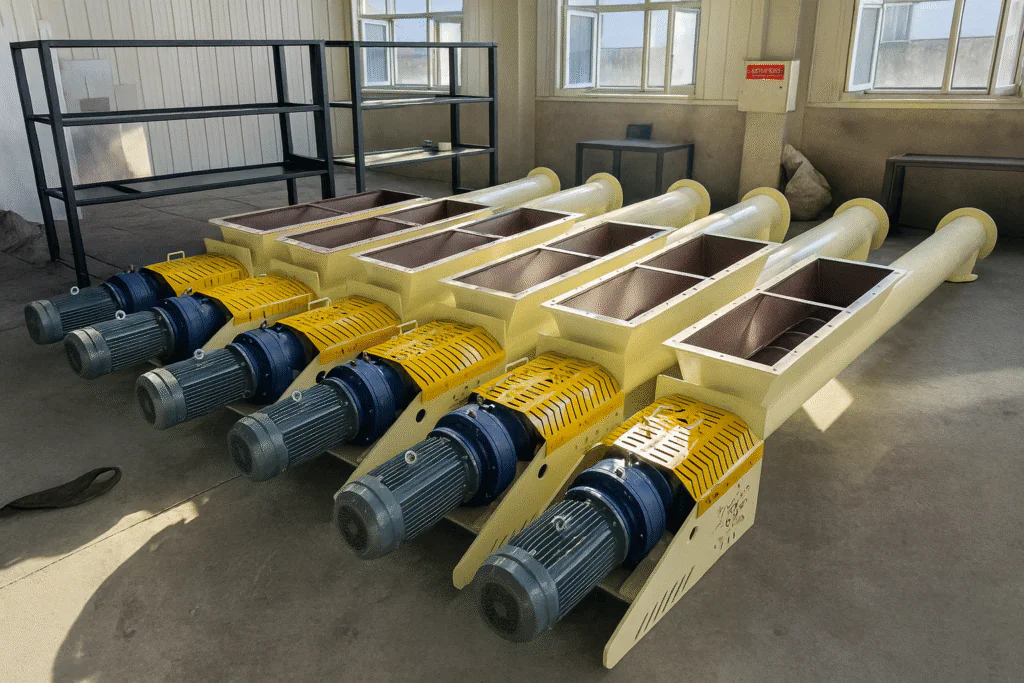
Cause 5: Worn Screw Flights Reduce Conveying Efficiency
The screw flights are responsible for pushing material forward. When the flights are worn, the conveyor may still rotate, but its conveying efficiency becomes lower. Material may stay inside the trough longer, build up gradually, and finally cause blockage.
Wear is common when the conveyor handles abrasive materials such as cement, clinker dust, slag powder, limestone powder, or mineral powder.
Field Signs
✔ Conveyor capacity becomes lower over time
✔ Motor runs normally, but material output decreases
✔ More residue remains inside the trough after operation
✔ Screw blade edges become thin or uneven
✔ Blockage happens more frequently after long-term use
Field Troubleshooting
Inspect the screw flights during maintenance. Check blade thickness, edge wear, shaft condition, and clearance between the screw and trough wall.
If the screw flights are badly worn, simply increasing motor power will not solve the problem. The conveyor cannot move material efficiently because the screw geometry has changed.
Practical Solution
Replace worn screw flights or the complete screw shaft when needed. For abrasive powder applications, choose wear-resistant material or thicker screw flights. Regular inspection is important for cement and slag powder systems.
Cause 6: Outlet Restriction or Downstream Equipment Problem
Sometimes screw conveyor blockage is caused by the outlet, not the inlet. If the discharge outlet is too small, partly blocked, or connected to equipment that cannot receive material properly, powder will accumulate inside the conveyor.
This may happen when the downstream rotary valve, air slide conveyor, bucket elevator, loading spout, or storage bin is not operating correctly.
Field Signs
✔ Material accumulates near the outlet
✔ Conveyor blocks after running for a period of time
✔ Downstream equipment is full or stopped
✔ Powder cannot discharge smoothly from the outlet
✔ Back pressure appears inside the conveyor body
Field Troubleshooting
Check whether the downstream equipment is running before the screw conveyor starts. Inspect the outlet chute, discharge valve, flexible connection, and receiving equipment.
If the outlet is connected to a dust collector hopper or silo, check whether material is bridging below the outlet.
Practical Solution
Make sure downstream equipment starts before feeding begins. Keep the outlet chute clear and avoid narrow discharge transitions. Use interlock control when possible so the screw conveyor does not feed into a stopped or blocked downstream system.
Cause 7: Wrong Motor Power, Speed, or Screw Size
Incorrect motor power, screw speed, or conveyor size can also cause screw conveyor blockage. If the conveyor is too small for the required capacity, material will accumulate. If the speed is too low, powder may not move fast enough. If the speed is too high, material may become unstable and generate excessive wear or dust.
In cement powder handling, the screw conveyor should be selected based on material density, required capacity, conveying distance, installation angle, inlet condition, and discharge method.
Field Signs
✔ Conveyor blocks when production capacity increases
✔ Motor frequently overloads
✔ Material output does not match process requirement
✔ Conveyor works only at reduced feeding rate
✔ Equipment performance is unstable after project modification
Field Troubleshooting
Review the original design parameters and compare them with actual operation. Many blockage problems appear after the plant increases capacity, changes material type, or modifies the upstream silo discharge system.
Check whether the screw conveyor diameter, pitch, speed, motor power, and length are still suitable for current operation.
Practical Solution
Select the conveyor based on actual material and site conditions, not only theoretical capacity. For difficult powder or inclined installation, leave enough design margin. If the system has changed, the screw conveyor may need to be upgraded.
Field Troubleshooting Checklist for Screw Conveyor Blockage
When screw conveyor blockage happens, do not only clean the conveyor and restart it. The same problem may return if the root cause is not found.
Use this field checklist:
✔ Is the powder dry or sticky?
✔ Is the silo feeding stable?
✔ Is the inlet blocked or too narrow?
✔ Is the conveyor angle too steep?
✔ Are the screw flights worn?
✔ Is the outlet clear?
✔ Is downstream equipment running properly?
✔ Is the motor power suitable?
✔ Is the screw speed matched with the feed rate?
✔ Does blockage happen at the start, middle, or end of operation?
The timing of blockage helps identify the cause:
✔ Blockage at startup often means material buildup or wrong starting sequence
✔ Blockage near the inlet often means overfeeding or poor inlet design
✔ Blockage during continuous operation often means moisture, wear, or capacity mismatch
✔ Blockage near the outlet often means downstream restriction
This method helps maintenance teams reduce unnecessary part replacement and find the actual system problem faster.
How to Prevent Screw Conveyor Blockage in Long-Term Operation
Preventing screw conveyor blockage requires good system matching and regular maintenance. A screw conveyor should not be treated as an isolated machine. It works together with silos, flow control gates, rotary valves, dust collectors, loading systems, and downstream conveyors.
For long-term operation, cement plants and powder handling facilities should:
✔ Keep cement powder and fly ash dry
✔ Control the silo discharge rate
✔ Avoid sudden full feeding
✔ Keep the inlet and outlet clear
✔ Inspect screw flights regularly
✔ Check motor current during operation
✔ Maintain seals and covers
✔ Avoid excessive inclined installation
✔ Clean material buildup before it hardens
✔ Confirm downstream equipment starts before feeding
A stable screw conveyor system depends on balanced feeding, correct sizing, proper installation, and regular inspection.
Screw Conveyor vs Air Slide Conveyor: Which Is Better for Cement Powder?
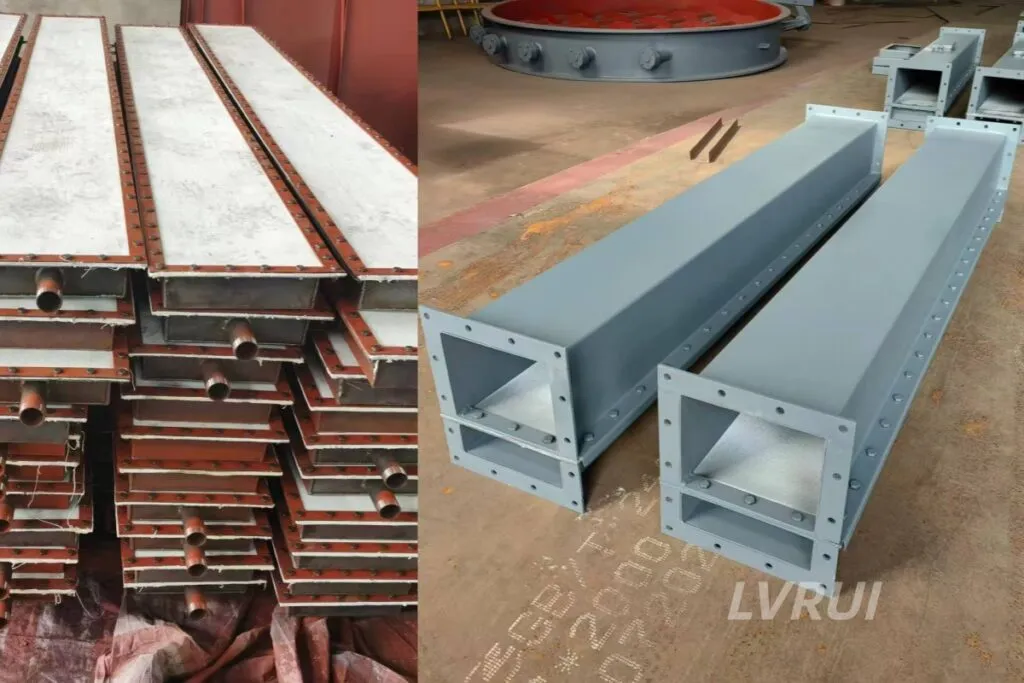
Both screw conveyors and air slide conveyors are used in cement powder handling, but they are suitable for different situations.
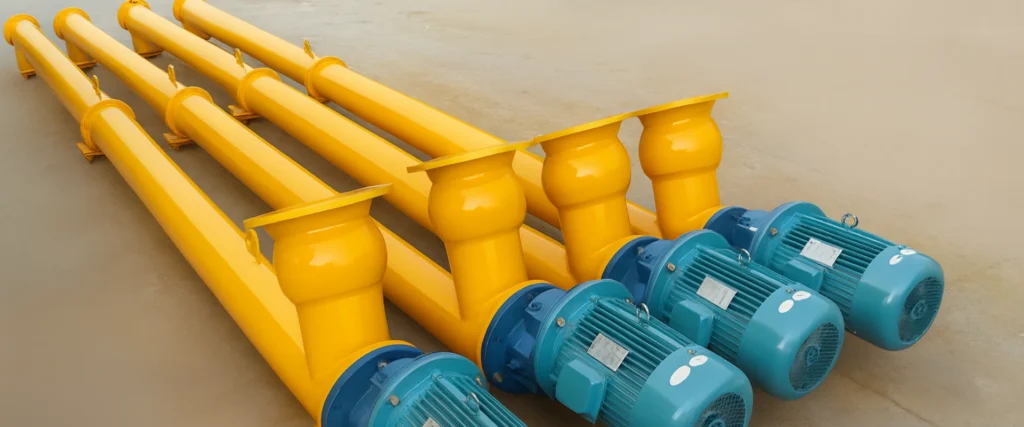
A screw conveyor is more suitable for:
✔ Short-distance powder transfer
✔ Controlled feeding
✔ Horizontal or slightly inclined conveying
✔ Small to medium capacity applications
✔ Silo discharge and batching systems
✔ Enclosed mechanical conveying
An air slide conveyor is more suitable for:
✔ Longer-distance powder conveying
✔ Low-energy cement powder transfer
✔ Large-volume fine powder handling
✔ Enclosed dust-controlled conveying
✔ Cement plant process lines with enough height difference
For some projects, both systems can work together. A screw conveyor may be used for controlled feeding, while an air slide conveyor handles longer-distance powder transport.
The best choice depends on material type, layout, capacity, installation space, power consumption, and maintenance preference.
When Should a Screw Conveyor Be Upgraded?
A screw conveyor should be upgraded when blockage becomes frequent and cleaning no longer solves the problem. Repeated blockage usually means the system condition has changed or the original design is no longer suitable.
Upgrade should be considered when:
✔ Production capacity has increased
✔ Material moisture has changed
✔ Conveyor angle is too steep
✔ Screw flights are heavily worn
✔ Motor overload happens frequently
✔ Inlet or outlet design is unsuitable
✔ The conveyor cannot match upstream feeding
✔ The system needs better sealing or automation
For cement and fly ash systems, upgrading the screw conveyor may reduce downtime, improve feeding accuracy, and make the whole powder handling process more stable.
Conclusion
Screw conveyor blockage in cement powder handling is usually caused by more than one factor. Moisture, unstable feeding, poor inlet design, steep installation angle, worn screw flights, outlet restriction, and incorrect motor or speed selection can all lead to blockage.
For cement, fly ash, slag powder, lime powder, and dry bulk materials, the best solution is to check the complete conveying process instead of only cleaning the conveyor.
A well-designed screw conveyor system can improve feeding stability, reduce blockage, protect downstream equipment, and support reliable powder handling in cement plants, grinding stations, and dry bulk storage facilities.
FAQ – Screw Conveyor Blockage and Troubleshooting
What causes screw conveyor blockage in cement powder handling?
Screw conveyor blockage in cement powder handling is usually caused by excessive moisture, unstable silo feeding, poor inlet design, steep conveyor angle, worn screw flights, outlet restriction, or incorrect motor and speed selection. In most cases, blockage is a system problem, not only a conveyor problem.
How do you troubleshoot screw conveyor blockage?
To troubleshoot screw conveyor blockage, first identify where the blockage happens: inlet, conveyor body, or outlet. Then check material moisture, silo feeding stability, inlet buildup, screw flight wear, outlet restriction, downstream equipment, motor load, and conveyor speed.
Why does cement powder block a screw conveyor?
Cement powder can block a screw conveyor when it becomes damp, compacted, overfed, or poorly discharged from the silo. If the inlet is too narrow, the screw flights are worn, or the outlet is restricted, cement powder may build up and stop material flow.
How can fly ash screw conveyor blockage be prevented?
Fly ash screw conveyor blockage can be prevented by keeping the material dry, controlling feed rate, avoiding sudden overfeeding, keeping the inlet and outlet clear, inspecting screw flights, and ensuring that downstream equipment runs before the conveyor starts.
Is screw conveyor blockage related to material moisture?
Yes. Material moisture is one of the most common causes of screw conveyor blockage. Cement, fly ash, lime powder, and slag powder can become sticky when they absorb moisture, causing material buildup on the screw blade, trough wall, inlet, or outlet.
Can worn screw flights cause blockage?
Yes. Worn screw flights reduce conveying efficiency. The screw may still rotate, but it cannot push material forward effectively. This causes material residue, lower capacity, and higher risk of screw conveyor blockage during continuous operation.
Why does a screw conveyor block at the inlet?
A screw conveyor blocks at the inlet when material enters too fast, the inlet opening is too small, the silo discharge is unstable, or material forms buildup before entering the active screw area. Proper inlet design and controlled feeding are important for stable operation.
Why does a screw conveyor block near the outlet?
A screw conveyor blocks near the outlet when the discharge chute is too narrow, downstream equipment is stopped, the receiving bin is full, or material cannot leave the conveyor smoothly. Outlet restriction can create back pressure inside the conveyor body.
Is a screw conveyor suitable for cement powder?
Yes. A screw conveyor is suitable for cement powder when the conveying distance, capacity, installation angle, sealing, motor power, and feed rate are correctly selected. It is commonly used for short-distance transfer, silo discharge, batching, and controlled feeding.
What is the difference between a screw conveyor and an air slide conveyor?
A screw conveyor uses a rotating screw blade to move powder mechanically, while an air slide conveyor uses low-pressure air and gravity to move fluidized powder. Screw conveyors are suitable for short-distance controlled feeding, while air slide conveyors are better for longer-distance low-energy cement powder conveying.
Indonesian Short Version
Penyumbatan Screw Conveyor pada Sistem Bubuk Semen dan Fly Ash
Masalah screw conveyor blockage sering terjadi pada sistem penanganan bubuk semen, fly ash, slag powder, lime powder, dan material kering lainnya. Penyumbatan biasanya bukan hanya disebabkan oleh conveyor itu sendiri, tetapi juga oleh kelembapan material, feeding yang tidak stabil, desain inlet yang kurang tepat, sudut pemasangan yang terlalu curam, screw flight yang aus, outlet yang tersumbat, atau pemilihan motor dan kecepatan yang tidak sesuai.
Pada sistem silo discharge, screw conveyor harus menerima material secara stabil. Jika flow control gate, rotary valve, atau silo outlet membuka terlalu cepat, material dapat menumpuk di inlet dan menyebabkan motor overload. Jika material terlalu lembap, bubuk akan menempel pada screw blade dan dinding conveyor.
Untuk mencegah penyumbatan, operator perlu memeriksa kondisi material, kestabilan feeding dari silo, kebersihan inlet dan outlet, keausan screw flight, motor current, serta kondisi downstream equipment. Jika blockage sering terjadi di inlet, masalah biasanya berasal dari overfeeding atau desain inlet. Jika blockage terjadi di outlet, penyebabnya bisa berasal dari downstream equipment yang penuh atau tidak berjalan.
Screw conveyor cocok untuk transfer bubuk jarak pendek, controlled feeding, batching, dan silo discharge. Untuk conveying jarak lebih panjang dan kapasitas besar, air slide conveyor bisa menjadi pilihan yang lebih efisien. Pemilihan sistem terbaik harus berdasarkan jenis material, kapasitas, jarak conveying, sudut pemasangan, sealing, dan kebutuhan maintenance.
CTA
Need a reliable Screw Conveyor for cement, fly ash, or powder handling systems?
Contact LVRUI today for fast delivery and expert technical support.
Email: info@lvrui-conveyor.com
Website: https://lvrui-conveyor.com
✅ Get expert quotation and customized solution within 12 hours
✅ Factory direct supply with strict quality control
✅ Professional engineering support from experienced team
✅ Stable delivery for overseas industrial projects